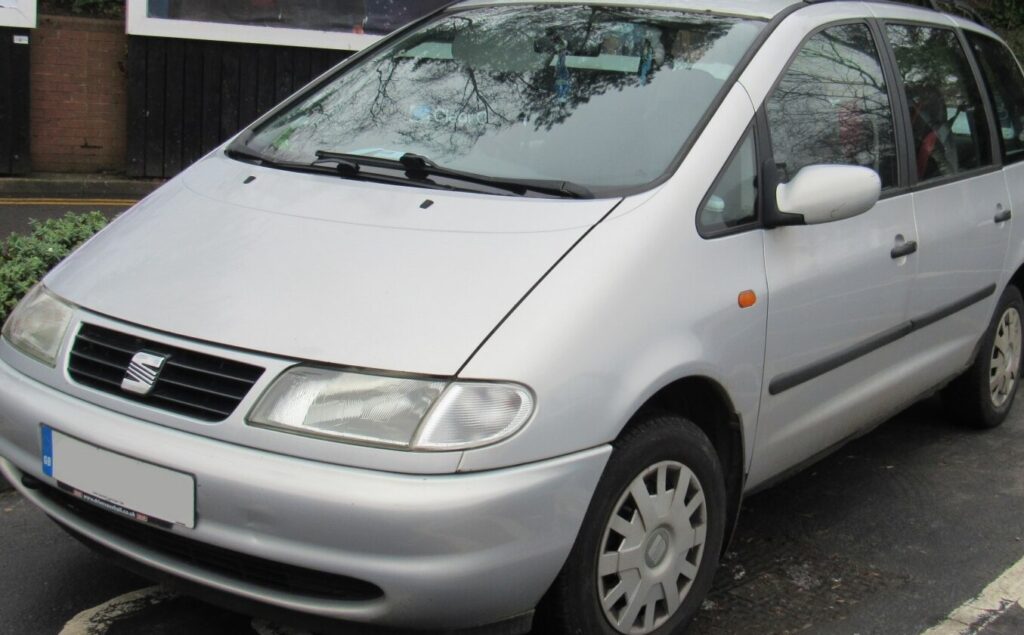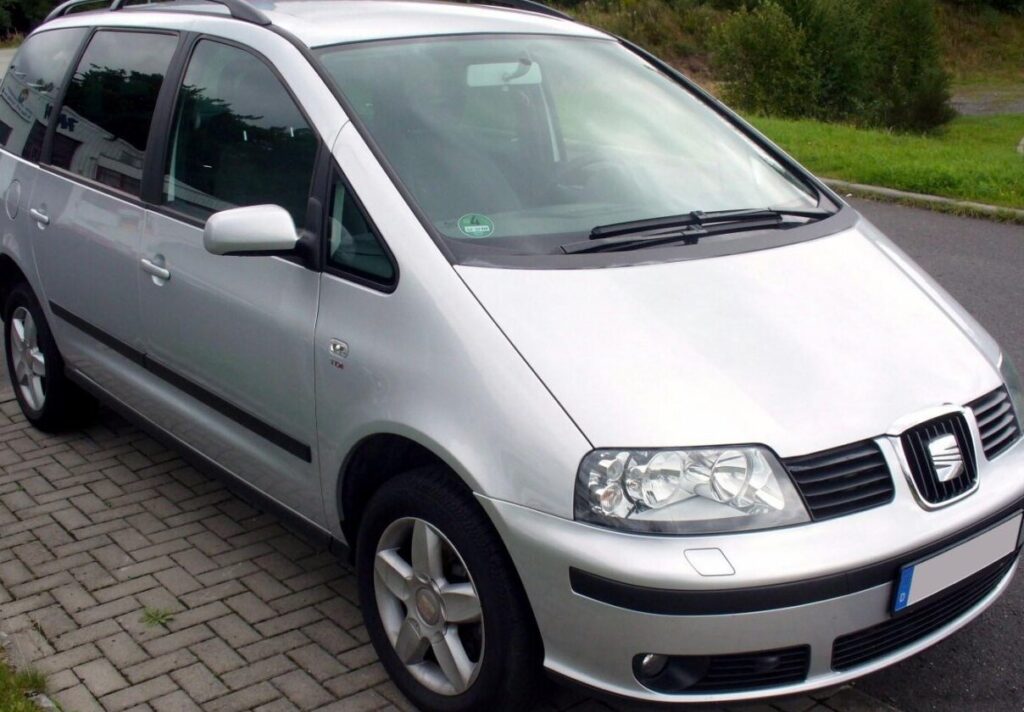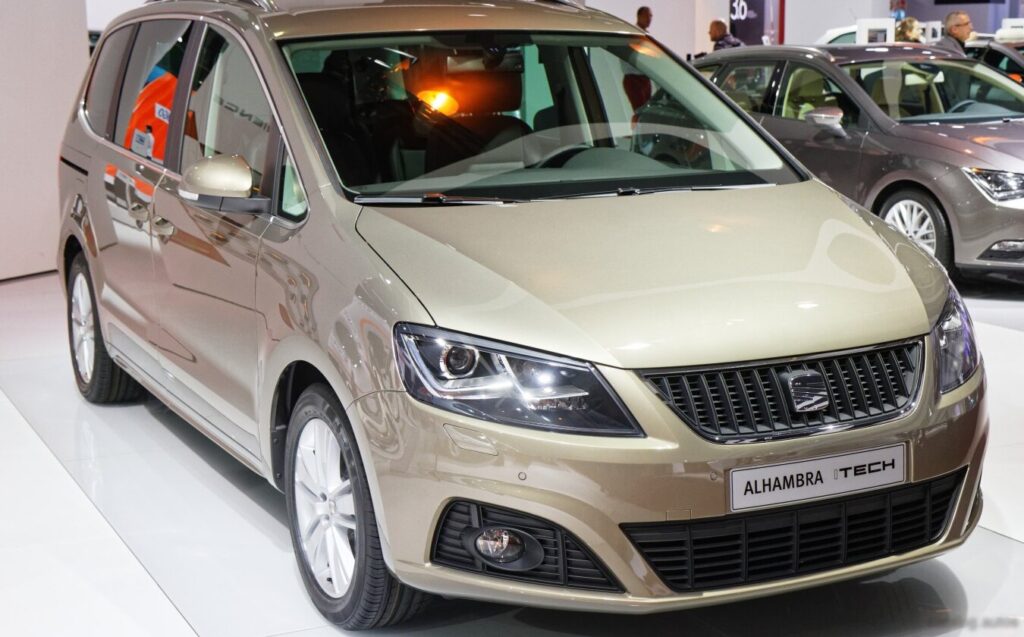
The Seat Alhambra II (7N) 2.0 TDI 170 hp DPF Ecomotive 7-seat model, produced from August 2010 to 2015, represents a significant iteration of Seat’s large MPV offering. Built in collaboration with Volkswagen (sharing a platform with the VW Sharan), the Alhambra II aimed to provide a spacious, practical, and relatively efficient family vehicle for the European market. This particular variant, equipped with the 2.0-liter TDI engine and a six-speed manual transmission, occupied a mid-range position within the Alhambra lineup, balancing performance, fuel economy, and equipment levels. It was designed to appeal to families needing seven seats and ample cargo space, while also offering a more economical diesel option compared to petrol-powered versions.
Technical Specifications
| Brand | Seat |
| Model | Alhambra |
| Generation | Alhambra II (7N) |
| Type | 2.0 TDI (170 Hp) DPF Ecomotive 7 Seat |
| Start of production | August, 2010 |
| End of production | 2015 |
| Powertrain Architecture | Internal Combustion engine |
| Body type | Minivan, MPV |
| Seats | 7 |
| Doors | 5 |
| Fuel consumption (urban) | 7.3 l/100 km (32.2 US mpg, 38.7 UK mpg, 13.7 km/l) |
| Fuel consumption (extra urban) | 5 l/100 km (47 US mpg, 56.5 UK mpg, 20 km/l) |
| Fuel consumption (combined) | 5.8 l/100 km (40.6 US mpg, 48.7 UK mpg, 17.2 km/l) |
| CO2 emissions | 152 g/km |
| Fuel Type | Diesel |
| Acceleration 0 – 100 km/h | 9.5 sec |
| Acceleration 0 – 62 mph | 9.5 sec |
| Acceleration 0 – 60 mph | 9 sec |
| Maximum speed | 207 km/h (128.62 mph) |
| Emission standard | Euro 5 |
| Weight-to-power ratio | 10.8 kg/Hp, 92.3 Hp/tonne |
| Weight-to-torque ratio | 5.3 kg/Nm, 190 Nm/tonne |
| Power | 170 Hp @ 4200 rpm |
| Power per litre | 86.4 Hp/l |
| Torque | 350 Nm @ 1750-2500 rpm (258.15 lb.-ft. @ 1750-2500 rpm) |
| Engine layout | Front, Transverse |
| Engine Model/Code | CFGB |
| Engine displacement | 1968 cm3 (120.09 cu. in.) |
| Number of cylinders | 4 |
| Engine configuration | Inline |
| Cylinder Bore | 81 mm (3.19 in.) |
| Piston Stroke | 95.5 mm (3.76 in.) |
| Compression ratio | 16:1 |
| Number of valves per cylinder | 4 |
| Fuel injection system | Diesel Commonrail |
| Engine aspiration | Turbocharger, Intercooler |
| Engine oil capacity | 4.3 l (4.54 US qt | 3.78 UK qt) |
| Coolant | 8 l (8.45 US qt | 7.04 UK qt) |
| Kerb Weight | 1842 kg (4060.91 lbs.) |
| Max. weight | 2530 kg (5577.7 lbs.) |
| Max load | 688 kg (1516.78 lbs.) |
| Trunk (boot) space – minimum | 267 l (9.43 cu. ft.) |
| Trunk (boot) space – maximum | 1339 l (47.29 cu. ft.) |
| Fuel tank capacity | 70 l (18.49 US gal | 15.4 UK gal) |
| Permitted trailer load with brakes (12%) | 2200 kg (4850.17 lbs.) |
| Length | 4854 mm (191.1 in.) |
| Width | 1904 mm (74.96 in.) |
| Height | 1720 mm (67.72 in.) |
| Wheelbase | 2919 mm (114.92 in.) |
| Front track | 1569 mm (61.77 in.) |
| Rear (Back) track | 1617 mm (63.66 in.) |
| Minimum turning circle | 11.9 m (39.04 ft.) |
| Drivetrain Architecture | Front wheel drive |
| Number of gears and type of gearbox | 6 gears, manual transmission |
| Front suspension | Independent, type McPherson with coil spring and anti-roll bar |
| Rear suspension | Independent coil spring |
| Front brakes | Ventilated discs, 314 mm |
| Rear brakes | Disc, 282 mm |
| Assisting systems | ABS (Anti-lock braking system) |
| Steering type | Steering rack and pinion |
| Power steering | Electric Steering |
| Tires size | 205/60 R16; 215/60 R16; 225/50 R17 |
| Wheel rims size | 6.5J x 16; 7.0J x 17 |
Powertrain & Engine Architecture
The heart of this Alhambra variant is the CFGB engine, a 2.0-liter inline-four cylinder turbocharged diesel. This engine is part of the Volkswagen Group’s modular engine family, known for its robust construction and efficiency. The CFGB utilizes a common rail direct injection system, delivering fuel at extremely high pressure for optimized combustion. A turbocharger with an intercooler further enhances performance by forcing more air into the cylinders. The engine produces 170 horsepower at 4200 rpm and a substantial 350 Nm (258 lb-ft) of torque between 1750 and 2500 rpm. This broad torque curve is characteristic of modern turbo-diesels, providing strong pulling power for a vehicle of this size. The engine is paired with a six-speed manual transmission, offering precise gear changes and contributing to the Alhambra’s relatively good fuel economy.
Driving Characteristics
The 2.0 TDI 170 hp engine provides adequate performance for the Alhambra, though it’s not a particularly sporty vehicle. Acceleration from 0-62 mph takes around 9.5 seconds, which is respectable for a seven-seat MPV. The engine feels strongest in the mid-range, making overtaking and highway cruising relatively effortless. The six-speed manual transmission is well-matched to the engine’s characteristics, allowing drivers to keep the engine in its optimal power band. Compared to the higher-output 140 hp TDI version, the 170 hp model offers noticeably more power, especially when fully loaded with passengers and luggage. However, it doesn’t deliver the same level of performance as the petrol-powered variants. The gear ratios are tuned for fuel efficiency, meaning the engine can feel slightly strained when climbing steep hills with a full load.
Equipment & Trim Levels
The 2.0 TDI 170 hp Ecomotive trim typically included a good level of standard equipment. This generally featured air conditioning, electric windows and mirrors, a CD/radio system, and alloy wheels. The “Ecomotive” designation indicated a focus on fuel efficiency, often including features like low rolling resistance tires and optimized aerodynamics. Optional extras included a navigation system, parking sensors, leather upholstery, and a panoramic sunroof. Interior upholstery was typically cloth, though leather was available as an upgrade. The dashboard layout was functional and straightforward, prioritizing practicality over stylistic flair.
Chassis & Braking
The Alhambra II utilizes an independent suspension setup at both the front (McPherson strut) and rear (multi-link). This provides a comfortable ride quality, absorbing bumps and imperfections in the road surface effectively. The front brakes are ventilated discs, providing ample stopping power, while the rear brakes are solid discs. Anti-lock Braking System (ABS) is standard, enhancing safety during emergency braking situations. Stabilizer bars are fitted to both axles to reduce body roll during cornering. The suspension tuning is geared towards comfort rather than sporty handling, making the Alhambra a stable and predictable vehicle to drive.
Market Reception & Comparison
The Seat Alhambra II 2.0 TDI 170 hp was generally well-received by automotive critics. It was praised for its spacious interior, practicality, and relatively good fuel economy. The diesel engine was considered a good compromise between performance and efficiency. Compared to the lower-powered TDI variants, the 170 hp model offered a noticeable improvement in performance, making it a more suitable choice for those who frequently carry a full load or tow a trailer. However, some critics noted that the interior materials were not as premium as those found in some of its competitors, such as the Ford Galaxy. Fuel economy figures of around 5.8 l/100 km (40.6 US mpg) were competitive for its class.
Legacy
The 2.0 TDI CFGB engine, when properly maintained, has proven to be a reliable powertrain. Common issues include diesel particulate filter (DPF) clogging, particularly on vehicles used primarily for short journeys. Regular servicing and the use of quality diesel fuel are crucial for preventing DPF problems. The Alhambra II, in general, has a reputation for being a durable and practical MPV. On the used car market, these models represent good value for money, offering a lot of space and practicality for a relatively affordable price. However, potential buyers should carefully inspect the vehicle’s service history and check for any signs of DPF issues or other common diesel engine problems.