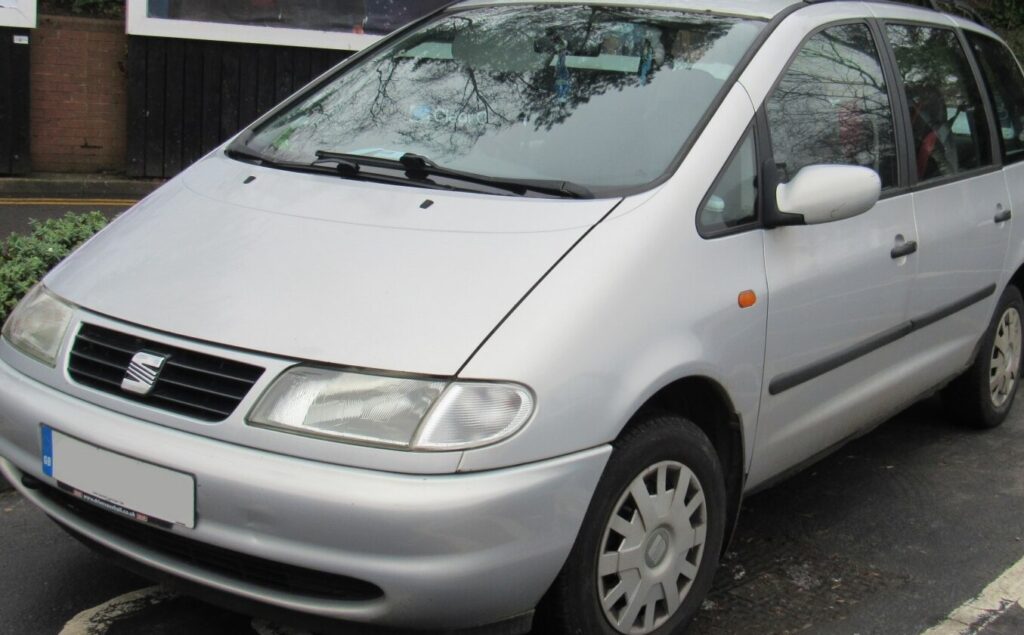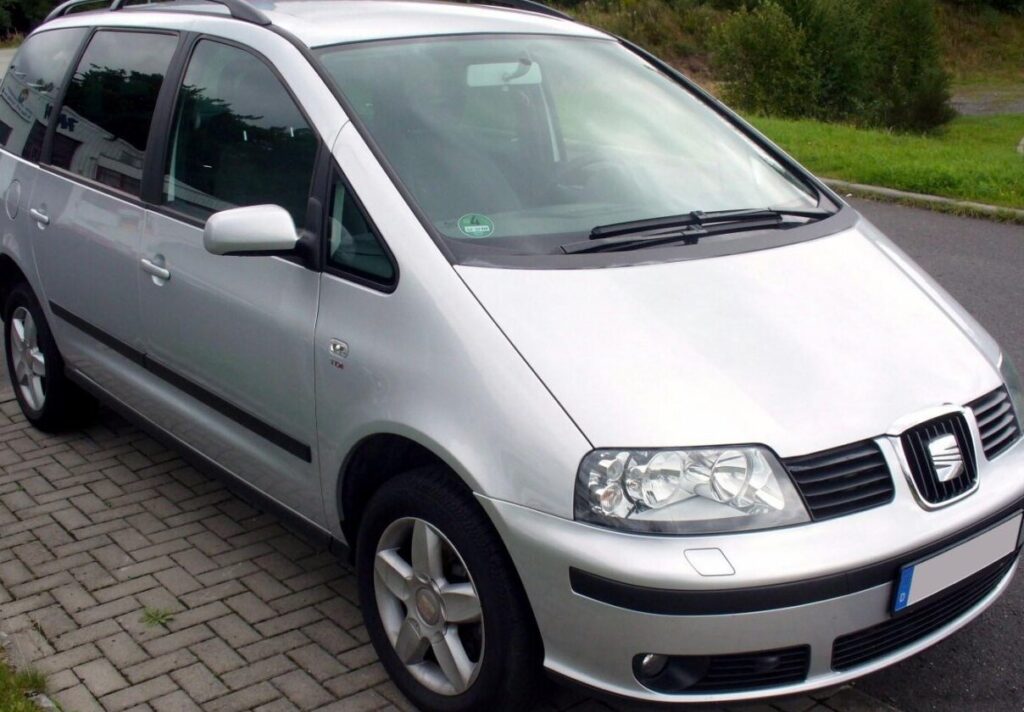
Technical Specifications
| Brand | Seat |
| Model | Alhambra |
| Generation | Alhambra II (7N) |
| Type (Engine) | 2.0 TSI (200 Hp) Ecomotive DSG |
| Start of production | November, 2010 |
| End of production | 2015 |
| Powertrain Architecture | Internal Combustion engine |
| Body type | Minivan, MPV |
| Seats | 5 |
| Doors | 5 |
| Fuel consumption (urban) | 11.5 l/100 km (20.5 US mpg, 24.6 UK mpg, 8.7 km/l) |
| Fuel consumption (extra urban) | 6.6 l/100 km (35.6 US mpg, 42.8 UK mpg, 15.2 km/l) |
| Fuel consumption (combined) | 8.4 l/100 km (28 US mpg, 33.6 UK mpg, 11.9 km/l) |
| CO2 emissions | 196 g/km |
| Fuel Type | Petrol (Gasoline) |
| Acceleration 0 – 100 km/h | 8.3 sec |
| Acceleration 0 – 62 mph | 8.3 sec |
| Acceleration 0 – 60 mph | 7.9 sec |
| Maximum speed | 221 km/h (137.32 mph) |
| Emission standard | Euro 5 |
| Weight-to-power ratio | 8.8 kg/Hp, 113.1 Hp/tonne |
| Weight-to-torque ratio | 6.3 kg/Nm, 158.3 Nm/tonne |
| Power | 200 Hp @ 5100 rpm |
| Power per litre | 100.8 Hp/l |
| Torque | 280 Nm @ 1700-5000 rpm (206.52 lb.-ft. @ 1700-5000 rpm) |
| Engine layout | Front, Transverse |
| Engine Model/Code | CCZA |
| Engine displacement | 1984 cm3 (121.07 cu. in.) |
| Number of cylinders | 4 |
| Engine configuration | Inline |
| Cylinder Bore | 82.5 mm (3.25 in.) |
| Piston Stroke | 92.8 mm (3.65 in.) |
| Compression ratio | 9.8:1 |
| Number of valves per cylinder | 4 |
| Fuel injection system | Direct injection |
| Engine aspiration | Turbocharger, Intercooler |
| Engine oil capacity | 4.7 l (4.97 US qt | 4.14 UK qt) |
| Coolant | 8 l (8.45 US qt | 7.04 UK qt) |
| Kerb Weight | 1769 kg (3899.98 lbs.) |
| Max. weight | 2530 kg (5577.7 lbs.) |
| Max load | 761 kg (1677.72 lbs.) |
| Trunk (boot) space – minimum | 809 l (28.57 cu. ft.) |
| Trunk (boot) space – maximum | 2430 l (85.81 cu. ft.) |
| Fuel tank capacity | 70 l (18.49 US gal | 15.4 UK gal) |
| Length | 4854 mm (191.1 in.) |
| Width | 1904 mm (74.96 in.) |
| Height | 1720 mm (67.72 in.) |
| Wheelbase | 2919 mm (114.92 in.) |
| Front track | 1569 mm (61.77 in.) |
| Rear (Back) track | 1617 mm (63.66 in.) |
| Minimum turning circle | 11.9 m (39.04 ft.) |
| Drivetrain Architecture | Front wheel drive |
| Number of gears and type of gearbox | 6 gears, automatic transmission DSG |
| Front suspension | Independent type McPherson |
| Rear suspension | Independent multi-link suspension |
| Front brakes | Ventilated discs |
| Rear brakes | Disc |
| Assisting systems | ABS (Anti-lock braking system) |
| Steering type | Steering rack and pinion |
| Power steering | Electric Steering |
| Tires size | 205/60 R16; 215/60 R16; 225/50 R17 |
| Wheel rims size | 6.5J x 16 |
The Seat Alhambra II, launched in 2010, represented a collaborative effort with Volkswagen, sharing its underpinnings with the VW Sharan. The 2.0 TSI Ecomotive DSG variant, equipped with a turbocharged four-cylinder engine and a dual-clutch gearbox, was introduced as a more efficient and dynamically capable option within the Alhambra lineup. Built on the Volkswagen Group’s PQ46 platform (also known as the 1HX0/A3 platform), the Alhambra II aimed to address the growing demand for versatile, family-oriented vehicles with a touch of European flair. The “Ecomotive” designation signified a focus on fuel efficiency through technologies like start-stop functionality and optimized engine mapping.
Powertrain & Engine Architecture
At the heart of the Alhambra 2.0 TSI Ecomotive DSG lies the CCZA engine code, a 1.984-liter inline-four cylinder gasoline engine. This engine utilizes direct fuel injection (FSI) and is coupled with a turbocharger and intercooler to deliver 200 horsepower at 5100 rpm and 280 Nm (206.52 lb-ft) of torque between 1700 and 5000 rpm. The direct injection system allows for precise fuel delivery, enhancing both power and efficiency. The engine features a 9.8:1 compression ratio and four valves per cylinder. The dual-clutch transmission (DSG) is a seven-speed unit, offering quick and smooth gear changes. This transmission contributes significantly to the vehicle’s responsiveness and fuel economy. The DSG’s programming prioritizes efficiency in normal driving conditions, shifting to sportier settings when demanded by the driver.
Driving Characteristics
The 2.0 TSI Ecomotive DSG variant of the Alhambra offered a noticeable step up in performance compared to lower-powered engine options. Acceleration from 0 to 62 mph (0-100 km/h) takes approximately 8.3 seconds, making it reasonably quick for a large MPV. The DSG transmission provides seamless gear changes, contributing to a refined driving experience. While not a sports car, the Alhambra 2.0 TSI offers ample power for overtaking and highway cruising. The gear ratios are tuned to balance acceleration with fuel efficiency, with higher gears designed for relaxed long-distance travel. Compared to a manual transmission version (if available), the DSG offers convenience and potentially slightly improved fuel economy, but may lack the direct engagement preferred by some drivers. Compared to the diesel variants, the TSI offers a more responsive and linear power delivery, albeit with potentially higher fuel consumption.
Equipment & Trim Levels
The Alhambra 2.0 TSI Ecomotive DSG typically came well-equipped, reflecting its position as a mid-to-upper trim level. Standard features often included climate control, an infotainment system with a touchscreen display, alloy wheels, and various safety systems like ABS, ESP (Electronic Stability Program), and multiple airbags. Interior upholstery was typically cloth or a combination of cloth and leatherette. Optional extras could include navigation, parking sensors, a panoramic sunroof, and upgraded audio systems. The dashboard layout was functional and modern, with a focus on ergonomics and ease of use. The Ecomotive trim often included specific aerodynamic enhancements and low-rolling-resistance tires to further improve fuel efficiency.
Chassis & Braking
The Alhambra II utilized an independent suspension setup, with McPherson struts at the front and a multi-link system at the rear. This configuration provided a comfortable ride quality while maintaining reasonable handling characteristics. The front brakes were ventilated discs, while the rear brakes were solid discs. ABS (Anti-lock Braking System) was standard, enhancing braking performance and stability. The steering was power-assisted, providing light and precise control. Stabilizer bars were fitted to both the front and rear axles to reduce body roll during cornering. The suspension tuning was geared towards comfort and practicality, prioritizing a smooth ride over sporty handling.
Market Reception & Comparison
The Seat Alhambra 2.0 TSI Ecomotive DSG was generally well-received by automotive critics. It was praised for its spacious interior, comfortable ride, and efficient engine. The DSG transmission was also a highlight, offering smooth and quick gear changes. However, some critics noted that the Alhambra’s styling was somewhat conservative compared to some of its rivals. In terms of fuel economy, the 2.0 TSI Ecomotive offered a good balance between performance and efficiency, but typically lagged behind the diesel-powered variants. Compared to the Volkswagen Sharan, which it shared a platform with, the Alhambra often offered a slightly more affordable price point. Reliability reports generally indicated that the Alhambra was a dependable vehicle, although potential issues with the DSG transmission (common to many VW/Audi group vehicles) should be considered.
Legacy
The Seat Alhambra II 2.0 TSI Ecomotive DSG remains a practical and versatile option in the used car market. The CCZA engine, while not without its potential maintenance needs (such as timing chain wear), is generally considered robust when properly maintained. The DSG transmission requires regular servicing, including fluid changes, to ensure long-term reliability. Today, these Alhambra models offer a compelling combination of space, comfort, and performance at a relatively affordable price. They continue to appeal to families seeking a spacious and practical MPV with a touch of European style.