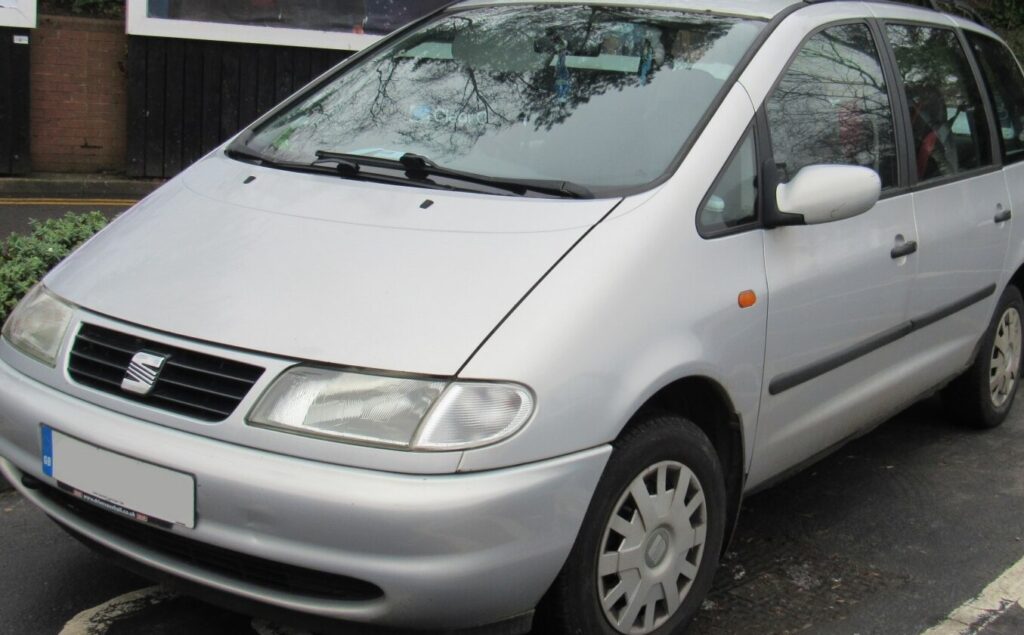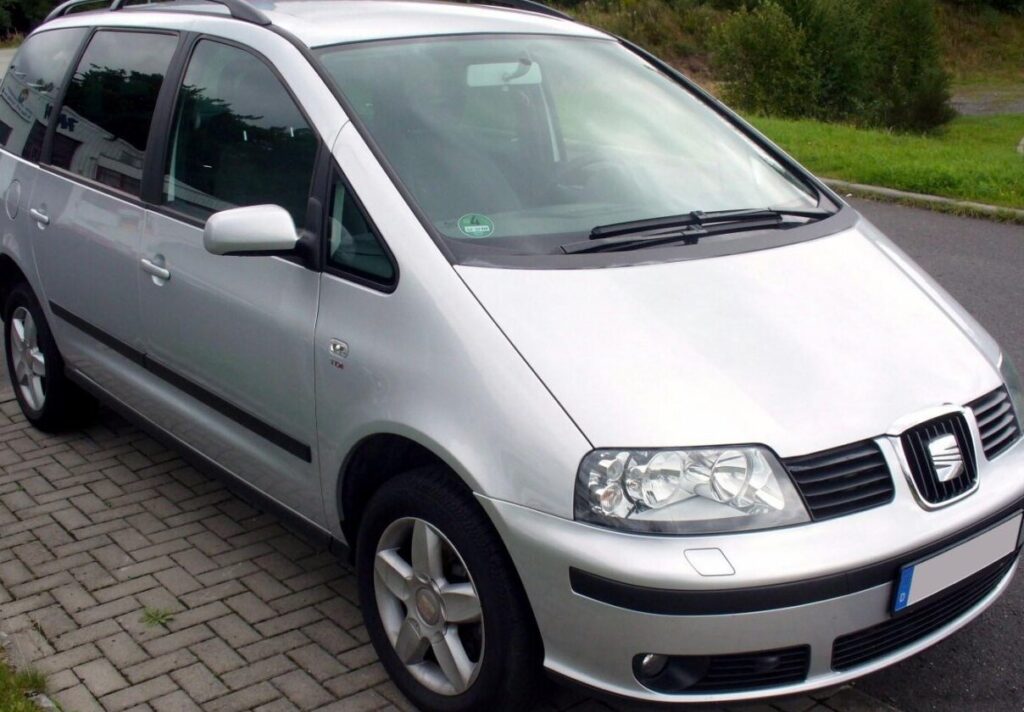
The Seat Alhambra II (7N), specifically the facelifted version produced from May 2015 to 2016, represents a significant iteration of Seat’s large MPV offering. Positioned as a practical and spacious family vehicle, the 2.0 TDI 115 horsepower variant occupied a middle ground within the Alhambra lineup, offering a balance between fuel efficiency and acceptable performance. This generation Alhambra, co-developed with Volkswagen (sharing a platform with the Sharan), aimed to provide a compelling alternative to traditional people carriers, emphasizing versatility and comfort. The facelift brought styling updates and refinements to the interior, enhancing the Alhambra’s appeal in the European market.
Technical Specifications
| Brand | Seat |
| Model | Alhambra |
| Generation | Alhambra II (7N, facelift 2015) |
| Type (Engine) | 2.0 TDI (115 Hp) |
| Start of production | May, 2015 |
| End of production | 2016 |
| Powertrain Architecture | Internal Combustion engine |
| Body type | Minivan, MPV |
| Seats | 5 |
| Doors | 5 |
| Fuel consumption (combined) | 5 l/100 km (47 US mpg, 56.5 UK mpg, 20 km/l) |
| CO2 emissions | 130 g/km |
| Fuel Type | Diesel |
| Acceleration 0 – 100 km/h | 12.6 sec |
| Acceleration 0 – 62 mph | 12.6 sec |
| Acceleration 0 – 60 mph | 12 sec |
| Maximum speed | 184 km/h (114.33 mph) |
| Emission standard | Euro 6 |
| Weight-to-power ratio | 14.8 kg/Hp, 67.6 Hp/tonne |
| Weight-to-torque ratio | 6.1 kg/Nm, 164.7 Nm/tonne |
| Power | 115 Hp @ 3500 rpm |
| Power per litre | 58.4 Hp/l |
| Torque | 280 Nm @ 1750-3000 rpm (206.52 lb.-ft. @ 1750-3000 rpm) |
| Engine layout | Front, Transverse |
| Engine Model/Code | CUVA, DFLD |
| Engine displacement | 1968 cm3 (120.09 cu. in.) |
| Number of cylinders | 4 |
| Engine configuration | Inline |
| Cylinder Bore | 81 mm (3.19 in.) |
| Piston Stroke | 95.5 mm (3.76 in.) |
| Compression ratio | 16:1 |
| Number of valves per cylinder | 4 |
| Fuel injection system | Diesel Commonrail |
| Engine aspiration | Turbocharger, Intercooler |
| Engine oil capacity | 4.6 l (4.86 US qt | 4.05 UK qt) |
| Coolant | 8 l (8.45 US qt | 7.04 UK qt) |
| Kerb Weight | 1700 kg (3747.86 lbs.) |
| Max. weight | 2390 kg (5269.05 lbs.) |
| Max load | 690 kg (1521.19 lbs.) |
| Trunk (boot) space – minimum | 955 l (33.73 cu. ft.) |
| Trunk (boot) space – maximum | 2430 l (85.81 cu. ft.) |
| Fuel tank capacity | 70 l (18.49 US gal | 15.4 UK gal) |
| Length | 4854 mm (191.1 in.) |
| Width | 1904 mm (74.96 in.) |
| Height | 1720 mm (67.72 in.) |
| Wheelbase | 2919 mm (114.92 in.) |
| Front track | 1557/1569 mm (61.3 in.) |
| Rear (Back) track | 1605/1617 mm (63.19 in.) |
| Minimum turning circle | 11.9 m (39.04 ft.) |
| Drivetrain Architecture | Front wheel drive |
| Number of gears and type of gearbox | 6 gears, manual transmission |
| Front suspension | Independent type McPherson |
| Rear suspension | Independent coil spring |
| Front brakes | Ventilated discs |
| Rear brakes | Disc |
| Assisting systems | ABS (Anti-lock braking system) |
| Steering type | Steering rack and pinion |
| Power steering | Electric Steering |
| Tires size | 205/60 R16; 215/60 R16; 225/50 R17; 225/50 R18 |
| Wheel rims size | 16; 17; 18 |
Powertrain & Engine Architecture
The 2.0 TDI engine in the 2015-2016 Seat Alhambra facelift utilized the common rail direct injection system, a hallmark of modern diesel engines. Engine codes CUVA and DFLD were commonly found in this application. This engine featured a turbocharger with an intercooler, enhancing power output and efficiency. The 1968cc inline-four cylinder engine produced 115 horsepower at 3500 rpm and 280 Nm (206.52 lb-ft) of torque between 1750 and 3000 rpm. The engine’s four valves per cylinder and a compression ratio of 16:1 contributed to its relatively efficient combustion process. The Alhambra 2.0 TDI was paired with a 6-speed manual transmission, delivering power to the front wheels. While a DSG (Direct-Shift Gearbox) automatic option was available on other Alhambra trims, the 115 hp version was primarily offered with the manual gearbox.
Driving Characteristics
The 115 hp 2.0 TDI engine, coupled with the manual transmission, provided adequate, though not exhilarating, performance for the Alhambra. Acceleration from 0 to 100 km/h (0-62 mph) took approximately 12.6 seconds. The engine’s torque delivery, peaking at 1750 rpm, made it reasonably responsive in everyday driving situations, particularly for overtaking maneuvers. Compared to the higher-output 140 hp or 170 hp TDI variants, the 115 hp version felt noticeably less powerful, especially when fully loaded with passengers and luggage. The manual transmission allowed for greater driver control, but required more engagement than the optional DSG automatic. The gear ratios were tuned for fuel efficiency, prioritizing comfortable cruising over outright acceleration.
Equipment & Trim Levels
The 115 hp 2.0 TDI Alhambra typically came with a respectable level of standard equipment, though it generally sat towards the entry-level or mid-range of the lineup. Standard features often included air conditioning, electric front windows, central locking, and a basic audio system. Higher trim levels added features like alloy wheels, rear parking sensors, cruise control, and a more advanced infotainment system. Interior upholstery was typically cloth, with options for leather upgrades. The Alhambra’s flexible seating configuration, with individual second-row seats and the option for a third-row bench, was a key selling point, regardless of trim level.
Chassis & Braking
The Alhambra II utilized an independent McPherson strut suspension at the front and an independent coil spring suspension at the rear, providing a comfortable ride quality. The front brakes were ventilated discs, while the rear brakes were solid discs. ABS (Anti-lock Braking System) was standard. The suspension was tuned to prioritize ride comfort over sporty handling, reflecting the vehicle’s intended role as a family MPV. Stabilizer bars were fitted to both the front and rear axles to reduce body roll during cornering.
Market Reception & Comparison
The Seat Alhambra 2.0 TDI 115 hp was generally well-received as a practical and fuel-efficient MPV. Critics praised its spacious interior, versatile seating configuration, and comfortable ride. However, some reviewers noted that the 115 hp engine could feel underpowered when the vehicle was fully loaded. Compared to the more powerful TDI variants, the 115 hp version offered better fuel economy but compromised on performance. It competed with other large MPVs such as the Volkswagen Sharan, Ford Galaxy, and Renault Espace.
Legacy
The 2.0 TDI engine, in various iterations, proved to be a reliable and durable powertrain. The Alhambra II, including the 115 hp variant, has maintained a reasonable reputation for reliability in the used car market. Common issues, if any, typically relate to diesel particulate filter (DPF) maintenance and turbocharger wear, particularly on vehicles that have not been properly maintained. Today, the 2015-2016 Seat Alhambra 2.0 TDI 115 hp represents a cost-effective option for families seeking a spacious and practical MPV, offering a good balance of fuel efficiency and usability.