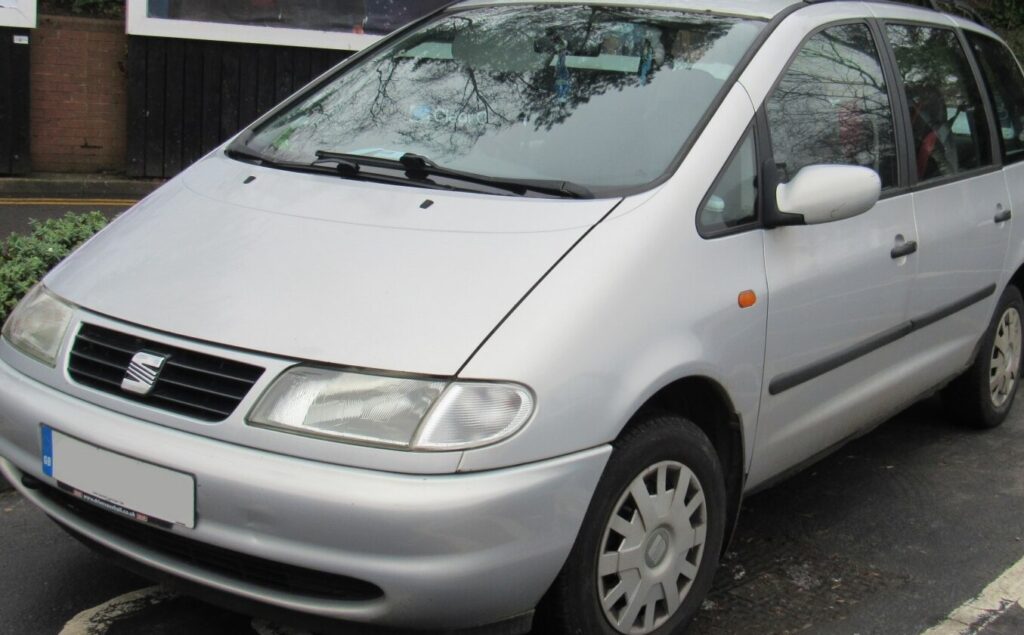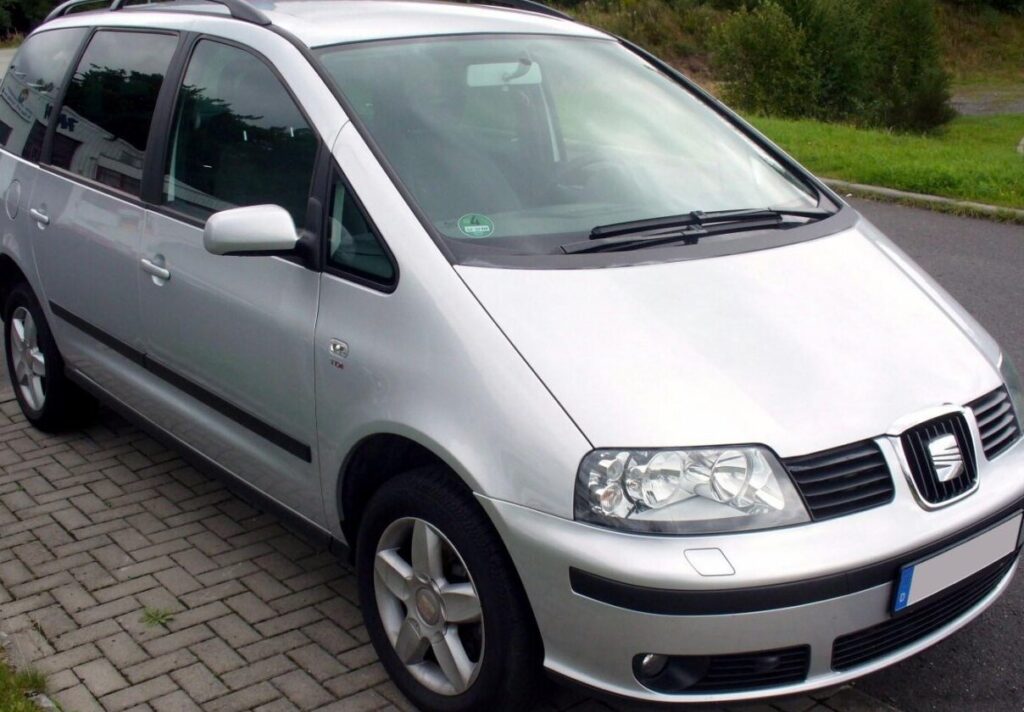
The Seat Alhambra II (7N), particularly the facelifted version introduced in May 2015, represents Seat’s entry into the large MPV (Multi-Purpose Vehicle) segment. Built in collaboration with Volkswagen – sharing a platform and many components with the Volkswagen Sharan – the Alhambra aimed to provide a spacious and practical vehicle for families. Production of this generation continued until 2020. The 2.0 TDI 150 horsepower variant with the DSG (Direct-Shift Gearbox) automatic transmission was a popular choice, positioned as a mid-range offering balancing fuel efficiency, performance, and equipment levels within the Alhambra lineup. It catered to buyers needing a versatile vehicle for both daily commutes and longer journeys.
Technical Specifications
| Brand | Seat |
| Model | Alhambra |
| Generation | Alhambra II (7N, facelift 2015) |
| Type (Engine) | 2.0 TDI (150 Hp) DSG |
| Start of production | May, 2015 |
| End of production | 2020 |
| Powertrain Architecture | Internal Combustion engine |
| Body type | Minivan, MPV |
| Seats | 5 |
| Doors | 5 |
| Fuel consumption (combined) | 5.2 l/100 km (45.2 US mpg, 54.3 UK mpg, 19.2 km/l) |
| CO2 emissions | 136 g/km |
| Fuel Type | Diesel |
| Acceleration 0 – 100 km/h | 10.3 sec |
| Acceleration 0 – 62 mph | 10.3 sec |
| Acceleration 0 – 60 mph | 9.8 sec |
| Maximum speed | 198 km/h (123.03 mph) |
| Emission standard | Euro 6 |
| Weight-to-power ratio | 11.5 kg/Hp, 87.3 Hp/tonne |
| Weight-to-torque ratio | 5.1 kg/Nm, 197.9 Nm/tonne |
| Power | 150 Hp @ 3500 rpm |
| Power per litre | 76.2 Hp/l |
| Torque | 340 Nm @ 1750-3000 rpm (250.77 lb.-ft. @ 1750-3000 rpm) |
| Engine layout | Front, Transverse |
| Engine Model/Code | CUVC, DFLA |
| Engine displacement | 1968 cm3 (120.09 cu. in.) |
| Number of cylinders | 4 |
| Engine configuration | Inline |
| Cylinder Bore | 81 mm (3.19 in.) |
| Piston Stroke | 95.5 mm (3.76 in.) |
| Compression ratio | 16:1 |
| Number of valves per cylinder | 4 |
| Fuel injection system | Diesel Commonrail |
| Engine aspiration | Turbocharger, Intercooler |
| Engine oil capacity | 4.6 l (4.86 US qt | 4.05 UK qt) |
| Coolant | 8 l (8.45 US qt | 7.04 UK qt) |
| Kerb Weight | 1718 kg (3787.54 lbs.) |
| Max. weight | 2410 kg (5313.14 lbs.) |
| Max load | 692 kg (1525.6 lbs.) |
| Trunk (boot) space – minimum | 955 l (33.73 cu. ft.) |
| Trunk (boot) space – maximum | 2430 l (85.81 cu. ft.) |
| Fuel tank capacity | 70 l (18.49 US gal | 15.4 UK gal) |
| Length | 4854 mm (191.1 in.) |
| Width | 1904 mm (74.96 in.) |
| Height | 1720 mm (67.72 in.) |
| Wheelbase | 2919 mm (114.92 in.) |
| Front track | 1557 mm (61.3 in.) |
| Rear (Back) track | 1605 mm (63.19 in.) |
| Minimum turning circle | 11.9 m (39.04 ft.) |
| Drivetrain Architecture | Front wheel drive |
| Number of gears and type of gearbox | 6 gears, automatic transmission DSG |
| Front suspension | Independent type McPherson |
| Rear suspension | Independent coil spring |
| Front brakes | Ventilated discs |
| Rear brakes | Disc |
| Tires size | 205/60 R16; 215/60 R16; 225/50 R17; 225/50 R18 |
| Wheel rims size | 16; 17; 18 |
Powertrain & Engine Architecture
The heart of this Alhambra variant is the 2.0-liter TDI engine, specifically utilizing the CUVC or DFLA engine codes depending on the exact production date and market. This engine is a four-cylinder, inline diesel, employing common rail direct injection and a turbocharger with intercooling. The common rail system, operating at very high pressures, ensures precise fuel delivery for optimized combustion and reduced emissions. The turbocharger boosts power output, providing 150 horsepower at 3500 rpm and a substantial 340 Nm (250.77 lb-ft) of torque available from 1750 to 3000 rpm. This broad torque curve is particularly beneficial in a larger vehicle like the Alhambra, providing strong pulling power for hauling passengers and cargo. The engine features four valves per cylinder, enhancing breathing and contributing to its efficiency. The engine’s 16:1 compression ratio is typical for modern diesel engines. The engine is transversely mounted in the front of the vehicle.
Paired with the engine is a 6-speed DSG (Direct-Shift Gearbox) automatic transmission. This dual-clutch transmission offers quick and smooth gear changes, contributing to both performance and fuel economy. The DSG essentially combines the efficiency of a manual transmission with the convenience of an automatic. It utilizes two separate clutches, one for odd-numbered gears and one for even-numbered gears, allowing for pre-selection of the next gear and seamless shifts.
Driving Characteristics
The 150 hp 2.0 TDI with the DSG transmission delivers a comfortable and capable driving experience. While not a performance-oriented setup, it provides sufficient power for everyday driving and highway cruising. Acceleration from 0-60 mph takes around 9.8 seconds, and top speed is rated at 198 km/h (123.03 mph). The DSG transmission contributes to responsive acceleration, and the broad torque band means the engine feels strong even at lower speeds. Compared to the higher-output 170 hp or 184 hp TDI variants, this version offers slightly less outright performance, but the difference is often negligible in real-world driving. Compared to manual transmission versions of the same engine, the DSG offers greater convenience, especially in stop-and-go traffic, but some drivers may prefer the more direct feel of a manual gearbox.
Equipment & Trim Levels
The 2.0 TDI 150 hp DSG variant typically came equipped with a respectable level of standard features. These generally included air conditioning, electric windows and mirrors, a basic audio system with USB connectivity, and alloy wheels. Higher trim levels, such as Style or Reference, added features like automatic climate control, parking sensors, a touchscreen infotainment system, and upgraded interior upholstery. Optional extras included navigation, leather seats, a panoramic sunroof, and advanced driver-assistance systems.
Chassis & Braking
The Alhambra II utilizes an independent McPherson strut suspension at the front and an independent coil spring suspension at the rear. This setup provides a comfortable ride quality, absorbing bumps and irregularities in the road surface effectively. The front brakes are ventilated discs, providing strong stopping power, while the rear brakes are solid discs. ABS (Anti-lock Braking System) is standard, enhancing safety during emergency braking. The steering is electric power-assisted, offering a light and precise feel.
Market Reception & Comparison
The Seat Alhambra, and specifically the 2.0 TDI 150 hp DSG variant, was generally well-received by automotive critics. It was praised for its spacious interior, practicality, and comfortable ride. The fuel economy of around 5.2 l/100 km (45.2 US mpg) was also a significant selling point. Compared to the more powerful TDI variants, this version offered a more affordable price point and slightly better fuel efficiency. However, some critics noted that the interior materials weren’t as premium as those found in some of its competitors, such as the Ford Galaxy.
Legacy
The 2.0 TDI engine in this configuration has proven to be relatively reliable, although, like all diesel engines, it’s susceptible to issues related to the diesel particulate filter (DPF) if not properly maintained. Regular servicing and the use of high-quality diesel fuel are crucial for ensuring long-term reliability. On the used car market, the Alhambra II 2.0 TDI 150 hp DSG represents a good value proposition for buyers seeking a spacious and practical MPV. Its combination of fuel efficiency, comfort, and practicality makes it a popular choice for families.