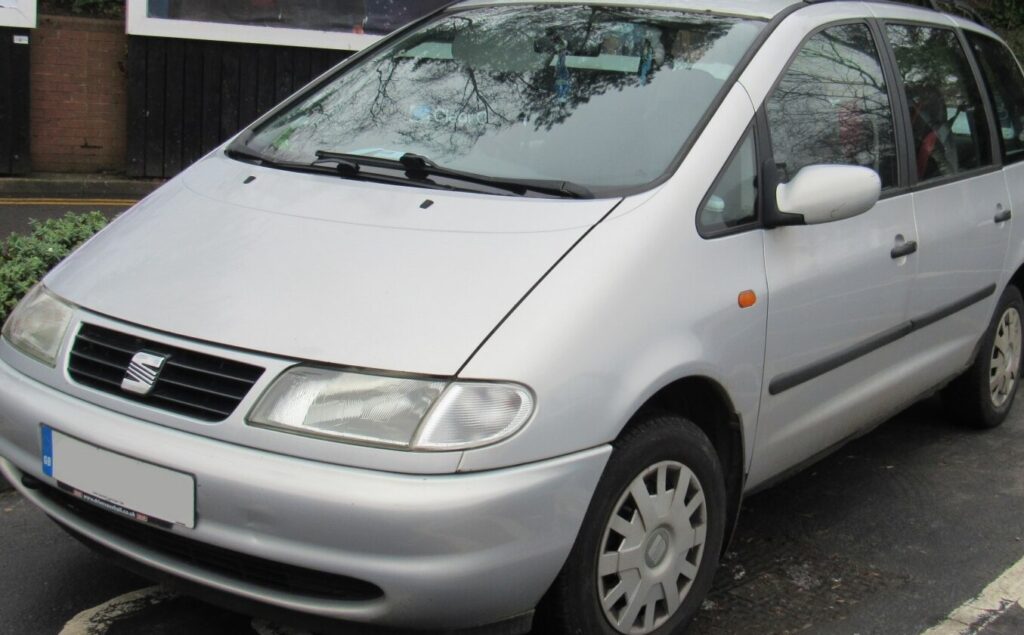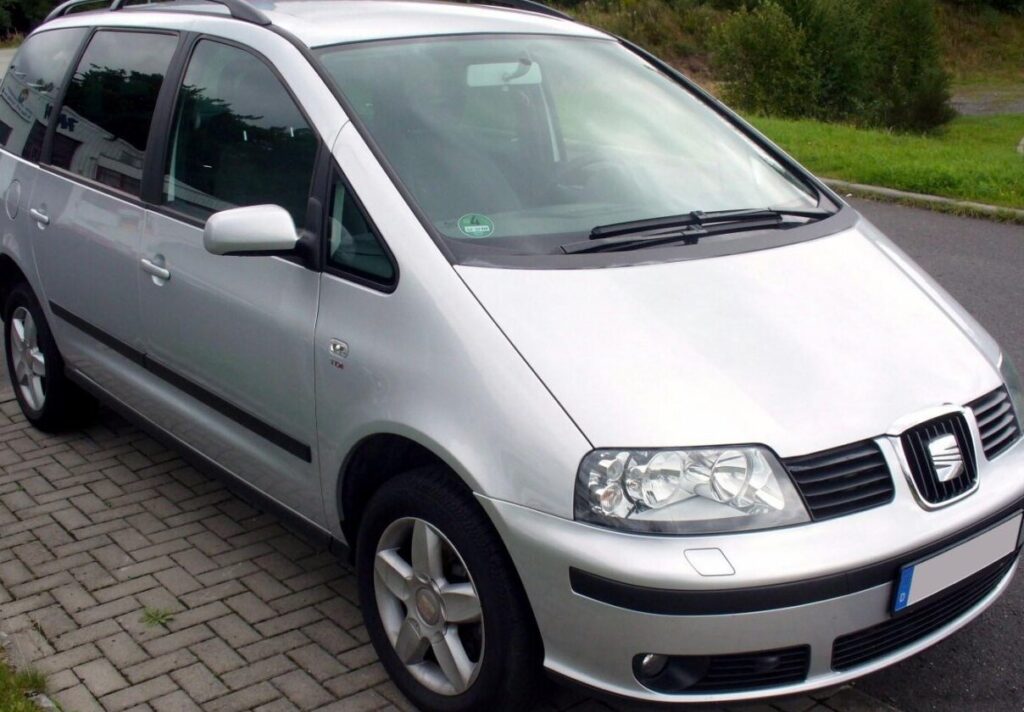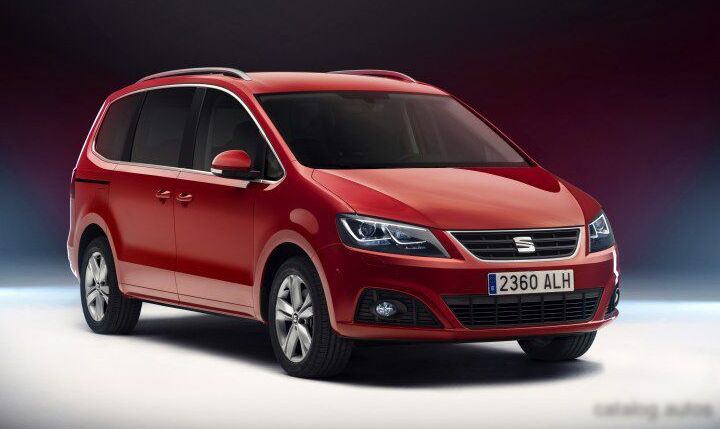
The Seat Alhambra II (7N), particularly the facelifted version introduced in 2015, represents Seat’s entry into the large MPV (Multi-Purpose Vehicle) segment. Produced from 2019 to 2020, the 2.0 TDI 177 hp 4Drive DSG variant was a top-tier offering, positioned as a practical and well-equipped family vehicle. This generation Alhambra, co-developed with Volkswagen (sharing a platform with the Sharan), aimed to provide a spacious and versatile alternative to traditional estate cars and people carriers, primarily targeting the European market. The “7N” designation refers to the internal Seat project code for this generation.
Technical Specifications
| Brand | Seat |
| Model | Alhambra |
| Generation | Alhambra II (7N, facelift 2015) |
| Type (Engine) | 2.0 TDI (177 Hp) 4Drive DSG |
| Start of production | 2019 |
| End of production | 2020 |
| Powertrain Architecture | Internal Combustion engine |
| Body type | Minivan, MPV |
| Seats | 5-7 |
| Doors | 5 |
| Fuel Type | Diesel |
| Acceleration 0 – 100 km/h | 8.9 sec |
| Acceleration 0 – 62 mph | 8.9 sec |
| Acceleration 0 – 60 mph | 8.5 sec |
| Maximum speed | 211 km/h (131.11 mph) |
| Emission standard | Euro 6d-Temp |
| Weight-to-power ratio | 10.4 kg/Hp, 95.8 Hp/tonne |
| Weight-to-torque ratio | 4.9 kg/Nm, 205.6 Nm/tonne |
| Power | 177 Hp |
| Power per litre | 89.9 Hp/l |
| Torque | 380 Nm (280.27 lb.-ft.) |
| Engine layout | Front, Transverse |
| Engine Model/Code | DLUB |
| Engine displacement | 1968 cm3 (120.09 cu. in.) |
| Number of cylinders | 4 |
| Engine configuration | Inline |
| Cylinder Bore | 81 mm (3.19 in.) |
| Piston Stroke | 95.5 mm (3.76 in.) |
| Compression ratio | 16.2:1 |
| Number of valves per cylinder | 4 |
| Fuel injection system | Diesel Commonrail |
| Engine aspiration | Turbocharger, Intercooler |
| Engine oil capacity | 4.7 l (4.97 US qt | 4.14 UK qt) |
| Coolant | 8 l (8.45 US qt | 7.04 UK qt) |
| Kerb Weight | 1848-1889 kg (4074.14 – 4164.53 lbs.) |
| Max. weight | 2560-2590 kg (5643.83 – 5709.97 lbs.) |
| Max load | 701-712 kg (1545.44 – 1569.69 lbs.) |
| Trunk (boot) space – maximum | 2430 l (85.81 cu. ft.) |
| Fuel tank capacity | 70 l (18.49 US gal | 15.4 UK gal) |
| Permitted trailer load with brakes (8%) | 2400 kg (5291.09 lbs.) |
| Permitted trailer load with brakes (12%) | 2400 kg (5291.09 lbs.) |
| Permitted trailer load without brakes | 750 kg (1653.47 lbs.) |
| Length | 4854 mm (191.1 in.) |
| Width | 1904 mm (74.96 in.) |
| Width including mirrors | 2081 mm (81.93 in.) |
| Height | 1740 mm (68.5 in.) |
| Wheelbase | 2919 mm (114.92 in.) |
| Front track | 1569 mm (61.77 in.) |
| Rear (Back) track | 1617 mm (63.66 in.) |
| Minimum turning circle | 11.9 m (39.04 ft.) |
| Drive wheel | All wheel drive (4×4) |
| Number of gears and type of gearbox | 6 gears, automatic transmission DSG |
| Front suspension | Independent type McPherson |
| Front brakes | Ventilated discs, 314 mm |
| Rear brakes | Disc, 282 mm |
| Assisting systems | ABS (Anti-lock braking system) |
| Steering type | Steering rack and pinion |
| Power steering | Hydraulic Steering |
| Tires size | 225/50 R17 98H; 225/50 R17 98V; 225/45 R18 95W |
| Wheel rims size | 7.0J x 17; 7.5J x 18 |
INTRODUCTION
The Seat Alhambra II, particularly the 2019-2020 facelifted model, represented a significant evolution of Seat’s MPV offering. Built on the Volkswagen Group’s PQ46 platform (also known as the 1HX0/A3 platform), it shared its underpinnings with the Volkswagen Sharan and Skoda Superb. The 2.0 TDI 177 hp 4Drive DSG variant was positioned as a premium trim, offering a balance of performance, practicality, and all-weather capability thanks to its four-wheel-drive system. This model aimed to appeal to families needing space and versatility, as well as drivers who frequently travel long distances or in challenging conditions.
Powertrain & Engine Architecture
At the heart of the Alhambra 2.0 TDI 4Drive DSG lies the DLUB engine code, a 1968cc inline-four cylinder diesel engine. This engine utilizes a common rail direct injection system, delivering fuel at extremely high pressure for optimized combustion. A turbocharger with an intercooler further enhances performance by forcing more air into the cylinders. The engine produces 177 horsepower and 380 Nm (280.27 lb.-ft.) of torque. The Alhambra employs a six-speed dual-clutch transmission (DSG) which provides quick and smooth gear changes. The 4Drive system is a sophisticated all-wheel-drive system that intelligently distributes torque between the front and rear axles, enhancing traction and stability, particularly on slippery surfaces. The engine also incorporates a diesel particulate filter (DPF) to meet stringent Euro 6d-Temp emission standards.
Driving Characteristics
The 177 hp 2.0 TDI engine, coupled with the DSG transmission and 4Drive system, delivers a composed and capable driving experience. Acceleration from 0-62 mph takes approximately 8.9 seconds, and top speed is rated at 211 km/h (131.11 mph). While not a sports car, the Alhambra offers sufficient power for overtaking and maintaining comfortable cruising speeds on motorways. The DSG transmission provides seamless gear changes, contributing to a refined driving experience. The 4Drive system provides excellent grip in various conditions, enhancing confidence and stability. Compared to lower-powered versions of the Alhambra, this variant offers noticeably improved performance, while remaining more fuel-efficient than the petrol options. Compared to the higher-output TDI variants, the 177 hp version strikes a balance between performance and economy.
Equipment & Trim Levels
The 2.0 TDI 4Drive DSG variant of the Alhambra typically came well-equipped as a higher trim level. Standard features often included climate control, a touchscreen infotainment system with navigation, Bluetooth connectivity, and a comprehensive suite of safety features such as ABS, ESP (Electronic Stability Program), and multiple airbags. Interior upholstery was typically a combination of cloth and leather, with options for full leather trim. Optional extras included a panoramic sunroof, parking sensors, adaptive cruise control, and a premium sound system. The Alhambra’s interior was designed with practicality in mind, offering flexible seating configurations and ample storage space.
Chassis & Braking
The Alhambra II utilizes an independent McPherson strut suspension setup at the front, providing a comfortable and controlled ride. The rear suspension features a multi-link setup, further enhancing ride quality and handling. Braking duties are handled by ventilated discs at the front and solid discs at the rear. The ABS (Anti-lock Braking System) and ESP (Electronic Stability Program) work together to provide enhanced braking performance and stability, particularly in emergency situations. The steering is a hydraulic rack and pinion system, offering precise and responsive steering feel.
Market Reception & Comparison
The Seat Alhambra II, including the 2.0 TDI 4Drive DSG variant, received generally positive reviews from automotive critics. It was praised for its spacious interior, comfortable ride, and practical features. The 2.0 TDI engine was considered a good compromise between performance and fuel economy. However, some critics noted that the Alhambra’s styling was somewhat conservative compared to some of its rivals. In terms of fuel economy, the 2.0 TDI 4Drive DSG variant typically achieved around 45-50 mpg on a combined cycle. Compared to the lower-powered 1.6 TDI versions, the 2.0 TDI offered significantly improved performance, while the higher-output TDI variants were more expensive and offered only marginal gains in performance.
Legacy
The Seat Alhambra II, particularly the 2.0 TDI 4Drive DSG variant, has proven to be a reliable and durable vehicle. The 2.0 TDI engine is known for its longevity, provided it is properly maintained. The DSG transmission, while generally reliable, can require servicing at specific intervals. On the used car market, the Alhambra II remains a popular choice for families seeking a spacious and practical MPV. Its all-wheel-drive system and well-equipped interior make it a desirable option, particularly in regions with harsh weather conditions. While no longer in production, the Alhambra II continues to offer a compelling blend of practicality, comfort, and reliability.