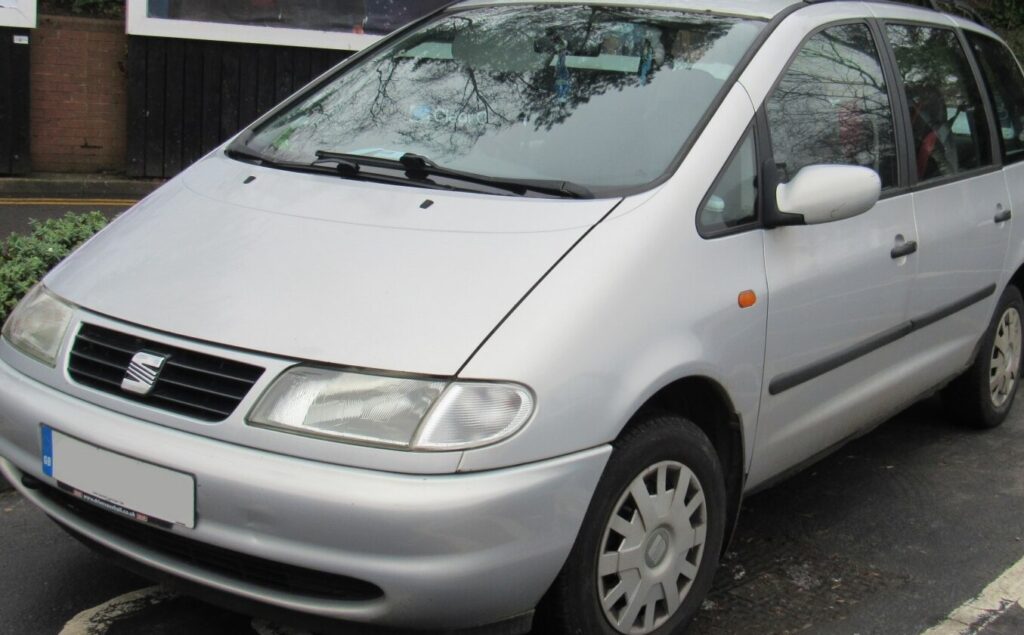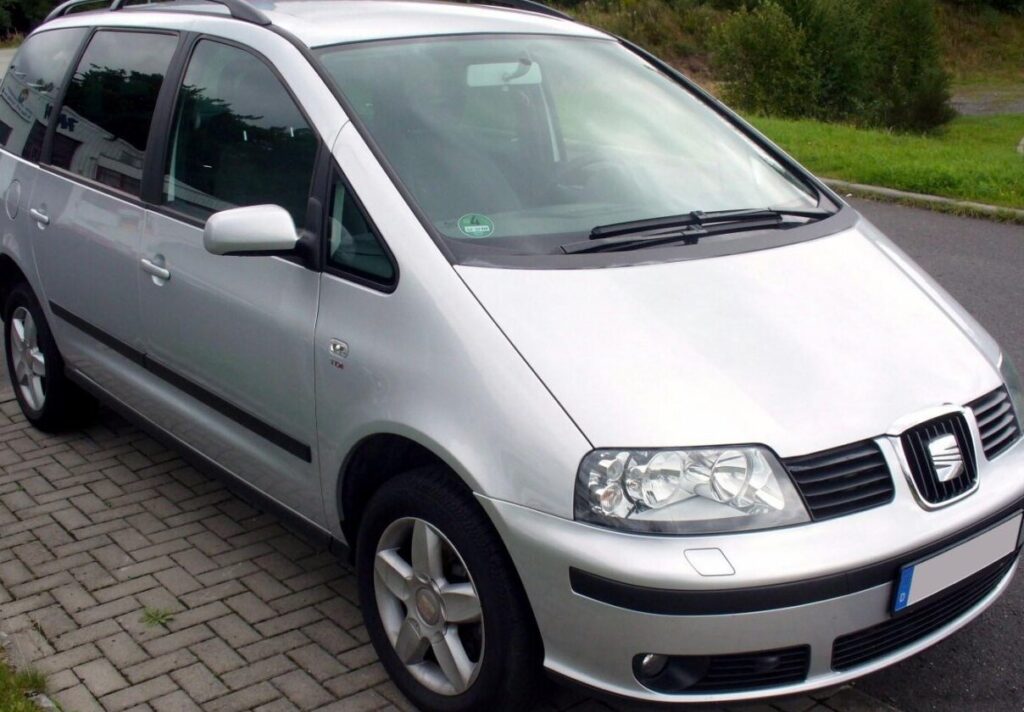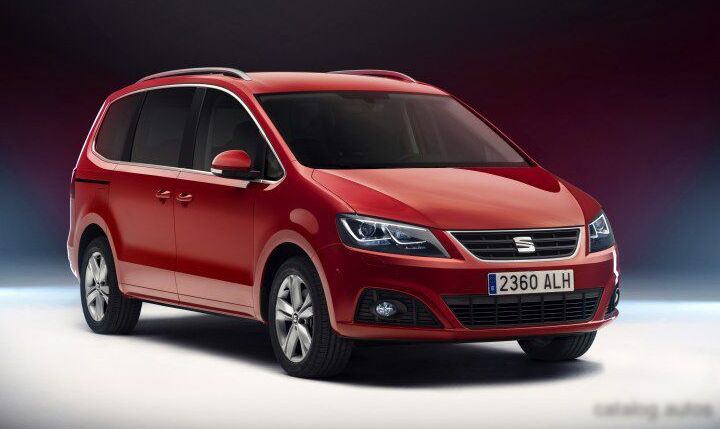
The Seat Alhambra II (7N), particularly the facelifted version introduced in 2015, represents Seat’s entry into the large MPV (Multi-Purpose Vehicle) segment. Produced from 2019 to 2020 in this specific configuration, the 2.0 TDI 177 horsepower model with a dual-clutch gearbox (DSG) aimed to provide a balance of practicality, efficiency, and performance for families. This generation Alhambra shared its platform and much of its engineering with the Volkswagen Sharan, reflecting the close ties between the brands within the Volkswagen Group. The 7N series was a significant update to the original Alhambra, offering improved styling, technology, and a more refined driving experience.
Technical Specifications
| Brand | Seat |
| Model | Alhambra |
| Generation | Alhambra II (7N, facelift 2015) |
| Type (Engine) | 2.0 TDI (177 Hp) DSG |
| Start of production | 2019 |
| End of production | 2020 |
| Powertrain Architecture | Internal Combustion engine |
| Body type | Minivan, MPV |
| Seats | 5-7 |
| Doors | 5 |
| Fuel Type | Diesel |
| Acceleration 0 – 100 km/h | 8.9 sec |
| Acceleration 0 – 62 mph | 8.9 sec |
| Acceleration 0 – 60 mph | 8.5 sec |
| Maximum speed | 213 km/h (132.35 mph) |
| Emission standard | Euro 6d-Temp |
| Weight-to-power ratio | 9.8 kg/Hp, 102.4 Hp/tonne |
| Weight-to-torque ratio | 4.6 kg/Nm, 219.8 Nm/tonne |
| Power | 177 Hp |
| Power per litre | 89.9 Hp/l |
| Torque | 380 Nm (280.27 lb.-ft.) |
| Engine layout | Front, Transverse |
| Engine Model/Code | DLUB |
| Engine displacement | 1968 cm3 (120.09 cu. in.) |
| Number of cylinders | 4 |
| Engine configuration | Inline |
| Cylinder Bore | 81 mm (3.19 in.) |
| Piston Stroke | 95.5 mm (3.76 in.) |
| Compression ratio | 16:1 |
| Number of valves per cylinder | 4 |
| Fuel injection system | Diesel Commonrail |
| Engine aspiration | Turbocharger, Intercooler |
| Engine oil capacity | 4.7 l (4.97 US qt | 4.14 UK qt) |
| Coolant | 8 l (8.45 US qt | 7.04 UK qt) |
| Kerb Weight | 1729-1770 kg (3811.79 – 3902.18 lbs.) |
| Max. weight | 2400-2550 kg (5291.09 – 5621.79 lbs.) |
| Max load | 671-780 kg (1479.3 – 1719.61 lbs.) |
| Trunk (boot) space – maximum | 2430 l (85.81 cu. ft.) |
| Fuel tank capacity | 70 l (18.49 US gal | 15.4 UK gal) |
| Permitted trailer load with brakes (8%) | 2400 kg (5291.09 lbs.) |
| Permitted trailer load with brakes (12%) | 2200 kg (4850.17 lbs.) |
| Permitted trailer load without brakes | 750 kg (1653.47 lbs.) |
| Length | 4854 mm (191.1 in.) |
| Width | 1904 mm (74.96 in.) |
| Width including mirrors | 2081 mm (81.93 in.) |
| Height | 1740 mm (68.5 in.) |
| Wheelbase | 2919 mm (114.92 in.) |
| Front track | 1569 mm (61.77 in.) |
| Rear (Back) track | 1617 mm (63.66 in.) |
| Minimum turning circle | 11.9 m (39.04 ft.) |
| Drivetrain Architecture | Front wheel drive |
| Number of gears and type of gearbox | 6 gears, automatic transmission DSG |
| Front suspension | Independent type McPherson |
| Front brakes | Ventilated discs, 314 mm |
| Rear brakes | Disc, 282 mm |
| Steering type | Steering rack and pinion |
| Power steering | Hydraulic Steering |
| Tires size | 225/50 R17 98H; 225/50 R17 98V; 225/45 R18 95W |
| Wheel rims size | 7.0J x 17; 7.5J x 18 |
Powertrain & Engine Architecture
The heart of the Alhambra 2.0 TDI was the DLUB engine code, a 1968cc inline four-cylinder diesel engine. This engine utilized common rail direct injection, delivering fuel at extremely high pressure for improved combustion efficiency and reduced emissions. A turbocharger with an intercooler further enhanced performance, boosting power output to 177 horsepower and 380 Nm (280 lb-ft) of torque. The engine featured four valves per cylinder and a compression ratio of 16:1. The dual-clutch gearbox (DSG) was a crucial component, offering smooth and rapid gear changes compared to a traditional automatic transmission. The DSG typically featured six forward gears, optimizing both fuel economy and acceleration.
Driving Characteristics
The 177 hp 2.0 TDI with the DSG transmission provided a respectable driving experience for a large MPV. Acceleration from 0 to 60 mph took around 8.5 seconds, which was adequate for everyday driving and overtaking maneuvers. The DSG transmission contributed to a responsive feel, and the engine delivered a broad torque curve, making it easy to maintain speed on highways. Compared to the lower-powered 1.6 TDI versions, the 2.0 TDI offered significantly more punch, especially when fully loaded with passengers and luggage. While not a sports car, the Alhambra 2.0 TDI provided a comfortable and capable driving experience. The gear ratios were tuned for a balance between fuel efficiency and performance, prioritizing smooth cruising over outright acceleration.
Equipment & Trim Levels
The Alhambra 2.0 TDI typically came well-equipped, reflecting its position as a family vehicle. Standard features often included air conditioning, power windows, central locking, and an audio system with Bluetooth connectivity. Higher trim levels added features such as leather upholstery, a navigation system, parking sensors, and a panoramic sunroof. Safety features were also comprehensive, including ABS, electronic stability control, and multiple airbags. The interior design was functional and spacious, with a focus on practicality and comfort. The seats were designed to accommodate adults comfortably, and the flexible seating configuration allowed for a variety of cargo and passenger arrangements.
Chassis & Braking
The Alhambra II utilized an independent McPherson strut suspension at the front and a multi-link suspension at the rear, providing a comfortable ride and good handling characteristics. The front brakes were ventilated discs measuring 314mm, while the rear brakes were solid discs measuring 282mm. ABS (Anti-lock Braking System) was standard, enhancing braking performance and stability. The steering was a hydraulic rack and pinion system, offering precise control and feedback. Stabilizer bars were fitted to both the front and rear axles to reduce body roll during cornering.
Market Reception & Comparison
The Seat Alhambra 2.0 TDI DSG was generally well-received by automotive critics. It was praised for its spacious interior, comfortable ride, and efficient engine. However, some reviewers noted that the styling was somewhat conservative compared to other MPVs on the market. Compared to the Volkswagen Sharan, which shared the same platform, the Alhambra often offered a slightly more affordable price point. The 2.0 TDI engine provided a good balance of performance and fuel economy, making it a popular choice for families who needed a versatile and practical vehicle. Fuel economy typically ranged from 35 to 45 mpg on a combined cycle, depending on driving conditions.
Legacy
The Seat Alhambra II, including the 2.0 TDI DSG variant, has proven to be a relatively reliable vehicle in the long term. The 2.0 TDI engine is known for its durability, although regular maintenance is essential to prevent issues with the turbocharger and fuel injection system. The DSG transmission can be prone to wear and tear, particularly if not serviced properly. In the used car market, the Alhambra 2.0 TDI DSG remains a popular choice for families seeking a spacious and practical MPV. Its combination of comfort, efficiency, and reliability makes it a compelling option, and well-maintained examples can still provide many years of service.