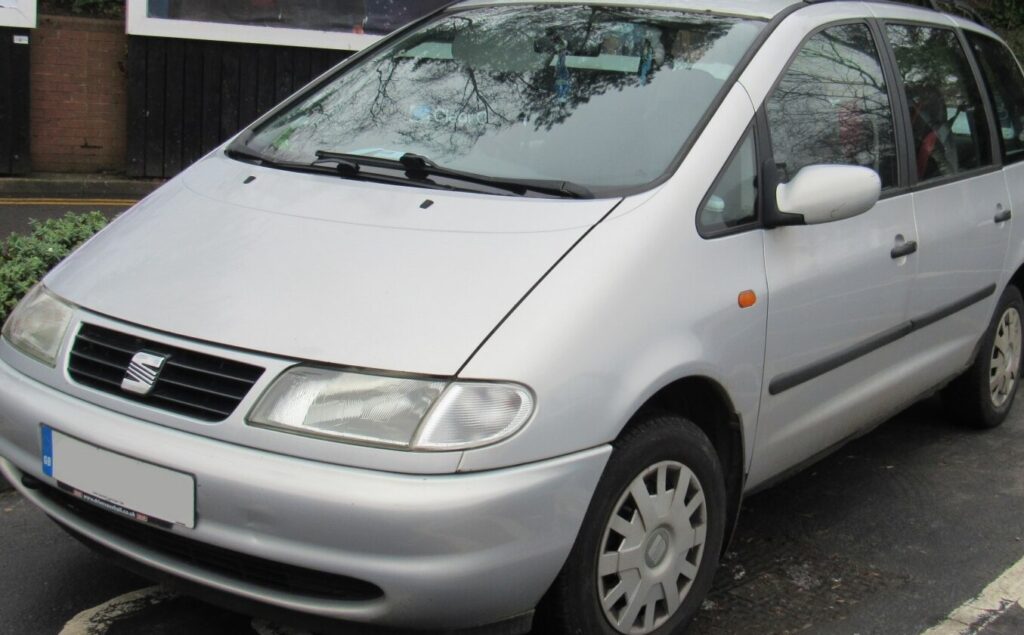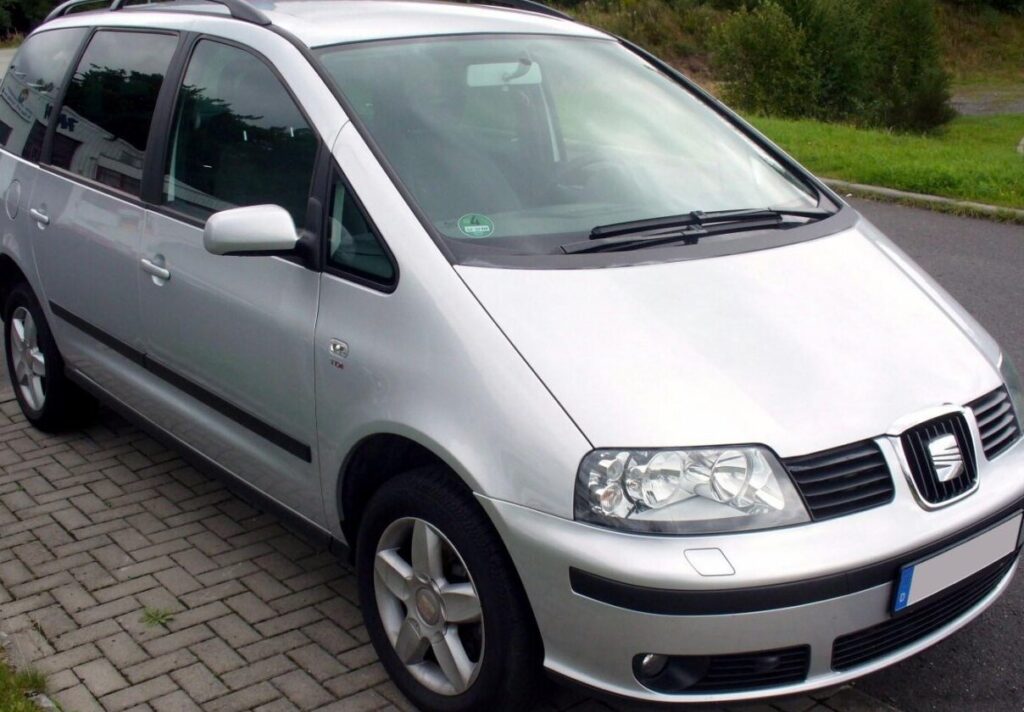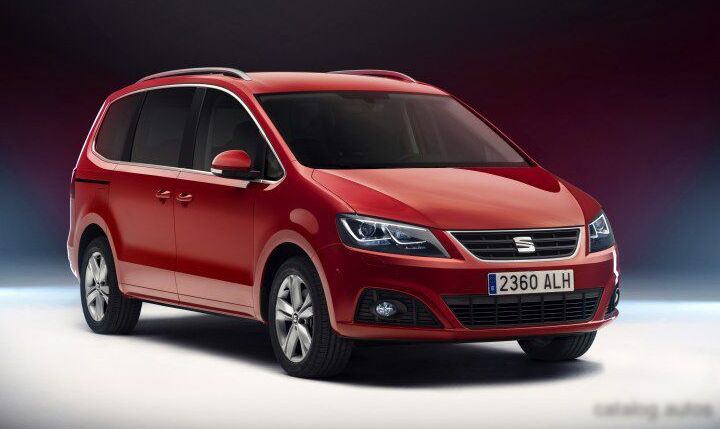
The Seat Alhambra II (7N), particularly the facelifted version introduced in May 2015, represents Seat’s entry into the large MPV (Multi-Purpose Vehicle) segment. Built in collaboration with Volkswagen – sharing a platform and many components with the Volkswagen Sharan – the Alhambra aimed to provide a spacious and practical vehicle for families. Production of this specific 2.0 TDI 184 horsepower variant with a DSG (Direct-Shift Gearbox) transmission ran from 2015 until 2018. This model occupied a mid-to-upper position within the Alhambra lineup, offering a balance of performance, fuel efficiency, and features. It was primarily marketed in Europe, where large MPVs remained popular for their versatility.
Technical Specifications
| Brand | Seat |
| Model | Alhambra |
| Generation | Alhambra II (7N, facelift 2015) |
| Type (Engine) | 2.0 TDI (184 Hp) DSG |
| Start of production | May, 2015 |
| End of production | 2018 |
| Powertrain Architecture | Internal Combustion engine |
| Body type | Minivan, MPV |
| Seats | 5 |
| Doors | 5 |
| Fuel consumption (combined) | 5.3 l/100 km (44.4 US mpg, 53.3 UK mpg, 18.9 km/l) |
| CO2 emissions | 138 g/km |
| Fuel Type | Diesel |
| Acceleration 0 – 100 km/h | 8.9 sec |
| Acceleration 0 – 62 mph | 8.9 sec |
| Acceleration 0 – 60 mph | 8.5 sec |
| Maximum speed | 213 km/h (132.35 mph) |
| Emission standard | Euro 6 |
| Weight-to-power ratio | 9.4 kg/Hp, 106.4 Hp/tonne |
| Weight-to-torque ratio | 4.6 kg/Nm, 219.8 Nm/tonne |
| Power | 184 Hp @ 3500-4000 rpm |
| Power per litre | 93.5 Hp/l |
| Torque | 380 Nm @ 1750-3000 rpm (280.27 lb.-ft. @ 1750-3000 rpm) |
| Engine layout | Front, Transverse |
| Engine Model/Code | CUWA, DFMA |
| Engine displacement | 1968 cm3 (120.09 cu. in.) |
| Number of cylinders | 4 |
| Engine configuration | Inline |
| Cylinder Bore | 81 mm (3.19 in.) |
| Piston Stroke | 95.5 mm (3.76 in.) |
| Compression ratio | 16:1 |
| Number of valves per cylinder | 4 |
| Fuel injection system | Diesel Commonrail |
| Engine aspiration | Turbocharger, Intercooler |
| Engine oil capacity | 4.6 l (4.86 US qt | 4.05 UK qt) |
| Coolant | 8 l (8.45 US qt | 7.04 UK qt) |
| Kerb Weight | 1729 kg (3811.79 lbs.) |
| Max. weight | 2400 kg (5291.09 lbs.) |
| Max load | 671 kg (1479.3 lbs.) |
| Trunk (boot) space – minimum | 955 l (33.73 cu. ft.) |
| Trunk (boot) space – maximum | 2430 l (85.81 cu. ft.) |
| Fuel tank capacity | 70 l (18.49 US gal | 15.4 UK gal) |
| Length | 4854 mm (191.1 in.) |
| Width | 1904 mm (74.96 in.) |
| Height | 1720 mm (67.72 in.) |
| Wheelbase | 2919 mm (114.92 in.) |
| Front track | 1557-1569 mm (61.3 – 61.77 in.) |
| Rear (Back) track | 1605-1617 mm (63.19 – 63.66 in.) |
| Minimum turning circle | 11.9 m (39.04 ft.) |
| Drivetrain Architecture | Front wheel drive |
| Number of gears and type of gearbox | 6 gears, automatic transmission DSG |
| Front suspension | Independent type McPherson |
| Rear suspension | Independent coil spring |
| Front brakes | Ventilated discs |
| Rear brakes | Disc |
| Tires size | 205/60 R16; 215/60 R16; 225/50 R17; 225/45 R18 |
| Wheel rims size | 16; 17; 18 |
Powertrain & Engine Architecture
The heart of this Alhambra variant is the 2.0-liter TDI engine, specifically utilizing the CUWA or DFMA engine codes. These engines are members of the Volkswagen Group’s modular engine family. The engine employs a common rail direct injection system, delivering fuel at extremely high pressure for optimized combustion. A turbocharger with an intercooler is standard, boosting power and torque output. The engine features four valves per cylinder and a relatively high compression ratio of 16:1, contributing to its efficiency. The 2.0 TDI is a transverse-mounted engine, meaning it’s positioned sideways in the engine bay. The Dual Clutch Gearbox (DSG) is a seven-speed automatic transmission known for its quick and smooth shifts. It operates by utilizing two separate clutches for odd and even gears, allowing for seamless gear changes and improved fuel economy compared to traditional automatic transmissions.
Driving Characteristics
The 184 horsepower and 380 Nm (280 lb-ft) of torque provided by the 2.0 TDI engine and DSG transmission offered a respectable driving experience for a large MPV. Acceleration from 0 to 62 mph (0-100 km/h) took approximately 8.9 seconds. While not sporty, this was sufficient for comfortable highway cruising and overtaking. The DSG transmission contributed to responsive acceleration, and the gear ratios were well-suited for both urban and long-distance driving. Compared to the lower-powered 1.6 TDI versions, the 2.0 TDI offered significantly more punch, especially when fully loaded with passengers and luggage. It also felt more refined than the diesel engines paired with manual transmissions. However, it didn’t match the performance of the higher-end petrol engines available in the Sharan, which prioritized outright speed.
Equipment & Trim Levels
The 2.0 TDI DSG Alhambra typically came with a generous level of standard equipment. This included features like air conditioning, electric windows, central locking, a multi-function steering wheel, and an infotainment system with a touchscreen display. Higher trim levels, such as Style or Reference, added features like alloy wheels, parking sensors, a navigation system, and leather upholstery. Optional extras included a panoramic sunroof, advanced safety systems (like adaptive cruise control and lane assist), and a rear entertainment system. Interior upholstery was typically cloth on base models, with leather options available on higher trims.
Chassis & Braking
The Alhambra II utilized an independent McPherson strut suspension at the front and an independent coil spring suspension at the rear. This setup provided a comfortable ride quality, even on uneven surfaces. The front brakes were ventilated discs, offering good stopping power, while the rear brakes were solid discs. ABS (Anti-lock Braking System) was standard. The steering was electric power-assisted, providing a light and easy steering feel. Stabilizer bars were fitted to both the front and rear axles to reduce body roll during cornering.
Market Reception & Comparison
The Seat Alhambra II 2.0 TDI DSG was generally well-received by automotive critics. It was praised for its spacious interior, comfortable ride, and fuel efficiency. The DSG transmission was also a highlight, offering smooth and responsive gear changes. Compared to other MPVs in its class, the Alhambra offered a good value proposition, often undercutting competitors in terms of price. The 2.0 TDI engine provided a good balance of performance and economy, making it a popular choice for families who needed a versatile vehicle. However, some critics noted that the interior design was somewhat understated compared to more premium MPVs.
Legacy
The 2.0 TDI engine, in various iterations, has proven to be a reliable and durable powertrain. While early versions of the common rail diesel engines experienced some issues with diesel particulate filters (DPF) and injector failures, these were largely addressed in later revisions. The DSG transmission, while generally reliable, can require more frequent servicing than traditional automatic transmissions. Today, used examples of the Alhambra II 2.0 TDI DSG are readily available and represent a relatively affordable option for those seeking a spacious and practical MPV. Maintenance costs are generally reasonable, and parts availability is good due to the shared components with Volkswagen models. The Alhambra remains a popular choice for families and those who require a versatile vehicle with plenty of space.