
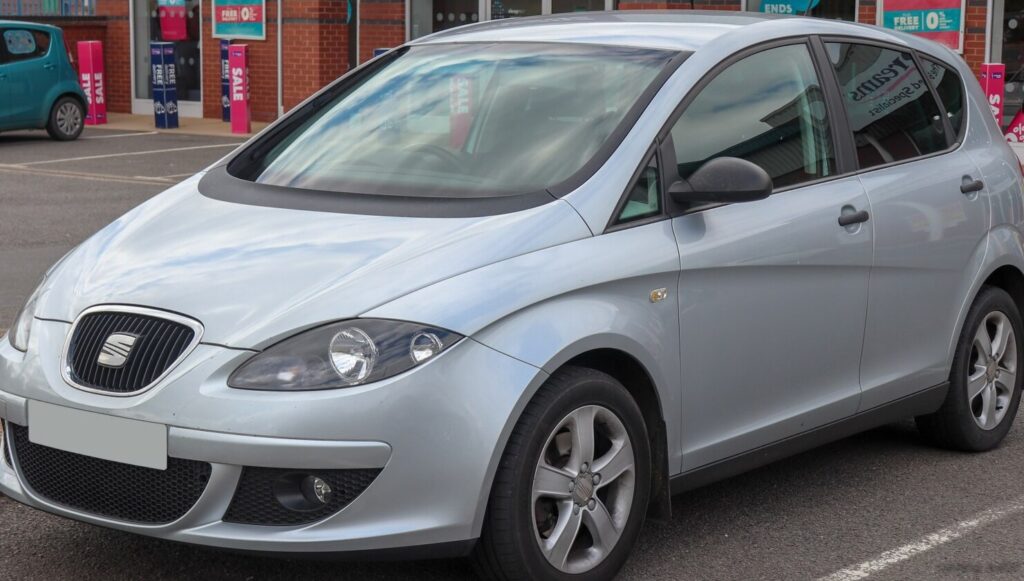
The SEAT Altea (5P) 1.4 MPI, producing 85 horsepower, was a key variant in the first generation of the Altea model range, manufactured between 2006 and 2009. Positioned as the entry-level engine option, it aimed to provide affordable access to the Altea’s distinctive styling and practical, compact MPV (Multi-Purpose Vehicle) format. The Altea, launched in 2004, represented SEAT’s attempt to carve out a niche in the increasingly popular segment of sporty, yet family-oriented vehicles, competing with models like the Renault Scenic and Opel Zafira, but with a more design-focused approach. This 1.4 MPI version was primarily targeted at buyers prioritizing fuel economy and lower running costs over outright performance.
Technical Specifications
| Brand | Seat |
| Model | Altea |
| Generation | Altea (5P) |
| Type (Engine) | 1.4 MPI (85 Hp) |
| Start of production | May, 2006 |
| End of production | 2009 |
| Powertrain Architecture | Internal Combustion engine |
| Body type | Minivan |
| Seats | 5 |
| Doors | 5 |
| Fuel consumption (urban) | 9.7 l/100 km (24.2 US mpg) |
| Fuel consumption (extra urban) | 5.8 l/100 km (40.6 US mpg) |
| Fuel consumption (combined) | 7.3 l/100 km (32.2 US mpg) |
| Fuel Type | Petrol (Gasoline) |
| Acceleration 0 – 100 km/h | 14.8 sec |
| Acceleration 0 – 62 mph | 14.8 sec |
| Acceleration 0 – 60 mph | 14.1 sec |
| Maximum speed | 169 km/h (105.01 mph) |
| Weight-to-power ratio | 15.5 kg/Hp |
| Weight-to-torque ratio | 10 kg/Nm |
| Power | 85 Hp @ 5000 rpm |
| Torque | 132 Nm @ 3800 rpm (97.36 lb.-ft. @ 3800 rpm) |
| Engine layout | Front, Transverse |
| Engine Model/Code | BXW |
| Engine displacement | 1390 cm3 (84.82 cu. in.) |
| Number of cylinders | 4 |
| Engine configuration | Inline |
| Cylinder Bore | 76.5 mm (3.01 in.) |
| Piston Stroke | 75.6 mm (2.98 in.) |
| Compression ratio | 10.5:1 |
| Number of valves per cylinder | 4 |
| Fuel injection system | Multi-port manifold injection |
| Engine aspiration | Naturally aspirated engine |
| Valvetrain | OHC |
| Engine oil capacity | 3.2 l (3.38 US qt | 2.82 UK qt) |
| Coolant | 7.5 l (7.93 US qt | 6.6 UK qt) |
| Kerb Weight | 1320 kg (2910.1 lbs.) |
| Max. weight | 1920 kg (4232.88 lbs.) |
| Max load | 600 kg (1322.77 lbs.) |
| Trunk (boot) space – minimum | 409 l (14.44 cu. ft.) |
| Trunk (boot) space – maximum | 409 l (14.44 cu. ft.) |
| Fuel tank capacity | 55 l (14.53 US gal | 12.1 UK gal) |
| Length | 4280 mm (168.5 in.) |
| Width | 1768 mm (69.61 in.) |
| Height | 1568 mm (61.73 in.) |
| Wheelbase | 2578 mm (101.5 in.) |
| Front track | 1534 mm (60.39 in.) |
| Rear (Back) track | 1523 mm (59.96 in.) |
| Minimum turning circle | 10.9 m (35.76 ft.) |
| Drivetrain Architecture | Front wheel drive |
| Number of gears | 5 gears, manual transmission |
| Front suspension | Independent, type McPherson with coil spring and anti-roll bar |
| Rear suspension | Several levers and rods |
| Front brakes | Ventilated discs |
| Rear brakes | Disc |
| Assisting systems | ABS (Anti-lock braking system) |
| Steering type | Steering rack and pinion |
| Power steering | Electric Steering |
| Tires size | 205/55 R16 |
| Wheel rims size | 6.5J x 16 |
Powertrain & Engine Architecture
The Altea 1.4 MPI utilized the SEAT BXW engine code, a naturally aspirated 1.4-liter inline-four cylinder engine. This engine was part of the Volkswagen Group’s EA111 family, known for its relatively simple design and focus on fuel efficiency. The BXW featured a multi-point fuel injection system, delivering fuel to each cylinder individually for optimized combustion. The engine employed an overhead camshaft (OHC) valvetrain with four valves per cylinder, contributing to improved breathing and a modest power output. The 85 horsepower and 132 Nm (97 lb-ft) of torque were adequate for everyday driving, but didn’t offer significant performance reserves. The engine was paired with a five-speed manual transmission, which was the standard offering for this variant. While an automatic transmission was available on other Altea models, it wasn’t offered with the 1.4 MPI engine.
Driving Characteristics
The Altea 1.4 MPI offered a comfortable, if uninspiring, driving experience. Acceleration was leisurely, taking approximately 14.8 seconds to reach 62 mph (100 km/h). The engine required frequent downshifts to maintain momentum, particularly when overtaking or climbing hills. Compared to the more powerful 1.8-liter TSI or 2.0-liter TDI variants, the 1.4 MPI felt noticeably underpowered. However, the five-speed manual transmission was light and precise, making it relatively easy to extract the most from the engine. The gear ratios were tuned for fuel economy rather than performance, with a relatively long final drive. The focus was on providing a smooth and economical ride, making it well-suited for urban commuting and longer journeys where outright speed wasn’t a priority.
Equipment & Trim Levels
The 1.4 MPI Altea typically came with a base level of equipment, reflecting its position as the entry-level model. Standard features generally included power steering, central locking, electric front windows, and an ABS anti-lock braking system. Air conditioning was often an optional extra. Interior upholstery was typically cloth, and the dashboard featured a functional, if somewhat basic, design. Optional extras included alloy wheels, a CD stereo system, and rear parking sensors. Higher trim levels, such as the Stylance and Sport, offered more luxurious features like climate control, upgraded upholstery, and sportier styling cues, but were paired with more powerful engines.
Chassis & Braking
The Altea 1.4 MPI utilized a McPherson strut front suspension and a multi-link rear suspension, providing a comfortable and controlled ride. The suspension was tuned for everyday use, prioritizing comfort over sporty handling. Front brakes were ventilated discs, while rear brakes were solid discs. The ABS system provided effective stopping power in emergency situations. The Altea’s chassis was relatively lightweight, helping to offset the engine’s modest power output. Stabilizer bars were fitted to both the front and rear axles to reduce body roll during cornering.
Market Reception & Comparison
The Altea 1.4 MPI was generally well-received by critics as a practical and affordable family car. However, its lack of performance was often cited as a drawback. Compared to the more powerful engine options, the 1.4 MPI offered significantly lower fuel economy, but also a lower purchase price. The 1.8-liter TSI engine provided a noticeable performance boost, but at a higher cost. The 2.0-liter TDI diesel engine offered excellent fuel economy and strong torque, but was more expensive to purchase and maintain. The 1.4 MPI appealed to buyers who prioritized fuel efficiency and affordability over performance, making it a popular choice for urban commuters and families on a budget.
Legacy
The SEAT Altea 1.4 MPI, while not the most exciting variant in the range, proved to be a reliable and economical option for many owners. The EA111 engine family is generally known for its durability, although regular maintenance is essential to prevent issues such as oil leaks and timing chain wear. In the used car market, the 1.4 MPI Altea represents a relatively affordable entry point into Altea ownership. Its simplicity and low running costs make it an attractive option for buyers seeking a practical and dependable family car. While it may not offer the performance of its more powerful siblings, the 1.4 MPI Altea remains a viable option for those prioritizing value and fuel efficiency.
