
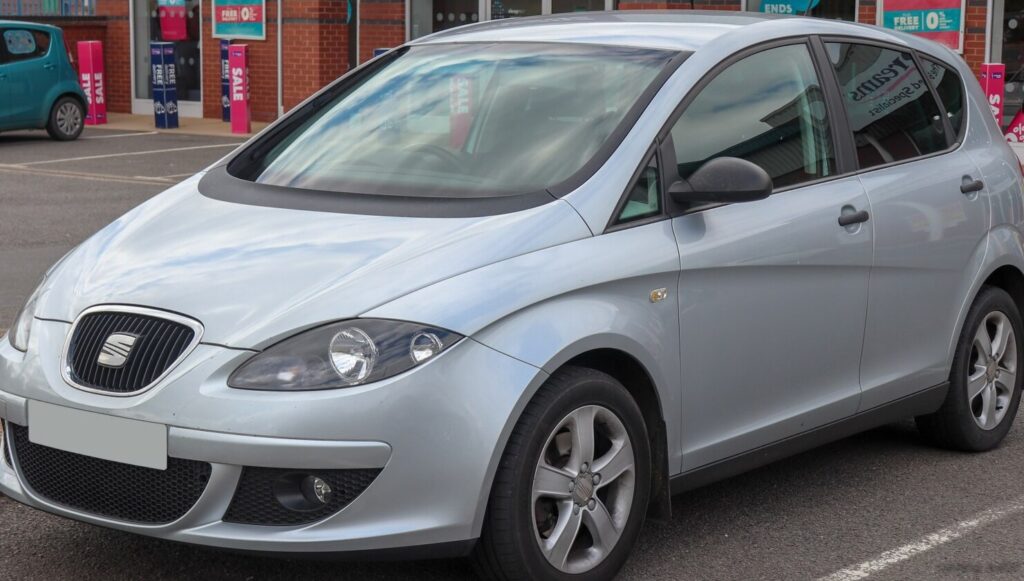
The Seat Altea 2.0 TDI, producing 140 horsepower, was a key variant within the first generation (5P) Altea lineup, manufactured between March 2004 and 2009. Positioned as a mid-range offering, it aimed to balance performance and fuel efficiency within the compact minivan segment. The Altea, as a whole, represented SEAT’s attempt to carve out a niche between traditional hatchbacks and larger MPVs, offering a more stylish and driver-focused alternative. This 2.0 TDI model was particularly important in European markets where diesel engines were, and continue to be, highly favored for their economy and torque.
Technical Specifications
| Brand | Seat |
| Model | Altea |
| Generation | Altea (5P) |
| Type (Engine) | 2.0 TDI (140 Hp) |
| Start of production | March, 2004 |
| End of production | 2009 |
| Powertrain Architecture | Internal Combustion engine |
| Body type | Minivan |
| Seats | 5 |
| Doors | 5 |
| Fuel consumption (urban) | 7.7 l/100 km (30.5 US mpg) |
| Fuel consumption (extra urban) | 4.8 l/100 km (49 US mpg) |
| Fuel consumption (combined) | 5.9 l/100 km (39.9 US mpg) |
| Fuel Type | Diesel |
| Acceleration 0 – 100 km/h | 9.9 sec |
| Acceleration 0 – 62 mph | 9.9 sec |
| Acceleration 0 – 60 mph | 9.4 sec |
| Maximum speed | 201 km/h (124.9 mph) |
| Weight-to-power ratio | 10.2 kg/Hp |
| Weight-to-torque ratio | 4.5 kg/Nm |
| Power | 140 Hp @ 4000 rpm |
| Torque | 320 Nm @ 2500 rpm (236.02 lb.-ft. @ 2500 rpm) |
| Engine layout | Front, Transverse |
| Engine Model/Code | EA188 / BKD |
| Engine displacement | 1968 cm3 (120.09 cu. in.) |
| Number of cylinders | 4 |
| Engine configuration | Inline |
| Cylinder Bore | 81 mm (3.19 in.) |
| Piston Stroke | 95.5 mm (3.76 in.) |
| Compression ratio | 18.5:1 |
| Number of valves per cylinder | 2 |
| Fuel injection system | Pump-nozzle (Unit Injector) |
| Engine aspiration | Turbocharger, Intercooler |
| Engine oil capacity | 3.8 l (4.02 US qt | 3.34 UK qt) |
| Coolant | 8 l (8.45 US qt | 7.04 UK qt) |
| Kerb Weight | 1430 kg (3152.61 lbs.) |
| Max. weight | 2025 kg (4464.36 lbs.) |
| Max load | 595 kg (1311.75 lbs.) |
| Trunk (boot) space – minimum | 409 l (14.44 cu. ft.) |
| Trunk (boot) space – maximum | 409 l (14.44 cu. ft.) |
| Fuel tank capacity | 55 l (14.53 US gal | 12.1 UK gal) |
| Length | 4280 mm (168.5 in.) |
| Width | 1768 mm (69.61 in.) |
| Height | 1568 mm (61.73 in.) |
| Wheelbase | 2578 mm (101.5 in.) |
| Front track | 1534 mm (60.39 in.) |
| Rear (Back) track | 1523 mm (59.96 in.) |
| Minimum turning circle | 10.9 m (35.76 ft.) |
| Drivetrain Architecture | Front wheel drive |
| Number of gears | 6 gears, manual transmission |
| Front suspension | Independent, type McPherson with coil spring and anti-roll bar |
| Rear suspension | Several levers and rods |
| Front brakes | Ventilated discs |
| Rear brakes | Disc |
| Assisting systems | ABS (Anti-lock braking system) |
| Steering type | Steering rack and pinion |
| Power steering | Electric Steering |
| Tires size | 205/55 R16 |
| Wheel rims size | 6.5J x 16 |
Powertrain & Engine Architecture
The heart of the Altea 2.0 TDI was the EA188 engine family, specifically the BKD code. This 1968cc, four-cylinder diesel engine utilized a pump-nozzle (unit injector) fuel injection system, a technology favored by Volkswagen Group at the time for its precise fuel delivery and efficiency. The engine featured a single overhead camshaft (SOHC) operating two valves per cylinder. A turbocharger with an intercooler was employed to boost power output and improve torque across the rev range. The 2.0 TDI produced 140 horsepower at 4000 rpm and a substantial 320 Nm (236 lb-ft) of torque at 2500 rpm. This torque figure was a key selling point, providing strong acceleration and effortless cruising. The engine was transversely mounted in the front of the vehicle, driving the front wheels. The six-speed manual transmission was the standard offering, providing a good balance between performance and fuel economy.
Driving Characteristics
The Altea 2.0 TDI with the manual transmission offered a surprisingly engaging driving experience for a minivan. The ample torque meant that strong acceleration was available from relatively low engine speeds, making overtaking and merging onto highways easy. The six-speed gearbox allowed for efficient cruising at highway speeds, keeping engine revs low and maximizing fuel economy. While not a sports car, the Altea 2.0 TDI felt composed and stable in corners, thanks to its well-tuned suspension. Compared to the lower-powered 1.9 TDI variants, the 2.0 TDI offered a noticeable performance improvement, with quicker acceleration and a more relaxed feel on long journeys. However, it didn’t quite match the responsiveness of the petrol-powered versions, which, while less fuel-efficient, offered a higher revving character.
Equipment & Trim Levels
The 2.0 TDI trim typically included features such as air conditioning, electric front windows, central locking, and an integrated radio/CD player. Higher trim levels, such as the Stylance and Sport, added features like alloy wheels, climate control, rear parking sensors, and upgraded interior upholstery. Interior materials were generally of good quality, although the overall design was functional rather than luxurious. Optional extras included a sunroof, leather seats, and a navigation system. The Altea’s interior was praised for its spaciousness and practicality, with ample room for passengers and luggage.
Chassis & Braking
The Altea 5P utilized an independent McPherson strut suspension setup at the front, providing a comfortable ride and good handling. The rear suspension employed a multi-link system, further enhancing ride quality and stability. The 2.0 TDI models were equipped with ventilated disc brakes at the front and solid disc brakes at the rear. Anti-lock Braking System (ABS) was standard, providing enhanced braking performance and safety. The steering was a rack and pinion system with electric power assistance, offering a light and precise feel.
Market Reception & Comparison
The Seat Altea 2.0 TDI was generally well-received by automotive critics. It was praised for its stylish design, spacious interior, and strong diesel engine. Fuel economy was a major selling point, with the 2.0 TDI achieving around 39.9 US mpg on the combined cycle. Compared to other compact minivans of the time, such as the Renault Scenic and Citroën C4 Picasso, the Altea offered a more driver-focused experience. However, some critics noted that the interior design was somewhat understated and that the ride could be a little firm on rough roads. The 2.0 TDI offered a compelling alternative to the petrol-powered Altea variants, providing a better balance between performance and fuel efficiency.
Legacy
The EA188 2.0 TDI engine, as found in the Altea, proved to be a relatively reliable unit, although early versions were known to have some issues with diesel particulate filter (DPF) clogging. With proper maintenance, these engines can cover high mileages. Today, the Altea 2.0 TDI remains a popular choice in the used car market, particularly for those seeking a practical and fuel-efficient family vehicle. Its combination of style, space, and performance continues to appeal to buyers looking for an alternative to more conventional hatchbacks and MPVs. The Altea, while not a massive sales success, established SEAT as a brand capable of producing stylish and well-engineered vehicles.
