
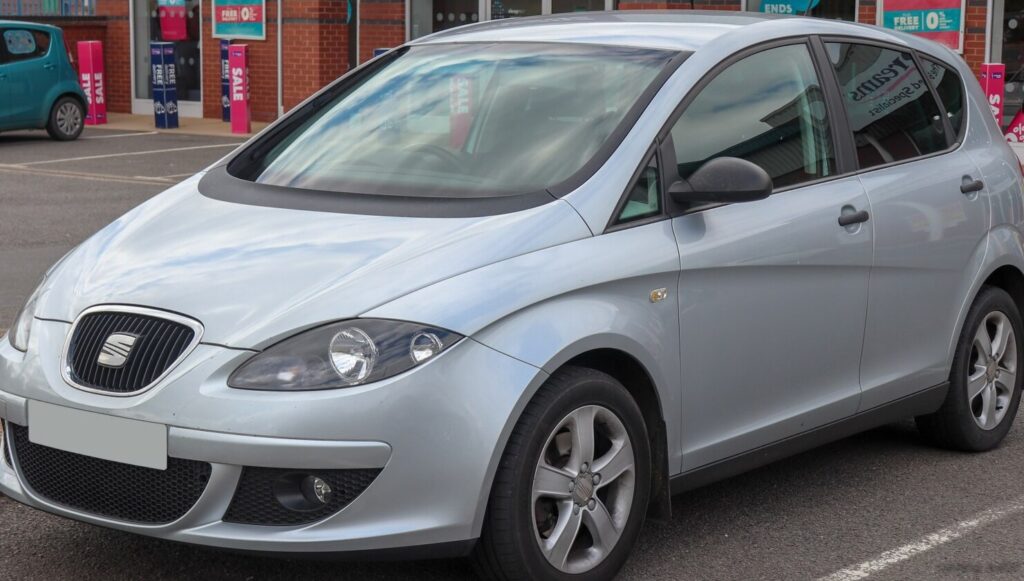
The SEAT Altea FR 2.0 TDI with 170 horsepower, produced between 2004 and 2009, represents a performance-oriented variant of the Altea (5P) compact minivan. Positioned as the flagship trim level, the FR (Formula Racing) model aimed to deliver a more engaging driving experience compared to the standard Altea and the more economical versions. It was primarily marketed in Europe, where SEAT, a subsidiary of the Volkswagen Group, enjoys a strong following. The Altea itself was a unique offering, blending minivan practicality with a slightly sporty aesthetic, attempting to carve out a niche between traditional hatchbacks and larger MPVs.
Technical Specifications
| Brand | Seat |
| Model | Altea |
| Generation | Altea (5P) |
| Type (Engine) | FR 2.0 TDI (170 Hp) DPF |
| Start of production | 2004 |
| End of production | 2009 |
| Powertrain Architecture | Internal Combustion engine |
| Body type | Minivan |
| Seats | 5 |
| Doors | 5 |
| Fuel consumption (urban) | 8 l/100 km (29.4 US mpg) |
| Fuel consumption (extra urban) | 5 l/100 km (47 US mpg) |
| Fuel consumption (combined) | 6.1 l/100 km (38.6 US mpg) |
| Fuel Type | Diesel |
| Acceleration 0 – 100 km/h | 8.6 sec |
| Acceleration 0 – 62 mph | 8.6 sec |
| Acceleration 0 – 60 mph | 8.2 sec |
| Maximum speed | 208 km/h (129.25 mph) |
| Weight-to-power ratio | 8.5 kg/Hp |
| Weight-to-torque ratio | 4.1 kg/Nm |
| Power | 170 Hp @ 4200 rpm |
| Torque | 350 Nm @ 1800 rpm (258.15 lb.-ft. @ 1800 rpm) |
| Engine layout | Front, Transverse |
| Engine Model/Code | EA188 / BMN |
| Engine displacement | 1968 cm3 (120.09 cu. in.) |
| Number of cylinders | 4 |
| Engine configuration | Inline |
| Cylinder Bore | 81 mm (3.19 in.) |
| Piston Stroke | 95.5 mm (3.76 in.) |
| Compression ratio | 18.5:1 |
| Number of valves per cylinder | 4 |
| Fuel injection system | Pump-nozzle (Unit Injector) |
| Engine aspiration | Turbocharger, Intercooler |
| Engine oil capacity | 4.3 l (4.54 US qt | 3.78 UK qt) |
| Coolant | 8 l (8.45 US qt | 7.04 UK qt) |
| Kerb Weight | 1446 kg (3187.88 lbs.) |
| Max. weight | 2041 kg (4499.63 lbs.) |
| Max load | 595 kg (1311.75 lbs.) |
| Trunk (boot) space – minimum | 409 l (14.44 cu. ft.) |
| Trunk (boot) space – maximum | 409 l (14.44 cu. ft.) |
| Fuel tank capacity | 55 l (14.53 US gal | 12.1 UK gal) |
| Length | 4325 mm (170.28 in.) |
| Width | 1768 mm (69.61 in.) |
| Height | 1568 mm (61.73 in.) |
| Wheelbase | 2578 mm (101.5 in.) |
| Front track | 1527 mm (60.12 in.) |
| Rear (Back) track | 1508 mm (59.37 in.) |
| Minimum turning circle | 10.9 m (35.76 ft.) |
| Drivetrain Architecture | Front wheel drive |
| Number of gears | 6 gears, manual transmission |
| Front suspension | Independent, type McPherson with coil spring and anti-roll bar |
| Rear suspension | Several levers and rods |
| Front brakes | Ventilated discs |
| Rear brakes | Disc |
| Assisting systems | ABS (Anti-lock braking system) |
| Steering type | Steering rack and pinion |
| Power steering | Electric Steering |
| Tires size | 225/55 R17 |
| Wheel rims size | 7J x 17 |
INTRODUCTION
The SEAT Altea FR 2.0 TDI, launched in 2004 as part of the Altea 5P (five-door) range, was designed to appeal to buyers seeking a practical yet dynamically capable vehicle. The Altea, built on the Volkswagen Group’s A5 (1HX0) platform – shared with models like the VW Golf Mk5 and Audi A3 – aimed to offer a more stylish and versatile alternative to conventional hatchbacks. The FR trim, signifying ‘Formula Racing’, was SEAT’s performance designation, adding sporty styling cues and a more powerful engine option. The 2.0 TDI engine, a mainstay of the Volkswagen Group’s diesel lineup, provided a balance of performance and fuel efficiency, making it a popular choice in European markets.
Powertrain & Engine Architecture
The heart of the Altea FR 2.0 TDI is the EA188 series 2.0-liter four-cylinder diesel engine, specifically the BMN code. This engine utilizes a common-rail direct injection system, delivering fuel directly into the combustion chamber at extremely high pressure. The BMN engine featured pump-nozzle (Unit Injector) technology, known for its robust nature and ability to handle higher cylinder pressures. A turbocharger with an intercooler further enhances performance by forcing more air into the engine, increasing power output. The engine produces 170 horsepower at 4200 rpm and a substantial 350 Nm (258 lb-ft) of torque at just 1800 rpm. This torque peak, available low in the rev range, contributes to strong acceleration and effortless cruising. The engine also incorporates a Diesel Particulate Filter (DPF) to reduce harmful emissions, a requirement for meeting increasingly stringent European emission standards. The engine is transversely mounted, driving the front wheels through a six-speed manual transmission. This transmission was chosen for its sporty feel and efficient power delivery.
Driving Characteristics
The Altea FR 2.0 TDI offered a noticeably more engaging driving experience than the lower-powered Altea variants. The 170 hp engine and six-speed gearbox provided brisk acceleration, with 0-60 mph times around 8.2 seconds. The readily available torque meant that overtaking maneuvers were executed with ease, and the engine felt responsive even at lower speeds. The gear ratios in the six-speed transmission were well-matched to the engine’s powerband, allowing for comfortable highway cruising and spirited driving on winding roads. Compared to the 1.9 TDI models, the 2.0 TDI FR offered a significant power increase and a more refined driving experience. While not a dedicated sports car, the Altea FR provided a good balance of performance, comfort, and practicality.
Equipment & Trim Levels
The FR trim level came generously equipped as standard. Interior features included sport seats upholstered in a unique fabric pattern, a leather-wrapped steering wheel, and aluminum pedals. The dashboard featured a distinctive instrument cluster with unique graphics. Standard equipment also included automatic climate control, electric windows, and a CD stereo system. Optional extras included a sunroof, parking sensors, and a navigation system. The exterior styling of the FR model was also enhanced with a sporty body kit, including a front spoiler, side skirts, and a rear diffuser. Alloy wheels, typically 17-inch in size, were also standard.
Chassis & Braking
The Altea FR 2.0 TDI featured a McPherson strut front suspension and a multi-link rear suspension, providing a comfortable yet controlled ride. The suspension was slightly stiffer than the standard Altea, contributing to improved handling and reduced body roll. The FR model also benefited from larger brakes compared to the base models, with ventilated discs at the front and solid discs at the rear. Anti-lock Braking System (ABS) was standard. The steering was a rack-and-pinion system with electric power assistance, providing precise and responsive steering feel.
Market Reception & Comparison
The SEAT Altea FR 2.0 TDI was generally well-received by automotive critics. It was praised for its stylish design, spacious interior, and engaging driving experience. The 2.0 TDI engine was lauded for its performance and fuel efficiency. However, some critics noted that the Altea’s styling was somewhat polarizing, and its interior quality wasn’t quite on par with some of its German rivals. Compared to other compact MPVs and hatchbacks, the Altea FR offered a unique blend of practicality and sportiness. Fuel economy was a strong point, with combined figures around 38.6 US mpg. Reliability was generally good, although the DPF system could be prone to issues if the vehicle was primarily used for short journeys.
Legacy
The SEAT Altea FR 2.0 TDI remains a relatively popular choice in the used car market, particularly in Europe. The EA188 2.0 TDI engine is known for its durability and relatively straightforward maintenance, although regular servicing is essential, especially concerning the DPF. The Altea FR’s unique styling and engaging driving dynamics continue to appeal to buyers seeking a practical yet distinctive vehicle. While no longer in production, the Altea FR 2.0 TDI represents a significant chapter in SEAT’s history, showcasing the brand’s commitment to delivering sporty and well-equipped vehicles.
