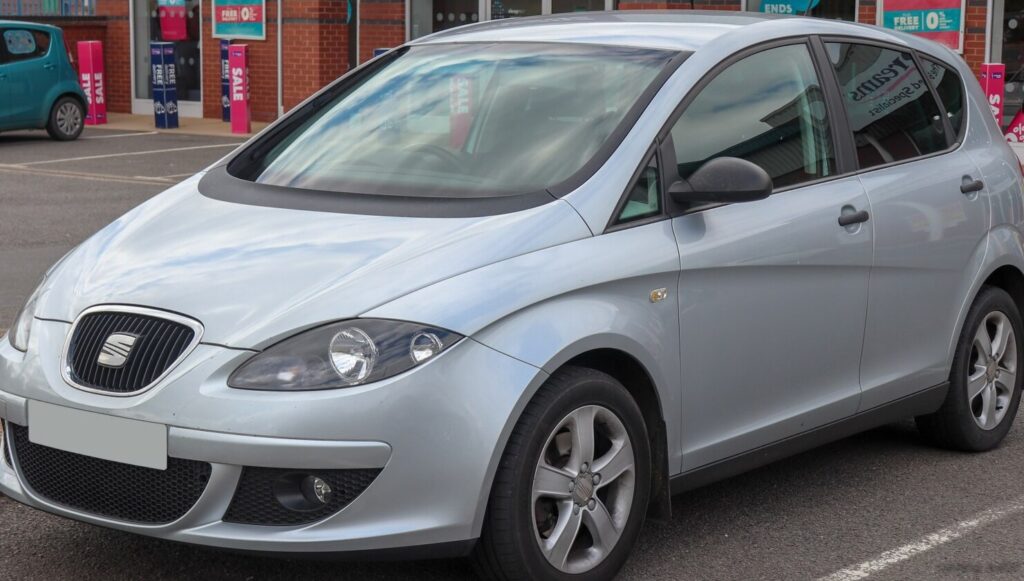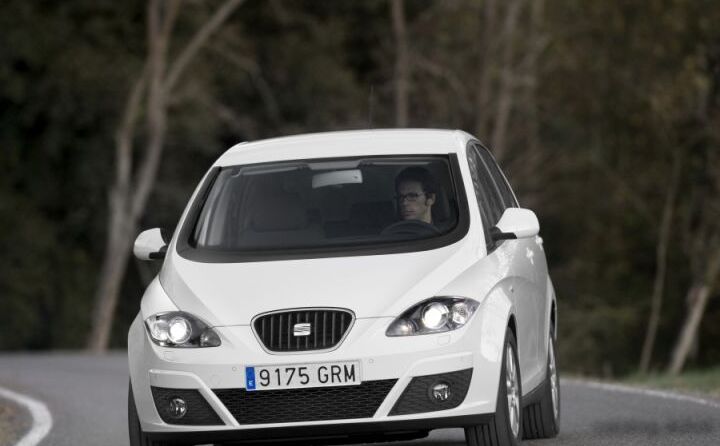
The Seat Altea, particularly the facelifted version introduced in 2009, represented Seat’s entry into the compact multi-purpose vehicle (MPV) segment. Production of the 1.4-liter (85 hp) variant spanned from May 2010 to June 2013. This model occupied the lower end of the Altea range, serving as an accessible and economical option within the broader lineup, which also included more powerful 1.8-liter and diesel variants. The Altea itself was built on the Volkswagen Group’s A5 (PQ35) platform, shared with models like the Volkswagen Golf Mk5 and Škoda Octavia, and aimed to offer a blend of practicality, style, and driving enjoyment. The 2009 facelift brought revised styling, improved interior materials, and updated technology, enhancing the Altea’s appeal in a competitive market.
Technical Specifications
| Brand | Seat |
| Model | Altea |
| Generation | Altea (facelift 2009) |
| Type (Engine) | 1.4 (85 Hp) |
| Start of production | May, 2010 |
| End of production | June, 2013 |
| Powertrain Architecture | Internal Combustion engine |
| Body type | MPV |
| Seats | 5 |
| Doors | 5 |
| Fuel consumption (urban) | 8.6 l/100 km (27.4 US mpg, 32.8 UK mpg, 11.6 km/l) |
| Fuel consumption (extra urban) | 5.4 l/100 km (43.6 US mpg, 52.3 UK mpg, 18.5 km/l) |
| Fuel consumption (combined) | 6.5 l/100 km (36.2 US mpg, 43.5 UK mpg, 15.4 km/l) |
| CO2 emissions | 152 g/km |
| Fuel Type | Petrol (Gasoline) |
| Acceleration 0 – 100 km/h | 15 sec |
| Acceleration 0 – 62 mph | 15 sec |
| Acceleration 0 – 60 mph | 14.3 sec |
| Maximum speed | 169 km/h (105.01 mph) |
| Emission standard | Euro 5 |
| Weight-to-power ratio | 15.7 kg/Hp, 63.7 Hp/tonne |
| Weight-to-torque ratio | 10.1 kg/Nm, 98.9 Nm/tonne |
| Power | 85 Hp @ 5000 rpm |
| Power per litre | 61.2 Hp/l |
| Torque | 132 Nm @ 3800 rpm (97.36 lb.-ft. @ 3800 rpm) |
| Engine layout | Front, Transverse |
| Engine Model/Code | CGGB |
| Engine displacement | 1390 cm3 (84.82 cu. in.) |
| Number of cylinders | 4 |
| Engine configuration | Inline |
| Cylinder Bore | 76.5 mm (3.01 in.) |
| Piston Stroke | 75.6 mm (2.98 in.) |
| Compression ratio | 10.5:1 |
| Number of valves per cylinder | 4 |
| Fuel injection system | Multi-port manifold injection |
| Engine aspiration | Naturally aspirated engine |
| Engine oil capacity | 3.2 l (3.38 US qt | 2.82 UK qt) |
| Coolant | 5.6 l (5.92 US qt | 4.93 UK qt) |
| Kerb Weight | 1335 kg (2943.17 lbs.) |
| Max. weight | 1855 kg (4089.57 lbs.) |
| Max load | 520 kg (1146.4 lbs.) |
| Trunk (boot) space – minimum | 409 l (14.44 cu. ft.) |
| Fuel tank capacity | 55 l (14.53 US gal | 12.1 UK gal) |
| Length | 4282 mm (168.58 in.) |
| Width | 1768 mm (69.61 in.) |
| Height | 1576 mm (62.05 in.) |
| Wheelbase | 2578 mm (101.5 in.) |
| Front track | 1533-1541 mm (60.35 – 60.67 in.) |
| Rear (Back) track | 1503-1517 mm (59.17 – 59.72 in.) |
| Minimum turning circle | 10.7 m (35.1 ft.) |
| Drivetrain Architecture | The Internal combustion engine (ICE) drives the front wheels of the vehicle. |
| Drive wheel | Front wheel drive |
| Number of gears and type of gearbox | 5 gears, manual transmission |
| Front suspension | Independent, type McPherson with coil spring and anti-roll bar |
| Rear suspension | Independent multi-link suspension |
| Front brakes | Ventilated discs |
| Rear brakes | Disc |
| Assisting systems | ABS (Anti-lock braking system) |
| Steering type | Steering rack and pinion |
| Tires size | 195/65 R15 91H; 205/55 R16 91V; 225/45 R17 91W; 225/40 R18 92Y |
| Wheel rims size | 6J x 15; 6.5J x 16; 7J x 17; 7.5J x 18 |
Powertrain & Engine Architecture
The heart of this Altea variant is the 1.4-liter CGGB inline-four cylinder gasoline engine. This engine is part of the Volkswagen Group’s EA111 family, known for its relatively simple design and focus on fuel efficiency. The CGGB utilizes a multi-point fuel injection system, delivering fuel directly into the intake ports. It features a single overhead camshaft (SOHC) operating four valves per cylinder. The engine produces 85 horsepower at 5000 rpm and 132 Nm (97 lb-ft) of torque at 3800 rpm. The engine’s modest output is delivered through a five-speed manual transmission, which was the standard offering for this trim level. While an automatic transmission was available on other Altea models, it wasn’t offered with the 1.4-liter 85 hp engine.
Driving Characteristics
The 1.4-liter Altea is not a performance-oriented vehicle. Acceleration from 0 to 60 mph takes around 14.3 seconds, and its top speed is 169 km/h (105 mph). The engine feels adequate for everyday driving, particularly in urban and suburban environments. However, overtaking maneuvers require careful planning, and the engine can feel strained when fully loaded or climbing hills. The five-speed manual transmission is well-matched to the engine’s characteristics, offering reasonable gear spacing. Compared to the more powerful 1.8-liter TSI variants, the 1.4-liter engine lacks the punch and responsiveness that those models provide. However, it offers a smoother and more predictable power delivery, making it easier to drive for less experienced drivers.
Equipment & Trim Levels
The 1.4-liter Altea typically came with a base level of equipment, focusing on practicality and affordability. Standard features generally included air conditioning, power windows, central locking, and a basic audio system. Safety features such as ABS and front airbags were also standard. Higher trim levels, such as the Stylance and Sport, added features like alloy wheels, climate control, a more advanced audio system, and upgraded interior trim. The 1.4-liter model was often seen as a starting point, with buyers able to add optional extras such as parking sensors, a sunroof, and leather upholstery.
Chassis & Braking
The Altea’s chassis features an independent McPherson strut suspension at the front and an independent multi-link suspension at the rear. This setup provides a comfortable ride quality and decent handling characteristics. The front brakes are ventilated discs, while the rear brakes are solid discs. The steering is a rack-and-pinion system, offering precise and responsive control. The suspension is tuned for comfort rather than outright sportiness, but it provides a stable and predictable driving experience. The weight distribution is reasonably balanced, contributing to the Altea’s overall handling competence.
Market Reception & Comparison
The 1.4-liter Altea was generally well-received as an economical and practical MPV. Critics praised its spacious interior, comfortable ride, and reasonable fuel economy (around 36.2 US mpg combined). However, it was often criticized for its lack of power and somewhat uninspiring driving experience. Compared to other compact MPVs on the market, such as the Renault Scenic and Citroën C4 Picasso, the Altea offered a more driver-focused experience, but lacked the outright practicality and innovative features of some of its rivals. The 1.8-liter TSI variants offered significantly better performance, but at a higher price point. The 1.4-liter model appealed to buyers who prioritized fuel efficiency and affordability over outright performance.
Legacy
The 1.4-liter CGGB engine, while not known for being particularly robust, is generally considered reliable if properly maintained. Common issues include occasional oil leaks and problems with the ignition coils. The Altea itself has developed a reputation as a practical and dependable family car. In the used car market, the 1.4-liter variants are typically the most affordable, making them an attractive option for budget-conscious buyers. However, potential buyers should be aware of the engine’s limitations and ensure that the vehicle has been well-maintained. The Altea, in all its variants, represents a significant chapter in Seat’s history, showcasing the brand’s ability to produce stylish, practical, and well-engineered vehicles.