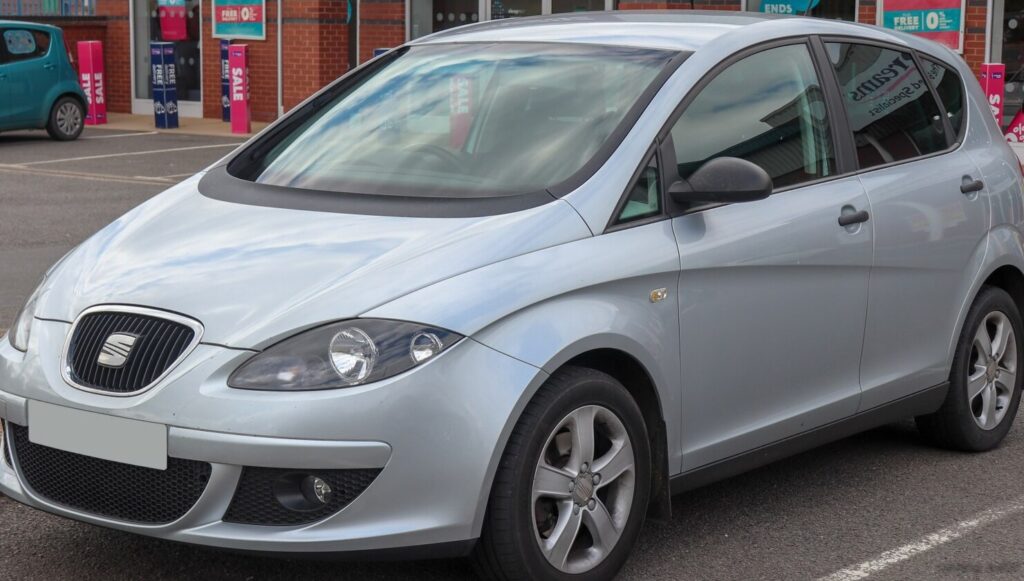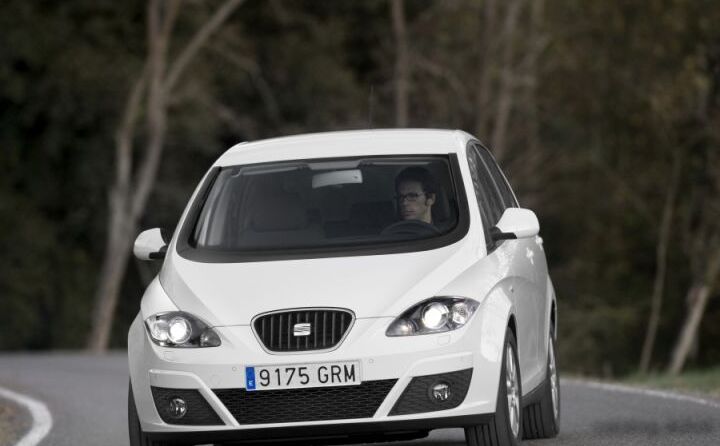
The Seat Altea, specifically the 1.6-liter (102 horsepower) Ethanol variant produced from May 2010 to June 2013, represents a unique offering within the Altea range. This version of the Altea, part of the facelifted second generation (introduced in 2009), was primarily aimed at markets where ethanol fuel was readily available and incentivized, offering a more economical and environmentally conscious alternative to traditional gasoline power. Positioned as an entry-level to mid-range option, it provided a practical and affordable MPV choice for families and individuals seeking versatility and fuel efficiency. The Altea itself was Seat’s entry into the compact MPV segment, designed to compete with vehicles like the Renault Scenic and Citroën C4 Picasso, offering a distinctive, somewhat sporty aesthetic compared to its more conservatively styled rivals.
Technical Specifications
| Brand | Seat |
| Model | Altea |
| Generation | Altea (facelift 2009) |
| Type (Engine) | 1.6 (102 Hp) Ethanol |
| Start of production | May, 2010 |
| End of production | June, 2013 |
| Powertrain Architecture | Internal Combustion engine |
| Body type | MPV |
| Seats | 5 |
| Doors | 5 |
| Fuel consumption (economy) – urban | 9.9 l/100 km (23.8 US mpg, 28.5 UK mpg, 10.1 km/l) |
| Fuel consumption (economy) – urban (Ethanol – E85) | 13.3 l/100 km |
| Fuel consumption (economy) – extra urban | 6.0 l/100 km (39.2 US mpg, 47.1 UK mpg, 16.7 km/l) |
| Fuel consumption (economy) – extra urban (Ethanol – E85) | 8.2 l/100 km |
| Fuel consumption (economy) – combined | 7.4 l/100 km (31.8 US mpg, 38.2 UK mpg, 13.5 km/l) |
| Fuel consumption (economy) – combined (Ethanol – E85) | 10.1 l/100 km |
| CO2 emissions | 172 g/km |
| CO2 emissions (Ethanol – E85) | 166 g/km |
| Fuel Type | Petrol / Ethanol – E85 |
| Acceleration 0 – 100 km/h | 12.8 sec |
| Acceleration 0 – 62 mph | 12.8 sec |
| Acceleration 0 – 60 mph | 12.2 sec |
| Maximum speed | 181 km/h (112.47 mph) |
| Emission standard | Euro 5 |
| Weight-to-power ratio | 13.7 kg/Hp, 73.1 Hp/tonne |
| Weight-to-torque ratio | 9.4 kg/Nm, 106.1 Nm/tonne |
| Power | 102 Hp @ 5600 rpm |
| Power per litre | 63.9 Hp/l |
| Torque | 148 Nm @ 3800 rpm (109.16 lb.-ft. @ 3800 rpm) |
| Engine layout | Front, Transverse |
| Engine Model/Code | CMXA |
| Engine displacement | 1595 cm3 (97.33 cu. in.) |
| Number of cylinders | 4 |
| Engine configuration | Inline |
| Cylinder Bore | 81 mm (3.19 in.) |
| Piston Stroke | 77.4 mm (3.05 in.) |
| Compression ratio | 10.3:1 |
| Number of valves per cylinder | 2 |
| Fuel injection system | Multi-port manifold injection |
| Engine aspiration | Naturally aspirated engine |
| Engine oil capacity | 4.5 l (4.76 US qt | 3.96 UK qt) |
| Coolant | 8 l (8.45 US qt | 7.04 UK qt) |
| Kerb Weight | 1395 kg (3075.45 lbs.) |
| Max. weight | 1920 kg (4232.88 lbs.) |
| Max load | 525 kg (1157.43 lbs.) |
| Trunk (boot) space – minimum | 409 l (14.44 cu. ft.) |
| Fuel tank capacity | 55 l (14.53 US gal | 12.1 UK gal) |
| Length | 4282 mm (168.58 in.) |
| Width | 1768 mm (69.61 in.) |
| Height | 1576 mm (62.05 in.) |
| Wheelbase | 2578 mm (101.5 in.) |
| Front track | 1533-1541 mm (60.35 – 60.67 in.) |
| Rear (Back) track | 1503-1517 mm (59.17 – 59.72 in.) |
| Minimum turning circle | 10.7 m (35.1 ft.) |
| Drivetrain Architecture | The Internal combustion engine (ICE) drives the front wheels of the vehicle. |
| Drive wheel | Front wheel drive |
| Number of gears and type of gearbox | 5 gears, manual transmission |
| Front suspension | Independent, type McPherson with coil spring and anti-roll bar |
| Rear suspension | Independent multi-link suspension |
| Front brakes | Ventilated discs |
| Rear brakes | Disc |
| Assisting systems | ABS (Anti-lock braking system) |
| Steering type | Steering rack and pinion |
| Tires size | 195/65 R15 91H; 205/55 R16 91V; 225/45 R17 91W; 225/40 R18 92Y |
| Wheel rims size | 6J x 15; 6.5J x 16; 7J x 17; 7.5J x 18 |
Powertrain & Engine Architecture
The heart of this Altea variant is the CMXA engine, a 1.6-liter inline-four cylinder gasoline engine specifically designed to run on both petrol and E85 ethanol fuel. This engine belongs to the EA827 family, known for its relatively simple design and durability. The CMXA features multi-point fuel injection, delivering fuel directly into the intake ports. The engine utilizes a single overhead camshaft (SOHC) valvetrain with two valves per cylinder. The engine’s ability to run on E85 requires specific modifications to the fuel system, including ethanol-resistant fuel lines and a fuel pump capable of handling the corrosive nature of ethanol. The 5-speed manual transmission was the standard offering, providing a balance between fuel economy and drivability. The transmission’s gear ratios were tuned for efficiency and everyday usability, rather than outright performance.
Driving Characteristics
The 102 horsepower output of the 1.6-liter engine, coupled with the five-speed manual transmission, resulted in a driving experience focused on practicality and fuel economy. Acceleration from 0-60 mph took around 12.2 seconds, and top speed was approximately 112 mph. While not particularly sporty, the engine provided adequate power for everyday driving situations, including highway cruising and city commuting. The manual transmission allowed for a degree of driver engagement, but the relatively long gear ratios prioritized fuel efficiency over spirited acceleration. Compared to the more powerful 2.0-liter TDI diesel variants, the 1.6-liter petrol engine felt noticeably less responsive, particularly when fully loaded. However, it offered a smoother and quieter driving experience than the diesel, and the E85 compatibility provided a potential cost saving for drivers in regions with affordable ethanol fuel.
Equipment & Trim Levels
The 1.6-liter Ethanol Altea typically came equipped with a reasonable level of standard features. These included air conditioning, power windows, central locking, and an audio system with MP3 compatibility. Safety features such as ABS brakes, front airbags, and seatbelt pretensioners were also standard. Higher trim levels, such as the Stylance, added features like alloy wheels, climate control, rear parking sensors, and upgraded interior trim. Optional extras included a sunroof, navigation system, and leather upholstery. The interior generally featured durable, if somewhat basic, plastics and fabrics, reflecting the car’s positioning as a value-oriented MPV.
Chassis & Braking
The Altea’s chassis featured independent suspension all around, with a McPherson strut setup at the front and a multi-link system at the rear. This provided a comfortable ride quality and decent handling characteristics. The front brakes were ventilated discs, while the rear brakes were solid discs. The steering was a rack-and-pinion system, offering reasonable precision and feedback. The suspension was tuned for comfort rather than outright sportiness, prioritizing ride quality over sharp handling. Stabilizer bars were fitted to both the front and rear axles to reduce body roll during cornering.
Market Reception & Comparison
The Seat Altea 1.6 Ethanol was generally well-received as a practical and affordable MPV, particularly in markets where ethanol fuel was readily available. Critics praised its spacious interior, comfortable ride, and fuel efficiency when running on E85. However, some reviewers noted its relatively modest performance and somewhat uninspired styling. Compared to the diesel variants, the 1.6-liter petrol engine offered lower torque and slightly higher running costs when using petrol. However, the potential for cost savings with E85 fuel made it an attractive option for budget-conscious buyers. The Altea faced competition from established MPV players like the Renault Scenic, Citroën C4 Picasso, and Volkswagen Touran.
Legacy
The Seat Altea 1.6 Ethanol, while not a high-performance variant, represents an interesting chapter in Seat’s history, showcasing the brand’s willingness to explore alternative fuel options. The CMXA engine proved to be a relatively reliable unit, and well-maintained examples continue to be found on the used car market today. However, the long-term durability of the ethanol-compatible fuel system components should be carefully inspected when considering a used example. The Altea, as a whole, didn’t achieve the same sales success as some of its rivals, but it remains a distinctive and practical MPV with a loyal following. Its blend of practicality, affordability, and E85 compatibility made it a unique offering in its segment.