Technical Specifications
| Brand | Seat |
| Model | Altea |
| Generation | Altea (facelift 2009) |
| Type (Engine) | 1.6 TDI (105 Hp) Ecomotive start/stop |
| Start of production | October, 2009 |
| End of production | August, 2015 |
| Powertrain Architecture | Internal Combustion engine |
| Body type | MPV |
| Seats | 5 |
| Doors | 5 |
| Fuel consumption (urban) | 5.2 l/100 km (45.2 US mpg, 54.3 UK mpg, 19.2 km/l) |
| Fuel consumption (extra urban) | 4.1 l/100 km (57.4 US mpg, 68.9 UK mpg, 24.4 km/l) |
| Fuel consumption (combined) | 4.5 l/100 km (52.3 US mpg, 62.8 UK mpg, 22.2 km/l) |
| CO2 emissions | 119 g/km |
| Fuel Type | Diesel |
| Acceleration 0 – 100 km/h | 12.2 sec |
| Acceleration 0 – 62 mph | 12.2 sec |
| Acceleration 0 – 60 mph | 11.6 sec |
| Maximum speed | 183 km/h (113.71 mph) |
| Emission standard | Euro 5 |
| Weight-to-power ratio | 13.8 kg/Hp, 72.4 Hp/tonne |
| Weight-to-torque ratio | 5.8 kg/Nm, 172.4 Nm/tonne |
| Power | 105 Hp @ 4400 rpm |
| Power per litre | 65.7 Hp/l |
| Torque | 250 Nm @ 1500-2500 rpm (184.39 lb.-ft. @ 1500-2500 rpm) |
| Engine layout | Front, Transverse |
| Engine Model/Code | CAYC |
| Engine displacement | 1598 cm3 (97.52 cu. in.) |
| Number of cylinders | 4 |
| Engine configuration | Inline |
| Cylinder Bore | 79.5 mm (3.13 in.) |
| Piston Stroke | 80.5 mm (3.17 in.) |
| Compression ratio | 16.5:1 |
| Number of valves per cylinder | 4 |
| Fuel injection system | Diesel Commonrail |
| Engine aspiration | Turbocharger, Intercooler |
| Engine oil capacity | 4.3 l (4.54 US qt | 3.78 UK qt) |
| Kerb Weight | 1450 kg (3196.7 lbs.) |
| Max. weight | 1970 kg (4343.11 lbs.) |
| Max load | 520 kg (1146.4 lbs.) |
| Trunk (boot) space – minimum | 409 l (14.44 cu. ft.) |
| Fuel tank capacity | 55 l (14.53 US gal | 12.1 UK gal) |
| Length | 4282 mm (168.58 in.) |
| Width | 1768 mm (69.61 in.) |
| Height | 1576 mm (62.05 in.) |
| Wheelbase | 2578 mm (101.5 in.) |
| Front track | 1541 mm (60.67 in.) |
| Rear (Back) track | 1517 mm (59.72 in.) |
| Minimum turning circle | 10.7 m (35.1 ft.) |
| Drivetrain Architecture | The Internal combustion engine (ICE) drives the front wheels of the vehicle. |
| Drive wheel | Front wheel drive |
| Number of gears and type of gearbox | 6 gears, manual transmission |
| Front suspension | Independent, type McPherson with coil spring and anti-roll bar |
| Rear suspension | Independent multi-link suspension |
| Front brakes | Ventilated discs |
| Rear brakes | Disc |
| Assisting systems | ABS (Anti-lock braking system) |
| Steering type | Steering rack and pinion |
| Power steering | Electric Steering |
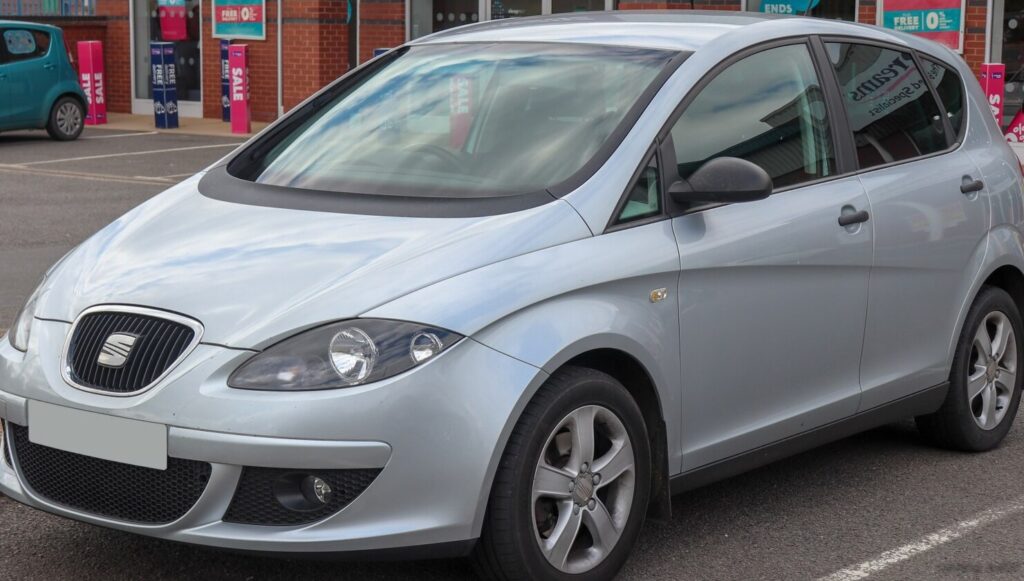
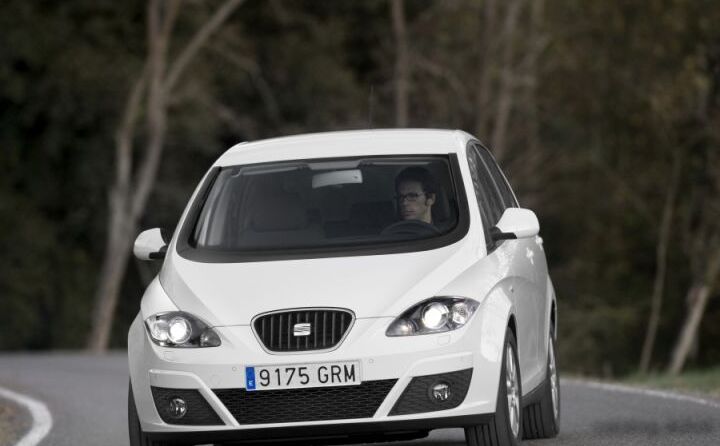
The Seat Altea 1.6 TDI Ecomotive, produced from October 2009 to August 2015, was a significant model within Seat’s lineup during the late 2000s and early 2010s. This variant belongs to the facelifted generation of the Altea, internally known as the 5P platform. Positioned as an economical and practical compact multi-purpose vehicle (MPV), the 1.6 TDI Ecomotive targeted buyers prioritizing fuel efficiency and lower running costs. It served as an accessible entry point into the Altea range, positioned below the more powerful 2.0 TDI models and offering a diesel alternative to the gasoline-powered options.
Powertrain & Engine Architecture
The Altea 1.6 TDI Ecomotive’s core is the CAYC engine code, a 1.6-liter inline-four cylinder diesel engine. This engine is part of the Volkswagen Group’s common rail diesel family, employing direct fuel injection and a turbocharger with intercooling to optimize both power and efficiency. The common rail system, operating at high pressures, allows for precise fuel delivery, improving combustion and reducing emissions. The engine features four valves per cylinder, enhancing airflow and contributing to its power output. A key feature of the Ecomotive designation is the Start/Stop system, which automatically shuts off the engine when the vehicle is stationary – such as at traffic lights – and restarts it instantly when the driver depresses the clutch pedal. This feature significantly reduces fuel consumption in urban driving. The engine is transversely mounted at the front of the vehicle, driving the front wheels through a six-speed manual transmission, chosen to balance fuel economy with acceptable performance.
Driving Characteristics
The 105 horsepower output of the 1.6 TDI, combined with 250 Nm (184 lb-ft) of torque, delivers adequate, though not particularly exciting, performance. Acceleration from 0-60 mph takes approximately 11.6 seconds, with a top speed around 114 mph. The engine’s torque peak, available between 1500-2500 rpm, makes it reasonably responsive in everyday driving, providing enough power for overtaking and highway merging. Compared to the more powerful 2.0 TDI Altea models, the 1.6 TDI feels noticeably slower, especially at higher speeds. However, the six-speed manual transmission allows drivers to keep the engine within its optimal power band. The gear ratios are well-suited for maximizing fuel economy, but may require frequent shifting when climbing steep hills or carrying a full passenger load. The steering is precise and well-weighted, offering a confident feel on the road. The suspension, while prioritizing comfort, provides reasonable body control.
Equipment & Trim Levels
The Altea 1.6 TDI Ecomotive typically came with a solid set of standard features. These included air conditioning, electric front windows, central locking, a basic audio system with MP3 compatibility, and ABS brakes. Safety features like driver and passenger airbags were also standard. Higher trim levels, such as Style or Reference, added features like alloy wheels, climate control, rear parking sensors, and upgraded interior trim. Optional extras included a navigation system, a panoramic sunroof, and leather upholstery. The interior design was functional and modern, emphasizing practicality. Upholstery was typically cloth, with a dark color scheme. The dashboard layout was straightforward and user-friendly.
Chassis & Braking
The Altea’s chassis utilizes an independent McPherson strut suspension at the front and an independent multi-link suspension at the rear. This setup provides a good balance between ride comfort and handling. The front brakes are ventilated discs, while the rear brakes are solid discs. ABS (Anti-lock Braking System) is standard, enhancing braking performance and stability. The Altea’s weight of around 3197 lbs contributes to its stable handling characteristics. The electric power steering provides a light and responsive feel, making it easy to maneuver in urban environments.
Market Reception & Comparison
The Seat Altea 1.6 TDI Ecomotive was generally well-received by automotive critics for its fuel efficiency and practicality. It was praised for its comfortable ride and spacious interior. However, some reviewers noted the engine’s lack of outright power, particularly when the vehicle was fully loaded. Compared to other compact MPVs of the time, such as the Renault Scenic or the Citroën C4 Picasso, the Altea offered a more driver-focused experience. Its fuel economy was competitive, typically achieving around 52 mpg on the combined cycle. Reliability was generally good, although some owners reported minor issues with the diesel particulate filter (DPF).
Legacy
The Seat Altea 1.6 TDI Ecomotive remains a relatively common sight on European roads today. The CAYC engine, while not known for exceptional durability, is generally reliable with proper maintenance. Regular servicing, including oil changes and DPF regeneration, is crucial for ensuring its longevity. The Altea’s practical design and fuel-efficient engine make it a popular choice for budget-conscious buyers in the used car market. While it may not offer the performance or prestige of some of its rivals, the Altea 1.6 TDI Ecomotive represents a sensible and economical option for those seeking a versatile and affordable MPV.