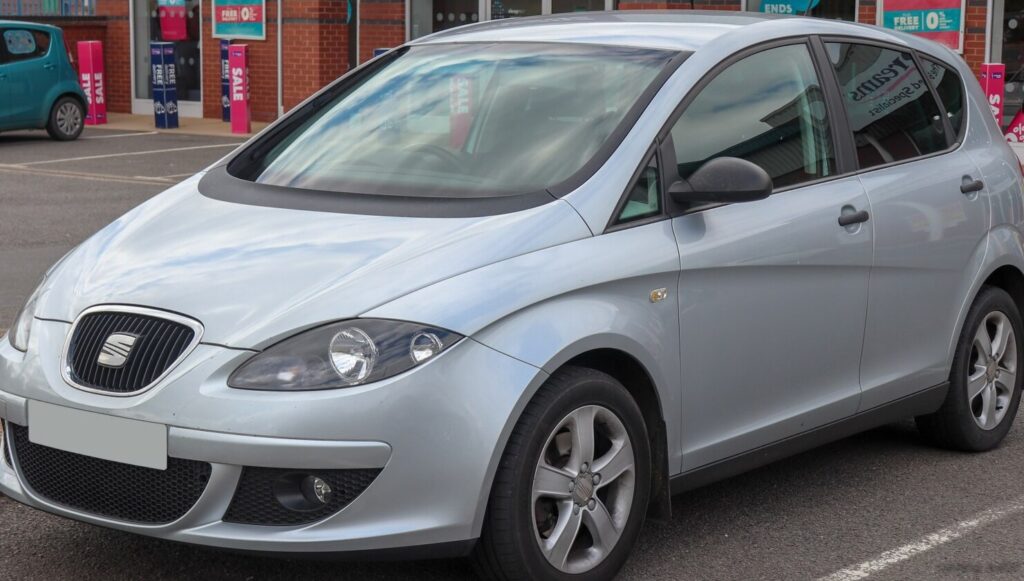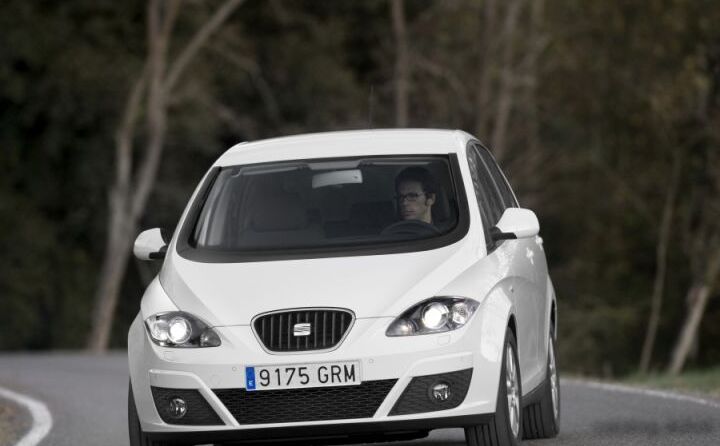
The Seat Altea, specifically the facelifted version produced from 2009 to 2010 equipped with the 1.9 TDI 90 horsepower engine, represents a pragmatic offering within the broader Altea range. Positioned as an entry-level diesel variant, it aimed to provide fuel efficiency and reasonable practicality for family transport. The Altea itself, launched in 2004, was Seat’s attempt to carve out a niche in the compact MPV (Multi-Purpose Vehicle) segment, blending styling cues from both a hatchback and a minivan. The 2009 facelift brought revised front and rear aesthetics, along with minor interior updates, aiming to refresh the model and maintain its competitiveness. This particular 1.9 TDI 90 hp version was primarily sold in European markets, where diesel engines held a significant market share due to favorable taxation and fuel economy.
Technical Specifications
| Brand | Seat |
| Model | Altea |
| Generation | Altea (facelift 2009) |
| Type (Engine) | 1.9 TDI (90 Hp) |
| Start of production | 2009 |
| End of production | 2010 |
| Powertrain Architecture | Internal Combustion engine |
| Body type | MPV |
| Seats | 5 |
| Doors | 5 |
| Fuel consumption (urban) | 6.8 l/100 km (34.6 US mpg, 41.5 UK mpg, 14.7 km/l) |
| Fuel consumption (extra urban) | 4.5 l/100 km (52.3 US mpg, 62.8 UK mpg, 22.2 km/l) |
| Fuel consumption (combined) | 5.4 l/100 km (43.6 US mpg, 52.3 UK mpg, 18.5 km/l) |
| CO2 emissions | 142 g/km |
| Fuel Type | Diesel |
| Acceleration 0 – 100 km/h | 14.3 sec |
| Acceleration 0 – 62 mph | 14.3 sec |
| Acceleration 0 – 60 mph | 13.6 sec |
| Maximum speed | 172 km/h (106.88 mph) |
| Emission standard | Euro 4 |
| Weight-to-power ratio | 15.6 kg/Hp, 64.1 Hp/tonne |
| Weight-to-torque ratio | 6.7 kg/Nm, 149.5 Nm/tonne |
| Power | 90 Hp @ 4000 rpm |
| Power per litre | 47.5 Hp/l |
| Torque | 210 Nm @ 1800 rpm (154.89 lb.-ft. @ 1800 rpm) |
| Engine layout | Front, Transverse |
| Engine Model/Code | EA188 / BXF |
| Engine displacement | 1896 cm3 (115.7 cu. in.) |
| Number of cylinders | 4 |
| Engine configuration | Inline |
| Cylinder Bore | 79.5 mm (3.13 in.) |
| Piston Stroke | 95.5 mm (3.76 in.) |
| Compression ratio | 18.5:1 |
| Number of valves per cylinder | 2 |
| Fuel injection system | Pump-nozzle (Unit Injector) |
| Engine aspiration | Turbocharger, Intercooler |
| Valvetrain | SOHC |
| Engine oil capacity | 4.3 l (4.54 US qt | 3.78 UK qt) |
| Coolant capacity | 5.6 l (5.92 US qt | 4.93 UK qt) |
| Kerb Weight | 1405 kg (3097.49 lbs.) |
| Max. weight | 2000 kg (4409.25 lbs.) |
| Max load | 595 kg (1311.75 lbs.) |
| Trunk (boot) space – minimum | 409 l (14.44 cu. ft.) |
| Trunk (boot) space – maximum | 1320 l (46.62 cu. ft.) |
| Fuel tank capacity | 55 l (14.53 US gal | 12.1 UK gal) |
| Permitted trailer load with brakes (12%) | 1400 kg (3086.47 lbs.) |
| Length | 4282 mm (168.58 in.) |
| Width | 1768 mm (69.61 in.) |
| Height | 1576 mm (62.05 in.) |
| Wheelbase | 2578 mm (101.5 in.) |
| Front track | 1527-1541 mm (60.12 – 60.67 in.) |
| Rear track | 1503-1517 mm (59.17 – 59.72 in.) |
| Front overhang | 915 mm (36.02 in.) |
| Rear overhang | 789 mm (31.06 in.) |
| Drag coefficient (Cd) | 0.32 |
| Minimum turning circle | 10.7 m (35.1 ft.) |
| Drivetrain | Front wheel drive |
| Number of gears | 5 |
| Gearbox type | Manual transmission |
| Front suspension | Independent, McPherson with coil spring and anti-roll bar |
| Rear suspension | Independent multi-link spring suspension with stabilizer |
| Front brakes | Ventilated discs, 288×25 mm |
| Rear brakes | Disc, 253×10 mm |
| Assisting systems | ABS (Anti-lock braking system) |
| Steering type | Steering rack and pinion |
| Power steering | Electric |
| Tires size | 195/65 R15; 205/55 R16; 225/45 R17 |
| Wheel rims size | 6J x 15; 6.5J x 16; 7J x 17 |
Powertrain & Engine Architecture
The heart of this Altea variant is the 1.9-liter (1896 cc) inline-four cylinder diesel engine, identified by the engine code BXF. This engine belongs to the Volkswagen Group’s EA188 family, a widely used engine platform. The BXF utilizes a pump-nozzle (unit injector) fuel injection system, a technology known for its precision and efficiency in diesel engines. This system directly injects fuel into the combustion chamber at extremely high pressure, optimizing combustion and reducing emissions. The engine features a single overhead camshaft (SOHC) valvetrain operating two valves per cylinder. A turbocharger with an intercooler is employed to increase power output and improve torque delivery. The intercooler cools the compressed air from the turbocharger, increasing its density and further enhancing combustion. This engine produced 90 horsepower at 4000 rpm and 210 Nm (154.89 lb-ft) of torque at 1800 rpm. The engine was paired with a five-speed manual transmission, delivering power to the front wheels.
Driving Characteristics
The 1.9 TDI 90 hp Altea offered a practical, if not particularly exhilarating, driving experience. Acceleration was modest, taking around 14.3 seconds to reach 62 mph (100 km/h). The focus was on fuel economy and usability rather than outright performance. The engine’s torque peak at 1800 rpm provided adequate pulling power for everyday driving situations, making it suitable for commuting and carrying passengers. Compared to higher-output versions of the Altea, such as those equipped with the 2.0 TDI engine, this variant felt noticeably slower. The five-speed manual transmission was well-matched to the engine’s characteristics, offering a reasonable spread of gears for both urban and highway driving. The gear ratios were optimized for fuel efficiency, prioritizing economy over rapid acceleration.
Equipment & Trim Levels
The 1.9 TDI 90 hp Altea typically came with a base level of equipment, focusing on essential features. Standard equipment generally included air conditioning, power windows, central locking, and an audio system. Interior upholstery was typically cloth, and the dashboard featured a functional, if somewhat understated, design. Optional extras included alloy wheels, a trip computer, and upgraded audio systems. Higher trim levels, available with more powerful engines, offered additional features such as climate control, leather upholstery, and parking sensors. This specific variant was positioned as the entry-level diesel option, appealing to buyers seeking a cost-effective and fuel-efficient MPV.
Chassis & Braking
The Altea’s chassis featured independent suspension all around, with a McPherson strut setup at the front and a multi-link system at the rear. This configuration provided a comfortable ride quality and decent handling characteristics. The front brakes were ventilated discs, while the rear brakes were solid discs. Anti-lock Braking System (ABS) was standard, enhancing safety by preventing wheel lockup during hard braking. Stabilizer bars were fitted to both the front and rear axles, reducing body roll during cornering. The suspension was tuned to prioritize comfort and ride quality, rather than sporty handling.
Market Reception & Comparison
The Seat Altea 1.9 TDI 90 hp received generally positive reviews for its fuel efficiency and practicality. Critics praised its spacious interior and versatile cargo area. However, some reviewers noted its relatively modest performance and somewhat bland styling. Compared to other compact MPVs in its class, such as the Renault Scenic and the Citroën C4 Picasso, the Altea offered a more driver-focused experience. In terms of fuel economy, the 1.9 TDI 90 hp Altea was competitive with other diesel-powered MPVs, achieving around 5.4 l/100 km (43.6 US mpg) on the combined cycle. Reliability was generally good, although some owners reported issues with the pump-nozzle fuel injection system.
Legacy
The 1.9 TDI engine, in its various iterations, proved to be a durable and reliable powerplant. While the Altea itself was discontinued in 2020, the 1.9 TDI engine remains well-regarded for its longevity and fuel efficiency. In the used car market, Altea models equipped with this engine are often sought after by buyers looking for a practical and economical MPV. However, potential buyers should be aware of the potential for issues with the pump-nozzle fuel injection system, which can be expensive to repair. Overall, the Seat Altea 1.9 TDI 90 hp represents a solid and dependable choice for those seeking a fuel-efficient and versatile family vehicle.