Technical Specifications
| Brand | Seat |
| Model | Altea |
| Generation | Altea Freetrack |
| Type (Engine) | 2.0 TDI (140 Hp) DPF |
| Start of production | 2007 |
| End of production | 2009 |
| Powertrain Architecture | Internal Combustion engine |
| Body type | SUV |
| Seats | 5 |
| Doors | 5 |
| Fuel consumption (economy) – urban (NEDC) | 7.7 l/100 km (30.5 US mpg, 36.7 UK mpg, 13 km/l) |
| Fuel consumption (economy) – extra urban (NEDC) | 5.3 l/100 km (44.4 US mpg, 53.3 UK mpg, 18.9 km/l) |
| Fuel consumption (economy) – combined (NEDC) | 6.1 l/100 km (38.6 US mpg, 46.3 UK mpg, 16.4 km/l) |
| CO2 emissions (NEDC) | 163 g/km |
| Fuel Type | Diesel |
| Acceleration 0 – 100 km/h | 10.2 sec |
| Acceleration 0 – 62 mph | 10.2 sec |
| Acceleration 0 – 60 mph | 9.7 sec |
| Maximum speed | 196 km/h (121.79 mph) |
| Emission standard | Euro 4 |
| Weight-to-power ratio | 10.7 kg/Hp, 93.1 Hp/tonne |
| Weight-to-torque ratio | 4.7 kg/Nm, 212.8 Nm/tonne |
| Power | 140 Hp @ 4000 rpm |
| Power per litre | 71.1 Hp/l |
| Torque | 320 Nm @ 1750-2500 rpm (236.02 lb.-ft. @ 1750-2500 rpm) |
| Engine layout | Front, Transverse |
| Engine Model/Code | EA188 / BMM |
| Engine displacement | 1968 cm3 (120.09 cu. in.) |
| Number of cylinders | 4 |
| Engine configuration | Inline |
| Cylinder Bore | 81 mm (3.19 in.) |
| Piston Stroke | 95.5 mm (3.76 in.) |
| Compression ratio | 18.5:1 |
| Number of valves per cylinder | 2 |
| Fuel injection system | Pump-nozzle (Unit Injector) |
| Engine aspiration | Turbocharger, Intercooler |
| Valvetrain | SOHC |
| Engine oil capacity | 4.3 l (4.54 US qt | 3.78 UK qt) |
| Coolant | 8 l (8.45 US qt | 7.04 UK qt) |
| Kerb Weight | 1504 kg (3315.75 lbs.) |
| Max. weight | 2124 kg (4682.62 lbs.) |
| Max load | 620 kg (1366.87 lbs.) |
| Trunk (boot) space – minimum | 452 l (15.96 cu. ft.) |
| Trunk (boot) space – maximum | 1521 l (53.71 cu. ft.) |
| Fuel tank capacity | 55 l (14.53 US gal | 12.1 UK gal) |
| Max. roof load | 75 kg (165.35 lbs.) |
| Permitted trailer load with brakes (12%) | 1400 kg (3086.47 lbs.) |
| Permitted trailer load without brakes | 750 kg (1653.47 lbs.) |
| Permitted towbar download | 75 kg (165.35 lbs.) |
| Length | 4493 mm (176.89 in.) |
| Width | 1788 mm (70.39 in.) |
| Height | 1622 mm (63.86 in.) |
| Wheelbase | 2576 mm (101.42 in.) |
| Front track | 1542 mm (60.71 in.) |
| Rear (Back) track | 1527 mm (60.12 in.) |
| Minimum turning circle (turning diameter) | 10.9 m (35.76 ft.) |
| Drivetrain Architecture | The Internal combustion engine (ICE) drives the front wheels of the vehicle. |
| Drive wheel | Front wheel drive |
| Number of gears and type of gearbox | 6 gears, manual transmission |
| Front suspension | Independent, type McPherson with coil spring and anti-roll bar |
| Rear suspension | Independent multi-link spring suspension with stabilizer |
| Front brakes | Ventilated discs |
| Rear brakes | Disc |
| Assisting systems | ABS (Anti-lock braking system) |
| Steering type | Steering rack and pinion |
| Power steering | Electric Steering |
| Tires size | 225/50 R17 |
| Wheel rims size | 7J x 17 |
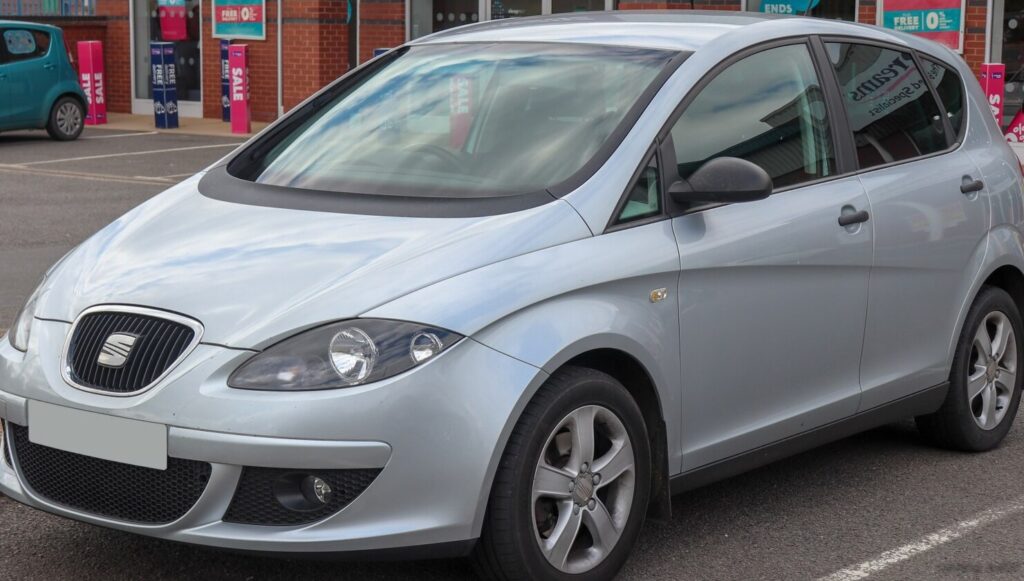
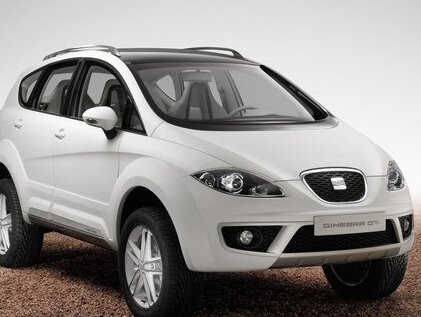
The SEAT Altea Freetrack, introduced in 2007, was designed to appeal to buyers seeking a vehicle that combined the practicality of a compact family car with a more rugged, adventurous aesthetic. Positioned as a crossover SUV, the Freetrack aimed to broaden the Altea’s market reach. Built on the Volkswagen Group’s A5 platform (also known as the 1HX0/A3 platform), shared with the VW Golf, Audi A3, and Skoda Octavia, the Freetrack distinguished itself through its increased ground clearance, distinctive body cladding, and the option of all-wheel drive. The 2.0 TDI 140 horsepower variant, coupled with a six-speed manual transmission, represented a mid-range offering, striking a balance between performance, fuel economy, and price. This front-wheel drive configuration was a popular choice for those prioritizing efficiency and affordability.
Powertrain & Engine Architecture
The Altea Freetrack 2.0 TDI is powered by the EA188 series diesel engine, specifically the BMM engine code. This 1968cc, inline four-cylinder engine utilizes a pump-nozzle (unit injector) fuel injection system, a technology known for its precise fuel metering and efficiency. The engine features a single overhead camshaft (SOHC) operating two valves per cylinder. A turbocharger, coupled with an intercooler, significantly boosts power and torque output, delivering 140 horsepower at 4000 rpm and a robust 320 Nm (236 lb-ft) of torque between 1750 and 2500 rpm. The six-speed manual transmission is well-matched to the engine’s characteristics, providing a good range of gears for both efficient cruising and responsive acceleration. The gear ratios are optimized to keep the engine within its peak torque band during normal driving conditions.
Driving Characteristics
The 2.0 TDI 140hp Freetrack delivers a capable and enjoyable driving experience. While not designed for outright performance, the engine provides sufficient power for everyday driving, overtaking maneuvers, and maintaining highway speeds. The front-wheel-drive layout contributes to a lighter overall weight compared to the all-wheel-drive versions, resulting in slightly more agile handling. The raised suspension provides a more comfortable ride, effectively absorbing bumps and road imperfections. Compared to the lower-powered gasoline engines available in the Altea range, the 2.0 TDI offers a significant increase in torque, making it easier to accelerate from a standstill and tackle inclines. However, it doesn’t quite match the outright power of the higher-output TDI variants. The six-speed gearbox is smooth and precise, allowing drivers to easily select the appropriate gear for any situation.
Equipment & Trim Levels
The Altea Freetrack 2.0 TDI typically came equipped with a comprehensive set of standard features. These generally included air conditioning, electric front windows, central locking, and an audio system with a CD player. The interior featured comfortable seating upholstered in durable fabric, and a functional, straightforward dashboard layout. Optional extras included alloy wheels, a sunroof, rear parking sensors, and an upgraded audio system. The Freetrack also featured distinctive exterior styling elements, such as plastic body cladding, roof rails, and unique alloy wheel designs. The interior trim was generally practical and hard-wearing, reflecting the vehicle’s intended use as a versatile family vehicle.
Chassis & Braking
The Altea Freetrack utilizes an independent McPherson strut suspension setup at the front, providing good handling and ride comfort. The rear suspension employs an independent multi-link system, further enhancing ride quality and stability. The front brakes are ventilated discs, offering strong stopping power, while the rear brakes are solid discs. An Anti-lock Braking System (ABS) is standard, improving safety during emergency braking situations. The Freetrack’s suspension is tuned to provide a balance between comfort and handling, making it suitable for a variety of road conditions. The steering is a rack and pinion system with electric power assistance, providing precise and responsive control.
Market Reception & Comparison
The SEAT Altea Freetrack 2.0 TDI received generally positive reviews from automotive critics. It was praised for its practicality, comfortable ride, and fuel-efficient engine. Some critics noted that the interior styling was somewhat conservative and that the front-wheel-drive configuration limited its off-road capabilities compared to the all-wheel-drive models. Compared to other trims in the Altea lineup, the 2.0 TDI 140hp offered a compelling combination of performance and economy. It was more affordable than the higher-output TDI models but provided significantly more power than the petrol engines. Fuel economy figures of around 38.6 US mpg combined were competitive for its class.
Legacy
The EA188 2.0 TDI engine, found in the Altea Freetrack, has proven to be a relatively reliable powertrain, although early versions were known for potential issues with diesel particulate filter (DPF) clogging and, in some cases, turbocharger failures. Regular maintenance, including timely oil changes and ensuring proper DPF regeneration, is crucial for long-term reliability. Today, the Altea Freetrack 2.0 TDI can be found on the used car market at attractive prices. It remains a practical and versatile vehicle, appealing to buyers seeking a comfortable and fuel-efficient crossover SUV. Its blend of style, practicality, and reasonable running costs ensures its continued relevance in the used car market, offering a good value proposition for those seeking a dependable and economical vehicle.