Technical Specifications
| Brand | Seat |
| Model | Altea |
| Generation | Altea Freetrack (facelift 2009) |
| Type (Engine) | 1.6 TDI (105 Hp) |
| Start of production | October, 2009 |
| End of production | August, 2015 |
| Powertrain Architecture | Internal Combustion engine |
| Body type | SUV |
| Seats | 5 |
| Doors | 5 |
| Fuel consumption (urban) | 5.7 l/100 km (41.3 US mpg, 49.6 UK mpg, 17.5 km/l) |
| Fuel consumption (extra urban) | 4.5 l/100 km (52.3 US mpg, 62.8 UK mpg, 22.2 km/l) |
| Fuel consumption (combined) | 4.9 l/100 km (48 US mpg, 57.6 UK mpg, 20.4 km/l) |
| CO2 emissions | 129 g/km |
| Fuel Type | Diesel |
| Acceleration 0 – 100 km/h | 12.6 sec |
| Acceleration 0 – 62 mph | 12.6 sec |
| Acceleration 0 – 60 mph | 12 sec |
| Maximum speed | 177 km/h (109.98 mph) |
| Emission standard | Euro 5 |
| Weight-to-power ratio | 14.3 kg/Hp, 69.8 Hp/tonne |
| Weight-to-torque ratio | 6 kg/Nm, 166.1 Nm/tonne |
| Power | 105 Hp @ 4400 rpm |
| Power per litre | 65.7 Hp/l |
| Torque | 250 Nm @ 1500-2500 rpm (184.39 lb.-ft. @ 1500-2500 rpm) |
| Engine layout | Front, Transverse |
| Engine Model/Code | CAYC |
| Engine displacement | 1598 cm3 (97.52 cu. in.) |
| Number of cylinders | 4 |
| Engine configuration | Inline |
| Cylinder Bore | 79.5 mm (3.13 in.) |
| Piston Stroke | 80.5 mm (3.17 in.) |
| Compression ratio | 16.5:1 |
| Number of valves per cylinder | 4 |
| Fuel injection system | Diesel Commonrail |
| Engine aspiration | Turbocharger, Intercooler |
| Engine oil capacity | 4.3 l (4.54 US qt | 3.78 UK qt) |
| Kerb Weight | 1505 kg (3317.96 lbs.) |
| Max. weight | 2049 kg (4517.27 lbs.) |
| Max load | 544 kg (1199.31 lbs.) |
| Trunk (boot) space – minimum | 532 l (18.79 cu. ft.) |
| Fuel tank capacity | 55 l (14.53 US gal | 12.1 UK gal) |
| Length | 4493 mm (176.89 in.) |
| Width | 1788 mm (70.39 in.) |
| Height | 1596 mm (62.83 in.) |
| Wheelbase | 2578 mm (101.5 in.) |
| Front track | 1527-1535 mm (60.12 – 60.43 in.) |
| Rear (Back) track | 1503-1511 mm (59.17 – 59.49 in.) |
| Minimum turning circle | 10.7 m (35.1 ft.) |
| Drivetrain Architecture | Front wheel drive |
| Number of gears and type of gearbox | 5 gears, manual transmission |
| Front suspension | Independent, type McPherson with coil spring and anti-roll bar |
| Rear suspension | Independent multi-link suspension |
| Front brakes | Ventilated discs |
| Rear brakes | Disc |
| Assisting systems | ABS (Anti-lock braking system) |
| Steering type | Steering rack and pinion |
| Tires size | 205/55 R16 91V; 225/45 R17 91W |
| Wheel rims size | 6.5J x 16 ET50; 7J x 17 ET54 |
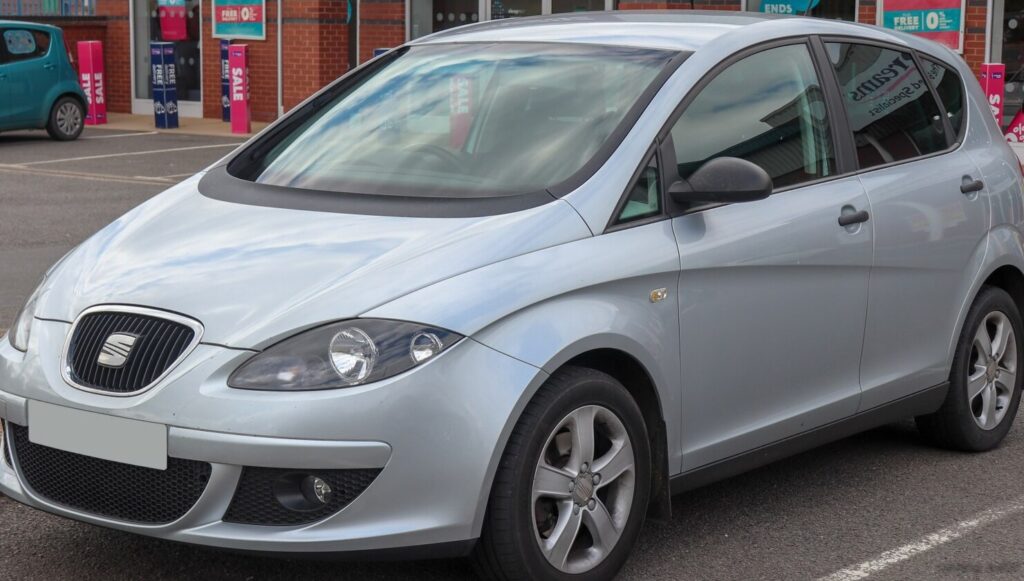
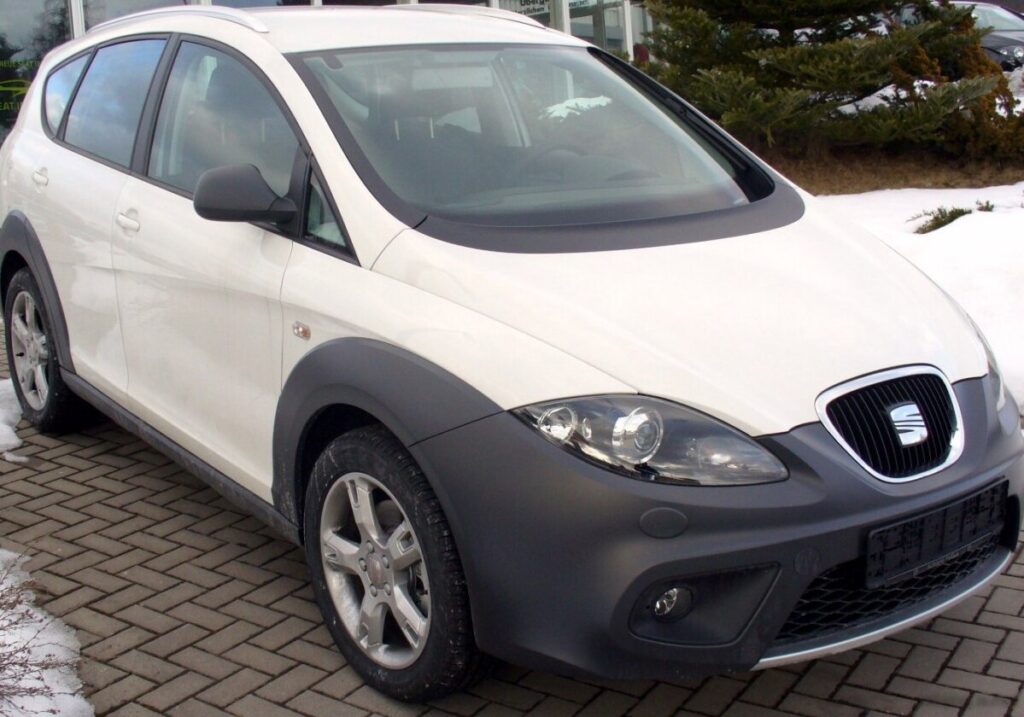
The Seat Altea Freetrack, specifically the facelifted version introduced in October 2009 and continuing through August 2015, represented Seat’s entry into the compact crossover SUV segment. Positioned as a more rugged and versatile variant of the Altea, the Freetrack aimed to appeal to buyers seeking a vehicle with increased ground clearance and a more adventurous aesthetic. This particular version, powered by the 1.6 TDI engine producing 105 horsepower, served as a relatively economical and practical option within the Freetrack lineup, often appealing to those prioritizing fuel efficiency over outright performance. It was built on the Volkswagen Group’s A5 (PQ35) platform, shared with models like the Volkswagen Golf and Škoda Octavia.
Powertrain & Engine Architecture
The heart of this Altea Freetrack variant is the CAYC engine code, a 1.6-liter inline-four cylinder diesel engine. This engine is part of the Volkswagen Group’s common rail diesel family, known for its relatively efficient operation and reasonable power output. The CAYC utilizes a turbocharger with an intercooler to boost power and torque. Fuel is delivered via a Bosch common rail direct injection system, operating at very high pressures to ensure fine atomization and complete combustion. The engine features four valves per cylinder (DOHC) and a compression ratio of 16.5:1, contributing to its efficiency. The 105 horsepower and 250 Nm (184 lb-ft) of torque are delivered between 1500-2500 rpm, providing a usable powerband for everyday driving. The engine is transversely mounted in the front of the vehicle. The Freetrack utilized a five-speed manual transmission, chosen for its simplicity and cost-effectiveness, though it wasn’t known for particularly quick shifts.
Driving Characteristics
The 1.6 TDI engine in the Altea Freetrack, paired with the five-speed manual gearbox, delivers adequate, but not exhilarating, performance. Acceleration from 0-60 mph takes around 12 seconds, and the top speed is approximately 109 mph. The engine’s torque is readily available at low RPMs, making it suitable for everyday driving and providing sufficient power for overtaking maneuvers. However, it can feel strained when fully loaded or climbing steep hills. The gear ratios are spaced to prioritize fuel economy over outright acceleration. Compared to the more powerful 2.0 TDI variants, this 1.6 TDI version feels noticeably slower, but it offers a more economical driving experience. The raised suspension of the Freetrack provides a slightly higher driving position and improved ride comfort on uneven surfaces, but it also introduces a bit more body roll in corners.
Equipment & Trim Levels
The Altea Freetrack 1.6 TDI typically came with a reasonable level of standard equipment. This included air conditioning, electric front windows, central locking, and an audio system with MP3 compatibility. Safety features such as ABS, front and side airbags, and electronic stability control were also standard. Higher trim levels offered options like alloy wheels, rear parking sensors, a multi-function steering wheel, and a more advanced audio system. Interior upholstery was typically cloth, with the option of leather upgrades. The dashboard layout was functional and straightforward, typical of Volkswagen Group interiors of the period.
Chassis & Braking
The Altea Freetrack’s chassis featured independent suspension all around – McPherson struts at the front and a multi-link setup at the rear. This configuration provided a good balance between ride comfort and handling. The Freetrack’s ride height was increased compared to the standard Altea, providing greater ground clearance for tackling rougher terrain. Braking duties were handled by ventilated discs at the front and solid discs at the rear, equipped with ABS. The steering system was a rack and pinion setup, offering precise and responsive steering feel.
Market Reception & Comparison
The Seat Altea Freetrack 1.6 TDI was generally well-received as a practical and economical crossover SUV. Critics praised its fuel efficiency and comfortable ride, but some found the engine to be underpowered, especially when compared to competitors offering larger displacement engines. Compared to the more powerful 2.0 TDI versions of the Altea Freetrack, the 1.6 TDI offered lower running costs but sacrificed performance. It competed with vehicles like the Škoda Yeti, Nissan Qashqai, and Renault Kadjar, offering a slightly more sporty driving experience than some of its rivals.
Legacy
The 1.6 TDI engine, while not known for being particularly exciting, proved to be relatively reliable in the Altea Freetrack. Common issues include diesel particulate filter (DPF) problems, particularly on vehicles used primarily for short journeys, and occasional turbocharger failures. However, with regular maintenance and careful driving, these engines can cover high mileages. On the used car market, the Altea Freetrack 1.6 TDI represents a relatively affordable entry point into the compact crossover SUV segment. Its fuel efficiency and practicality continue to appeal to budget-conscious buyers seeking a versatile vehicle.