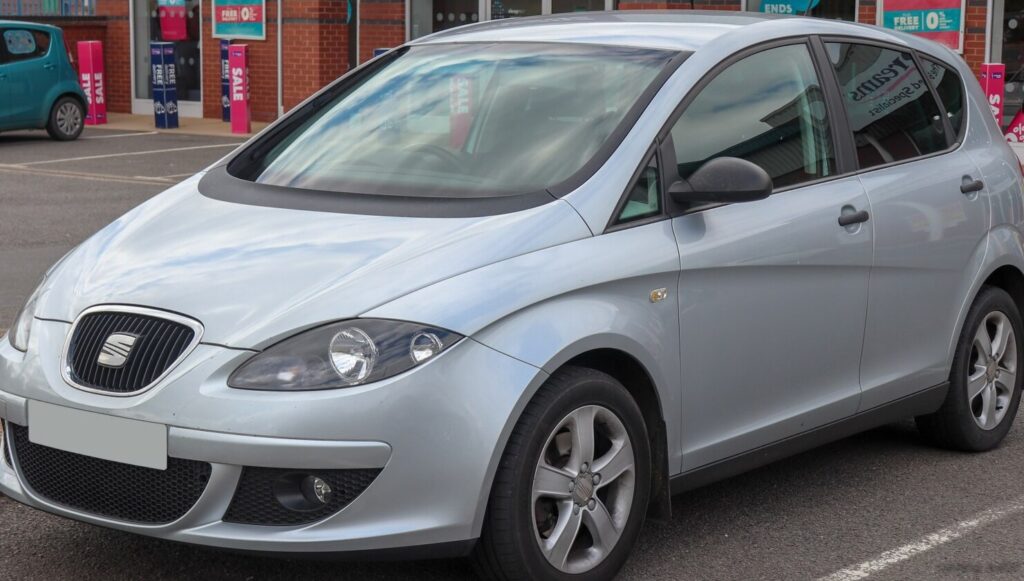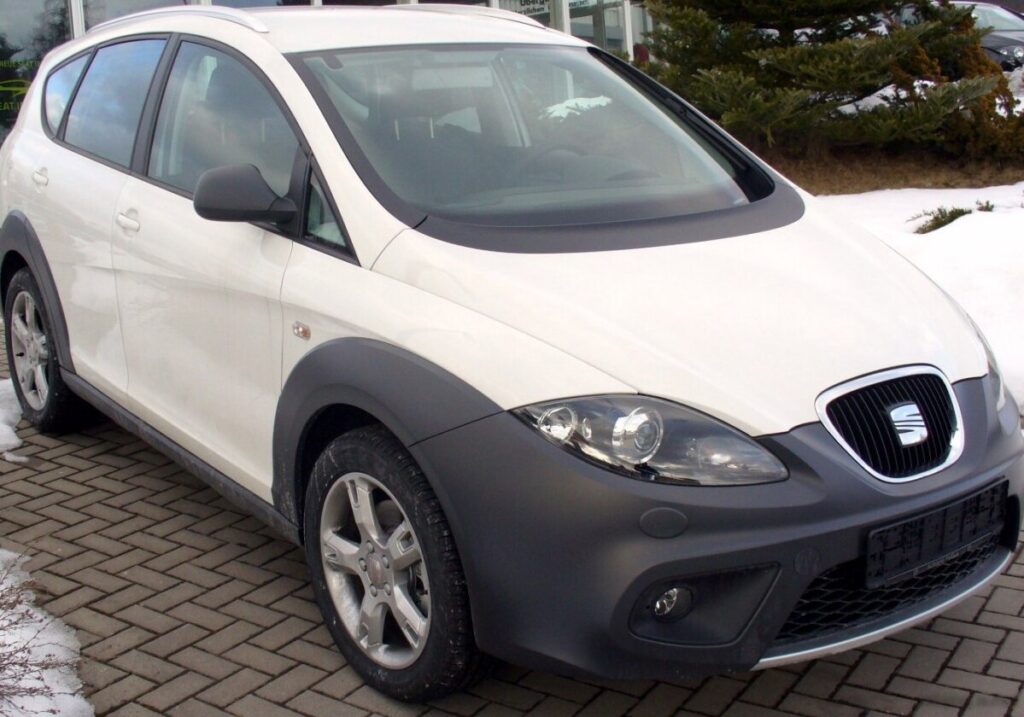
The Seat Altea Freetrack, specifically the facelifted version introduced in 2009, represented Seat’s entry into the compact crossover SUV segment. Production of this 2.0 TDI 140 horsepower, 4Drive (all-wheel drive) variant ran from September 2010 to August 2015. Positioned as a more rugged and versatile version of the standard Altea, the Freetrack aimed to appeal to buyers seeking a vehicle with enhanced practicality and all-weather capability. It was a key model for Seat in the European market, offering a blend of style, space, and performance within the Volkswagen Group’s portfolio.
Technical Specifications
| Brand | Seat |
| Model | Altea |
| Generation | Altea Freetrack (facelift 2009) |
| Type (Engine) | 2.0 TDI (140 Hp) 4Drive |
| Start of production | September, 2010 |
| End of production | August, 2015 |
| Powertrain Architecture | Internal Combustion engine |
| Body type | SUV |
| Seats | 5 |
| Doors | 5 |
| Fuel consumption (urban) | 7.4 l/100 km (31.8 US mpg) |
| Fuel consumption (extra urban) | 5.1 l/100 km (46.1 US mpg) |
| Fuel consumption (combined) | 5.9 l/100 km (39.9 US mpg) |
| CO2 emissions | 155 g/km |
| Fuel Type | Diesel |
| Acceleration 0 – 100 km/h | 10.2 sec |
| Acceleration 0 – 62 mph | 10.2 sec |
| Acceleration 0 – 60 mph | 9.7 sec |
| Maximum speed | 193 km/h (119.92 mph) |
| Emission standard | Euro 5 |
| Weight-to-power ratio | 11.5 kg/Hp |
| Weight-to-torque ratio | 5 kg/Nm |
| Power | 140 Hp @ 4200 rpm |
| Torque | 320 Nm @ 1750-2500 rpm (236.02 lb.-ft.) |
| Engine layout | Front, Transverse |
| Engine Model/Code | CFHC |
| Engine displacement | 1968 cm3 (120.09 cu. in.) |
| Number of cylinders | 4 |
| Engine configuration | Inline |
| Cylinder Bore | 81 mm (3.19 in.) |
| Piston Stroke | 95.5 mm (3.76 in.) |
| Compression ratio | 16:1 |
| Number of valves per cylinder | 4 |
| Fuel injection system | Diesel Commonrail |
| Engine aspiration | Turbocharger, Intercooler |
| Engine oil capacity | 4.3 l (4.54 US qt | 3.78 UK qt) |
| Coolant | 8 l (8.45 US qt | 7.04 UK qt) |
| Kerb Weight | 1615 kg (3560.47 lbs.) |
| Max. weight | 2159 kg (4759.78 lbs.) |
| Max load | 544 kg (1199.31 lbs.) |
| Trunk (boot) space – minimum | 490 l (17.3 cu. ft.) |
| Fuel tank capacity | 60 l (15.85 US gal | 13.2 UK gal) |
| Length | 4493 mm (176.89 in.) |
| Width | 1788 mm (70.39 in.) |
| Height | 1596-1622 mm (62.83 – 63.86 in.) |
| Wheelbase | 2576 mm (101.42 in.) |
| Front track | 1542 mm (60.71 in.) |
| Rear (Back) track | 1518 mm (59.76 in.) |
| Minimum turning circle | 10.7 m (35.1 ft.) |
| Drive wheel | All wheel drive (4×4) |
| Number of gears | 7 |
| Gearbox type | automatic transmission |
| Front suspension | Independent, type McPherson with coil spring and anti-roll bar |
| Rear suspension | Independent multi-link suspension |
| Front brakes | Ventilated discs |
| Rear brakes | Disc |
| Assisting systems | ABS (Anti-lock braking system) |
| Steering type | Steering rack and pinion |
| Power steering | Electric Steering |
Powertrain & Engine Architecture
The heart of the Altea Freetrack 2.0 TDI is the CFHC engine, a four-cylinder, inline diesel engine displacing 1968cc. This engine is part of the Volkswagen Group’s modular engine family and utilizes common rail direct injection, delivering fuel at extremely high pressure for optimized combustion. A turbocharger with an intercooler further enhances performance by forcing more air into the cylinders. The engine produces 140 horsepower at 4200 rpm and a substantial 320 Nm (236 lb-ft) of torque between 1750 and 2500 rpm. This torque output is a key characteristic of modern diesel engines, providing strong pulling power at lower engine speeds. The engine also incorporates a diesel particulate filter (DPF) to reduce emissions, meeting Euro 5 standards. The engine is transversely mounted in the front of the vehicle. The Freetrack exclusively used a seven-speed dual-clutch transmission (DSG) which provided quick and smooth gear changes, contributing to both performance and fuel efficiency.
Driving Characteristics
The 2.0 TDI 140 hp engine paired with the seven-speed DSG transmission delivers a competent and refined driving experience. While not overtly sporty, the Freetrack offers ample power for everyday driving and comfortable highway cruising. The DSG transmission is well-programmed, providing seamless shifts and keeping the engine in its optimal power band. Acceleration from 0-60 mph takes around 9.7 seconds, and the top speed is 119.92 mph. The all-wheel-drive system (4Drive) provides enhanced traction, particularly on slippery surfaces, making the Freetrack a capable vehicle in inclement weather. Compared to the lower-powered 1.6 TDI versions, the 2.0 TDI offers a noticeable improvement in performance, especially when fully loaded or tackling uphill climbs. It also feels more relaxed at highway speeds. However, it doesn’t match the outright performance of the more expensive and less common petrol-powered variants.
Equipment & Trim Levels
The Altea Freetrack, even in its base form, came reasonably well-equipped. Standard features typically included alloy wheels, air conditioning, a CD stereo with MP3 compatibility, electric windows and mirrors, and ABS brakes. The Freetrack also featured a more rugged exterior styling package, including plastic cladding around the wheel arches and sills, and raised suspension. Higher trim levels added features such as climate control, a touchscreen infotainment system, parking sensors, and leather upholstery. Optional extras included a panoramic sunroof, satellite navigation, and upgraded audio systems.
Chassis & Braking
The Altea Freetrack utilizes an independent suspension setup at both the front and rear. The front features a McPherson strut design with coil springs and an anti-roll bar, while the rear employs a multi-link suspension. This setup provides a good balance between ride comfort and handling. The raised ride height, compared to the standard Altea, contributes to the Freetrack’s crossover appearance and provides increased ground clearance. Braking is handled by ventilated discs at the front and solid discs at the rear, with ABS (Anti-lock Braking System) as standard. The steering is electrically assisted, providing a light and precise feel.
Market Reception & Comparison
The Seat Altea Freetrack 2.0 TDI 4Drive was generally well-received by automotive critics. It was praised for its practicality, spacious interior, and all-weather capability. The 2.0 TDI engine was considered a good compromise between performance and fuel economy. However, some critics noted that the interior design was starting to feel dated compared to newer competitors. Compared to other compact crossovers of the time, such as the Nissan Qashqai and Skoda Yeti, the Altea Freetrack offered a more distinctive and stylish design. Fuel economy was competitive, averaging around 39.9 US mpg in combined driving. Reliability was generally good, although, like all diesel vehicles, the DPF could require maintenance over time.
Legacy
The Seat Altea Freetrack, while not a massive sales success, established Seat as a player in the growing compact crossover market. The 2.0 TDI engine with the DSG transmission proved to be a reliable and durable powertrain. Today, used examples of the Freetrack are relatively affordable and represent a practical and versatile option for buyers seeking a capable all-weather vehicle. The CFHC engine is known for its longevity, provided it has been properly maintained. However, potential buyers should be aware of the potential costs associated with DPF maintenance and ensure that the vehicle has a full service history.