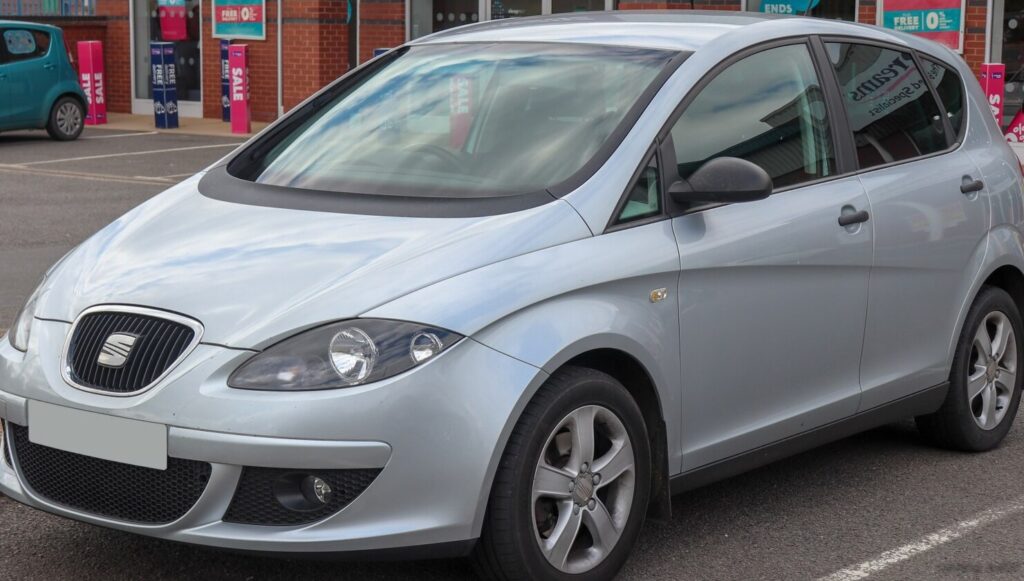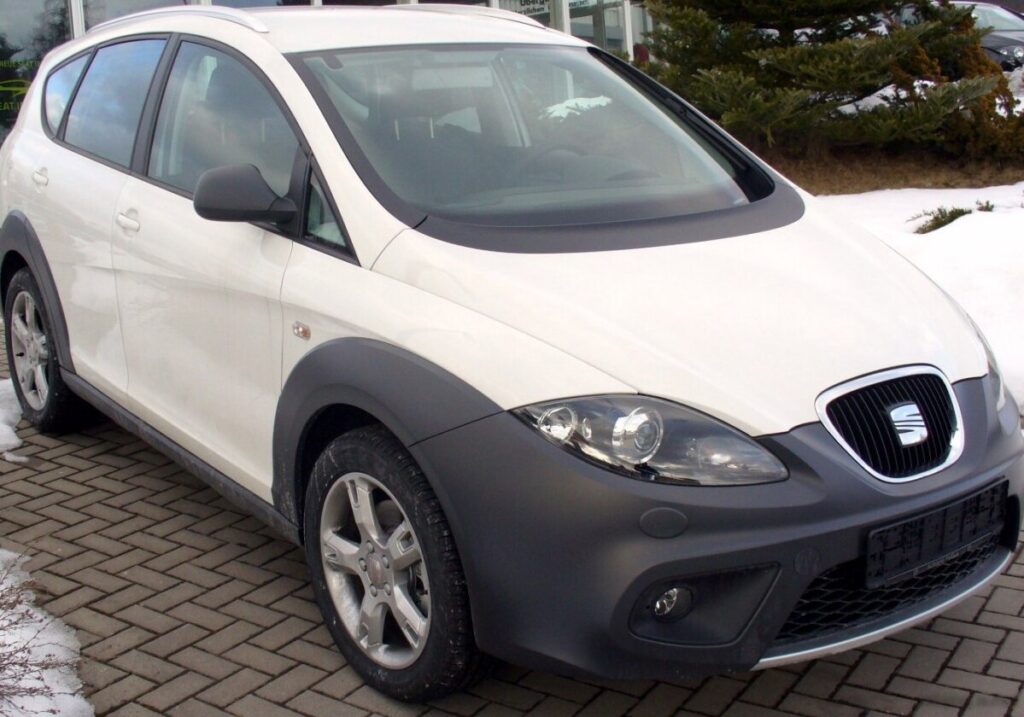
The Seat Altea Freetrack, specifically the facelifted version introduced in 2009 and produced through 2013, represented Seat’s entry into the compact crossover SUV segment. This variant, equipped with a 2.0 TDI engine producing 170 horsepower and a four-wheel-drive (4Drive) system, aimed to blend the practicality of a family vehicle with a degree of all-weather capability. Positioned as a more rugged and adventurous alternative to the standard Altea, the Freetrack offered increased ground clearance and distinctive styling cues. Production began in September 2010 and concluded in June 2013, falling within the broader Altea (XL) model range, which utilized the Volkswagen Group’s PQ46 platform.
Technical Specifications
| Brand | Seat |
| Model | Altea |
| Generation | Altea Freetrack (facelift 2009) |
| Type (Engine) | 2.0 TDI (170 Hp) 4Drive |
| Start of production | September, 2010 |
| End of production | June, 2013 |
| Powertrain Architecture | Internal Combustion engine |
| Body type | SUV |
| Seats | 5 |
| Doors | 5 |
| Fuel consumption (urban) | 6.9 l/100 km (34.1 US mpg, 40.9 UK mpg, 14.5 km/l) |
| Fuel consumption (extra urban) | 5.3 l/100 km (44.4 US mpg, 53.3 UK mpg, 18.9 km/l) |
| Fuel consumption (combined) | 5.9 l/100 km (39.9 US mpg, 47.9 UK mpg, 16.9 km/l) |
| CO2 emissions | 155 g/km |
| Fuel Type | Diesel |
| Acceleration 0 – 100 km/h | 8.7 sec |
| Acceleration 0 – 62 mph | 8.7 sec |
| Acceleration 0 – 60 mph | 8.3 sec |
| Maximum speed | 204 km/h (126.76 mph) |
| Emission standard | Euro 5 |
| Weight-to-power ratio | 9.5 kg/Hp, 105.3 Hp/tonne |
| Weight-to-torque ratio | 4.6 kg/Nm, 216.7 Nm/tonne |
| Power | 170 Hp @ 4200 rpm |
| Power per litre | 86.4 Hp/l |
| Torque | 350 Nm @ 1750-2500 rpm (258.15 lb.-ft. @ 1750-2500 rpm) |
| Engine layout | Front, Transverse |
| Engine Model/Code | CFJA |
| Engine displacement | 1968 cm3 (120.09 cu. in.) |
| Number of cylinders | 4 |
| Engine configuration | Inline |
| Cylinder Bore | 81 mm (3.19 in.) |
| Piston Stroke | 95.5 mm (3.76 in.) |
| Compression ratio | 16:1 |
| Number of valves per cylinder | 4 |
| Fuel injection system | Diesel Commonrail |
| Engine aspiration | Turbocharger, Intercooler |
| Engine oil capacity | 4.3 l (4.54 US qt | 3.78 UK qt) |
| Coolant | 8 l (8.45 US qt | 7.04 UK qt) |
| Kerb Weight | 1615 kg (3560.47 lbs.) |
| Max. weight | 2159 kg (4759.78 lbs.) |
| Max load | 544 kg (1199.31 lbs.) |
| Trunk (boot) space – minimum | 490 l (17.3 cu. ft.) |
| Fuel tank capacity | 60 l (15.85 US gal | 13.2 UK gal) |
| Length | 4493 mm (176.89 in.) |
| Width | 1788 mm (70.39 in.) |
| Height | 1622 mm (63.86 in.) |
| Wheelbase | 2576 mm (101.42 in.) |
| Front track | 1542 mm (60.71 in.) |
| Rear (Back) track | 1518 mm (59.76 in.) |
| Minimum turning circle | 10.7 m (35.1 ft.) |
| Drive wheel | All wheel drive (4×4) |
| Number of gears and type of gearbox | 6 gears, manual transmission |
| Front suspension | Independent, type McPherson with coil spring and anti-roll bar |
| Rear suspension | Independent multi-link suspension |
| Front brakes | Ventilated discs |
| Rear brakes | Disc |
| Assisting systems | ABS (Anti-lock braking system) |
| Steering type | Steering rack and pinion |
| Tires size | 225/50 R17 94W |
| Wheel rims size | 7J x 17 ET 46 |
Powertrain & Engine Architecture
The heart of the Altea Freetrack 2.0 TDI was the CFJA engine, a four-cylinder, inline diesel engine displacing 1968cc. This engine was a member of the Volkswagen Group’s common rail diesel family, utilizing direct fuel injection and a turbocharger with intercooling to achieve its 170 horsepower output at 4200 rpm and 350 Nm (258 lb-ft) of torque between 1750 and 2500 rpm. The engine featured a 16:1 compression ratio and four valves per cylinder. The 4Drive system was a Haldex all-wheel-drive system, primarily front-wheel drive but capable of automatically engaging the rear wheels when traction was lost. The standard transmission was a six-speed manual gearbox, optimized for fuel efficiency and providing reasonable acceleration.
Driving Characteristics
The 2.0 TDI engine in the Freetrack provided a good balance of performance and economy. While not a sports car, the 170 hp output and readily available torque allowed for confident overtaking and comfortable cruising. The six-speed manual transmission was well-matched to the engine’s characteristics, offering precise shifts and allowing the driver to keep the engine in its optimal power band. The 4Drive system enhanced stability and traction, particularly on slippery surfaces, making the Freetrack a capable all-weather vehicle. Compared to the lower-powered 1.6 TDI versions of the Altea, the 2.0 TDI offered significantly more punch, while remaining more economical than the petrol-powered options. The Freetrack’s increased ride height and slightly softer suspension setup, compared to the standard Altea, provided a more comfortable ride, albeit with a bit more body roll in corners.
Equipment & Trim Levels
The Altea Freetrack, even in base form, was reasonably well-equipped. Standard features typically included air conditioning, alloy wheels, a multi-function steering wheel, and an integrated audio system. The Freetrack also featured unique exterior styling elements, such as plastic body cladding, roof rails, and distinctive front and rear bumpers, giving it a more rugged appearance. Optional extras included a sunroof, parking sensors, leather upholstery, and a navigation system. Interior trim levels varied, with higher-spec models offering more premium materials and finishes.
Chassis & Braking
The Altea Freetrack utilized an independent suspension setup at all four wheels. The front suspension employed McPherson struts with coil springs and an anti-roll bar, while the rear featured a multi-link suspension. This configuration provided a good balance of ride comfort and handling. Braking duties were handled by ventilated discs at the front and solid discs at the rear, coupled with an Anti-lock Braking System (ABS). The steering was a rack and pinion system, providing precise and responsive steering feel.
Market Reception & Comparison
The Seat Altea Freetrack was generally well-received by automotive critics as a practical and versatile crossover. The 2.0 TDI engine was praised for its performance and fuel efficiency, while the 4Drive system was appreciated for its added security in adverse weather conditions. However, some critics noted that the interior design was somewhat dated compared to newer competitors. Compared to rivals like the Skoda Octavia Scout or Volkswagen Golf Plus 4Motion, the Altea Freetrack offered a slightly more distinctive and sporty character. Fuel economy was competitive for its class, averaging around 39.9 US mpg in combined driving. Reliability was generally good, although, like all diesel vehicles, the Freetrack’s diesel particulate filter (DPF) required periodic maintenance.
Legacy
The Seat Altea Freetrack, particularly the 2.0 TDI 4Drive variant, has developed a reputation as a reliable and capable used car. The CFJA engine is known for its durability, provided it has been properly maintained. The 4Drive system remains a valuable asset for drivers in regions with inclement weather. While the Altea model line has been discontinued, the Freetrack remains a popular choice for those seeking a practical, affordable, and relatively stylish crossover SUV. Common issues reported by owners include DPF problems (particularly with short-trip driving) and occasional turbocharger wear, but these are generally manageable with regular servicing and preventative maintenance.