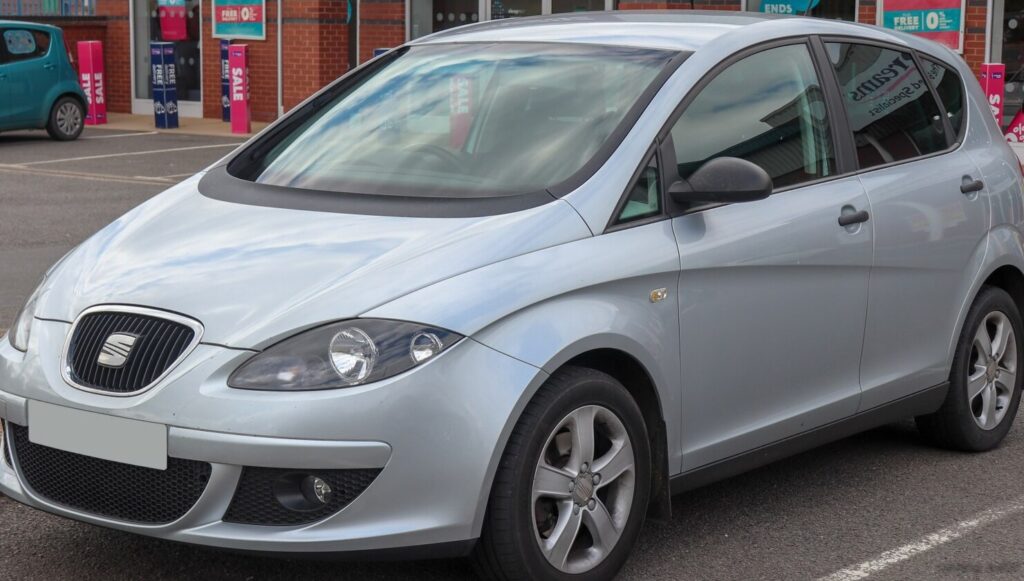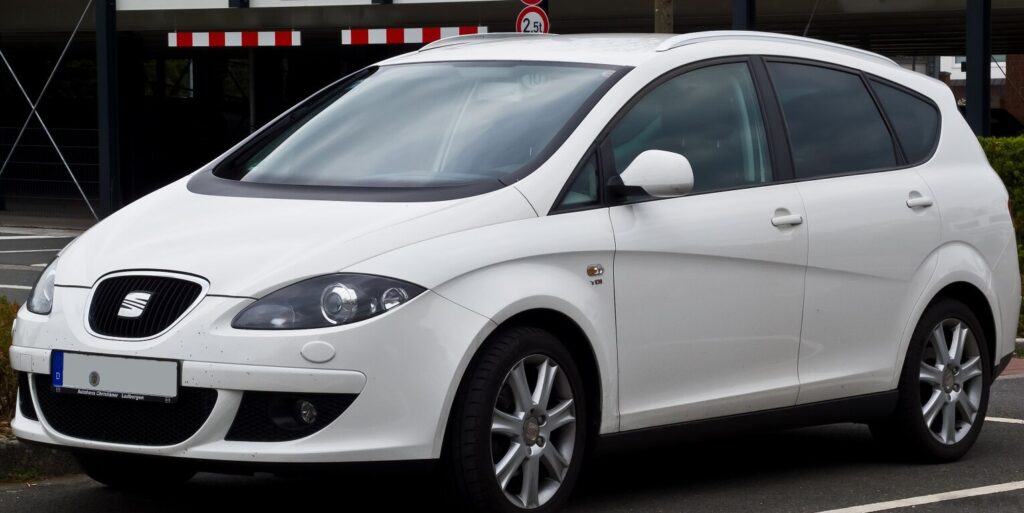
The Seat Altea XL 2.0 TDI, producing 140 horsepower, was a key variant within the Altea XL range, a larger, more practical version of the original Altea. Introduced in May 2006 and continuing through 2009, it represented Seat’s attempt to capture a larger share of the European compact minivan/leisure activity vehicle (LAV) market. Built on the Volkswagen Group’s PQ46 platform (also known as the A5 platform), the Altea XL aimed to offer a blend of style, space, and driving dynamics not always found in its competitors. This particular 2.0 TDI model occupied a mid-range position in the Altea XL lineup, offering a balance between performance, fuel economy, and price.
Technical Specifications
| Brand | Seat |
| Model | Altea |
| Generation | Altea XL |
| Type (Engine) | 2.0 TDI (140 Hp) |
| Start of production | May, 2006 |
| End of production | 2009 |
| Powertrain Architecture | Internal Combustion engine |
| Body type | Minivan |
| Seats | 5 |
| Doors | 5 |
| Fuel consumption (economy) – urban (NEDC) | 7.6 l/100 km (30.9 US mpg, 37.2 UK mpg, 13.2 km/l) |
| Fuel consumption (economy) – extra urban (NEDC) | 4.8 l/100 km (49 US mpg, 58.9 UK mpg, 20.8 km/l) |
| Fuel consumption (economy) – combined (NEDC) | 5.9 l/100 km (39.9 US mpg, 47.9 UK mpg, 16.9 km/l) |
| Fuel Type | Diesel |
| Acceleration 0 – 100 km/h | 10 sec |
| Acceleration 0 – 62 mph | 10 sec |
| Acceleration 0 – 60 mph | 9.5 sec |
| Maximum speed | 201 km/h (124.9 mph) |
| Emission standard | Euro 4 |
| Weight-to-power ratio | 10.5 kg/Hp, 95.3 Hp/tonne |
| Weight-to-torque ratio | 4.6 kg/Nm, 217.8 Nm/tonne |
| Power | 140 Hp @ 4000 rpm |
| Power per litre | 71.1 Hp/l |
| Torque | 320 Nm @ 1750-2500 rpm (236.02 lb.-ft. @ 1750-2500 rpm) |
| Engine layout | Front, Transverse |
| Engine Model/Code | EA188 / BKD |
| Engine displacement | 1968 cm3 (120.09 cu. in.) |
| Number of cylinders | 4 |
| Engine configuration | Inline |
| Cylinder Bore | 81 mm (3.19 in.) |
| Piston Stroke | 95.5 mm (3.76 in.) |
| Compression ratio | 18.5:1 |
| Number of valves per cylinder | 4 |
| Fuel injection system | Pump-nozzle (Unit Injector) |
| Engine aspiration | Turbocharger, Intercooler |
| Valvetrain | DOHC |
| Engine oil capacity | 3.8 l (4.02 US qt | 3.34 UK qt) |
| Coolant | 8 l (8.45 US qt | 7.04 UK qt) |
| Kerb Weight | 1469 kg (3238.59 lbs.) |
| Max. weight | 2089 kg (4605.46 lbs.) |
| Max load | 620 kg (1366.87 lbs.) |
| Trunk (boot) space – minimum | 532 l (18.79 cu. ft.) |
| Trunk (boot) space – maximum | 532 l (18.79 cu. ft.) |
| Fuel tank capacity | 55 l (14.53 US gal | 12.1 UK gal) |
| Max. roof load | 75 kg (165.35 lbs.) |
| Permitted trailer load with brakes (12%) | 1400 kg (3086.47 lbs.) |
| Permitted trailer load without brakes | 750 kg (1653.47 lbs.) |
| Length | 4467 mm (175.87 in.) |
| Width | 1768 mm (69.61 in.) |
| Height | 1581 mm (62.24 in.) |
| Wheelbase | 2578 mm (101.5 in.) |
| Front track | 1527-1535 mm (60.12 – 60.43 in.) |
| Rear (Back) track | 1506-1514 mm (59.29 – 59.61 in.) |
| Front overhang | 913 mm (35.94 in.) |
| Rear overhang | 976 mm (38.43 in.) |
| Minimum turning circle (turning diameter) | 10.7 m (35.1 ft.) |
| Drivetrain Architecture | The Internal combustion engine (ICE) drives the front wheels of the vehicle. |
| Drive wheel | Front wheel drive |
| Number of gears and type of gearbox | 6 gears, manual transmission |
| Front suspension | Independent, type McPherson with coil spring and anti-roll bar |
| Rear suspension | Independent multi-link spring suspension with stabilizer |
| Front brakes | Ventilated discs |
| Rear brakes | Disc |
| Assisting systems | ABS (Anti-lock braking system) |
| Steering type | Steering rack and pinion |
| Power steering | Electric Steering |
| Tires size | 205/55 R16; 225/45 R17 |
| Wheel rims size | 6.5J X 16; 7J x 17 |
INTRODUCTION
The Seat Altea XL 2.0 TDI (140 hp) was a five-door compact minivan produced by the Spanish automaker Seat from 2006 to 2009. It was an extension of the original Altea, offering increased rear passenger space and a larger cargo area. Positioned within the broader Altea XL range, this 2.0 TDI variant aimed to provide a balance of performance and fuel efficiency for families and individuals seeking a versatile vehicle. The Altea XL, and this variant specifically, was primarily marketed in Europe, where the compact minivan segment was – and remains – highly competitive. It was built on the Volkswagen Group’s PQ46 platform, shared with models like the Volkswagen Golf Mk5 and the Audi A3.
Powertrain & Engine Architecture
At the heart of the Altea XL 2.0 TDI was the EA188 series engine, specifically the BKD code. This 1968cc, four-cylinder diesel engine utilized pump-nozzle (unit injector) technology for direct fuel injection. This system, while effective, was known for being somewhat noisier than common-rail systems but offered good performance and reliability. The engine featured a single overhead camshaft (SOHC) design per cylinder bank (DOHC overall) and a turbocharger with an intercooler to boost power output. The 140 horsepower peak was achieved at 4000 rpm, while the substantial 320 Nm (236 lb-ft) of torque was available from 1750 to 2500 rpm, providing strong low-end and mid-range acceleration. The engine’s compression ratio was a relatively high 18.5:1, typical for diesel engines. The Altea XL 2.0 TDI was typically paired with a six-speed manual transmission, although a six-speed automatic transmission was also available as an option. The automatic transmission, while offering convenience, generally resulted in slightly lower fuel economy and a less engaging driving experience.
Driving Characteristics
The Altea XL 2.0 TDI offered a competent, if not particularly exciting, driving experience. The 140 hp engine provided adequate power for everyday driving and highway cruising, with the strong torque making overtaking maneuvers relatively effortless. Acceleration from 0-60 mph took around 9.5 seconds, which was competitive for its class. The six-speed manual transmission allowed drivers to keep the engine in its optimal power band, while the optional automatic transmission provided smooth shifts but could feel somewhat sluggish at times. The Altea XL’s suspension, featuring McPherson struts at the front and a multi-link setup at the rear, provided a comfortable ride, absorbing bumps and imperfections in the road well. However, the handling wasn’t particularly sporty, with noticeable body roll in corners. Compared to the lower-powered 1.9 TDI versions, the 2.0 TDI offered a noticeable performance boost, while the higher-output versions (like those found in the Cupra models) provided significantly more power but at the expense of fuel economy.
Equipment & Trim Levels
The Altea XL 2.0 TDI typically came equipped with a reasonable level of standard features. These included air conditioning, power windows, central locking, and an audio system. Higher trim levels, such as the Stylance and Sport, added features like alloy wheels, climate control, a multi-function steering wheel, and upgraded interior trim. Interior upholstery was typically cloth, with leather options available on higher trims. Optional extras included a sunroof, parking sensors, and a navigation system. The dashboard layout was functional and straightforward, with easy-to-read gauges and controls. The Altea XL’s interior was generally well-built, although some materials felt a bit low-rent compared to some of its competitors.
Chassis & Braking
The Altea XL 2.0 TDI utilized an independent suspension system, with McPherson struts at the front and a multi-link setup at the rear. This configuration provided a good balance of ride comfort and handling. The front brakes were ventilated discs, while the rear brakes were solid discs. Anti-lock Braking System (ABS) was standard. The steering was a rack-and-pinion system with electric power assistance. The Altea XL’s chassis was relatively lightweight, contributing to its decent fuel economy and handling. Stabilizer bars were fitted to both the front and rear axles to reduce body roll.
Market Reception & Comparison
The Seat Altea XL 2.0 TDI was generally well-received by automotive critics. It was praised for its spacious interior, practical design, and fuel efficiency. However, some critics found the styling a bit bland and the driving experience somewhat uninspiring. Compared to other compact minivans in its class, such as the Renault Scenic and the Citroën C4 Picasso, the Altea XL offered a more driver-focused experience but lacked some of the innovative features and quirky styling of its rivals. Fuel economy was competitive, averaging around 39.9 US mpg on the combined cycle. Reliability was generally good, although the pump-nozzle diesel injection system could be prone to issues if not properly maintained.
Legacy
The Seat Altea XL 2.0 TDI has proven to be a relatively reliable vehicle in the used car market. The EA188 engine, while not without its quirks, is generally durable and capable of high mileage with proper maintenance. The pump-nozzle injection system requires regular servicing to prevent issues. Today, the Altea XL 2.0 TDI represents a practical and affordable option for buyers seeking a spacious and fuel-efficient family vehicle. While it may not be the most exciting car on the road, it offers a good blend of functionality, comfort, and value.