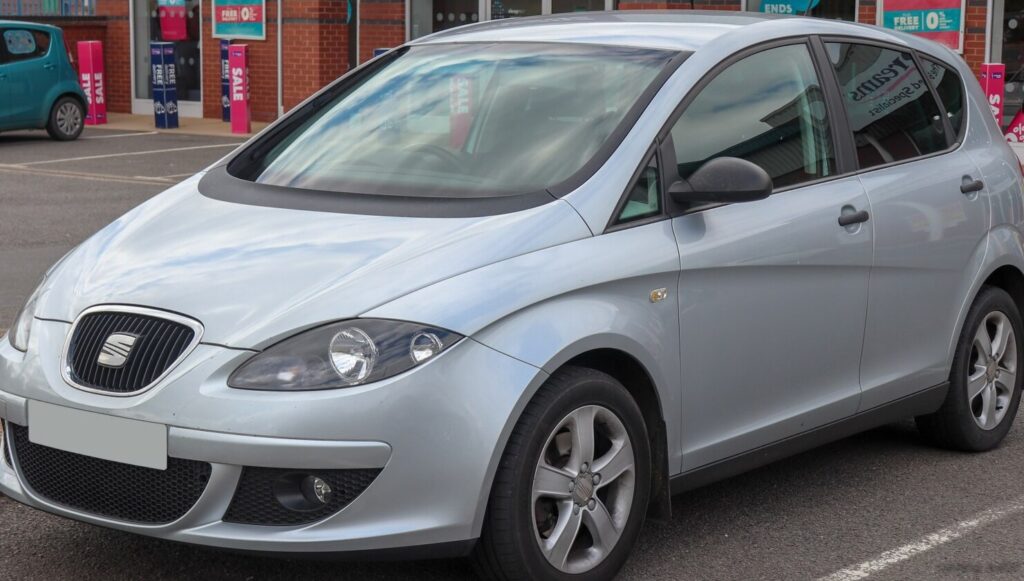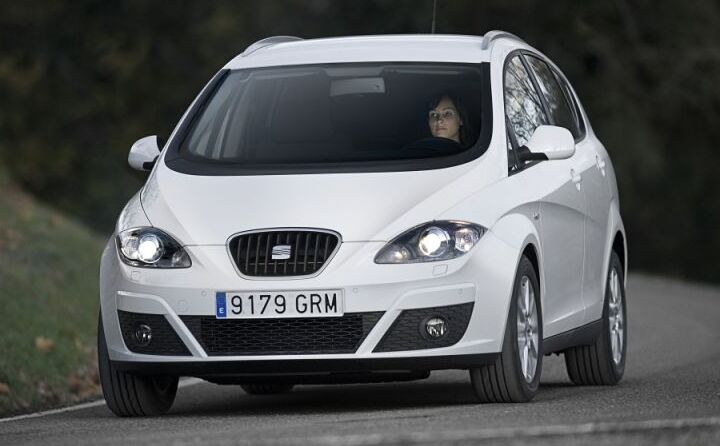
The Seat Altea XL 1.6 TDI, specifically the 105 horsepower variant produced from October 2009 to August 2015, represents a practical and fuel-efficient offering within the broader Altea XL range. Positioned as a mid-range option, it catered to buyers seeking a spacious, versatile MPV (Multi-Purpose Vehicle) with reasonable running costs. The Altea XL itself was a larger, more practical version of the original Altea, designed to compete with vehicles like the Renault Scenic and Citroën C4 Picasso in the European market. This facelifted version, introduced in 2009, featured styling updates and refinements to the engine lineup, including the introduction of this 1.6 TDI engine.
Technical Specifications
| Brand | Seat |
| Model | Altea XL |
| Generation | Altea XL (facelift 2009) |
| Type (Engine) | 1.6 TDI (105 Hp) |
| Start of production | October, 2009 |
| End of production | August, 2015 |
| Powertrain Architecture | Internal Combustion engine |
| Body type | MPV |
| Seats | 5 |
| Doors | 5 |
| Fuel consumption (urban) | 5.9 l/100 km (39.9 US mpg, 47.9 UK mpg, 16.9 km/l) |
| Fuel consumption (extra urban) | 4.2 l/100 km (56 US mpg, 67.3 UK mpg, 23.8 km/l) |
| Fuel consumption (combined) | 4.8 l/100 km (49 US mpg, 58.9 UK mpg, 20.8 km/l) |
| CO2 emissions | 126 g/km |
| Fuel Type | Diesel |
| Acceleration 0 – 100 km/h | 12.4 sec |
| Acceleration 0 – 62 mph | 12.4 sec |
| Acceleration 0 – 60 mph | 11.8 sec |
| Maximum speed | 183 km/h (113.71 mph) |
| Emission standard | Euro 5 |
| Weight-to-power ratio | 14.1 kg/Hp, 70.7 Hp/tonne |
| Weight-to-torque ratio | 5.9 kg/Nm, 168.4 Nm/tonne |
| Power | 105 Hp @ 4400 rpm |
| Power per litre | 65.7 Hp/l |
| Torque | 250 Nm @ 1500-2500 rpm (184.39 lb.-ft. @ 1500-2500 rpm) |
| Engine layout | Front, Transverse |
| Engine Model/Code | CAYC |
| Engine displacement | 1598 cm3 (97.52 cu. in.) |
| Number of cylinders | 4 |
| Engine configuration | Inline |
| Cylinder Bore | 79.5 mm (3.13 in.) |
| Piston Stroke | 80.5 mm (3.17 in.) |
| Compression ratio | 16.5:1 |
| Number of valves per cylinder | 4 |
| Fuel injection system | Diesel Commonrail |
| Engine aspiration | Turbocharger, Intercooler |
| Engine oil capacity | 4.3 l (4.54 US qt | 3.78 UK qt) |
| Kerb Weight | 1485 kg (3273.86 lbs.) |
| Max. weight | 2029 kg (4473.18 lbs.) |
| Max load | 544 kg (1199.31 lbs.) |
| Trunk (boot) space – minimum | 532 l (18.79 cu. ft.) |
| Fuel tank capacity | 55 l (14.53 US gal | 12.1 UK gal) |
| Length | 4469 mm (175.94 in.) |
| Width | 1768 mm (69.61 in.) |
| Height | 1581 mm (62.24 in.) |
| Wheelbase | 2578 mm (101.5 in.) |
| Front track | 1527-1541 mm (60.12 – 60.67 in.) |
| Rear (Back) track | 1503-1517 mm (59.17 – 59.72 in.) |
| Minimum turning circle | 10.7 m (35.1 ft.) |
| Drivetrain Architecture | Front wheel drive |
| Number of gears and type of gearbox | 5 gears, manual transmission |
| Front suspension | Independent, type McPherson with coil spring and anti-roll bar |
| Rear suspension | Independent multi-link suspension |
| Front brakes | Ventilated discs |
| Rear brakes | Disc |
| Assisting systems | ABS (Anti-lock braking system) |
| Steering type | Steering rack and pinion |
| Tires size | 195/65 R15 91H; 205/55 R16 91V; 225/45 R17 91W; 225/40 R18 92Y |
| Wheel rims size | 6J x 15 ET47; 6.5J x 16 ET50; 7J x 17 ET54; 7.5J x 18 ET51 |
INTRODUCTION
The Seat Altea XL 1.6 TDI (105 hp) was introduced as part of the facelifted Altea XL range in late 2009. Built on the Volkswagen Group’s A5 (1HX0/A3) platform, shared with models like the VW Golf Mk5 and Audi A3, the Altea XL aimed to provide a more spacious and practical alternative to traditional hatchbacks. The 1.6 TDI engine was a key component in making the Altea XL accessible to a wider range of buyers, offering a balance between fuel economy and acceptable performance. It occupied a middle ground in the Altea XL lineup, sitting below the more powerful 2.0 TDI variants and above the lower-spec petrol engines.
Powertrain & Engine Architecture
The heart of this variant is the 1.6-liter, four-cylinder diesel engine, designated CAYC. This engine is a member of Volkswagen Group’s common rail diesel family. It utilizes a turbocharger with an intercooler to boost power output. The CAYC engine features a 16.5:1 compression ratio and four valves per cylinder, contributing to its efficiency. Fuel is delivered via a Bosch common rail direct injection system, allowing for precise fuel metering and optimized combustion. The 105 horsepower output is achieved at 4400 rpm, while peak torque of 250 Nm (184 lb-ft) is available between 1500 and 2500 rpm. The engine is transversely mounted at the front of the vehicle. The Altea XL 1.6 TDI was exclusively offered with a five-speed manual transmission, designed to maximize fuel efficiency and provide adequate performance for everyday driving.
Driving Characteristics
The 1.6 TDI engine in the Altea XL provides adequate, but not exhilarating, performance. Acceleration from 0 to 62 mph takes around 12.4 seconds, and the top speed is 183 km/h (113.7 mph). The engine’s strength lies in its mid-range torque, making it suitable for relaxed cruising and overtaking on highways. However, it can feel strained when pushed hard, particularly when fully loaded. The five-speed manual transmission is well-matched to the engine’s characteristics, with gear ratios optimized for fuel economy. Compared to the more powerful 2.0 TDI versions, the 1.6 TDI feels noticeably slower, but it offers a more economical driving experience. The gear ratios are spaced to keep the engine within its optimal torque band during normal driving conditions.
Equipment & Trim Levels
The Altea XL 1.6 TDI typically came equipped with a reasonable level of standard features. These included air conditioning, electric front windows, central locking, and a basic audio system. Higher trim levels, such as Style and Sport, added features like alloy wheels, rear parking sensors, climate control, and upgraded interior trim. Interior upholstery was typically cloth, with options for leather available on higher-spec models. The dashboard layout was functional and straightforward, with a focus on ergonomics. Optional extras included a navigation system, sunroof, and various safety features.
Chassis & Braking
The Altea XL’s chassis features independent suspension all around – McPherson struts at the front and a multi-link setup at the rear. This configuration provides a comfortable ride quality and decent handling characteristics. The front brakes are ventilated discs, while the rear brakes are solid discs. ABS (Anti-lock Braking System) is standard. The suspension setup is tuned for comfort rather than outright sportiness, prioritizing ride quality over sharp handling. Stabilizer bars are fitted to both the front and rear axles to reduce body roll during cornering.
Market Reception & Comparison
The Seat Altea XL 1.6 TDI was generally well-received by critics as a practical and economical MPV. It was praised for its spacious interior, comfortable ride, and fuel efficiency. However, some reviewers noted that the 1.6 TDI engine lacked the punch of the more powerful 2.0 TDI variants. Compared to the 2.0 TDI, the 1.6 TDI offered significantly better fuel economy, but at the expense of performance. It was also generally more affordable to purchase and insure. The Altea XL as a whole faced stiff competition from established players in the MPV segment, such as the Renault Scenic and Citroën C4 Picasso.
Legacy
The 1.6 TDI engine, in various iterations, proved to be a relatively reliable unit, although like all diesel engines, it is susceptible to issues related to the diesel particulate filter (DPF) if not properly maintained. Regular servicing and the use of quality diesel fuel are crucial for ensuring long-term reliability. In the used car market, the Altea XL 1.6 TDI represents a good value proposition for buyers seeking a spacious and economical MPV. While it may not be the most exciting vehicle to drive, it offers a practical and reliable solution for families and those needing a versatile vehicle. The CAYC engine is known for its durability, but potential buyers should be aware of the potential costs associated with DPF maintenance and repair.