
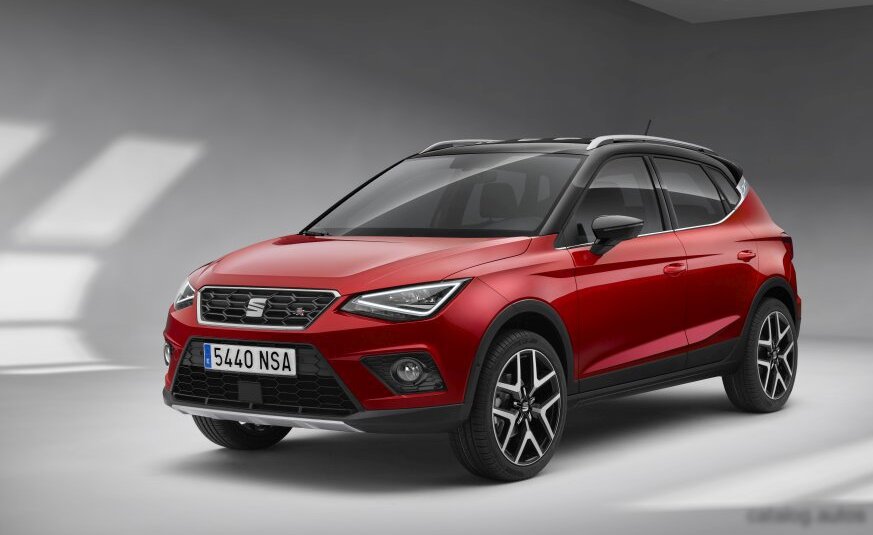
The Seat Arona 1.0 TSI (115 hp) was a popular subcompact SUV produced by the Spanish automaker SEAT between 2019 and June 2021. Positioned as a mid-range offering within the Arona lineup, it aimed to provide a balance of fuel efficiency, practicality, and affordability. The Arona itself, launched in 2017, represented SEAT’s entry into the rapidly growing crossover market, competing with vehicles like the Renault Captur, Peugeot 2008, and Volkswagen T-Cross. This particular variant, powered by the three-cylinder 1.0 TSI engine, was designed to appeal to buyers seeking lower running costs without sacrificing too much in terms of everyday usability.
Technical Specifications
| Brand | Seat |
| Model | Arona |
| Generation | Arona |
| Type (Engine) | 1.0 TSI (115 Hp) |
| Start of production | 2019 |
| End of production | June, 2021 |
| Powertrain Architecture | Internal Combustion engine |
| Body type | SUV |
| Seats | 5 |
| Doors | 5 |
| Combined fuel consumption (WLTP) | 5.7-6.1 l/100 km (41.3 – 38.6 US mpg, 49.6 – 46.3 UK mpg, 17.5 – 16.4 km/l) |
| CO2 emissions (WLTP) | 130-139 g/km |
| Fuel consumption (urban) | 6.1 l/100 km (38.6 US mpg, 46.3 UK mpg, 16.4 km/l) |
| Fuel consumption (extra urban) | 4.6 l/100 km (51.1 US mpg, 61.4 UK mpg, 21.7 km/l) |
| Fuel consumption (combined) | 5.2 l/100 km (45.2 US mpg, 54.3 UK mpg, 19.2 km/l) |
| CO2 emissions | 116 g/km |
| Fuel Type | Petrol (Gasoline) |
| Acceleration 0 – 100 km/h | 9.8 sec |
| Acceleration 0 – 62 mph | 9.8 sec |
| Acceleration 0 – 60 mph | 9.3 sec |
| Maximum speed | 190 km/h (118.06 mph) |
| Emission standard | Euro 6 DG |
| Weight-to-power ratio | 9.7 kg/Hp, 103.2 Hp/tonne |
| Weight-to-torque ratio | 5.6 kg/Nm, 179.5 Nm/tonne |
| Power | 115 Hp @ 5000-5500 rpm |
| Power per litre | 115.1 Hp/l |
| Torque | 200 Nm @ 2000-3500 rpm (147.51 lb.-ft. @ 2000-3500 rpm) |
| Engine layout | Front, Transverse |
| Engine Model/Code | DKRA, DKRF |
| Engine displacement | 999 cm3 (60.96 cu. in.) |
| Number of cylinders | 3 |
| Engine configuration | Inline |
| Cylinder Bore | 74.5 mm (2.93 in.) |
| Piston Stroke | 76.4 mm (3.01 in.) |
| Compression ratio | 10.5:1 |
| Fuel injection system | Direct injection |
| Engine aspiration | Turbocharger, Intercooler |
| Engine oil capacity | 4 l (4.23 US qt | 3.52 UK qt) |
| Coolant | 10 l (10.57 US qt | 8.8 UK qt) |
| Kerb Weight | 1114 kg (2455.95 lbs.) |
| Max. weight | 1710 kg (3769.9 lbs.) |
| Max load | 596 kg (1313.96 lbs.) |
| Trunk (boot) space – minimum | 400 l (14.13 cu. ft.) |
| Trunk (boot) space – maximum | 1280 l (45.2 cu. ft.) |
| Fuel tank capacity | 40 l (10.57 US gal | 8.8 UK gal) |
| Max. roof load | 75 kg (165.35 lbs.) |
| Permitted trailer load with brakes (12%) | 1100 kg (2425.08 lbs.) |
| Permitted trailer load without brakes | 590 kg (1300.73 lbs.) |
| Permitted towbar download | 55 kg (121.25 lbs.) |
| Length | 4138 mm (162.91 in.) |
| Width | 1780 mm (70.08 in.) |
| Height | 1552 mm (61.1 in.) |
| Wheelbase | 2566 mm (101.02 in.) |
| Front track | 1503 mm (59.17 in.) |
| Rear track | 1486 mm (58.5 in.) |
| Front overhang | 803 mm (31.61 in.) |
| Rear overhang | 769 mm (30.28 in.) |
| Ride height (ground clearance) | 190 mm (7.48 in.) |
| Minimum turning circle | 11 m (36.09 ft.) |
| Front suspension | Independent type McPherson |
| Rear suspension | Elastic beam |
| Front brakes | Ventilated discs, 276×24 mm |
| Rear brakes | Drum, 230×9 mm |
| Tires size | 205/60 R16; 205/55 R17; 215/45 R18 |
| Wheel rims size | 6J x 16; 6.5J x 17; 7J x 18 |
INTRODUCTION
The Seat Arona 1.0 TSI (115 hp) was introduced in 2019 as part of the Arona’s mid-life refresh. Built on the Volkswagen Group’s MQB A0 platform – also underpinning the VW Polo and Audi A1 – the Arona aimed to offer a more stylish and practical alternative to traditional hatchbacks. The 1.0 TSI variant occupied a crucial position in the range, serving as a gateway to the Arona lineup for budget-conscious buyers. It provided a compelling blend of fuel economy and acceptable performance for urban and highway driving. This engine and trim level was particularly popular in European markets where smaller displacement engines are favored due to tax incentives and fuel costs.
Powertrain & Engine Architecture
At the heart of the Arona 1.0 TSI lies the EA211 family of three-cylinder, turbocharged gasoline engines. Specifically, the engine codes DKRA and DKRF were commonly used for this output. This 999cc engine utilizes direct fuel injection and a single scroll turbocharger with an intercooler to deliver 115 horsepower at 5000-5500 rpm and 200 Nm (147.51 lb.-ft.) of torque between 2000 and 3500 rpm. The engine features a timing chain for durability and is known for its relatively smooth operation despite having only three cylinders. The Arona 1.0 TSI was typically paired with a six-speed manual transmission, but a seven-speed dual-clutch transmission (DSG) was also available as an option. The DSG offered quicker shifts and improved convenience, but at a higher price point. The engine management system is designed to optimize fuel efficiency and reduce emissions, incorporating start-stop technology as standard.
Driving Characteristics
The Arona 1.0 TSI (115 hp) offers a surprisingly capable driving experience for a subcompact SUV. While not particularly quick, the engine provides adequate power for everyday driving situations. Acceleration from 0-60 mph takes around 9.3 seconds, and the top speed is 190 km/h (118 mph). The turbocharger provides a noticeable boost in power, making overtaking maneuvers manageable. The six-speed manual transmission is well-matched to the engine, offering precise shifts and a reasonable spread of ratios. The optional DSG transmission provides even smoother and faster gear changes. The suspension setup is tuned for comfort, providing a relatively smooth ride over most road surfaces. However, the Arona is not as engaging to drive as some of its rivals, with a slightly numb steering feel. Compared to the more powerful 1.5 TSI engine, the 1.0 TSI feels less responsive, particularly at higher speeds.
Equipment & Trim Levels
The Arona 1.0 TSI (115 hp) was available in several trim levels, each offering a different level of equipment. Standard features typically included air conditioning, a touchscreen infotainment system with Apple CarPlay and Android Auto compatibility, Bluetooth connectivity, and a suite of safety features such as ABS, ESC, and multiple airbags. Higher trim levels added features such as alloy wheels, a rear-view camera, parking sensors, cruise control, and automatic climate control. Interior upholstery was typically cloth, with optional leather seats available on higher trims. The dashboard layout is modern and functional, with a focus on ease of use. Optional extras included a panoramic sunroof, a premium sound system, and various styling packages.
Chassis & Braking
The Arona’s chassis features a McPherson strut front suspension and an elastic beam rear suspension. This setup provides a good balance of comfort and handling. The front brakes are ventilated discs, while the rear brakes are drums on most variants. This configuration is typical for vehicles in this weight class. The steering is electrically assisted and provides a light and easy feel. The Arona’s relatively low weight (around 1114 kg / 2455.95 lbs) contributes to its nimble handling. The standard safety equipment includes ABS (Anti-lock braking system) and ESC (Electronic Stability Control), providing good stopping power and stability in various driving conditions.
Market Reception & Comparison
The Seat Arona 1.0 TSI (115 hp) was generally well-received by automotive critics. It was praised for its fuel efficiency, practicality, and stylish design. However, some critics noted that the engine could feel underpowered when fully loaded or driving uphill. Compared to other trims in the Arona lineup, the 1.0 TSI offered the most affordable entry point, making it an attractive option for budget-conscious buyers. It provided better fuel economy than the more powerful 1.5 TSI engine, but at the expense of performance. In terms of reliability, the 1.0 TSI engine has proven to be generally reliable, although some owners have reported issues with the turbocharger and fuel injectors.
Legacy
The Seat Arona 1.0 TSI (115 hp) remains a popular choice in the used car market. Its combination of affordability, fuel efficiency, and practicality makes it an appealing option for buyers seeking a small SUV. The EA211 engine has proven to be relatively durable, although regular maintenance is essential to ensure long-term reliability. The Arona’s stylish design and well-equipped interior have also contributed to its enduring appeal. As a representative of SEAT’s successful entry into the crossover segment, the Arona 1.0 TSI played a significant role in establishing the brand as a major player in the European automotive market.
