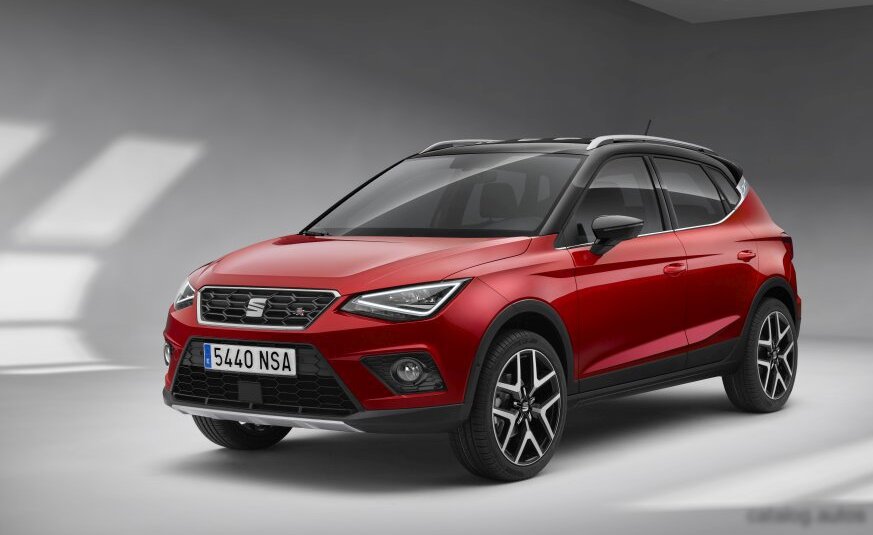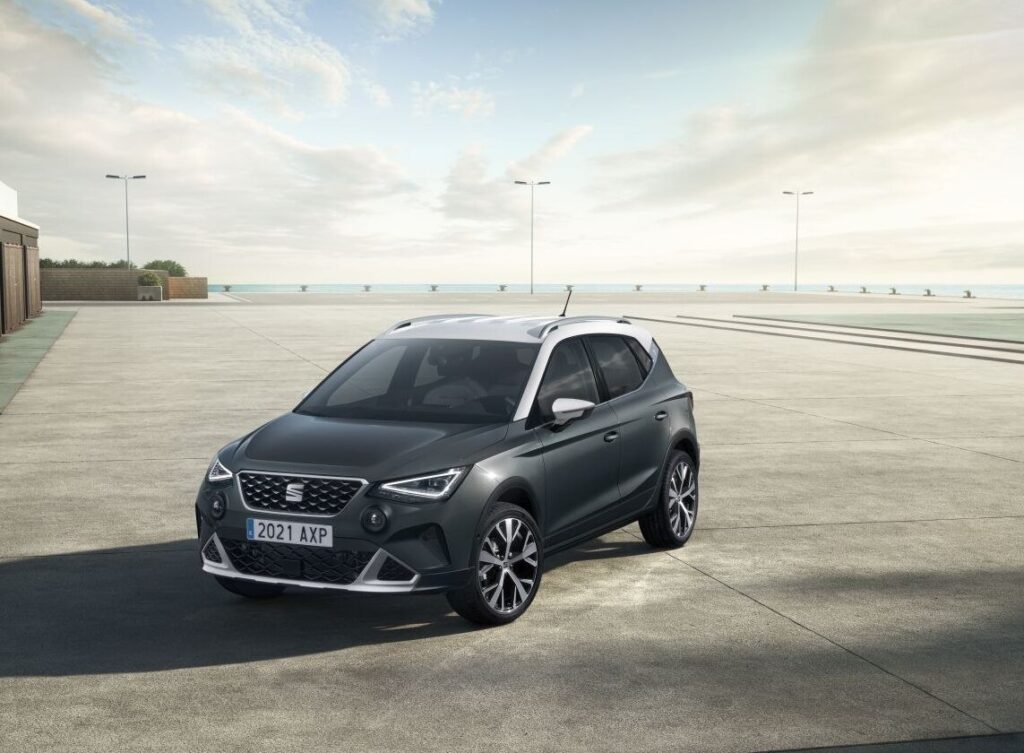
The Seat Arona, specifically the 1.0 TSI 95 horsepower variant produced from June 2021 to October 2025, represents an entry-level offering within the refreshed second-generation Arona (facelift) range. Positioned as a subcompact crossover SUV, the Arona aims to appeal to buyers seeking a practical, affordable, and stylish vehicle for urban environments. This particular engine and transmission combination was primarily sold in European markets, where smaller displacement, turbocharged engines are favored for their fuel efficiency and suitability for congested city driving. The facelift brought updated styling, improved technology, and refinements to the existing platform, known internally as the Volkswagen Group’s PQ25.
Technical Specifications
| Brand | Seat |
| Model | Arona |
| Generation | Arona (facelift 2021) |
| Type (Engine) | 1.0 TSI (95 Hp) |
| Start of production | June, 2021 |
| End of production | October, 2025 |
| Powertrain Architecture | Internal Combustion engine |
| Body type | SUV |
| Seats | 5 |
| Doors | 5 |
| Combined fuel consumption (WLTP) | 5.4-5.7 l/100 km (43.6 – 41.3 US mpg, 52.3 – 49.6 UK mpg, 18.5 – 17.5 km/l) |
| CO2 emissions (WLTP) | 123-129 g/km |
| Fuel consumption (urban) | 5.8 l/100 km (40.6 US mpg, 48.7 UK mpg, 17.2 km/l) |
| Fuel consumption (extra urban) | 4.4 l/100 km (53.5 US mpg, 64.2 UK mpg, 22.7 km/l) |
| Fuel consumption (combined) | 4.9 l/100 km (48 US mpg, 57.6 UK mpg, 20.4 km/l) |
| CO2 emissions (NEDC) | 113 g/km |
| Fuel Type | Petrol (Gasoline) |
| Acceleration 0 – 100 km/h | 11.5 sec |
| Acceleration 0 – 62 mph | 11.5 sec |
| Acceleration 0 – 60 mph | 10.9 sec |
| Maximum speed | 182 km/h (113.09 mph) |
| Emission standard | Euro 6 AP |
| Weight-to-power ratio | 11.7 kg/Hp, 85.6 Hp/tonne |
| Weight-to-torque ratio | 6.3 kg/Nm, 157.7 Nm/tonne |
| Power | 95 Hp @ 5000-5500 rpm |
| Power per litre | 95.1 Hp/l |
| Torque | 175 Nm @ 2000-3500 rpm (129.07 lb.-ft. @ 2000-3500 rpm) |
| Engine layout | Front, Transverse |
| Engine Model/Code | DKLA |
| Engine displacement | 999 cm3 (60.96 cu. in.) |
| Number of cylinders | 3 |
| Engine configuration | Inline |
| Cylinder Bore | 74.5 mm (2.93 in.) |
| Piston Stroke | 76.4 mm (3.01 in.) |
| Compression ratio | 11.5:1 |
| Number of valves per cylinder | 4 |
| Fuel injection system | Direct injection |
| Engine aspiration | Turbocharger, Intercooler |
| Engine oil capacity | 4 l (4.23 US qt | 3.52 UK qt) |
| Coolant capacity | 10 l (10.57 US qt | 8.8 UK qt) |
| Kerb Weight | 1110 kg (2447.13 lbs.) |
| Max. weight | 1710 kg (3769.9 lbs.) |
| Max load | 600 kg (1322.77 lbs.) |
| Trunk (boot) space – minimum | 400 l (14.13 cu. ft.) |
| Trunk (boot) space – maximum | 1280 l (45.2 cu. ft.) |
| Fuel tank capacity | 40 l (10.57 US gal | 8.8 UK gal) |
| Max. roof load | 75 kg (165.35 lbs.) |
| Permitted trailer load (braked) | 1000 kg (2204.62 lbs.) |
| Permitted trailer load (unbraked) | 590 kg (1300.73 lbs.) |
| Permitted towbar download | 55 kg (121.25 lbs.) |
| Length | 4153 mm (163.5 in.) |
| Width | 1780 mm (70.08 in.) |
| Width including mirrors | 1942 mm (76.46 in.) |
| Height | 1552 mm (61.1 in.) |
| Wheelbase | 2566 mm (101.02 in.) |
| Front track | 1513 mm (59.57 in.) |
| Rear track | 1495 mm (58.86 in.) |
| Front overhang | 809 mm (31.85 in.) |
| Rear overhang | 778 mm (30.63 in.) |
| Turning circle | 10.6 m (34.78 ft.) |
| Drivetrain | Front wheel drive |
| Number of gears | 5 |
| Gearbox type | Manual transmission |
| Front suspension | Independent type McPherson |
| Rear suspension | Coil spring, Elastic beam |
| Front brakes | Ventilated discs, 276×24 mm |
| Rear brakes | Drum, 228×42 mm |
| Steering type | Steering rack and pinion |
| Power steering | Electric |
| Tires size | 205/60 R16 92H; 205/55 R17 91V; 215/45 R18 89V |
| Wheel rims size | 6J x 16 ET45; 6.5J x 17 ET48; 7J x 18 ET47 |
INTRODUCTION
The Seat Arona 1.0 TSI 95 hp, introduced with the 2021 facelift, is a front-wheel-drive, five-door subcompact SUV. It’s built on the Volkswagen Group’s PQ25 platform, also underpinning models like the Volkswagen Polo and Audi A1. This variant served as the entry point to the Arona range, offering a balance between affordability and practicality. The facelift brought a more modern aesthetic, with revised front and rear styling, updated interior materials, and enhanced technology features. The 1.0 TSI engine was a key component of Seat’s strategy to offer fuel-efficient and environmentally conscious vehicles, aligning with increasingly stringent European emission regulations.
Powertrain & Engine Architecture
The heart of this Arona variant is the Volkswagen Group’s 1.0 TSI (DKLA) three-cylinder turbocharged gasoline engine. This engine utilizes direct fuel injection and a single scroll turbocharger with an intercooler to deliver a respectable 95 horsepower at 5000-5500 rpm and 175 Nm (129 lb-ft) of torque between 2000-3500 rpm. The engine features a timing chain for durability and is designed to meet Euro 6 AP emission standards. The engine’s compact size and lightweight construction contribute to the Arona’s overall efficiency. The engine is paired with a five-speed manual transmission, chosen for its simplicity and cost-effectiveness in this entry-level model. While a dual-clutch automatic transmission (DSG) was available on higher-spec Arona models, it wasn’t offered with the 95 hp engine.
Driving Characteristics
The 1.0 TSI 95 hp Arona offers adequate performance for everyday driving, particularly in urban and suburban settings. Acceleration from 0-100 km/h (0-62 mph) takes around 11.5 seconds, and top speed is rated at 182 km/h (113 mph). The engine feels responsive at lower revs thanks to the turbocharger, providing sufficient torque for overtaking maneuvers. However, it can feel strained when pushed hard, especially when fully loaded or on inclines. The five-speed manual transmission is well-matched to the engine’s characteristics, with gear ratios optimized for fuel efficiency. Compared to the more powerful 1.5 TSI variants, the 1.0 TSI feels noticeably less energetic, but it provides a more economical and relaxed driving experience. The gear ratios are taller, prioritizing fuel economy over outright acceleration.
Equipment & Trim Levels
The 1.0 TSI 95 hp Arona typically came equipped with a reasonable level of standard features. These generally included air conditioning, a touchscreen infotainment system with smartphone integration (Apple CarPlay and Android Auto), Bluetooth connectivity, and a suite of safety features such as ABS, ESC (Electronic Stability Control), and multiple airbags. Higher trim levels, such as Style and Xcellence, added features like alloy wheels, parking sensors, a rear-view camera, cruise control, and upgraded interior trim. Interior upholstery was typically cloth, with options for different color schemes. Optional extras included a panoramic sunroof, navigation system, and advanced driver-assistance systems (ADAS) like lane departure warning and automatic emergency braking.
Chassis & Braking
The Arona’s chassis features a MacPherson strut front suspension and a torsion beam rear suspension. This setup provides a comfortable ride quality, well-suited for everyday driving. The torsion beam rear suspension is a cost-effective solution that minimizes complexity and weight. The front brakes are ventilated discs, while the rear brakes are drums. This configuration is typical for vehicles in this weight class and provides adequate stopping power for normal driving conditions. Electric power steering provides light and precise steering feel. The Arona’s relatively compact size and nimble handling make it easy to maneuver in tight spaces.
Market Reception & Comparison
The Seat Arona 1.0 TSI 95 hp was generally well-received by automotive critics as a practical and affordable entry-level crossover. It was praised for its fuel efficiency, comfortable ride, and stylish design. However, some reviewers noted that the engine could feel underpowered, particularly when fully loaded or on long journeys. Compared to other trims in the Arona lineup, such as the 1.5 TSI, the 1.0 TSI offered lower running costs but compromised on performance. Against competitors like the Renault Captur, Peugeot 2008, and Nissan Juke, the Arona 1.0 TSI 95 hp offered a competitive package in terms of price, features, and fuel economy.
Legacy
The 1.0 TSI engine has proven to be a relatively reliable unit, although some owners have reported issues with the turbocharger and direct injection system. Regular maintenance, including oil changes and spark plug replacements, is crucial for ensuring long-term reliability. In the used car market, the Arona 1.0 TSI 95 hp represents a good value proposition for buyers seeking an affordable and fuel-efficient crossover. Its compact size, practical interior, and stylish design continue to appeal to a wide range of buyers. The engine’s relatively simple design and widespread use across the Volkswagen Group mean that parts and servicing are readily available.