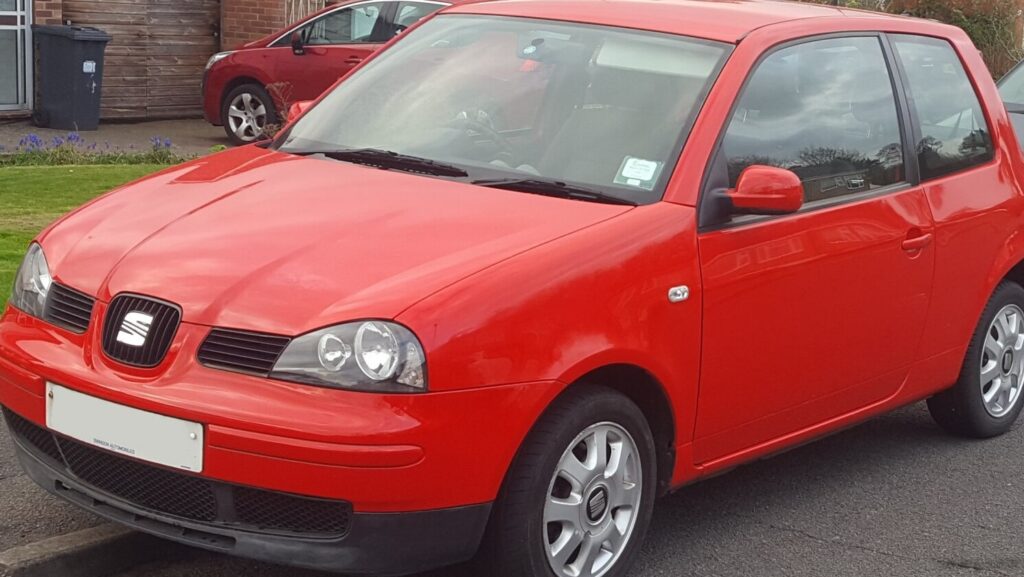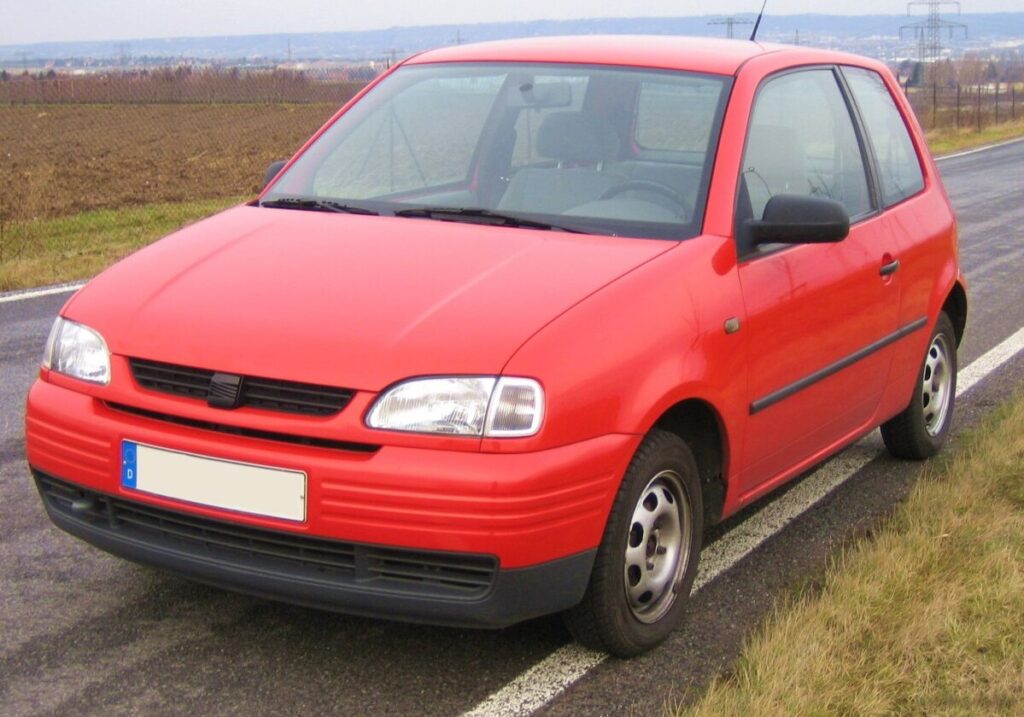
The SEAT Arosa (6H) 1.4, producing 60 horsepower, was a key entry-level offering in SEAT’s lineup during its production run from February 1997 to August 1998. Positioned as a small, economical city car, the Arosa was SEAT’s rebadged version of the Volkswagen Polo Mk3, sharing its platform (the 6K chassis) and many mechanical components. The 1.4-liter variant aimed to provide affordable transportation, particularly in European markets where small, fuel-efficient vehicles were highly sought after. It represented the base engine option for the Arosa, offering a more accessible price point compared to the more powerful 1.6-liter versions.
Technical Specifications
| Brand | Seat |
| Model | Arosa |
| Generation | Arosa (6H) |
| Type (Engine) | 1.4 (60 Hp) |
| Start of production | February, 1997 |
| End of production | August, 1998 |
| Powertrain Architecture | Internal Combustion engine |
| Body type | Hatchback |
| Seats | 4 |
| Doors | 3 |
| Fuel consumption (urban) | 8.5 l/100 km (27.7 US mpg) |
| Fuel consumption (extra urban) | 4.9 l/100 km (48 US mpg) |
| Fuel Type | Petrol (Gasoline) |
| Acceleration 0 – 100 km/h | 14.1 sec |
| Acceleration 0 – 62 mph | 14.1 sec |
| Acceleration 0 – 60 mph | 13.4 sec |
| Maximum speed | 160 km/h (99.42 mph) |
| Weight-to-power ratio | 15.5 kg/Hp |
| Weight-to-torque ratio | 8 kg/Nm |
| Power | 60 Hp @ 4700 rpm |
| Torque | 116 Nm @ 3000 rpm (85.56 lb.-ft. @ 3000 rpm) |
| Engine layout | Front, Transverse |
| Engine Model/Code | AEX |
| Engine displacement | 1390 cm3 (84.82 cu. in.) |
| Number of cylinders | 4 |
| Engine configuration | Inline |
| Cylinder Bore | 76.5 mm (3.01 in.) |
| Piston Stroke | 75.6 mm (2.98 in.) |
| Compression ratio | 10.7:1 |
| Number of valves per cylinder | 2 |
| Fuel injection system | Multi-port manifold injection |
| Engine aspiration | Naturally aspirated |
| Valvetrain | OHC |
| Engine oil capacity | 3.4 l (3.59 US qt | 2.99 UK qt) |
| Coolant capacity | 5.6 l (5.92 US qt | 4.93 UK qt) |
| Kerb Weight | 930 kg (2050.3 lbs.) |
| Max. weight | 1415 kg (3119.54 lbs.) |
| Max load | 485 kg (1069.24 lbs.) |
| Trunk (boot) space – minimum | 130 l (4.59 cu. ft.) |
| Trunk (boot) space – maximum | 790 l (27.9 cu. ft.) |
| Fuel tank capacity | 34 l (8.98 US gal | 7.48 UK gal) |
| Length | 3536 mm (139.21 in.) |
| Width | 1639 mm (64.53 in.) |
| Height | 1480 mm (58.27 in.) |
| Wheelbase | 2323 mm (91.46 in.) |
| Front track | 1392 mm (54.8 in.) |
| Rear track | 1400 mm (55.12 in.) |
| Minimum turning circle | 9.8 m (32.15 ft.) |
| Drivetrain Architecture | Front wheel drive |
| Number of gears | 5 gears, manual transmission |
| Front suspension | Spring Strut |
| Rear suspension | Coil spring |
| Front brakes | Disc |
| Rear brakes | Drum |
| Assisting systems | ABS (Anti-lock braking system) |
| Steering type | Steering rack and pinion |
| Power steering | Hydraulic |
| Tires size | 155/70R13 |
Powertrain & Engine Architecture
The Arosa 1.4 was powered by the SEAT AEX engine, a 1.4-liter inline-four cylinder gasoline engine. This engine was part of the Volkswagen EA827 family, known for its simplicity and reliability. The AEX featured a single overhead camshaft (OHC) operating two valves per cylinder. Fuel delivery was handled by a multi-port fuel injection system, providing adequate, though not exceptional, fuel atomization. The engine produced 60 horsepower at 4700 rpm and 85.56 lb-ft of torque at 3000 rpm. The engine’s relatively low compression ratio of 10.7:1 contributed to its ability to run on lower octane fuels, common in many European markets. The five-speed manual transmission was the standard offering, providing a reasonable spread of gears for city and highway driving.
Driving Characteristics
The Arosa 1.4, with its modest power output, was not designed for spirited performance. Acceleration from 0 to 60 mph took approximately 13.4 seconds, and its top speed was around 99.42 mph. The focus was on fuel efficiency and ease of driving. The gear ratios in the five-speed manual transmission were geared towards maximizing fuel economy, with taller gearing in the upper gears. Compared to the 1.6-liter Arosa, the 1.4 felt noticeably slower, particularly when accelerating or climbing hills. However, the lighter engine weight contributed to nimble handling in urban environments. The steering was light and responsive, making it easy to maneuver in tight spaces.
Equipment & Trim Levels
The Arosa 1.4 typically came with a basic level of equipment. Standard features included power steering, front disc brakes, and an anti-lock braking system (ABS). The interior was functional and utilitarian, with cloth upholstery and a simple dashboard layout. Optional extras included power windows, central locking, and an upgraded stereo system. Trim levels were relatively limited, with the 1.4 representing the entry point into the Arosa range. Higher trim levels, typically paired with the 1.6-liter engine, offered more luxurious features such as alloy wheels, air conditioning, and upgraded interior trim.
Chassis & Braking
The Arosa utilized a relatively simple chassis design. The front suspension consisted of MacPherson strut coil springs, while the rear suspension employed a twist beam setup with coil springs. This configuration provided a comfortable ride, although it wasn’t particularly sporty. The braking system featured disc brakes on the front wheels and drum brakes on the rear. ABS was standard, enhancing braking performance and stability, especially on slippery surfaces. The Arosa’s relatively light weight (around 2050 lbs) helped to compensate for the modest braking power.
Market Reception & Comparison
The SEAT Arosa 1.4 was generally well-received as an affordable and practical city car. Critics praised its fuel efficiency and ease of driving, but noted its lack of performance. Compared to the more powerful 1.6-liter Arosa, the 1.4 offered significantly lower running costs but at the expense of driving enjoyment. The Arosa also competed with other small hatchbacks such as the Fiat Punto and the Renault Clio, offering a similar level of practicality and affordability. The Arosa’s reliability was generally considered good, although the AEX engine was known to be susceptible to oil leaks as it aged.
Legacy
The SEAT Arosa 1.4 remains a relatively common sight on European roads today, particularly as an affordable used car. The AEX engine, while not particularly powerful, is known for its durability and relatively simple maintenance requirements. Parts availability is generally good, and the Arosa’s straightforward design makes it relatively easy to repair. However, potential buyers should be aware of the possibility of oil leaks and corrosion, particularly in vehicles that have spent a significant amount of time in harsh weather conditions. The Arosa 1.4 represents a practical and economical choice for those seeking a basic, reliable city car.