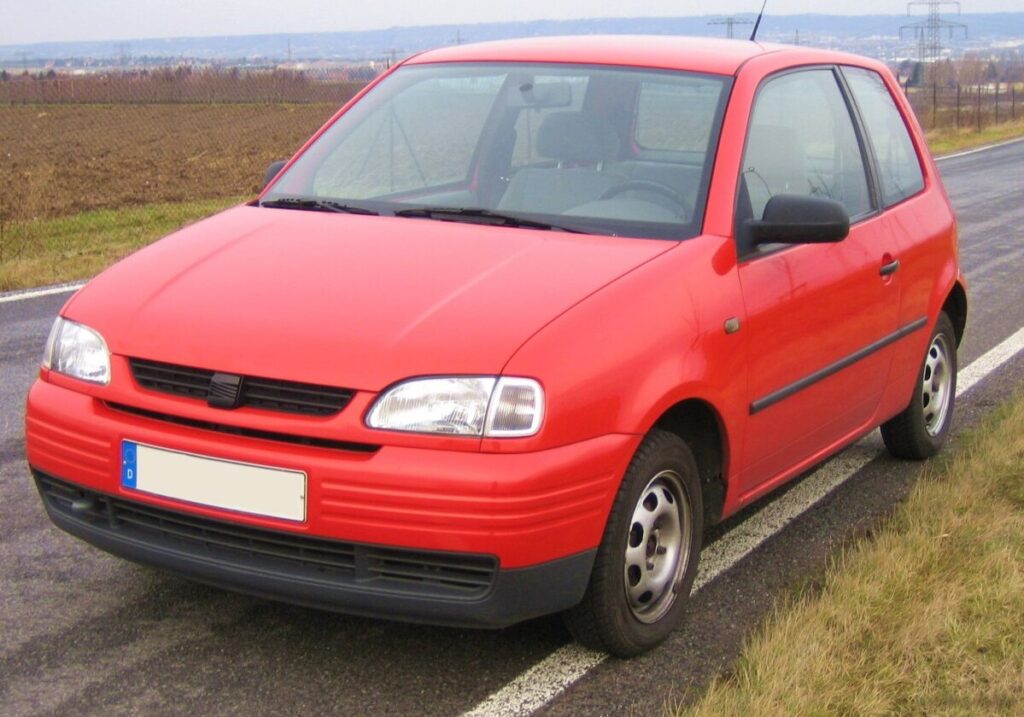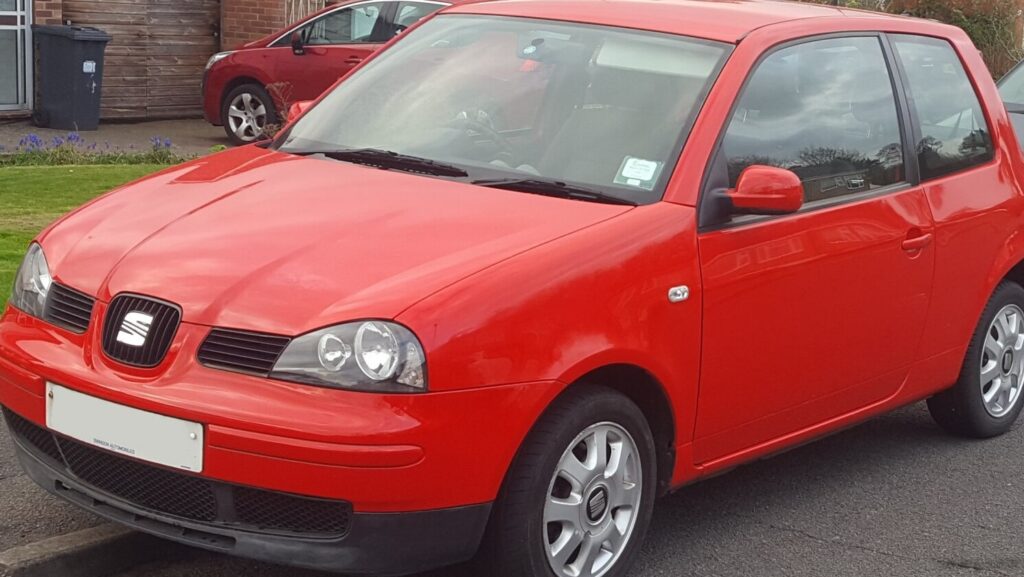
The Seat Arosa 1.0 MPi, produced from 2000 to 2004 as part of the 6H facelift generation, represented the entry point into the Arosa range. Positioned as an affordable and economical city car, it was primarily aimed at buyers seeking low running costs and ease of use. The Arosa itself was a rebadged version of the Volkswagen Polo Mk3, developed under the shared ownership of the Volkswagen Group. This particular 1.0-liter variant served as the base model, offering a simple and practical transportation solution within the European market, particularly in Spain and Germany. It was a direct competitor to other small hatchbacks like the Fiat Punto and Renault Clio.
Technical Specifications
| Brand | Seat |
| Model | Arosa |
| Generation | Arosa (6H, facelift 2000) |
| Type (Engine) | 1.0 MPi (50 Hp) |
| Start of production | July, 2000 |
| End of production | June, 2004 |
| Powertrain Architecture | Internal Combustion engine |
| Body type | Hatchback |
| Seats | 4 |
| Doors | 3 |
| Fuel consumption (urban) | 7.8 l/100 km (30.2 US mpg, 36.2 UK mpg, 12.8 km/l) |
| Fuel consumption (extra urban) | 4.7 l/100 km (50 US mpg, 60.1 UK mpg, 21.3 km/l) |
| Fuel consumption (combined) | 5.8 l/100 km (40.6 US mpg, 48.7 UK mpg, 17.2 km/l) |
| CO2 emissions | 139 g/km |
| Fuel Type | Petrol (Gasoline) |
| Acceleration 0 – 100 km/h | 17.7 sec |
| Acceleration 0 – 62 mph | 17.7 sec |
| Acceleration 0 – 60 mph | 16.8 sec |
| Maximum speed | 151 km/h (93.83 mph) |
| Emission standard | Euro 4 |
| Weight-to-power ratio | 17.6 kg/Hp |
| Weight-to-torque ratio | 10.2 kg/Nm |
| Power | 50 Hp @ 5200 rpm |
| Torque | 86 Nm @ 3300-3800 rpm (63.43 lb.-ft. @ 3300-3800 rpm) |
| Engine layout | Front, Transverse |
| Engine Model/Code | AUC |
| Engine displacement | 999 cm3 (60.96 cu. in.) |
| Number of cylinders | 4 |
| Engine configuration | Inline |
| Cylinder Bore | 67.1 mm (2.64 in.) |
| Piston Stroke | 70.6 mm (2.78 in.) |
| Compression ratio | 10.5:1 |
| Number of valves per cylinder | 2 |
| Fuel injection system | Multi-port manifold injection |
| Engine aspiration | Naturally aspirated |
| Valvetrain | SOHC |
| Engine oil capacity | 3.2 l (3.38 US qt | 2.82 UK qt) |
| Coolant capacity | 5.6 l (5.92 US qt | 4.93 UK qt) |
| Kerb Weight | 880 kg (1940.07 lbs.) |
| Max. weight | 1360 kg (2998.29 lbs.) |
| Max load | 480 kg (1058.22 lbs.) |
| Trunk (boot) space – minimum | 130 l (4.59 cu. ft.) |
| Trunk (boot) space – maximum | 790 l (27.9 cu. ft.) |
| Fuel tank capacity | 34 l (8.98 US gal | 7.48 UK gal) |
| Permitted trailer load with brakes (12%) | 650 kg (1433 lbs.) |
| Length | 3551 mm (139.8 in.) |
| Width | 1639 mm (64.53 in.) |
| Height | 1460 mm (57.48 in.) |
| Wheelbase | 2323 mm (91.46 in.) |
| Front track | 1392 mm (54.8 in.) |
| Rear track | 1400 mm (55.12 in.) |
| Drag coefficient (Cd) | 0.32 |
| Minimum turning circle | 10.1 m (33.14 ft.) |
| Drivetrain Architecture | Front wheel drive |
| Number of gears | 5 gears, manual transmission |
| Front suspension | Independent type McPherson, Transverse stabilizer |
| Rear suspension | Trailing arm, Elastic beam |
| Front brakes | Disc |
| Rear brakes | Drum |
| Steering type | Steering rack and pinion |
| Power steering | Hydraulic |
| Tires size | 185/55 R14 |
| Wheel rims size | 6J x 14 |
Powertrain & Engine Architecture
The Arosa 1.0 MPi utilized the AUC engine code, a 999cc inline four-cylinder petrol engine. This engine was a relatively simple design, featuring a single overhead camshaft (SOHC) and two valves per cylinder. Fuel delivery was managed by a multi-port fuel injection system, providing adequate, though not exceptional, combustion efficiency for its time. The engine’s modest output of 50 horsepower at 5200 rpm and 63.43 lb-ft of torque between 3300 and 3800 rpm was characteristic of small displacement engines of the era. The engine was transversely mounted, driving the front wheels. The five-speed manual transmission was the standard offering, providing a reasonable spread of gears for urban and highway driving. The engine oil capacity was 3.2 liters, and it required a specific oil specification (details often found in the owner’s manual).
Driving Characteristics
The Arosa 1.0 MPi was not designed for performance. Acceleration was leisurely, taking approximately 17.7 seconds to reach 62 mph. Its strength lay in its fuel efficiency and ease of driving in congested urban environments. The gear ratios were optimized for economy rather than outright speed. The engine felt strained at higher speeds, and overtaking required careful planning. Compared to the more powerful Arosa variants, such as those equipped with the 1.4-liter engine, the 1.0 MPi offered a significantly more relaxed driving experience, but at the cost of performance. The manual transmission, while basic, provided a direct connection to the engine and allowed for precise control.
Equipment & Trim Levels
The base-level Arosa 1.0 MPi was typically equipped with basic features. Standard equipment generally included power steering, central locking, and front airbags. Interior upholstery was typically cloth, and the dashboard featured a simple, functional design. Optional extras included air conditioning, electric windows, and a radio/cassette player. Trim levels were relatively limited, with the focus being on providing an affordable and practical vehicle. The Arosa’s interior space was adequate for four passengers, but rear legroom was limited. The rear seats could be folded down to increase luggage capacity.
Chassis & Braking
The Arosa 1.0 MPi featured a MacPherson strut independent suspension at the front and a trailing arm elastic beam suspension at the rear. This setup provided a comfortable ride quality, particularly on smooth roads. The front brakes were discs, while the rear brakes were drums. This configuration was typical for cars in this weight class and price range. The hydraulic power steering provided light and easy steering, making it ideal for maneuvering in tight spaces. The tires were typically 185/55 R14, providing adequate grip in most conditions.
Market Reception & Comparison
The Arosa 1.0 MPi was generally well-received as an affordable and economical city car. Critics praised its fuel efficiency and ease of driving, but noted its lack of performance. Compared to other trims in the Arosa lineup, the 1.0 MPi offered the lowest purchase price and running costs, making it an attractive option for budget-conscious buyers. However, those seeking more power or a more refined driving experience would typically opt for the 1.4-liter or other higher-spec variants. Its fuel economy of around 40.6 US mpg combined was a significant selling point.
Legacy
The Seat Arosa 1.0 MPi, while not a performance icon, remains a relatively reliable and affordable used car. The AUC engine is known for its durability, although regular maintenance is essential. Common issues include oil leaks and wear on the timing belt. Today, these cars are often sought after by first-time drivers or those looking for a cheap and cheerful runaround. The Arosa’s simple design and readily available parts make it relatively easy to maintain and repair. Its legacy lies in providing affordable and practical transportation for a wide range of drivers.