Technical Specifications
| Brand | Seat |
| Model | Arosa |
| Generation | Arosa (6H, facelift 2000) |
| Type (Engine) | 1.2 TDI 3L (61 Hp) |
| Start of production | 2000 |
| End of production | 2005 |
| Powertrain Architecture | Internal Combustion engine |
| Body type | Hatchback |
| Seats | 4 |
| Doors | 3 |
| Fuel consumption (urban) | 3.6 l/100 km (65.3 US mpg, 78.5 UK mpg) |
| Fuel consumption (extra urban) | 2.7 l/100 km (87.1 US mpg, 104.6 UK mpg) |
| Fuel Type | Diesel |
| Acceleration 0 – 100 km/h | 14.7 sec |
| Acceleration 0 – 62 mph | 14.7 sec |
| Acceleration 0 – 60 mph | 14 sec |
| Maximum speed | 164 km/h (101.9 mph) |
| Weight-to-power ratio | 14.1 kg/Hp |
| Weight-to-torque ratio | 6.1 kg/Nm |
| Power | 61 Hp @ 4000 rpm |
| Power per litre | 51.2 Hp/l |
| Torque | 140 Nm @ 1800 rpm (103.26 lb.-ft. @ 1800 rpm) |
| Engine layout | Front, Transverse |
| Engine Model/Code | ANY |
| Engine displacement | 1191 cm3 (72.68 cu. in.) |
| Number of cylinders | 3 |
| Engine configuration | Inline |
| Cylinder Bore | 76.5 mm (3.01 in.) |
| Piston Stroke | 86.4 mm (3.4 in.) |
| Compression ratio | 19.5:1 |
| Fuel injection system | Pump-nozzle (Unit Injector) |
| Engine aspiration | Turbocharger, Intercooler |
| Valvetrain | OHC |
| Kerb Weight | 860 kg (1895.98 lbs.) |
| Max. weight | 1200 kg (2645.55 lbs.) |
| Max load | 340 kg (749.57 lbs.) |
| Trunk (boot) space – minimum | 130 l (4.59 cu. ft.) |
| Trunk (boot) space – maximum | 790 l (27.9 cu. ft.) |
| Fuel tank capacity | 34 l (8.98 US gal | 7.48 UK gal) |
| Length | 3529 mm (138.94 in.) |
| Width | 1621 mm (63.82 in.) |
| Height | 1455 mm (57.28 in.) |
| Wheelbase | 2319 mm (91.3 in.) |
| Front track | 1425 mm (56.1 in.) |
| Rear (Back) track | 1400 mm (55.12 in.) |
| Minimum turning circle | 9.8 m (32.15 ft.) |
| Drivetrain Architecture | Front wheel drive |
| Number of gears and type of gearbox | 5 gears, automatic transmission |
| Front suspension | Spring Strut |
| Rear suspension | Coil spring |
| Front brakes | Disc |
| Rear brakes | Drum |
| Assisting systems | ABS (Anti-lock braking system) |
| Steering type | Steering rack and pinion |
| Power steering | Hydraulic Steering |
| Tires size | 155/65R14 |
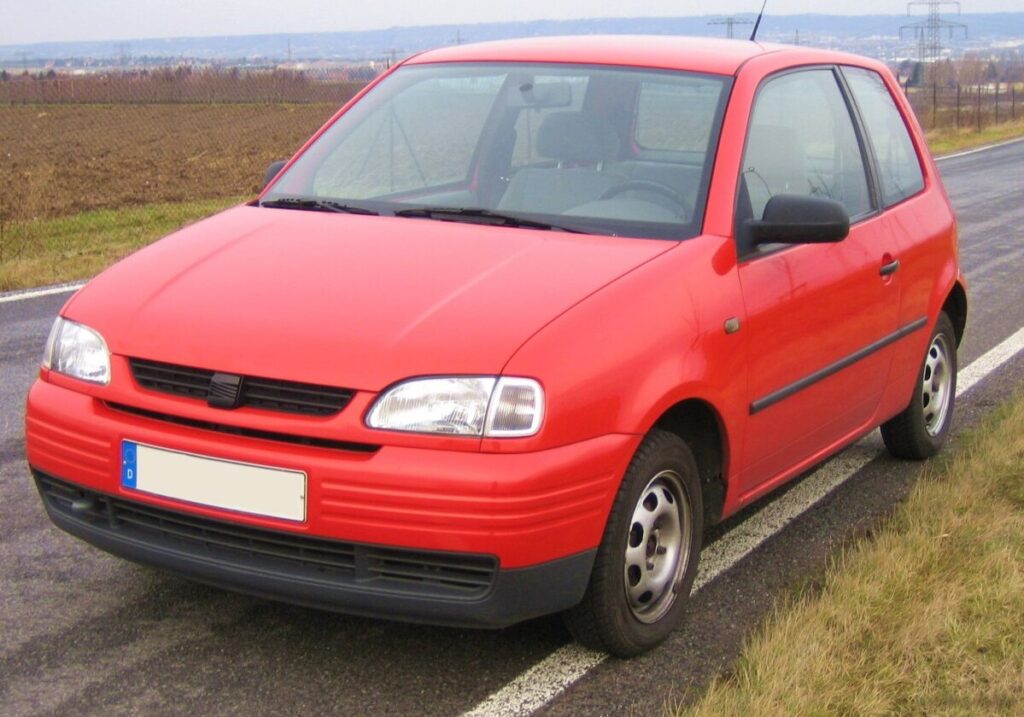
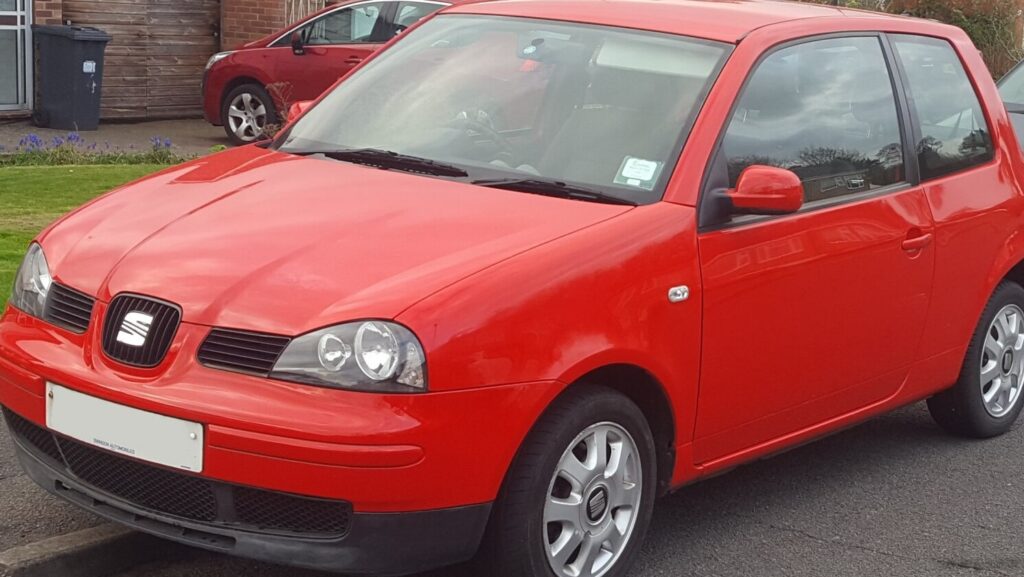
The Seat Arosa, launched in 1997, was a small, three-door hatchback designed as a more affordable alternative to the SEAT Ibiza. The facelifted version, introduced in 2000, brought subtle styling updates and, crucially, the introduction of the 1.2 TDI 3L engine. This variant aimed to capitalize on the growing demand for fuel-efficient vehicles, particularly in Europe. The Arosa shared its platform (the Volkswagen Group’s PQ24) with the Volkswagen Polo and Škoda Fabia, benefiting from the economies of scale and engineering expertise within the group. The 1.2 TDI 3L was positioned as the most economical Arosa, appealing to budget-conscious buyers and those prioritizing low running costs.
Powertrain & Engine Architecture
The heart of the Arosa 1.2 TDI 3L is the ANY engine code, a 1.2-liter three-cylinder diesel engine. This engine is a direct injection diesel, utilizing pump-nozzle (unit injector) technology developed by Bosch. This system allows for precise fuel delivery and contributes to the engine’s efficiency. The engine features an overhead camshaft (OHC) valvetrain and is turbocharged with an intercooler to boost power and torque. The turbocharger helps overcome the inherent limitations of a small-displacement engine. The 3L variant’s engine produced 61 horsepower at 4000 rpm and 140 Nm (103 lb-ft) of torque at 1800 rpm. Paired with this engine is a five-speed automatic transmission. This transmission, while offering convenience, was not known for its sportiness and was geared towards maximizing fuel economy rather than performance.
Driving Characteristics
The Arosa 1.2 TDI 3L with the automatic transmission offered a decidedly unhurried driving experience. Acceleration was slow, taking approximately 14.7 seconds to reach 62 mph (100 km/h). The automatic gearbox, while smooth, had relatively long gear ratios, prioritizing fuel efficiency over quick acceleration. In real-world conditions, the car felt most comfortable in urban environments, where its nimble size and low-speed torque were advantageous. Compared to the more powerful Arosa variants, such as those with the 1.4-liter petrol engine, the 1.2 TDI 3L lacked outright performance. However, it excelled in fuel economy, consistently achieving figures close to the advertised 3 liters per 100 kilometers. The automatic transmission, while convenient, did diminish the overall driving engagement compared to the available manual gearbox.
Equipment & Trim Levels
The Arosa 1.2 TDI 3L typically came with a fairly basic level of equipment, reflecting its position as an entry-level model. Standard features generally included power steering, central locking, and an anti-lock braking system (ABS). Interior upholstery was typically cloth, and the dashboard featured a simple, functional design. Optional extras included air conditioning, electric windows, and a radio/CD player. Higher trim levels, if selected, might have added features like alloy wheels and upgraded interior trim. The focus was on providing essential features at an affordable price point.
Chassis & Braking
The Arosa 1.2 TDI 3L utilized a relatively simple chassis setup. Front suspension consisted of spring struts, while the rear employed a coil spring arrangement. The front brakes were discs, providing adequate stopping power, while the rear brakes were drums, a cost-saving measure common in this segment. The car’s relatively light weight (approximately 860 kg or 1896 lbs) helped to compensate for the modest braking performance. Stabilizer bars were present, contributing to the car’s handling stability, though the overall driving experience was geared towards comfort rather than sporty handling.
Market Reception & Comparison
The Arosa 1.2 TDI 3L was generally well-received by critics for its exceptional fuel economy. However, its slow acceleration and basic interior were often noted as drawbacks. Compared to other Arosa variants, the 1.2 TDI 3L offered significantly better fuel economy but at the expense of performance. The 1.4-liter petrol version, for example, provided more power and a more engaging driving experience, but consumed considerably more fuel. The 1.2 TDI 3L’s main competitors included other small diesel hatchbacks, such as the Volkswagen Polo TDI and Škoda Fabia TDI, which offered similar levels of fuel efficiency and practicality.
Legacy
The Seat Arosa 1.2 TDI 3L remains a popular choice in the used car market, particularly among buyers seeking an economical and reliable city car. The 1.2 TDI engine, while not known for its longevity in all applications, proved reasonably durable in the Arosa, provided it was properly maintained. Common issues include turbocharger wear and potential problems with the pump-nozzle fuel injection system. However, these issues are often manageable with regular servicing. Today, the Arosa 1.2 TDI 3L represents a piece of automotive history, showcasing Volkswagen Group’s early efforts to develop ultra-low consumption vehicles. Its fuel efficiency and affordability continue to make it an attractive option for budget-conscious drivers.