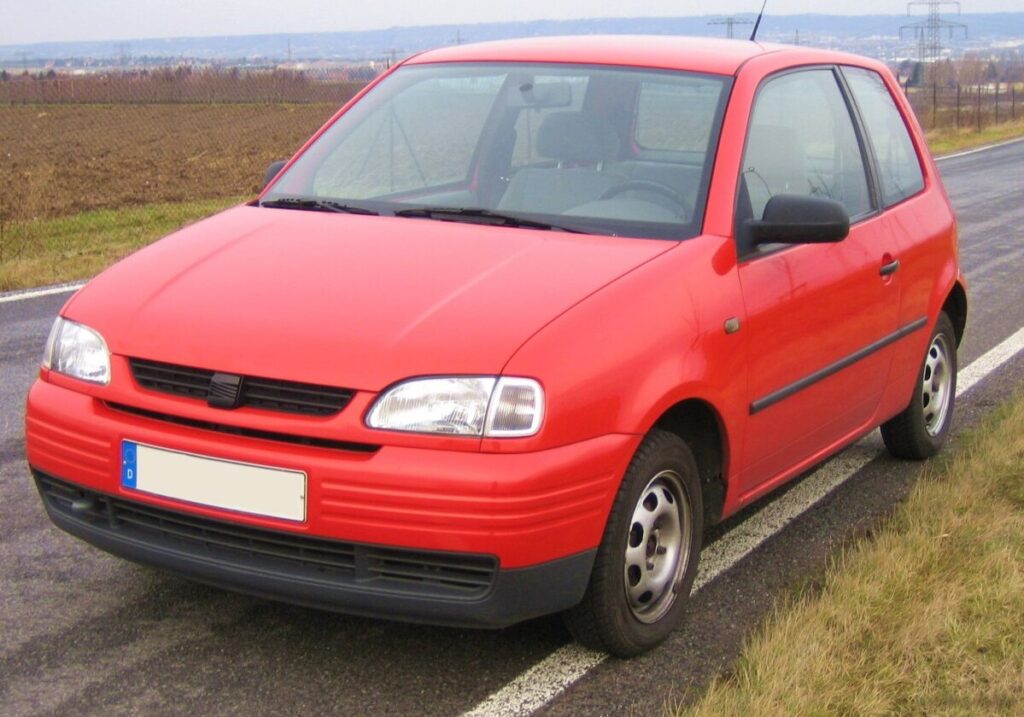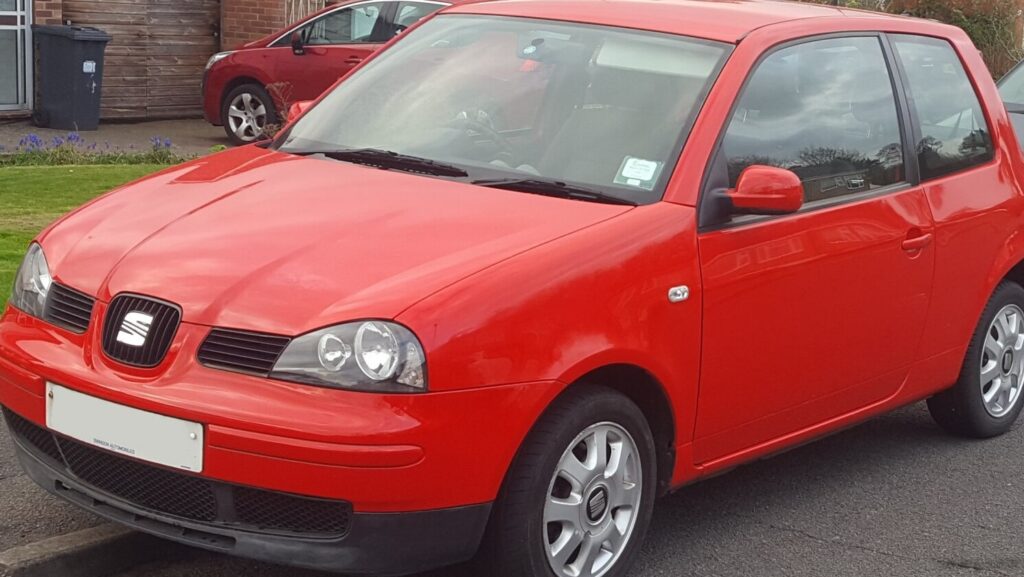
The Seat Arosa 1.4 TDI, produced from 2000 to 2004 as part of the 6H facelift generation, represented a fuel-efficient and economical entry point into the Seat lineup. Positioned as a city car, the Arosa shared its platform (the Volkswagen Polo 6N2) with its cousin, the Volkswagen Lupo. The 1.4 TDI variant, powered by the AMF engine code, was specifically aimed at buyers prioritizing low running costs and practicality over outright performance. It was a popular choice in European markets where diesel fuel was readily available and taxation favored smaller, more efficient vehicles. This model offered a blend of compact dimensions, reasonable interior space for its class, and the benefits of direct-injection diesel technology.
Technical Specifications
| Brand | Seat |
| Model | Arosa |
| Generation | Arosa (6H, facelift 2000) |
| Type (Engine) | 1.4 TDI (75 Hp) |
| Start of production | 2000 |
| End of production | May, 2004 |
| Powertrain Architecture | Internal Combustion engine |
| Body type | Hatchback |
| Seats | 4 |
| Doors | 3 |
| Fuel consumption (urban) | 5.6 l/100 km (42 US mpg, 50.4 UK mpg, 17.9 km/l) |
| Fuel consumption (extra urban) | 3.5 l/100 km (67.2 US mpg, 80.7 UK mpg, 28.6 km/l) |
| Fuel Type | Diesel |
| Acceleration 0 – 100 km/h | 12.2 sec |
| Acceleration 0 – 62 mph | 12.2 sec |
| Acceleration 0 – 60 mph | 11.6 sec |
| Maximum speed | 170 km/h (105.63 mph) |
| Weight-to-power ratio | 12.9 kg/Hp, 77.7 Hp/tonne |
| Weight-to-torque ratio | 4.9 kg/Nm, 202.1 Nm/tonne |
| Power | 75 Hp @ 4000 rpm |
| Power per litre | 52.7 Hp/l |
| Torque | 195 Nm @ 2200 rpm (143.82 lb.-ft. @ 2200 rpm) |
| Engine layout | Front, Transverse |
| Engine Model/Code | AMF |
| Engine displacement | 1422 cm3 (86.78 cu. in.) |
| Number of cylinders | 3 |
| Engine configuration | Inline |
| Cylinder Bore | 79.5 mm (3.13 in.) |
| Piston Stroke | 95.5 mm (3.76 in.) |
| Compression ratio | 19.5:1 |
| Number of valves per cylinder | 2 |
| Fuel injection system | Pump-nozzle (Unit Injector) |
| Engine aspiration | Turbocharger, Intercooler |
| Valvetrain | OHC |
| Engine oil capacity | 4.2 l (4.44 US qt | 3.7 UK qt) |
| Coolant | 5 l (5.28 US qt | 4.4 UK qt) |
| Kerb Weight | 965 kg (2127.46 lbs.) |
| Max. weight | 1445 kg (3185.68 lbs.) |
| Max load | 480 kg (1058.22 lbs.) |
| Trunk (boot) space – minimum | 130 l (4.59 cu. ft.) |
| Trunk (boot) space – maximum | 790 l (27.9 cu. ft.) |
| Fuel tank capacity | 34 l (8.98 US gal | 7.48 UK gal) |
| Length | 3536 mm (139.21 in.) |
| Width | 1639 mm (64.53 in.) |
| Height | 1460 mm (57.48 in.) |
| Wheelbase | 2323 mm (91.46 in.) |
| Front track | 1392 mm (54.8 in.) |
| Rear (Back) track | 1400 mm (55.12 in.) |
| Minimum turning circle | 9.8 m (32.15 ft.) |
| Drivetrain Architecture | The Internal combustion engine (ICE) drives the front wheels of the vehicle. |
| Drive wheel | Front wheel drive |
| Number of gears | 5 gears, manual transmission |
| Front suspension | Spring Strut |
| Rear suspension | Coil spring |
| Front brakes | Disc |
| Rear brakes | Drum |
| Assisting systems | ABS (Anti-lock braking system) |
| Steering type | Steering rack and pinion |
| Power steering | Hydraulic Steering |
| Tires size | 185/55R14 |
Powertrain & Engine Architecture
The heart of the Arosa 1.4 TDI is the AMF engine, a 1.4-liter, three-cylinder diesel engine. This engine is a member of the Volkswagen Group’s diesel family, known for its robust construction and fuel efficiency. The AMF utilizes a pump-nozzle (unit injector) fuel injection system, a technology that delivers highly precise fuel delivery directly into the combustion chamber, contributing to improved combustion efficiency and reduced emissions. The engine also features a turbocharger with an intercooler, which increases power output by forcing more air into the cylinders. The single overhead camshaft (OHC) operates two valves per cylinder. The engine’s relatively high compression ratio of 19.5:1 is typical for direct-injection diesels. The five-speed manual transmission was the standard offering, providing a balance between fuel economy and drivability. The engine’s layout is front-mounted and transverse, a common configuration for front-wheel-drive vehicles.
Driving Characteristics
The Arosa 1.4 TDI, with its 75 horsepower and 195 Nm (144 lb-ft) of torque, wasn’t designed for rapid acceleration. Zero to 60 mph took around 11.6 seconds, and top speed was limited to 105.63 mph. However, the engine’s torque characteristics made it surprisingly capable in urban environments and on winding roads. The peak torque was available from a low 2200 rpm, providing ample pulling power for overtaking and hill climbing. The five-speed manual transmission was well-matched to the engine, with gear ratios optimized for fuel efficiency. Compared to the more powerful (and expensive) Arosa 1.4 16V petrol variant, the TDI offered significantly better fuel economy but lacked the petrol engine’s responsiveness. The ride quality was generally comfortable, although the rear drum brakes could feel less progressive than disc brakes during hard braking.
Equipment & Trim Levels
The Arosa 1.4 TDI typically came with a fairly basic level of equipment, reflecting its position as an entry-level model. Standard features included central locking, power steering, and an ABS anti-lock braking system. Interior upholstery was typically cloth, and the dashboard featured a simple, functional design. Optional extras included air conditioning, electric windows, and a radio/CD player. Higher trim levels, if selected, might have added features like alloy wheels and upgraded interior trim. The Arosa’s interior, while not luxurious, was well-built and durable.
Chassis & Braking
The Arosa’s chassis featured a MacPherson strut front suspension and a coil spring rear suspension. This setup provided a good balance between ride comfort and handling. The front brakes were discs, while the rear brakes were drums – a cost-saving measure common in this class of vehicle. The steering was a rack and pinion system with hydraulic power assistance, providing light and precise steering feel. The Arosa’s relatively light weight (965 kg / 2127 lbs) helped to compensate for the modest power output and contributed to its nimble handling.
Market Reception & Comparison
The Seat Arosa 1.4 TDI was generally well-received by automotive critics as a practical and economical city car. Its fuel efficiency was a major selling point, and its compact size made it easy to maneuver in tight urban spaces. Compared to other small diesel cars of the time, such as the Peugeot 106 HDi and the Renault Clio dCi, the Arosa offered a competitive level of performance and economy. However, some critics noted that the interior was somewhat basic and that the engine could be noisy at higher speeds. The Arosa’s reliability was generally good, although the pump-nozzle fuel injection system could be prone to issues if not properly maintained.
Legacy
The Seat Arosa 1.4 TDI has proven to be a relatively durable and reliable vehicle, and many examples are still on the road today. The AMF engine, while not without its potential issues (particularly with the fuel injection pump), is generally considered to be a robust unit. In the used car market, the Arosa 1.4 TDI remains an affordable and economical option for buyers seeking a small, fuel-efficient city car. Its simplicity and relatively low running costs make it an attractive choice for first-time car owners or those on a tight budget. The Arosa, and particularly the 1.4 TDI variant, represents a significant chapter in Seat’s history, demonstrating the brand’s ability to produce practical and well-engineered vehicles for the mass market.