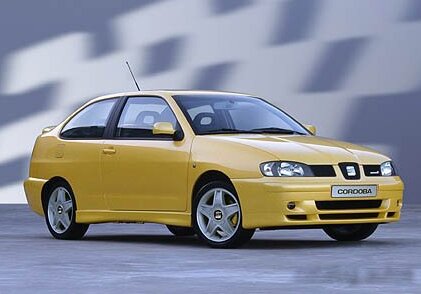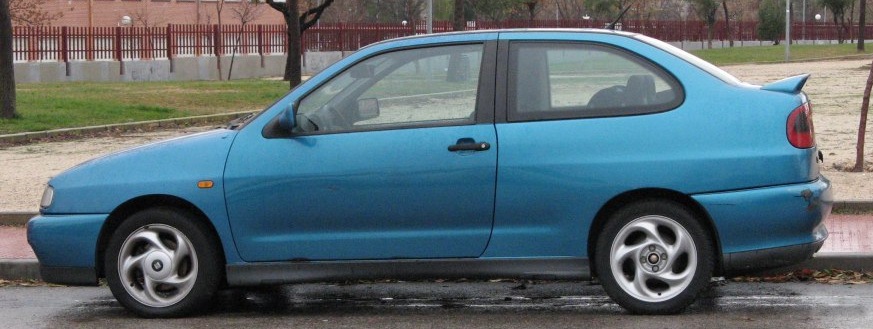
The SEAT Córdoba Coupe I 1.6 MPi, produced between May 1997 and December 1998, represented a sporty and affordable entry point into the SEAT lineup during that period. Positioned as a coupe derivative of the broader Córdoba range (based on the Volkswagen Polo/Ibiza 6K platform), it aimed to attract buyers seeking a more stylish and dynamic alternative to traditional hatchbacks. This variant, equipped with the 1.6-liter engine and a five-speed manual transmission, was a key model in establishing SEAT’s presence in the European market, offering a blend of practicality and accessible performance. It was a relatively simple, no-frills offering designed for cost-conscious buyers.
Technical Specifications
| Brand | Seat |
| Model | Cordoba |
| Generation | Cordoba Coupe I |
| Type (Engine) | 1.6 MPi (75 Hp) |
| Start of production | May, 1997 |
| End of production | December, 1998 |
| Powertrain Architecture | Internal Combustion engine |
| Body type | Coupe |
| Seats | 5 |
| Doors | 3 |
| Fuel consumption (urban) | 10.3 l/100 km (22.8 US mpg) |
| Fuel consumption (extra urban) | 6 l/100 km (39.2 US mpg) |
| Fuel Type | Petrol (Gasoline) |
| Acceleration 0 – 100 km/h | 13.2 sec |
| Acceleration 0 – 62 mph | 13.2 sec |
| Acceleration 0 – 60 mph | 12.5 sec |
| Maximum speed | 167 km/h (103.77 mph) |
| Weight-to-power ratio | 13.8 kg/Hp |
| Weight-to-torque ratio | 7.7 kg/Nm |
| Power | 75 Hp @ 4600 rpm |
| Torque | 135 Nm @ 2800 rpm (99.57 lb.-ft. @ 2800 rpm) |
| Engine layout | Front, Transverse |
| Engine Model/Code | AEE |
| Engine displacement | 1598 cm3 (97.52 cu. in.) |
| Number of cylinders | 4 |
| Engine configuration | Inline |
| Cylinder Bore | 76.5 mm (3.01 in.) |
| Piston Stroke | 86.9 mm (3.42 in.) |
| Compression ratio | 9.8:1 |
| Number of valves per cylinder | 2 |
| Fuel injection system | Multi-port manifold injection |
| Engine aspiration | Naturally aspirated engine |
| Valvetrain | OHC |
| Engine oil capacity | 3.5 l (3.7 US qt | 3.08 UK qt) |
| Coolant | 4.2 l (4.44 US qt | 3.7 UK qt) |
| Kerb Weight | 1035 kg (2281.78 lbs.) |
| Max. weight | 1495 kg (3295.91 lbs.) |
| Max load | 460 kg (1014.13 lbs.) |
| Trunk (boot) space – minimum | 455 l (16.07 cu. ft.) |
| Trunk (boot) space – maximum | 762 l (26.91 cu. ft.) |
| Fuel tank capacity | 45 l (11.89 US gal | 9.9 UK gal) |
| Length | 4144 mm (163.15 in.) |
| Width | 1640 mm (64.57 in.) |
| Height | 1424 mm (56.06 in.) |
| Wheelbase | 2433 mm (95.79 in.) |
| Front track | 1430 mm (56.3 in.) |
| Rear (Back) track | 1394 mm (54.88 in.) |
| Drivetrain Architecture | The Internal combustion engine (ICE) drives the front wheels of the vehicle. |
| Drive wheel | Front wheel drive |
| Number of gears and type of gearbox | 5 gears, manual transmission |
| Front suspension | Spring Strut |
| Rear suspension | Suspension with traction connecting levers |
| Front brakes | Disc |
| Rear brakes | Drum |
| Assisting systems | ABS (Anti-lock braking system) |
| Steering type | Steering rack and pinion |
| Power steering | Hydraulic Steering |
| Tires size | 185/60 R15 |
Powertrain & Engine Architecture
The Córdoba Coupe 1.6 MPi utilized the SEAT AEE engine, a naturally aspirated, inline-four cylinder powerplant displacing 1598cc. This engine was a common sight in various Volkswagen Group vehicles of the era, known for its relative simplicity and durability. The AEE featured a single overhead camshaft (OHC) valvetrain operating two valves per cylinder. Fuel delivery was managed by a multi-port fuel injection system, providing adequate, though not exceptional, performance. The engine produced 75 horsepower at 4600 rpm and 135 Nm (99.57 lb-ft) of torque at 2800 rpm. The five-speed manual transmission was a standard feature, offering a reasonably direct connection between the engine and the front wheels. The transmission’s gear ratios were geared towards fuel efficiency and everyday usability rather than outright performance.
Driving Characteristics
The 1.6 MPi-equipped Córdoba Coupe offered modest, but adequate, performance. Acceleration from 0-60 mph took around 12.5 seconds, and the top speed was approximately 103.77 mph. The engine felt somewhat strained at higher speeds, and overtaking maneuvers required careful planning. Compared to the more powerful (and expensive) VR6 versions of the Córdoba, or even the later TDI diesel models, the 1.6 MPi felt noticeably slower. However, the lighter weight of the 1.6 model did contribute to a more nimble feel in corners. The five-speed manual transmission provided a decent level of control, although the shift quality wasn’t particularly sporty. The overall driving experience was best described as practical and economical, rather than exhilarating.
Equipment & Trim Levels
The 1.6 MPi Córdoba Coupe was generally offered with a fairly basic level of equipment. Standard features typically included power steering, central locking, and an adjustable steering column. Interior upholstery was typically cloth, and the dashboard featured a functional, if somewhat plain, design. Optional extras included air conditioning, electric windows, and an upgraded audio system. The trim level was generally considered entry-level within the Córdoba Coupe range, appealing to buyers prioritizing affordability over luxury features. The focus was on providing a functional and reliable vehicle at a competitive price point.
Chassis & Braking
The Córdoba Coupe I utilized a relatively simple chassis design. Front suspension consisted of MacPherson strut springs, while the rear employed a torsion beam setup with traction connecting levers. This configuration provided a reasonable balance between ride comfort and handling. Braking duties were handled by disc brakes at the front and drum brakes at the rear. An Anti-lock Braking System (ABS) was included as standard, enhancing safety. The suspension setup was tuned for comfort, resulting in a slightly softer ride compared to more performance-oriented models. Stabilizer bars were present, but relatively thin, contributing to a degree of body roll during cornering.
Market Reception & Comparison
The Córdoba Coupe 1.6 MPi was generally well-received as an affordable and practical coupe. Critics praised its styling and value for money, but noted its lack of outright performance. Compared to the more powerful VR6 models, the 1.6 MPi offered significantly lower running costs and insurance premiums. Fuel economy was a strong point, averaging around 39.2 US mpg on the extra-urban cycle. Reliability was generally good, although the engine was known to be somewhat prone to oil consumption as it aged. The 1.6 MPi appealed to a different demographic than the VR6, attracting buyers who prioritized economy and practicality over performance and prestige.
Legacy
The SEAT Córdoba Coupe I 1.6 MPi, while not a particularly groundbreaking vehicle, played a significant role in establishing SEAT as a viable competitor in the European automotive market. The AEE engine proved to be reasonably durable, and many examples are still on the road today. In the used car market, these Córdoba Coupes are often sought after by enthusiasts looking for an affordable and stylish classic. Maintenance is generally straightforward, and parts availability is still relatively good. However, potential buyers should be aware of the possibility of oil consumption issues and the age-related wear and tear common to vehicles of this era. The 1.6 MPi variant remains a testament to SEAT’s early efforts to create a distinctive and appealing range of vehicles.