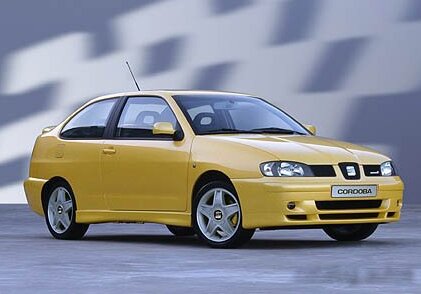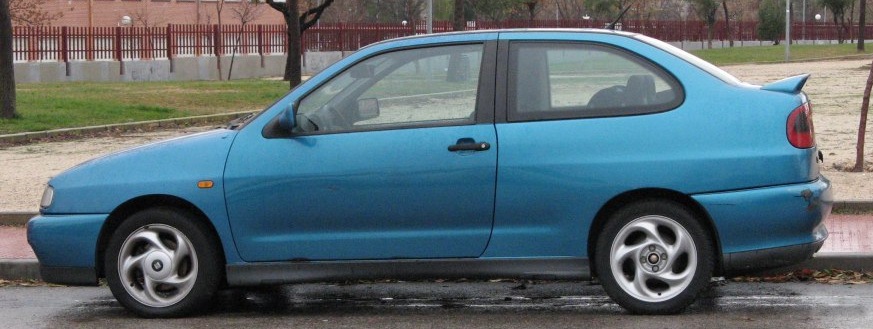
The SEAT Córdoba Coupe I 1.8 i 16V, produced between February 1994 and June 1996, represented a sporty and relatively affordable offering within the SEAT lineup. Positioned as a coupe derivative of the broader Córdoba range (based on the Volkswagen Polo and Ibiza platform – 1HX0/A3), it aimed to attract buyers seeking a more stylish and dynamic alternative to conventional hatchbacks. This particular 1.8-liter 16-valve variant occupied a mid-range position within the Córdoba Coupe’s offerings, slotting above the lower-powered 1.4 and 1.6-liter models but below potential future performance trims. The Córdoba itself was a key model for SEAT following its acquisition by the Volkswagen Group, representing a significant step in establishing the brand’s identity and expanding its market reach, particularly in Europe.
Technical Specifications
| Brand | Seat |
| Model | Cordoba |
| Generation | Cordoba Coupe I |
| Type (Engine) | 1.8 i 16V (129 Hp) |
| Start of production | February, 1994 |
| End of production | June, 1996 |
| Powertrain Architecture | Internal Combustion engine |
| Body type | Coupe |
| Seats | 5 |
| Doors | 3 |
| Fuel consumption (combined) | 8.3 l/100 km |
| Fuel consumption (US mpg) | 28.3 US mpg |
| Fuel consumption (UK mpg) | 34 UK mpg |
| Fuel consumption (km/l) | 12 km/l |
| Fuel Type | Petrol (Gasoline) |
| Acceleration 0 – 100 km/h | 9.1 sec |
| Acceleration 0 – 62 mph | 9.1 sec |
| Acceleration 0 – 60 mph | 8.6 sec |
| Maximum speed | 206 km/h |
| Maximum speed (mph) | 128 mph |
| Weight-to-power ratio | 8.3 kg/Hp |
| Weight-to-torque ratio | 6.6 kg/Nm |
| Power | 129 Hp @ 6000 rpm |
| Power per litre | 72.4 Hp/l |
| Torque | 162 Nm @ 4000 rpm |
| Torque (lb.-ft.) | 119.49 lb.-ft. @ 4000 rpm |
| Engine layout | Front, Transverse |
| Engine Model/Code | ADL |
| Engine displacement | 1781 cm3 |
| Engine displacement (cu. in.) | 108.68 cu. in. |
| Number of cylinders | 4 |
| Engine configuration | Inline |
| Cylinder Bore | 81 mm |
| Cylinder Bore (in.) | 3.19 in. |
| Piston Stroke | 86.4 mm |
| Piston Stroke (in.) | 3.4 in. |
| Compression ratio | 10.5:1 |
| Number of valves per cylinder | 4 |
| Fuel injection system | Multi-port manifold injection |
| Engine aspiration | Naturally aspirated engine |
| Valvetrain | DOHC |
| Engine oil capacity | 4 l |
| Engine oil capacity (US qt) | 4.23 US qt |
| Engine oil capacity (UK qt) | 3.52 UK qt |
| Coolant capacity | 5.5 l |
| Coolant capacity (US qt) | 5.81 US qt |
| Coolant capacity (UK qt) | 4.84 UK qt |
| Kerb Weight | 1065 kg |
| Kerb Weight (lbs) | 2347.92 lbs. |
| Max. weight | 1545 kg |
| Max. weight (lbs) | 3406.14 lbs. |
| Max load | 480 kg |
| Max load (lbs) | 1058.22 lbs. |
| Trunk (boot) space – minimum | 455 l |
| Trunk (boot) space – minimum (cu. ft.) | 16.07 cu. ft. |
| Trunk (boot) space – maximum | 762 l |
| Trunk (boot) space – maximum (cu. ft.) | 26.91 cu. ft. |
| Fuel tank capacity | 45 l |
| Fuel tank capacity (US gal) | 11.89 US gal |
| Fuel tank capacity (UK gal) | 9.9 UK gal |
| Length | 4142 mm |
| Length (in.) | 163.07 in. |
| Width | 1640 mm |
| Width (in.) | 64.57 in. |
| Height | 1409 mm |
| Height (in.) | 55.47 in. |
| Wheelbase | 2440 mm |
| Wheelbase (in.) | 96.06 in. |
| Front track | 1430 mm |
| Front track (in.) | 56.3 in. |
| Rear (Back) track | 1394 mm |
| Rear (Back) track (in.) | 54.88 in. |
| Drivetrain Architecture | The Internal combustion engine (ICE) drives the front wheels of the vehicle. |
| Drive wheel | Front wheel drive |
| Number of gears | 5 |
| Type of gearbox | manual transmission |
| Front suspension | Spring Strut |
| Rear suspension | Suspension with traction connecting levers |
| Front brakes | Ventilated discs |
| Rear brakes | Disc |
| Assisting systems | ABS (Anti-lock braking system) |
| Steering type | Steering rack and pinion |
| Power steering | Hydraulic Steering |
| Tires size | 185/55 R15 |
Powertrain & Engine Architecture
The Córdoba Coupe 1.8 i 16V was powered by the Volkswagen Group’s ADL engine code, a 1781cc inline four-cylinder engine. This engine was a mainstay in various VW, SEAT, and Audi models of the era. It featured a cast iron block and an aluminum cylinder head, equipped with a dual overhead camshaft (DOHC) valvetrain operating four valves per cylinder. This 16-valve configuration was key to the engine’s relatively high output for its displacement. Fuel delivery was handled by a multi-port fuel injection system, providing precise fuel metering for improved efficiency and performance. The engine’s 10.5:1 compression ratio contributed to its spirited response. The engine was transversely mounted, driving the front wheels. The standard transmission was a five-speed manual gearbox, offering a direct and engaging driving experience. The ADL engine was known for its robustness, but also for potential issues with oil consumption as it aged.
Driving Characteristics
The 1.8-liter 16V engine in the Córdoba Coupe provided a noticeable step up in performance compared to the smaller-displacement engines available in the range. With 129 horsepower, the coupe could accelerate from 0 to 60 mph in approximately 8.6 seconds and achieve a top speed of 128 mph. While not a sports car by modern standards, it offered a lively and enjoyable driving experience for its time. The five-speed manual transmission allowed drivers to effectively utilize the engine’s powerband. Compared to the later, more economical TDI diesel variants, the 1.8 i 16V prioritized responsiveness and a more traditional petrol engine feel. The gear ratios were tuned for a balance between acceleration and cruising efficiency. The steering was light and precise, contributing to the car’s nimble handling.
Equipment & Trim Levels
The Córdoba Coupe 1.8 i 16V typically came equipped with a reasonable level of standard features. Interior appointments included cloth upholstery, a basic stereo system, and power steering. Air conditioning was often an optional extra, as were electric windows and central locking. The dashboard layout was functional and straightforward, typical of European cars of the mid-1990s. Higher trim levels might have included alloy wheels, a sunroof, and upgraded interior trim. The overall focus was on providing a well-equipped, yet affordable, coupe experience.
Chassis & Braking
The Córdoba Coupe utilized a relatively simple chassis design. Front suspension consisted of MacPherson strut setup, while the rear employed a torsion beam axle. This configuration provided a good balance between ride comfort and handling. Braking duties were handled by ventilated disc brakes at the front and solid discs at the rear. An Anti-lock Braking System (ABS) was standard, enhancing safety and control during hard braking. The steering was rack and pinion, providing precise and responsive steering feel. The suspension was tuned for a slightly firmer ride than the standard Córdoba hatchback, reflecting the coupe’s more sporting aspirations.
Market Reception & Comparison
The SEAT Córdoba Coupe 1.8 i 16V was generally well-received by automotive critics. It was praised for its stylish design, lively performance, and relatively affordable price point. Compared to the 1.4 and 1.6-liter versions, the 1.8 offered a significant improvement in acceleration and overall driving enjoyment. However, it wasn’t as fuel-efficient as the diesel models. The 1.8 i 16V competed with other small coupes of the era, such as the Peugeot 305 and Renault 19. Its combination of performance, style, and value made it a popular choice among buyers looking for a sporty and practical coupe.
Legacy
The Córdoba Coupe 1.8 i 16V, and the ADL engine it featured, has proven to be reasonably reliable over the long term, although age-related issues are common. Oil consumption can be a concern, and regular maintenance is crucial to ensure longevity. Today, these cars are becoming increasingly sought after by classic car enthusiasts, particularly those who appreciate their 1990s European styling and engaging driving dynamics. Parts availability is generally good, thanks to the widespread use of the ADL engine in other VW Group vehicles. The Córdoba Coupe 1.8 i 16V represents a significant chapter in SEAT’s history, showcasing the brand’s ability to produce stylish and enjoyable cars that appealed to a wide range of buyers.