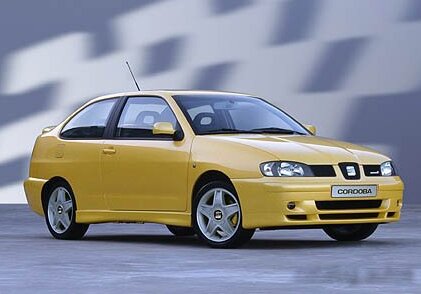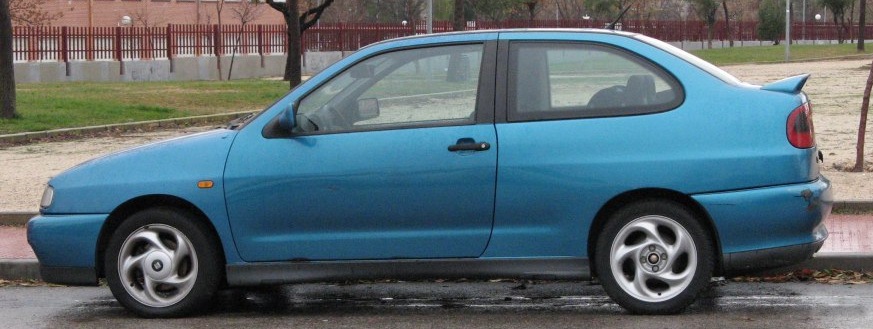
The SEAT Córdoba Coupe I 2.0 16V, produced between July 1996 and June 1999, represented a sporty and stylish offering from the Spanish automaker. Positioned as the performance variant within the Córdoba Coupe range, it aimed to attract buyers seeking a more engaging driving experience than the base models. Built on the Volkswagen Group’s 1HX0/A3 platform – shared with the Volkswagen Golf, Audi A3, and other models – the Córdoba Coupe offered a distinct, three-door body style. This 2.0-liter 16-valve engine and five-speed manual transmission combination was a key differentiator, offering a significant power upgrade over the smaller displacement engines available in the Córdoba lineup.
Technical Specifications
| Brand | Seat |
| Model | Cordoba |
| Generation | Cordoba Coupe I |
| Type (Engine) | 2.0 16V (150 Hp) |
| Start of production | July, 1996 |
| End of production | June, 1999 |
| Powertrain Architecture | Internal Combustion engine |
| Body type | Coupe |
| Seats | 5 |
| Doors | 3 |
| Fuel consumption (urban) | 11.9 l/100 km (19.8 US mpg, 23.7 UK mpg, 8.4 km/l) |
| Fuel consumption (extra urban) | 6.4 l/100 km (36.8 US mpg, 44.1 UK mpg, 15.6 km/l) |
| Fuel Type | Petrol (Gasoline) |
| Acceleration 0 – 100 km/h | 8.5 sec |
| Acceleration 0 – 62 mph | 8.5 sec |
| Acceleration 0 – 60 mph | 8.1 sec |
| Maximum speed | 216 km/h (134.22 mph) |
| Weight-to-power ratio | 7.5 kg/Hp, 133.9 Hp/tonne |
| Weight-to-torque ratio | 6.2 kg/Nm, 160.7 Nm/tonne |
| Power | 150 Hp @ 6000 rpm |
| Power per litre | 75.6 Hp/l |
| Torque | 180 Nm @ 4500 rpm (132.76 lb.-ft. @ 4500 rpm) |
| Engine layout | Front, Transverse |
| Engine Model/Code | ABF |
| Engine displacement | 1984 cm3 (121.07 cu. in.) |
| Number of cylinders | 4 |
| Engine configuration | Inline |
| Cylinder Bore | 82.5 mm (3.25 in.) |
| Piston Stroke | 92.8 mm (3.65 in.) |
| Compression ratio | 10.5:1 |
| Number of valves per cylinder | 4 |
| Fuel injection system | Multi-port manifold injection |
| Engine aspiration | Naturally aspirated engine |
| Valvetrain | DOHC |
| Engine oil capacity | 4 l (4.23 US qt | 3.52 UK qt) |
| Coolant | 5.5 l (5.81 US qt | 4.84 UK qt) |
| Kerb Weight | 1120 kg (2469.18 lbs.) |
| Max. weight | 1580 kg (3483.3 lbs.) |
| Max load | 460 kg (1014.13 lbs.) |
| Trunk (boot) space – minimum | 455 l (16.07 cu. ft.) |
| Trunk (boot) space – maximum | 762 l (26.91 cu. ft.) |
| Fuel tank capacity | 45 l (11.89 US gal | 9.9 UK gal) |
| Length | 4144 mm (163.15 in.) |
| Width | 1640 mm (64.57 in.) |
| Height | 1424 mm (56.06 in.) |
| Wheelbase | 2443 mm (96.18 in.) |
| Front track | 1430 mm (56.3 in.) |
| Rear (Back) track | 1394 mm (54.88 in.) |
| Drivetrain Architecture | The Internal combustion engine (ICE) drives the front wheels of the vehicle. |
| Drive wheel | Front wheel drive |
| Number of gears and type of gearbox | 5 gears, manual transmission |
| Front suspension | Spring Strut |
| Rear suspension | Suspension with traction connecting levers |
| Front brakes | Disc |
| Rear brakes | Drum |
| Assisting systems | ABS (Anti-lock braking system) |
| Steering type | Steering rack and pinion |
| Power steering | Hydraulic Steering |
| Tires size | 195/45 R16 |
Powertrain & Engine Architecture
The heart of the Córdoba Coupe 2.0 16V is the ABF engine, a 1.984-liter, naturally aspirated inline-four cylinder gasoline engine. This engine is a member of Volkswagen Group’s EA827 family, known for its robust construction and tuning potential. The ‘16V’ designation refers to the four valves per cylinder, contributing to improved breathing and higher power output. Fuel delivery is managed by a multi-port fuel injection system, providing precise fuel metering for optimal combustion. The engine utilizes a double overhead camshaft (DOHC) valvetrain, further enhancing its volumetric efficiency. The five-speed manual transmission, a standard feature, provides precise gear changes and allows the driver to fully exploit the engine’s power band. The transmission’s gear ratios were tuned to balance acceleration and fuel economy, with a relatively short final drive to enhance responsiveness.
Driving Characteristics
The 2.0 16V Córdoba Coupe offered a noticeably more spirited driving experience compared to the lower-powered variants. The 150 horsepower output, while not excessive by modern standards, provided brisk acceleration, with a 0-60 mph time of around 8.1 seconds. The engine’s torque peak of 180 Nm (132.76 lb-ft) at 4500 rpm delivered strong mid-range pull, making it well-suited for everyday driving and overtaking maneuvers. The five-speed manual transmission allowed for precise control, and the relatively short gear ratios kept the engine within its optimal power band. Compared to the 1.4 or 1.6-liter models, the 2.0 16V felt significantly more responsive and capable, particularly at higher speeds. The handling was generally considered safe and predictable, though not particularly sporty, reflecting the car’s focus on providing a comfortable and enjoyable driving experience.
Equipment & Trim Levels
The Córdoba Coupe 2.0 16V typically came equipped with a reasonable level of standard features. Interior appointments included cloth upholstery, a basic stereo system, and power windows. Air conditioning was often included, though it could be an optional extra depending on the market. The dashboard layout was functional and straightforward, typical of Volkswagen Group designs of the era. Optional extras included alloy wheels, a sunroof, and upgraded audio systems. The trim level generally sat in the mid-range of the Córdoba Coupe lineup, offering a balance between performance and affordability.
Chassis & Braking
The Córdoba Coupe utilized a MacPherson strut front suspension and a torsion beam rear suspension. This setup provided a good compromise between ride comfort and handling. The front brakes were ventilated discs, offering adequate stopping power, while the rear brakes were drums. ABS (Anti-lock Braking System) was standard, enhancing safety by preventing wheel lockup during hard braking. The steering was rack and pinion with hydraulic power assistance, providing light and precise steering feel. The suspension was tuned to provide a comfortable ride, but it could feel somewhat soft during aggressive cornering.
Market Reception & Comparison
The Córdoba Coupe 2.0 16V was generally well-received by automotive critics, who praised its performance and stylish design. It was seen as a viable alternative to other small coupes on the market, such as the Peugeot 306 Coupe and the Renault Mégane Coupe. Compared to the lower-powered Córdoba models, the 2.0 16V offered a significant performance upgrade, but it also came with a higher price tag and slightly increased fuel consumption. The 1.9 TDI diesel variant offered comparable fuel economy and strong torque, but lacked the 2.0 16V’s outright power and sporty character. Reliability was generally good, though the ABF engine could be prone to oil leaks as it aged.
Legacy
The SEAT Córdoba Coupe 2.0 16V has developed a modest following among enthusiasts. The ABF engine is known for its durability and potential for modification. Today, well-maintained examples are becoming increasingly sought after by collectors and enthusiasts. While not a particularly rare car, the 2.0 16V variant is considered the most desirable of the Córdoba Coupe range due to its superior performance. The car represents a significant chapter in SEAT’s history, showcasing the brand’s ability to produce stylish and engaging vehicles. The powertrain, while aging, remains relatively reliable with proper maintenance, and parts availability is generally good thanks to the widespread use of Volkswagen Group components.