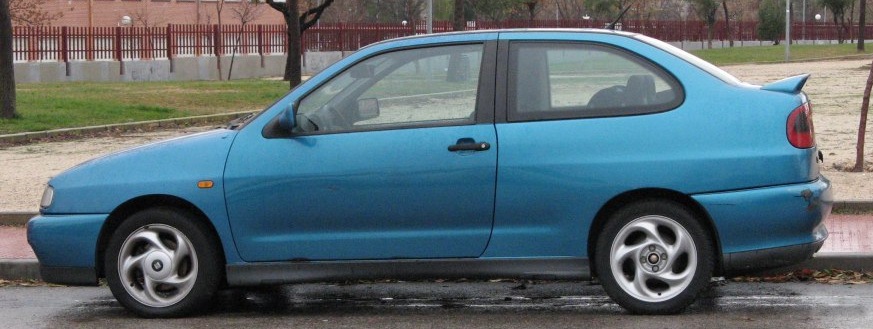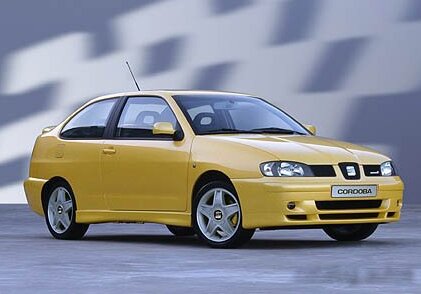
The SEAT Córdoba Coupe I (facelift 1999) 1.0 16V, produced from June 2000 to August 2002, represented an entry-level offering within the Córdoba Coupe range. Positioned as the most economical variant, it catered to buyers prioritizing fuel efficiency and affordability over outright performance. This model was part of the 6K series, based on the Volkswagen Group’s A3 platform (also known as the 1HX0/A3 platform), shared with the Volkswagen Golf, Audi A3, and Škoda Octavia. The facelifted Córdoba Coupe, introduced in 1999, featured revised styling and minor mechanical updates compared to the original model launched in 1996.
Technical Specifications
| Brand | Seat |
| Model | Cordoba |
| Generation | Cordoba Coupe I (facelift 1999) |
| Type (Engine) | 1.0 16V (70 Hp) |
| Start of production | June, 2000 |
| End of production | August, 2002 |
| Powertrain Architecture | Internal Combustion engine |
| Body type | Coupe |
| Seats | 5 |
| Doors | 3 |
| Fuel consumption (urban) | 9.1 l/100 km (25.8 US mpg, 31 UK mpg, 11 km/l) |
| Fuel consumption (extra urban) | 5.5 l/100 km (42.8 US mpg, 51.4 UK mpg, 18.2 km/l) |
| Fuel consumption (combined) | 6.8 l/100 km (34.6 US mpg, 41.5 UK mpg, 14.7 km/l) |
| Fuel Type | Petrol (Gasoline) |
| Acceleration 0 – 100 km/h | 14.9 sec |
| Acceleration 0 – 62 mph | 14.9 sec |
| Acceleration 0 – 60 mph | 14.2 sec |
| Maximum speed | 164 km/h (101.9 mph) |
| Weight-to-power ratio | 14.5 kg/Hp, 69 Hp/tonne |
| Weight-to-torque ratio | 11.2 kg/Nm, 89.7 Nm/tonne |
| Power | 70 Hp @ 6200 rpm |
| Power per litre | 70.1 Hp/l |
| Torque | 91 Nm @ 4500 rpm (67.12 lb.-ft. @ 4500 rpm) |
| Engine layout | Front, Transverse |
| Engine Model/Code | AST |
| Engine displacement | 999 cm3 (60.96 cu. in.) |
| Number of cylinders | 4 |
| Engine configuration | Inline |
| Cylinder Bore | 67.1 mm (2.64 in.) |
| Piston Stroke | 70.6 mm (2.78 in.) |
| Compression ratio | 10.5:1 |
| Number of valves per cylinder | 4 |
| Fuel injection system | Multi-port manifold injection |
| Engine aspiration | Naturally aspirated engine |
| Valvetrain | OHC |
| Engine oil capacity | 3.2 l (3.38 US qt, 2.82 UK qt) |
| Coolant capacity | 5.6 l (5.92 US qt, 4.93 UK qt) |
| Kerb Weight | 1015 kg (2237.69 lbs.) |
| Max. weight | 1475 kg (3251.82 lbs.) |
| Max load | 460 kg (1014.13 lbs.) |
| Trunk (boot) space – minimum | 455 l (16.07 cu. ft.) |
| Trunk (boot) space – maximum | 760 l (26.84 cu. ft.) |
| Fuel tank capacity | 45 l (11.89 US gal, 9.9 UK gal) |
| Length | 4165 mm (163.98 in.) |
| Width | 1645 mm (64.76 in.) |
| Height | 1420 mm (55.91 in.) |
| Wheelbase | 2445 mm (96.26 in.) |
| Front track | 1430 mm (56.3 in.) |
| Rear track | 1395 mm (54.92 in.) |
| Drivetrain Architecture | Front wheel drive |
| Drive wheel | Front wheel drive |
| Number of gears | 5 gears, manual transmission |
| Front suspension | Spring Strut |
| Rear suspension | Suspension with traction connecting levers |
| Front brakes | Disc |
| Rear brakes | Drum |
| Assisting systems | ABS (Anti-lock braking system) |
| Steering type | Steering rack and pinion |
| Power steering | Hydraulic Steering |
| Tires size | 175/70 R13 |
Powertrain & Engine Architecture
The Córdoba 1.0 16V utilized the SEAT AST engine code, a 999cc inline-four cylinder petrol engine. This engine was a member of the Volkswagen EA111 family, known for its compact size and relatively simple design. It featured a single overhead camshaft (OHC) operating four valves per cylinder, contributing to improved breathing and a slightly higher power output compared to earlier 8-valve versions. Fuel delivery was managed by a multi-port fuel injection system, providing precise fuel metering for optimal combustion. The engine’s 10.5:1 compression ratio was typical for the era, balancing performance and fuel efficiency. The five-speed manual transmission was the only gearbox option available with this engine, chosen for its efficiency and cost-effectiveness. The transmission featured a conventional layout with synchromesh on all forward gears.
Driving Characteristics
The 1.0 16V engine produced 70 horsepower and 91 Nm (67 lb-ft) of torque. This translated to modest performance, with a 0-60 mph time of around 14.2 seconds and a top speed of 101.9 mph. Compared to the more powerful 1.8L and 2.0L variants of the Córdoba, the 1.0 felt noticeably slower, particularly during acceleration and overtaking maneuvers. The five-speed gearbox was well-matched to the engine’s characteristics, allowing drivers to keep the engine in its optimal power band. However, frequent downshifts were often necessary, especially when tackling hills or carrying a full load. The steering was light and precise, making the car easy to maneuver in urban environments. The suspension provided a comfortable ride, although it could feel somewhat soft and prone to body roll during spirited driving.
Equipment & Trim Levels
The 1.0 16V Córdoba Coupe typically came with a basic level of equipment. Standard features included power steering, central locking, electric front windows, and an anti-lock braking system (ABS). Interior upholstery was typically cloth, with a simple dashboard layout. Optional extras included air conditioning, alloy wheels, and a radio/cassette player. The trim level was generally considered the entry-level offering, focusing on providing affordable transportation rather than luxury features.
Chassis & Braking
The Córdoba Coupe utilized a front-wheel-drive layout with a MacPherson strut suspension at the front and a torsion beam suspension at the rear. The front brakes were ventilated discs, while the rear brakes were drums. This configuration was typical for cars in this class and weight category. The suspension was tuned for comfort, providing a relatively smooth ride over uneven surfaces. The ABS system helped to improve braking performance and stability, particularly in wet or slippery conditions.
Market Reception & Comparison
The Córdoba 1.0 16V was generally well-received as an affordable and economical coupe. Critics praised its fuel efficiency and ease of driving, but noted its lack of outright performance. Compared to the 1.8L and 2.0L versions, the 1.0 offered significantly lower running costs but at the expense of driving enjoyment. The 1.8L offered a more balanced combination of performance and economy, while the 2.0L provided the most exhilarating driving experience. The 1.0 was often seen as a sensible choice for first-time car buyers or those seeking a practical and economical coupe.
Legacy
The SEAT Córdoba 1.0 16V, while not the most powerful or exciting variant, proved to be a reliable and durable car. The EA111 engine, when properly maintained, is known for its longevity. In the used car market, these models are often sought after by buyers looking for an affordable and economical coupe. Maintenance costs are generally low, and parts availability is good. However, potential buyers should be aware of the engine’s relatively modest performance and the possibility of age-related wear and tear. The Córdoba 1.0 16V represents a practical and affordable entry point into the world of SEAT ownership, offering a blend of economy, reliability, and style.