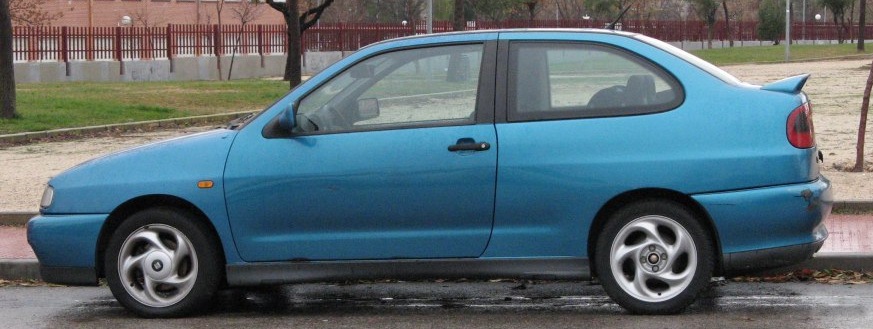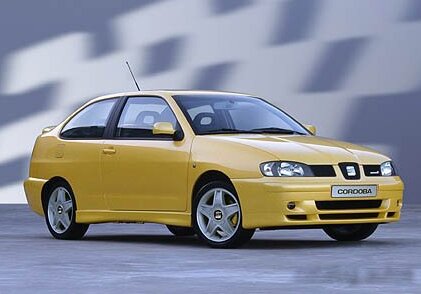
The SEAT Córdoba Coupe I (facelifted in 1999) 1.0, producing 50 horsepower, represented the entry point into the Córdoba Coupe range. Introduced in August 1999 and continuing through August 2002, this variant was primarily aimed at budget-conscious buyers in European markets. It was built on the Volkswagen Group’s 1HX0/A3 platform, shared with models like the Volkswagen Golf Mk4, Audi A3, and Škoda Octavia, but distinguished itself through its more affordable positioning and distinct styling. The 1.0-liter engine and five-speed manual transmission combination offered a basic, economical transportation solution within the SEAT lineup.
Technical Specifications
| Brand | Seat |
| Model | Cordoba |
| Generation | Cordoba Coupe I (facelift 1999) |
| Type (Engine) | 1.0 (50 Hp) |
| Start of production | August, 1999 |
| End of production | August, 2002 |
| Powertrain Architecture | Internal Combustion engine |
| Body type | Coupe |
| Seats | 5 |
| Doors | 3 |
| Fuel consumption (urban) | 8.6 l/100 km (27.4 US mpg, 32.8 UK mpg, 11.6 km/l) |
| Fuel consumption (extra urban) | 5.3 l/100 km (44.4 US mpg, 53.3 UK mpg, 18.9 km/l) |
| Fuel consumption (combined) | 6.5 l/100 km (36.2 US mpg, 43.5 UK mpg, 15.4 km/l) |
| Fuel Type | Petrol (Gasoline) |
| Acceleration 0 – 100 km/h | 20.4 sec |
| Acceleration 0 – 62 mph | 20.4 sec |
| Acceleration 0 – 60 mph | 19.4 sec |
| Maximum speed | 145 km/h (90.1 mph) |
| Weight-to-power ratio | 20.3 kg/Hp, 49.3 Hp/tonne |
| Weight-to-torque ratio | 11.8 kg/Nm, 84.7 Nm/tonne |
| Power | 50 Hp @ 5000 rpm |
| Power per litre | 50.1 Hp/l |
| Torque | 86 Nm @ 3000 rpm (63.43 lb.-ft. @ 3000 rpm) |
| Engine layout | Front, Transverse |
| Engine Model/Code | ALD, ANV, AUC |
| Engine displacement | 999 cm3 (60.96 cu. in.) |
| Number of cylinders | 4 |
| Engine configuration | Inline |
| Cylinder Bore | 67.1 mm (2.64 in.) |
| Piston Stroke | 70.6 mm (2.78 in.) |
| Compression ratio | 10.5:1 |
| Number of valves per cylinder | 2 |
| Fuel injection system | Multi-port manifold injection |
| Engine aspiration | Naturally aspirated engine |
| Valvetrain | OHC |
| Engine oil capacity | 4.3 l (4.54 US qt | 3.78 UK qt) |
| Coolant | 6.6 l (6.97 US qt | 5.81 UK qt) |
| Kerb Weight | 1015 kg (2237.69 lbs.) |
| Max. weight | 1475 kg (3251.82 lbs.) |
| Max load | 460 kg (1014.13 lbs.) |
| Trunk (boot) space – minimum | 455 l (16.07 cu. ft.) |
| Trunk (boot) space – maximum | 740 l (26.13 cu. ft.) |
| Fuel tank capacity | 45 l (11.89 US gal | 9.9 UK gal) |
| Length | 4165 mm (163.98 in.) |
| Width | 1645 mm (64.76 in.) |
| Height | 1420 mm (55.91 in.) |
| Wheelbase | 2445 mm (96.26 in.) |
| Front track | 1430 mm (56.3 in.) |
| Rear (Back) track | 1395 mm (54.92 in.) |
| Drivetrain Architecture | The Internal combustion engine (ICE) drives the front wheels of the vehicle. |
| Drive wheel | Front wheel drive |
| Number of gears and type of gearbox | 5 gears, manual transmission |
| Front suspension | Spring Strut |
| Rear suspension | Suspension with traction connecting levers |
| Front brakes | Disc |
| Rear brakes | Drum |
| Assisting systems | ABS (Anti-lock braking system) |
| Steering type | Steering rack and pinion |
| Power steering | Hydraulic Steering |
| Tires size | 175/70 R13 |
Powertrain & Engine Architecture
The Córdoba 1.0 Coupe utilized the ALD, ANV, or AUC engine codes, all denoting variations of the same 999cc inline-four cylinder engine. This engine was a relatively simple design, featuring a single overhead camshaft (OHC) and two valves per cylinder. Fuel delivery was managed by a multi-port fuel injection system, a common setup for engines of this era. The engine’s modest output of 50 horsepower at 5000 rpm and 63.43 lb-ft of torque at 3000 rpm was a result of its small displacement and conservative tuning. The engine was transversely mounted in the front of the vehicle, driving the front wheels. The standard transmission was a five-speed manual, optimized for fuel efficiency rather than outright performance.
Driving Characteristics
The 1.0-liter Córdoba Coupe was not known for its exhilarating performance. Acceleration was slow, taking over 20 seconds to reach 60 mph. The engine required frequent downshifting to maintain momentum, especially when climbing hills or overtaking. However, the engine was relatively smooth and refined for its size, and the manual transmission offered precise gear changes. The gear ratios were geared towards maximizing fuel economy, resulting in a relaxed driving experience at cruising speeds. Compared to the more powerful 1.6 and 1.8-liter versions of the Córdoba, the 1.0-liter model felt significantly underpowered, but it offered a more affordable and economical option for drivers prioritizing fuel efficiency.
Equipment & Trim Levels
The 1.0-liter Córdoba Coupe was typically offered with a basic level of equipment. Standard features generally included power steering, central locking, and an AM/FM radio. Interior upholstery was typically cloth, and the dashboard featured a simple, functional design. Optional extras, such as air conditioning, alloy wheels, and upgraded audio systems, were available, but often added a significant cost to the vehicle. The trim level was generally considered the base model, aimed at buyers seeking a no-frills, affordable coupe.
Chassis & Braking
The Córdoba Coupe’s chassis featured a MacPherson strut front suspension and a torsion beam rear suspension. The front brakes were disc brakes, while the rear brakes were drum brakes. ABS (Anti-lock Braking System) was often included as standard equipment, enhancing safety. The suspension was tuned for comfort rather than sporty handling, providing a relatively smooth ride over uneven surfaces. The relatively light weight of the 1.0-liter model helped to compensate for its lack of power, contributing to reasonable handling characteristics.
Market Reception & Comparison
The 1.0-liter Córdoba Coupe was generally well-received as an affordable and economical coupe. Critics praised its fuel efficiency and low purchase price, but noted its lack of performance. Compared to other trims in the Córdoba lineup, such as the 1.6 and 1.8-liter models, the 1.0-liter version offered significantly lower running costs but at the expense of driving enjoyment. It competed with other small coupes and hatchbacks in the European market, such as the Renault Clio and Peugeot 206.
Legacy
The 1.0-liter Córdoba Coupe, while not a performance icon, remains a relatively reliable and affordable used car. The engine is known for its durability, and maintenance costs are generally low. However, due to its age, potential buyers should be aware of common issues associated with older vehicles, such as rust and wear and tear on suspension components. Today, the Córdoba 1.0 Coupe is often sought after by drivers looking for a cheap and cheerful classic car, or as a first car for young drivers. Its simplicity and affordability continue to make it a popular choice in the used car market.