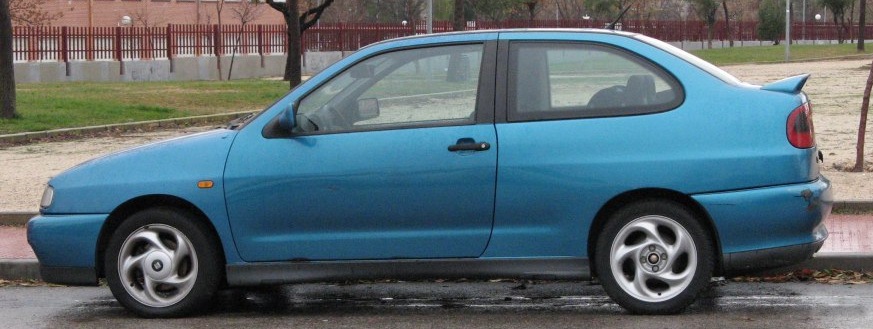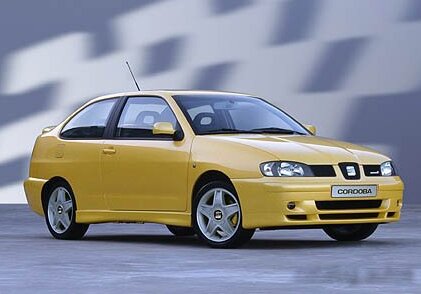
The Seat Cordoba Coupe I (facelifted in 1999) 1.6, producing 101 horsepower, represented a key offering in Seat’s lineup during its production run from June 1999 to August 2002. Positioned as a stylish and relatively affordable coupe, it was based on the Volkswagen Golf Mk4’s 1HX0/A3 platform, sharing many components with its German cousin. This facelifted version of the first-generation Cordoba Coupe aimed to modernize the design and broaden its appeal within the European market, offering a sporty alternative to more conventional hatchbacks and sedans. The 1.6L engine and five-speed manual transmission combination was a popular choice, balancing performance with fuel efficiency.
Technical Specifications
| Brand | Seat |
| Model | Cordoba |
| Generation | Cordoba Coupe I (facelift 1999) |
| Type (Engine) | 1.6 (101 Hp) |
| Start of production | June, 1999 |
| End of production | August, 2002 |
| Powertrain Architecture | Internal Combustion engine |
| Body type | Coupe |
| Seats | 5 |
| Doors | 3 |
| Fuel consumption (urban) | 11.1 l/100 km (21.2 US mpg, 25.4 UK mpg, 9 km/l) |
| Fuel consumption (extra urban) | 6 l/100 km (39.2 US mpg, 47.1 UK mpg, 16.7 km/l) |
| Fuel consumption (combined) | 7.8 l/100 km (30.2 US mpg, 36.2 UK mpg, 12.8 km/l) |
| Fuel Type | Petrol (Gasoline) |
| Acceleration 0 – 100 km/h | 11 sec |
| Acceleration 0 – 62 mph | 11 sec |
| Acceleration 0 – 60 mph | 10.5 sec |
| Maximum speed | 188 km/h (116.82 mph) |
| Weight-to-power ratio | 10.7 kg/Hp, 93.5 Hp/tonne |
| Weight-to-torque ratio | 7.4 kg/Nm, 134.3 Nm/tonne |
| Power | 101 Hp @ 5600 rpm |
| Power per litre | 63.3 Hp/l |
| Torque | 145 Nm @ 3800 rpm (106.95 lb.-ft. @ 3800 rpm) |
| Engine layout | Front, Transverse |
| Engine Model/Code | AEH, AKL |
| Engine displacement | 1595 cm3 (97.33 cu. in.) |
| Number of cylinders | 4 |
| Engine configuration | Inline |
| Cylinder Bore | 81 mm (3.19 in.) |
| Piston Stroke | 77.4 mm (3.05 in.) |
| Compression ratio | 10.2:1 |
| Number of valves per cylinder | 2 |
| Fuel injection system | Multi-port manifold injection |
| Engine aspiration | Naturally aspirated engine |
| Valvetrain | OHC |
| Engine oil capacity | 4.5 l (4.76 US qt | 3.96 UK qt) |
| Coolant | 5.5 l (5.81 US qt | 4.84 UK qt) |
| Kerb Weight | 1080 kg (2380.99 lbs.) |
| Max. weight | 1540 kg (3395.12 lbs.) |
| Max load | 460 kg (1014.13 lbs.) |
| Trunk (boot) space – minimum | 455 l (16.07 cu. ft.) |
| Trunk (boot) space – maximum | 760 l (26.84 cu. ft.) |
| Fuel tank capacity | 45 l (11.89 US gal | 9.9 UK gal) |
| Length | 4165 mm (163.98 in.) |
| Width | 1645 mm (64.76 in.) |
| Height | 1420 mm (55.91 in.) |
| Wheelbase | 2445 mm (96.26 in.) |
| Front track | 1430 mm (56.3 in.) |
| Rear (Back) track | 1395 mm (54.92 in.) |
| Drivetrain Architecture | The Internal combustion engine (ICE) drives the front wheels of the vehicle. |
| Drive wheel | Front wheel drive |
| Number of gears and type of gearbox | 5 gears, manual transmission |
| Front suspension | Spring Strut |
| Rear suspension | Suspension with traction connecting levers |
| Front brakes | Disc |
| Rear brakes | Drum |
| Assisting systems | ABS (Anti-lock braking system) |
| Steering type | Steering rack and pinion |
| Power steering | Hydraulic Steering |
| Tires size | 175/70 R13 |
Powertrain & Engine Architecture
The Cordoba Coupe 1.6 utilized the Volkswagen Group’s AEH or AKL engine code, a 1.6-liter inline-four cylinder gasoline engine. This engine was a mainstay in many VW and Seat models of the period. It featured a single overhead camshaft (SOHC) valvetrain with two valves per cylinder. Fuel delivery was handled by a multi-port fuel injection system, providing a balance between efficiency and performance. The engine’s 101 horsepower output at 5600 rpm and 145 Nm (106.95 lb-ft) of torque at 3800 rpm were respectable for its displacement and intended market segment. The five-speed manual transmission was the standard offering, providing drivers with good control over the engine’s power band. The transmission was known for its relatively smooth shifting action, though it wasn’t particularly sporty in feel.
Driving Characteristics
The 1.6L Cordoba Coupe offered a comfortable and predictable driving experience. Acceleration from 0-60 mph took around 10.5 seconds, and it had a top speed of 116.82 mph. While not a performance car, the engine provided adequate power for everyday driving and highway cruising. The gear ratios in the five-speed manual transmission were well-spaced, allowing the engine to remain in its optimal power range during most driving situations. Compared to the more powerful (and expensive) VR6 versions of the Cordoba, the 1.6L felt noticeably slower, but it offered significantly better fuel economy. Against diesel variants like the 1.9 TDI, the 1.6L lacked the low-end torque of the diesel, but provided a smoother and quieter driving experience.
Equipment & Trim Levels
The Cordoba Coupe 1.6 typically came with a reasonable level of standard equipment. This included power steering, central locking, electric front windows, and an anti-lock braking system (ABS). Interior upholstery was typically cloth, with a relatively simple dashboard layout. Optional extras included air conditioning, alloy wheels, and a radio/cassette player. Higher trim levels, if available, might have added features like upgraded upholstery, a sunroof, and more sophisticated audio systems. The overall interior design was functional and aimed at providing a comfortable space for driver and passengers.
Chassis & Braking
The Cordoba Coupe utilized a front-wheel-drive layout with a MacPherson strut suspension at the front and a torsion beam suspension with traction connecting levers at the rear. This suspension setup provided a good balance between ride comfort and handling. The front brakes were disc brakes, while the rear brakes were drum brakes – a common configuration for cars in this price range at the time. The hydraulic power steering provided light and easy steering, making it easy to maneuver in urban environments.
Market Reception & Comparison
The Seat Cordoba Coupe 1.6 was generally well-received by automotive critics as a stylish and affordable coupe. It was praised for its comfortable ride, decent fuel economy, and relatively spacious interior. However, some critics noted that the engine lacked outright power and that the interior materials were somewhat basic. Compared to rivals like the Peugeot 306 Coupe or the Renault Megane Coupe, the Cordoba offered a slightly more understated design and a focus on practicality. The 1.6L engine offered a good compromise between performance and running costs, making it a popular choice for buyers who prioritized fuel efficiency and affordability.
Legacy
The Seat Cordoba Coupe 1.6, while not a particularly rare or collectible car today, remains a relatively reliable and affordable option in the used car market. The 1.6L engine is known for its durability and relatively low maintenance costs. Common issues include wear and tear on suspension components and potential corrosion, particularly in areas with harsh winters. Parts availability is generally good, thanks to the Cordoba’s shared components with other VW Group vehicles. The 1.6L engine, when properly maintained, can provide many years of reliable service, making the Cordoba Coupe a practical and enjoyable classic for enthusiasts and everyday drivers alike.