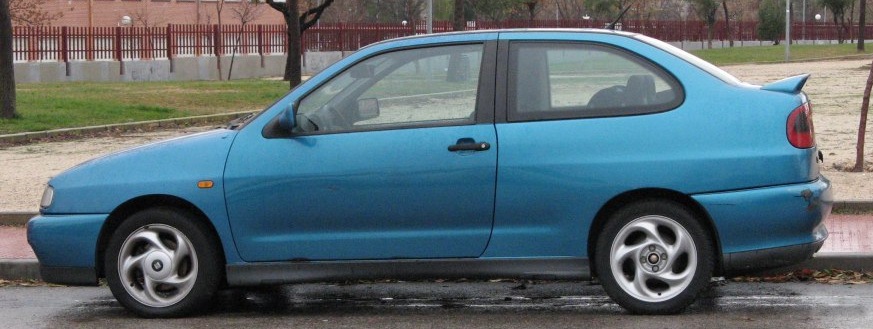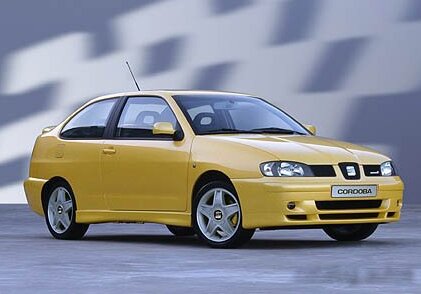
The SEAT Córdoba Coupe I (facelifted in 1999) 1.6, producing 75 horsepower, represented an entry-level offering within the Córdoba Coupe range. Introduced in 1999 and continuing through August 2002, this variant was positioned as a more affordable and fuel-efficient option compared to the higher-performance versions available, such as those equipped with larger engines. It was a key model for SEAT in the European market, particularly for buyers seeking a stylish, compact coupe at a reasonable price point. The facelift brought updated styling cues and minor mechanical refinements to the original Córdoba Coupe design, which was based on the Volkswagen Polo platform (6K).
Technical Specifications
| Brand | Seat |
| Model | Cordoba |
| Generation | Cordoba Coupe I (facelift 1999) |
| Type (Engine) | 1.6 (75 Hp) |
| Start of production | 1999 |
| End of production | August, 2002 |
| Powertrain Architecture | Internal Combustion engine |
| Body type | Coupe |
| Seats | 5 |
| Doors | 3 |
| Fuel consumption (urban) | 10 l/100 km (23.5 US mpg, 28.2 UK mpg, 10 km/l) |
| Fuel consumption (extra urban) | 5.7 l/100 km (41.3 US mpg, 49.6 UK mpg, 17.5 km/l) |
| Fuel consumption (combined) | 7.2 l/100 km (32.7 US mpg, 39.2 UK mpg, 13.9 km/l) |
| Fuel Type | Petrol (Gasoline) |
| Acceleration 0 – 100 km/h | 13.2 sec |
| Acceleration 0 – 62 mph | 13.2 sec |
| Acceleration 0 – 60 mph | 12.5 sec |
| Maximum speed | 170 km/h (105.63 mph) |
| Weight-to-power ratio | 13.9 kg/Hp, 71.8 Hp/tonne |
| Weight-to-torque ratio | 7.7 kg/Nm, 129.2 Nm/tonne |
| Power | 75 Hp @ 4600 rpm |
| Power per litre | 46.9 Hp/l |
| Torque | 135 Nm @ 2800 rpm (99.57 lb.-ft. @ 2800 rpm) |
| Engine layout | Front, Transverse |
| Engine Model/Code | ALM |
| Engine displacement | 1598 cm3 (97.52 cu. in.) |
| Number of cylinders | 4 |
| Engine configuration | Inline |
| Cylinder Bore | 76.5 mm (3.01 in.) |
| Piston Stroke | 86.9 mm (3.42 in.) |
| Compression ratio | 9.8:1 |
| Number of valves per cylinder | 2 |
| Fuel injection system | Multi-port manifold injection |
| Engine aspiration | Naturally aspirated engine |
| Valvetrain | OHC |
| Engine oil capacity | 3.2 l (3.38 US qt | 2.82 UK qt) |
| Coolant | 5.6 l (5.92 US qt | 4.93 UK qt) |
| Kerb Weight | 1045 kg (2303.83 lbs.) |
| Max. weight | 1505 kg (3317.96 lbs.) |
| Max load | 460 kg (1014.13 lbs.) |
| Trunk (boot) space – minimum | 455 l (16.07 cu. ft.) |
| Trunk (boot) space – maximum | 760 l (26.84 cu. ft.) |
| Fuel tank capacity | 45 l (11.89 US gal | 9.9 UK gal) |
| Length | 4165 mm (163.98 in.) |
| Width | 1645 mm (64.76 in.) |
| Height | 1420 mm (55.91 in.) |
| Wheelbase | 2445 mm (96.26 in.) |
| Front track | 1430 mm (56.3 in.) |
| Rear (Back) track | 1395 mm (54.92 in.) |
| Drivetrain Architecture | The Internal combustion engine (ICE) drives the front wheels of the vehicle. |
| Drive wheel | Front wheel drive |
| Number of gears and type of gearbox | 5 gears, manual transmission |
| Front suspension | Spring Strut |
| Rear suspension | Suspension with traction connecting levers |
| Front brakes | Disc |
| Rear brakes | Drum |
| Assisting systems | ABS (Anti-lock braking system) |
| Steering type | Steering rack and pinion |
| Power steering | Hydraulic Steering |
| Tires size | 175/70 R13 |
INTRODUCTION
The SEAT Córdoba Coupe I, particularly the facelifted version launched in 1999, was a significant model for the Spanish automaker. Built on the Volkswagen Group’s A2 platform (shared with the VW Polo, Ibiza, and Škoda Fabia), the Córdoba aimed to offer a sporty and affordable coupe option. The 1.6-liter, 75-horsepower variant was the entry point to the coupe range, designed to appeal to buyers prioritizing fuel economy and practicality over outright performance. This model occupied a crucial position in SEAT’s lineup, broadening its appeal beyond the more performance-oriented models and attracting a wider customer base. Production continued until August 2002, when it was superseded by the second-generation Córdoba.
Powertrain & Engine Architecture
The Córdoba Coupe 1.6 utilized the ALM engine code, a naturally aspirated, inline-four cylinder petrol engine displacing 1598cc. This engine featured a single overhead camshaft (OHC) valvetrain with two valves per cylinder. Fuel delivery was managed by a multi-port fuel injection system, providing a balance between efficiency and responsiveness. The ALM engine was a relatively simple and robust design, known for its reliability. The engine produced 75 horsepower at 4600 rpm and 135 Nm (99.57 lb-ft) of torque at 2800 rpm. The engine’s compression ratio was 9.8:1. The engine was transversely mounted in the front of the vehicle, driving the front wheels. The standard transmission was a five-speed manual gearbox, although an optional four-speed automatic transmission was also available, though less common.
Driving Characteristics
The 1.6-liter, 75 hp Córdoba Coupe offered modest performance. Acceleration from 0 to 60 mph took around 12.5 seconds, and the top speed was approximately 105.63 mph. Compared to the more powerful versions of the Córdoba (such as those with the 1.8 or 2.0-liter engines), the 1.6 felt noticeably slower, particularly when accelerating or overtaking. The five-speed manual transmission was well-matched to the engine’s characteristics, allowing drivers to keep the engine in its optimal power band. The automatic transmission, while offering convenience, further reduced acceleration performance. The suspension provided a comfortable ride, but the handling was not particularly sporty. The steering was light and precise, making the car easy to maneuver in urban environments. Overall, the driving experience was geared towards practicality and ease of use rather than outright excitement.
Equipment & Trim Levels
The 1.6-liter Córdoba Coupe typically came with a fairly basic level of equipment, reflecting its position as the entry-level model. Standard features generally included power steering, central locking, and an adjustable steering column. Interior upholstery was typically cloth, and the dashboard featured a simple, functional design. Optional extras included air conditioning, electric windows, and an upgraded audio system. Higher trim levels, such as the ‘Stella’ or ‘Sport’, added features like alloy wheels, a sunroof, and more luxurious interior trim. The overall interior ambiance was functional and durable, prioritizing practicality over luxury.
Chassis & Braking
The Córdoba Coupe utilized a front-wheel-drive layout with a MacPherson strut suspension at the front and a torsion beam suspension with traction connecting levers at the rear. The front brakes were disc brakes, while the rear brakes were drum brakes. ABS (Anti-lock Braking System) was standard equipment, enhancing safety. The suspension setup provided a comfortable ride, but it wasn’t particularly sporty. The chassis was relatively lightweight, contributing to the car’s fuel efficiency. The steering was rack and pinion, providing precise control. Tire size was typically 175/70 R13.
Market Reception & Comparison
The Córdoba Coupe 1.6 was generally well-received as an affordable and stylish coupe. Critics praised its fuel efficiency and practicality, but noted its lack of outright performance. Compared to other coupes in its class, such as the Peugeot 306 Coupe or the Renault Mégane Coupe, the Córdoba offered a more budget-friendly option. Within the Córdoba range, the 1.6-liter model was positioned as the sensible choice for buyers who prioritized economy and reliability over performance. The higher-powered versions, while more exciting to drive, were also more expensive to purchase and operate. Fuel economy figures were competitive, averaging around 32.7 US mpg in combined driving.
Legacy
The SEAT Córdoba Coupe 1.6, while not a performance icon, has proven to be a relatively reliable and durable vehicle. The ALM engine is known for its longevity, and parts availability remains good. In the used car market, these models are often sought after by buyers looking for an affordable and practical coupe. While not particularly collectible, well-maintained examples are appreciated for their simplicity and reliability. The Córdoba Coupe, in general, helped establish SEAT as a credible player in the European automotive market, and the 1.6-liter variant played a key role in broadening the model’s appeal to a wider range of buyers.