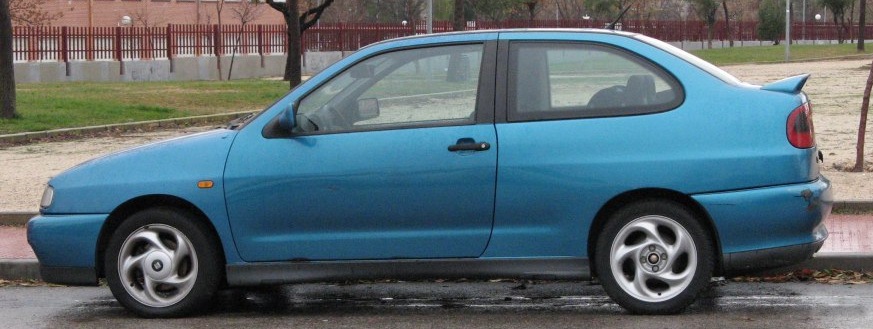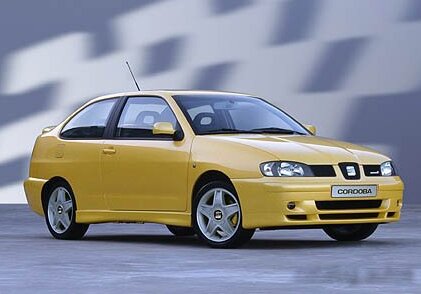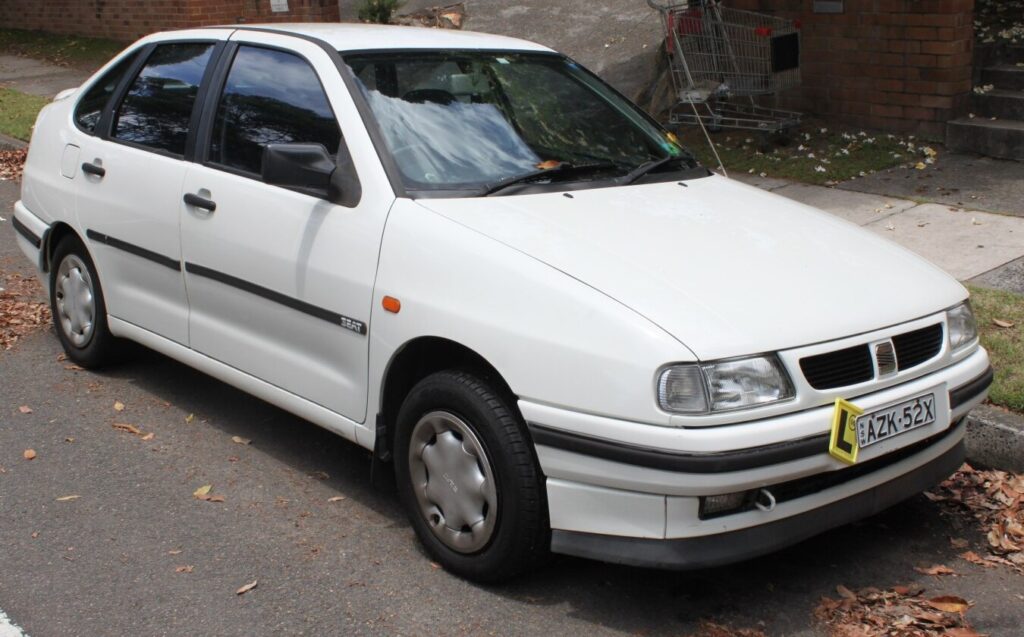
The SEAT Cordoba I 1.4 i, producing 60 horsepower, was an entry-level variant of the first-generation Cordoba (1993-1996), itself based on the Volkswagen Polo Mk3 and the SEAT Ibiza Mk2, all sharing the Volkswagen Group’s 028 platform. Introduced in June 1994 and remaining in production until June 1995, this model served as the most affordable gateway into the Cordoba range, targeting budget-conscious buyers seeking a practical and economical compact sedan. It represented SEAT’s attempt to establish a foothold in the competitive European small car market, offering a blend of Spanish design and German engineering.
Technical Specifications
| Brand | Seat |
| Model | Cordoba |
| Generation | Cordoba I |
| Type (Engine) | 1.4 i (60 Hp) |
| Start of production | June, 1994 |
| End of production | June, 1995 |
| Powertrain Architecture | Internal Combustion engine |
| Body type | Sedan |
| Seats | 5 |
| Doors | 4 |
| Fuel consumption (combined) | 6.9 l/100 km (34.1 US mpg, 40.9 UK mpg, 14.5 km/l) |
| Fuel Type | Petrol (Gasoline) |
| Acceleration 0 – 100 km/h | 16.1 sec |
| Acceleration 0 – 62 mph | 16.1 sec |
| Acceleration 0 – 60 mph | 15.3 sec |
| Maximum speed | 157 km/h (97.56 mph) |
| Weight-to-power ratio | 15.8 kg/Hp (63.5 Hp/tonne) |
| Weight-to-torque ratio | 8.8 kg/Nm (113.2 Nm/tonne) |
| Power | 60 Hp @ 5200 rpm |
| Power per litre | 43.1 Hp/l |
| Torque | 107 Nm @ 2800 rpm (78.92 lb.-ft. @ 2800 rpm) |
| Engine layout | Front, Transverse |
| Engine Model/Code | ABD |
| Engine displacement | 1391 cm3 (84.88 cu. in.) |
| Number of cylinders | 4 |
| Engine configuration | Inline |
| Cylinder Bore | 75 mm (2.95 in.) |
| Piston Stroke | 78.7 mm (3.1 in.) |
| Compression ratio | 9.5:1 |
| Number of valves per cylinder | 2 |
| Fuel injection system | Single-point injection |
| Engine aspiration | Naturally aspirated engine |
| Valvetrain | OHC |
| Engine oil capacity | 3.5 l (3.7 US qt | 3.08 UK qt) |
| Coolant | 6.6 l (6.97 US qt | 5.81 UK qt) |
| Kerb Weight | 945 kg (2083.37 lbs.) |
| Max. weight | 1420 kg (3130.56 lbs.) |
| Max load | 475 kg (1047.2 lbs.) |
| Trunk (boot) space – minimum | 455 l (16.07 cu. ft.) |
| Trunk (boot) space – maximum | 802 l (28.32 cu. ft.) |
| Fuel tank capacity | 47 l (12.42 US gal | 10.34 UK gal) |
| Length | 4109 mm (161.77 in.) |
| Width | 1640 mm (64.57 in.) |
| Height | 1408 mm (55.43 in.) |
| Wheelbase | 2440 mm (96.06 in.) |
| Front track | 1429 mm (56.26 in.) |
| Rear (Back) track | 1394 mm (54.88 in.) |
| Drivetrain Architecture | The Internal combustion engine (ICE) drives the front wheels of the vehicle. |
| Drive wheel | Front wheel drive |
| Number of gears and type of gearbox | 5 gears, manual transmission |
| Front suspension | Wishbone |
| Rear suspension | Suspension with traction connecting levers |
| Front brakes | Disc |
| Rear brakes | Drum |
| Assisting systems | ABS (Anti-lock braking system) |
| Steering type | Steering rack and pinion |
| Power steering | Hydraulic Steering |
| Tires size | 175/70 R13 |
Powertrain & Engine Architecture
The Cordoba 1.4 i was powered by the Volkswagen ABD engine, a 1.4-liter inline-four cylinder gasoline engine. This engine, a mainstay in many VW Group vehicles of the era, featured a single overhead camshaft (OHC) and two valves per cylinder. Its single-point fuel injection system, while cost-effective, was less sophisticated than the multi-point injection systems found in higher-spec models. The ABD engine produced 60 horsepower at 5200 rpm and 107 Nm (78.92 lb-ft) of torque at 2800 rpm. The engine’s relatively low output was a direct consequence of its design, prioritizing fuel economy and affordability over outright performance. The engine was transversely mounted, driving the front wheels. The standard transmission was a five-speed manual gearbox, designed for durability and ease of use.
Driving Characteristics
The 1.4 i Cordoba offered modest performance. Acceleration was leisurely, taking approximately 16.1 seconds to reach 62 mph (100 km/h). Top speed was around 97.56 mph (157 km/h). The engine felt strained when pushed hard, and overtaking required careful planning. The five-speed manual transmission helped to keep the engine in its optimal power band, but the lack of significant torque meant frequent downshifts were necessary, especially when climbing hills or carrying a full load. Compared to the more powerful 1.6-liter and 1.8-liter versions of the Cordoba, the 1.4 i felt noticeably slower and less refined. However, its lighter weight and simpler mechanicals contributed to a more nimble feel in city driving.
Equipment & Trim Levels
The 1.4 i Cordoba was typically the base model, featuring a relatively sparse equipment list. Standard features generally included power steering, central locking, and a basic stereo system. Interior upholstery was typically cloth, and the dashboard was constructed from durable, cost-effective plastics. Optional extras, such as air conditioning, electric windows, and alloy wheels, were available but added to the vehicle’s price. The trim level was designed to appeal to buyers prioritizing practicality and value for money over luxury and convenience.
Chassis & Braking
The Cordoba I utilized a relatively simple chassis design. Front suspension consisted of wishbones, while the rear employed a torsion beam setup with traction connecting levers. This configuration provided a reasonable balance between ride comfort and handling. Braking was handled by disc brakes at the front and drum brakes at the rear. An Anti-lock Braking System (ABS) was available, but not standard on all models. The relatively lightweight nature of the 1.4 i Cordoba helped to compensate for the less powerful braking system.
Market Reception & Comparison
The Cordoba 1.4 i was generally well-received as an affordable and reliable small car. Critics praised its fuel economy and practicality, but noted its lack of performance. Compared to rivals like the Renault 19 and Peugeot 305, the Cordoba offered a more modern design and a slightly more refined driving experience. However, its competitors often offered more powerful engine options and a wider range of features. Within the Cordoba lineup, the 1.4 i served as the entry point, attracting buyers who prioritized affordability over performance and features. The 1.6 and 1.8 liter models offered significantly more power and a more premium experience, but at a higher price point.
Legacy
The SEAT Cordoba I 1.4 i, while not a performance icon, proved to be a durable and reliable vehicle. The ABD engine, though basic, was known for its longevity when properly maintained. Today, these cars are relatively rare, but those that remain are often sought after by enthusiasts looking for a classic, affordable European car. The 1.4 i powertrain is generally considered to be less desirable than the higher-output versions, but its simplicity and fuel efficiency make it a viable option for those seeking a cost-effective and reliable classic car. Parts availability can be a challenge, but many components are shared with other VW Group vehicles of the era, making sourcing replacements relatively straightforward.