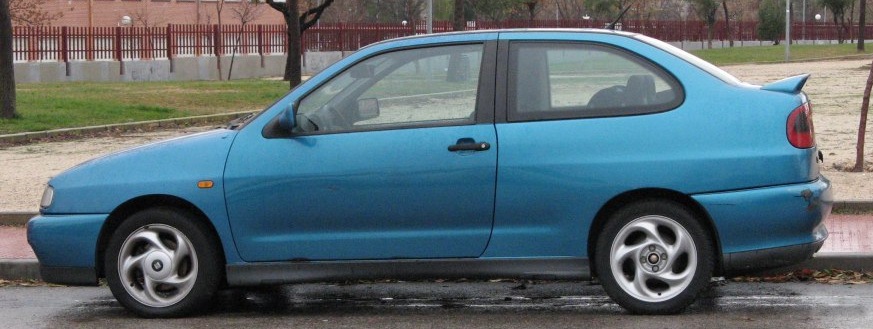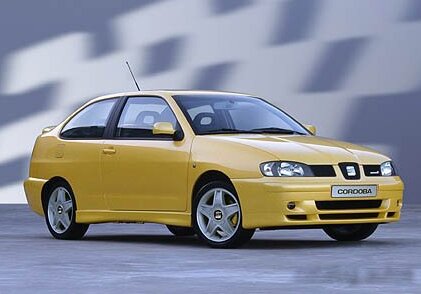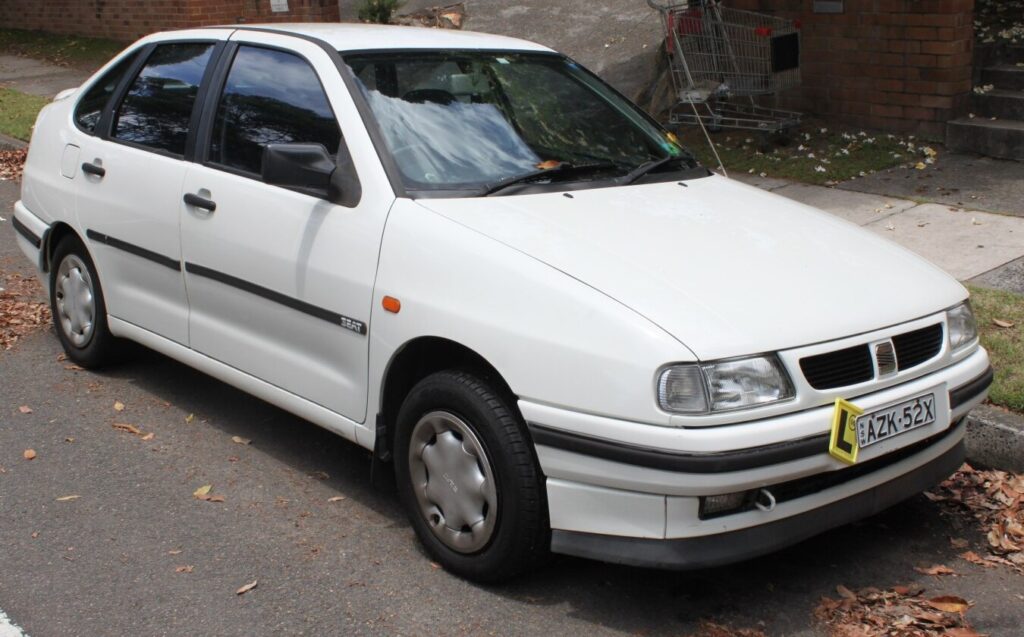
The SEAT Cordoba I 1.9 D, produced between 1993 and 1996, represented SEAT’s entry into the compact sedan market following its partnership with Volkswagen. Based on the Volkswagen Polo Mk3 (6N) platform – internally designated the 1HX0 – the Cordoba aimed to offer a more affordable and stylish alternative to established competitors like the Ford Escort and Opel Astra. This particular 1.9 D variant, equipped with a naturally aspirated diesel engine producing 68 horsepower, served as the base model in the Cordoba lineup, prioritizing fuel economy and practicality over outright performance. It was primarily marketed towards buyers seeking a reliable and economical family car, particularly in European markets where diesel engines enjoyed significant popularity due to favorable taxation and fuel costs.
Technical Specifications
| Brand | Seat |
| Model | Cordoba |
| Generation | Cordoba I |
| Type (Engine) | 1.9 D (68 Hp) |
| Start of production | 1993 |
| End of production | 1996 |
| Powertrain Architecture | Internal Combustion engine |
| Body type | Sedan |
| Seats | 5 |
| Doors | 4 |
| Fuel consumption (combined) | 5.8 l/100 km (40.6 US mpg, 48.7 UK mpg, 17.2 km/l) |
| Fuel Type | Diesel |
| Acceleration 0 – 100 km/h | 16.5 sec |
| Acceleration 0 – 62 mph | 16.5 sec |
| Acceleration 0 – 60 mph | 15.7 sec |
| Maximum speed | 165 km/h (102.53 mph) |
| Weight-to-power ratio | 15.1 kg/Hp |
| Weight-to-torque ratio | 6.8 kg/Nm |
| Power | 68 Hp @ 4200 rpm |
| Power per litre | 35.9 Hp/l |
| Torque | 150 Nm @ 2400 rpm (110.63 lb.-ft. @ 2400 rpm) |
| Engine layout | Front, Transverse |
| Engine Model/Code | 1Y |
| Engine displacement | 1896 cm3 (115.7 cu. in.) |
| Number of cylinders | 4 |
| Engine configuration | Inline |
| Cylinder Bore | 79.5 mm (3.13 in.) |
| Piston Stroke | 95.5 mm (3.76 in.) |
| Compression ratio | 22.5:1 |
| Number of valves per cylinder | 2 |
| Fuel injection system | Precombustion chamber injection |
| Engine aspiration | Naturally aspirated engine |
| Valvetrain | OHC |
| Engine oil capacity | 4.5 l (4.76 US qt | 3.96 UK qt) |
| Coolant | 6.6 l (6.97 US qt | 5.81 UK qt) |
| Kerb Weight | 1025 kg (2259.74 lbs.) |
| Max. weight | 1500 kg (3306.93 lbs.) |
| Max load | 475 kg (1047.2 lbs.) |
| Trunk (boot) space – minimum | 455 l (16.07 cu. ft.) |
| Trunk (boot) space – maximum | 802 l (28.32 cu. ft.) |
| Fuel tank capacity | 47 l (12.42 US gal | 10.34 UK gal) |
| Length | 4109 mm (161.77 in.) |
| Width | 1646 mm (64.8 in.) |
| Height | 1408 mm (55.43 in.) |
| Wheelbase | 2440 mm (96.06 in.) |
| Front track | 1429 mm (56.26 in.) |
| Rear (Back) track | 1394 mm (54.88 in.) |
| Drivetrain Architecture | The Internal combustion engine (ICE) drives the front wheels of the vehicle. |
| Drive wheel | Front wheel drive |
| Number of gears and type of gearbox | 5 gears, manual transmission |
| Front suspension | Wishbone |
| Rear suspension | Suspension with traction connecting levers |
| Front brakes | Disc |
| Rear brakes | Drum |
| Assisting systems | ABS (Anti-lock braking system) |
| Steering type | Steering rack and pinion |
| Power steering | Hydraulic Steering |
| Tires size | 175/70 R13 |
Powertrain & Engine Architecture
The heart of the Cordoba 1.9 D was the 1Y diesel engine, a four-cylinder, inline engine displacing 1896 cc. This engine utilized a precombustion chamber injection system, a common technology for diesel engines of the era. This system involved injecting fuel into a precombustion chamber connected to the main cylinder, where it was partially ignited before entering the main combustion chamber. This design aided in smoother combustion and reduced engine noise compared to direct injection systems. The engine featured an overhead camshaft (OHC) valvetrain with two valves per cylinder. The 1.9 D produced 68 horsepower at 4200 rpm and 150 Nm (110.63 lb-ft) of torque at 2400 rpm. The engine’s relatively high compression ratio of 22.5:1 was typical for diesel engines, contributing to its fuel efficiency. The engine was transversely mounted, driving the front wheels through a five-speed manual transmission. While an automatic transmission was offered on other Cordoba variants, it was not available with the 1.9 D engine.
Driving Characteristics
The Cordoba 1.9 D’s driving experience was defined by its focus on economy and practicality. Acceleration was modest, taking approximately 16.5 seconds to reach 62 mph (100 km/h). The engine’s torque, however, provided reasonable pulling power for everyday driving, making it suitable for navigating city streets and highways. The five-speed manual transmission allowed drivers to optimize fuel efficiency and maintain comfortable cruising speeds. Compared to the more powerful petrol variants of the Cordoba, such as the 1.6 or 2.0-liter engines, the 1.9 D felt noticeably slower. However, it offered significantly better fuel economy, making it a popular choice for drivers covering long distances. The gear ratios were geared towards maximizing fuel efficiency rather than providing sporty acceleration.
Equipment & Trim Levels
The 1.9 D Cordoba typically came with a basic level of equipment, reflecting its position as the entry-level model. Standard features generally included power steering, central locking, and a basic stereo system. Interior upholstery was typically cloth, and the dashboard featured a functional but relatively simple design. Optional extras included air conditioning, electric windows, and alloy wheels. The trim level was often simply designated as “D” or “GL”, with the “GL” trim offering a few additional comfort features. The focus was on providing a functional and affordable vehicle rather than luxurious appointments.
Chassis & Braking
The Cordoba I utilized a relatively simple chassis design. Front suspension consisted of wishbones, while the rear suspension employed a torsion beam setup with traction connecting levers. This configuration provided a comfortable ride quality, although it wasn’t particularly sporty. The braking system featured disc brakes on the front wheels and drum brakes on the rear. Anti-lock braking system (ABS) was available as an option, enhancing safety. The Cordoba’s weight of around 1025 kg (2259.74 lbs) contributed to its relatively good fuel economy and manageable handling characteristics.
Market Reception & Comparison
The Cordoba 1.9 D was generally well-received as a practical and economical family car. Critics praised its fuel efficiency and reliability, but noted its lack of performance compared to petrol-powered rivals. Compared to other diesel-powered cars in its class, such as the Peugeot 305 or Renault 19, the Cordoba offered a competitive combination of fuel economy, practicality, and build quality. The 1.9 D was often seen as a more sensible choice than the higher-powered Cordoba variants for drivers prioritizing running costs over driving excitement. Its fuel economy of around 40.6 US mpg was a significant selling point in markets with high fuel prices.
Legacy
The 1.9 D engine, in its various iterations, proved to be a durable and reliable powerplant. Cordoba I 1.9 D models are now considered classic cars, and well-maintained examples can still be found on the used car market. While not particularly sought after by enthusiasts, they represent an affordable and practical entry point into classic SEAT ownership. The engine’s simplicity and robust construction contribute to its longevity, although age-related issues such as wear and tear on seals and fuel injection components are common. The Cordoba I 1.9 D remains a testament to SEAT’s early efforts to establish itself as a mainstream automotive manufacturer, offering a blend of Spanish flair and Volkswagen engineering.