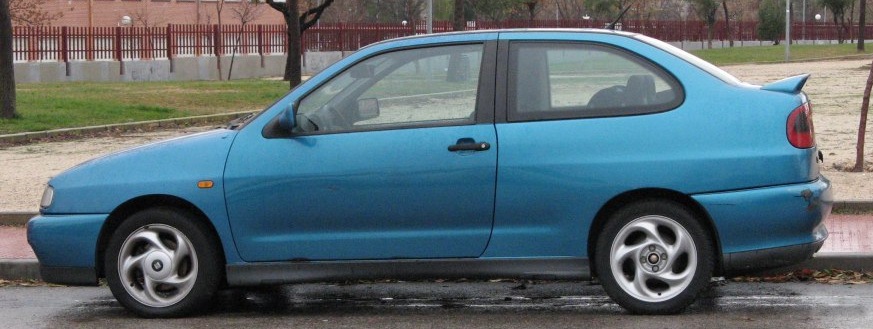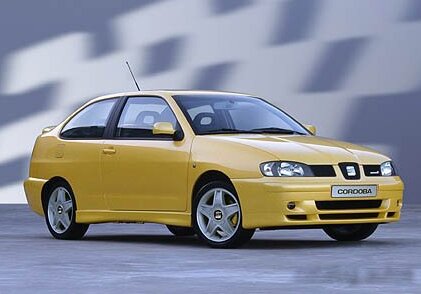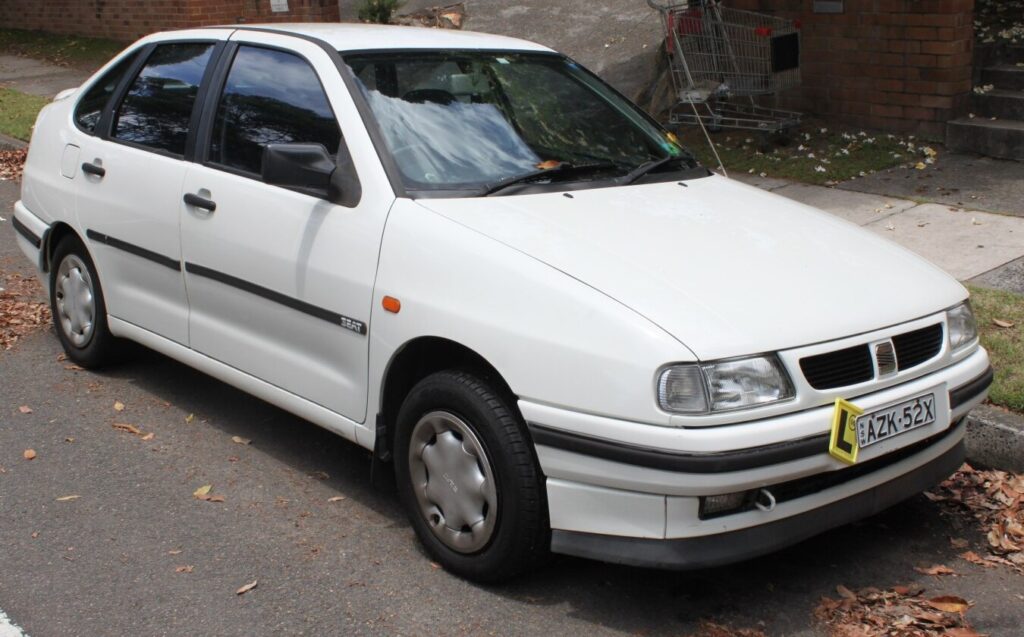
The SEAT Cordoba I 1.9 TDI, produced between September 1993 and June 1996, represented a significant entry in the compact sedan market, particularly within Europe. Positioned as a practical and economical choice, the 1.9 TDI variant offered a diesel-powered alternative to the gasoline engines available in the Cordoba I range. It was built on the Volkswagen Group’s A03 platform, shared with the first generation Volkswagen Polo and Ibiza, and aimed at buyers seeking fuel efficiency and reliability. This model served as a key component in SEAT’s early efforts to establish itself as a distinct brand following its partnership with Volkswagen.
Technical Specifications
| Brand | Seat |
| Model | Cordoba |
| Generation | Cordoba I |
| Type (Engine) | 1.9 TD (75 Hp) |
| Start of production | September, 1993 |
| End of production | June, 1996 |
| Powertrain Architecture | Internal Combustion engine |
| Body type | Sedan |
| Seats | 5 |
| Doors | 4 |
| Fuel consumption (combined) | 5.8 l/100 km (40.6 US mpg, 48.7 UK mpg, 17.2 km/l) |
| Fuel Type | Diesel |
| Acceleration 0 – 100 km/h | 15 sec |
| Acceleration 0 – 62 mph | 15 sec |
| Acceleration 0 – 60 mph | 14.3 sec |
| Maximum speed | 171 km/h (106.25 mph) |
| Weight-to-power ratio | 14.1 kg/Hp, 71.1 Hp/tonne |
| Weight-to-torque ratio | 7.5 kg/Nm, 132.7 Nm/tonne |
| Power | 75 Hp @ 4200 rpm |
| Power per litre | 39.6 Hp/l |
| Torque | 140 Nm @ 2200 rpm (103.26 lb.-ft. @ 2200 rpm) |
| Engine layout | Front, Transverse |
| Engine Model/Code | AAZ |
| Engine displacement | 1896 cm3 (115.7 cu. in.) |
| Number of cylinders | 4 |
| Engine configuration | Inline |
| Cylinder Bore | 79.5 mm (3.13 in.) |
| Piston Stroke | 95.5 mm (3.76 in.) |
| Compression ratio | 22.5:1 |
| Number of valves per cylinder | 2 |
| Fuel injection system | Precombustion chamber injection |
| Engine aspiration | Turbocharger |
| Valvetrain | OHC |
| Engine oil capacity | 4.5 l (4.76 US qt | 3.96 UK qt) |
| Coolant | 6.6 l (6.97 US qt | 5.81 UK qt) |
| Kerb Weight | 1055 kg (2325.88 lbs.) |
| Max. weight | 1530 kg (3373.07 lbs.) |
| Max load | 475 kg (1047.2 lbs.) |
| Trunk (boot) space – minimum | 455 l (16.07 cu. ft.) |
| Trunk (boot) space – maximum | 802 l (28.32 cu. ft.) |
| Fuel tank capacity | 47 l (12.42 US gal | 10.34 UK gal) |
| Length | 4109 mm (161.77 in.) |
| Width | 1640 mm (64.57 in.) |
| Height | 1408 mm (55.43 in.) |
| Wheelbase | 2440 mm (96.06 in.) |
| Front track | 1429 mm (56.26 in.) |
| Rear (Back) track | 1394 mm (54.88 in.) |
| Drivetrain Architecture | The Internal combustion engine (ICE) drives the front wheels of the vehicle. |
| Drive wheel | Front wheel drive |
| Number of gears and type of gearbox | 5 gears, manual transmission |
| Front suspension | Wishbone |
| Rear suspension | Suspension with traction connecting levers |
| Front brakes | Disc |
| Rear brakes | Drum |
| Assisting systems | ABS (Anti-lock braking system) |
| Steering type | Steering rack and pinion |
| Power steering | Hydraulic Steering |
| Tires size | 185/60 R14 |
Powertrain & Engine Architecture
The heart of the Cordoba I 1.9 TDI was the AAZ engine, a 1.9-liter, inline-four cylinder diesel engine. This engine was a mainstay in the Volkswagen Group’s diesel lineup during the early to mid-1990s, also finding its way into the Volkswagen Golf, Polo, and Passat. The AAZ utilized a precombustion chamber injection system, a common diesel technology of the time, where fuel was injected into a small pre-chamber before entering the main combustion chamber. This design aided in more complete combustion and reduced engine noise. A turbocharger was added to increase power output to 75 horsepower and 140 Nm (103 lb-ft) of torque. The engine featured a single overhead camshaft (OHC) valvetrain with two valves per cylinder. The five-speed manual transmission was the only gearbox option available with this engine, prioritizing fuel economy over outright performance.
Driving Characteristics
The 1.9 TDI Cordoba I offered a distinctly different driving experience compared to its gasoline-powered siblings. While not particularly quick – achieving 0-60 mph in around 14.3 seconds – it provided ample torque for everyday driving. The turbocharger provided a noticeable boost in power at lower RPMs, making it suitable for overtaking and navigating hilly terrain. The five-speed manual transmission allowed drivers to keep the engine in its optimal power band. Compared to the more powerful, but less fuel-efficient, gasoline versions, the 1.9 TDI prioritized economy and practicality. The gear ratios were tuned for maximizing fuel efficiency, resulting in a somewhat leisurely driving experience.
Equipment & Trim Levels
The Cordoba I 1.9 TDI typically came with a relatively basic level of equipment, reflecting its position as an affordable and practical vehicle. Standard features generally included power steering, central locking, and a basic stereo system. Interior upholstery was typically cloth, and the dashboard featured a functional, if somewhat spartan, design. Optional extras included air conditioning, electric windows, and alloy wheels. Trim levels were relatively limited, with the 1.9 TDI often serving as a mid-range offering, bridging the gap between the base gasoline models and the more luxurious trims.
Chassis & Braking
The Cordoba I featured a front-wheel-drive layout with a relatively simple suspension setup. The front suspension utilized wishbones, while the rear employed a torsion beam suspension with traction connecting levers. This setup provided a reasonable balance between ride comfort and handling. Braking duties were handled by disc brakes at the front and drum brakes at the rear. An Anti-lock Braking System (ABS) was available, enhancing safety by preventing wheel lockup during hard braking. The chassis was designed to accommodate the added weight of the diesel engine and its associated components.
Market Reception & Comparison
The SEAT Cordoba I 1.9 TDI was generally well-received by critics and consumers alike, particularly in European markets where diesel engines were highly popular. It was praised for its fuel efficiency, reliability, and practicality. Compared to the gasoline-powered Cordoba models, the 1.9 TDI offered significantly better fuel economy, making it an attractive option for high-mileage drivers. However, it was criticized for its relatively slow acceleration and somewhat noisy engine. Against competitors like the Peugeot 305 and Renault 19, the Cordoba 1.9 TDI offered a competitive package in terms of price, fuel economy, and reliability.
Legacy
The 1.9 TDI engine, in its various iterations, became renowned for its durability and longevity. The AAZ engine found in the Cordoba I is no exception. Well-maintained examples can still be found on the road today, testament to its robust construction. In the used car market, the Cordoba I 1.9 TDI is often sought after by those looking for a simple, reliable, and economical vehicle. While not a performance icon, it represents a significant chapter in SEAT’s history and a prime example of 1990s diesel technology. The engine’s reputation for reliability has contributed to its continued popularity among enthusiasts and those seeking a practical and affordable mode of transportation.