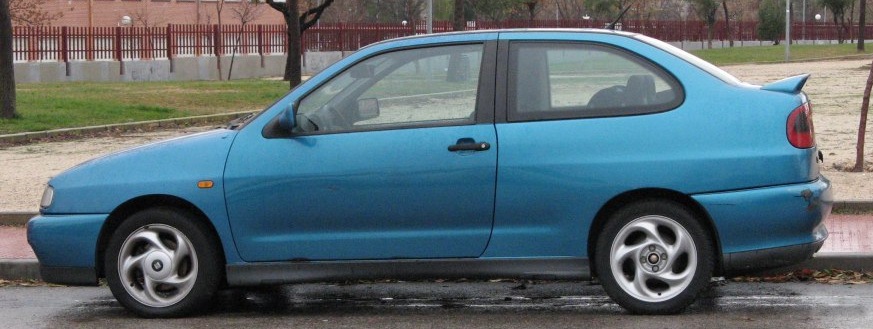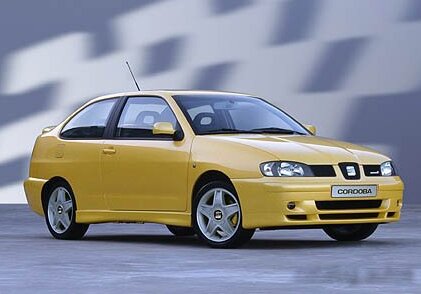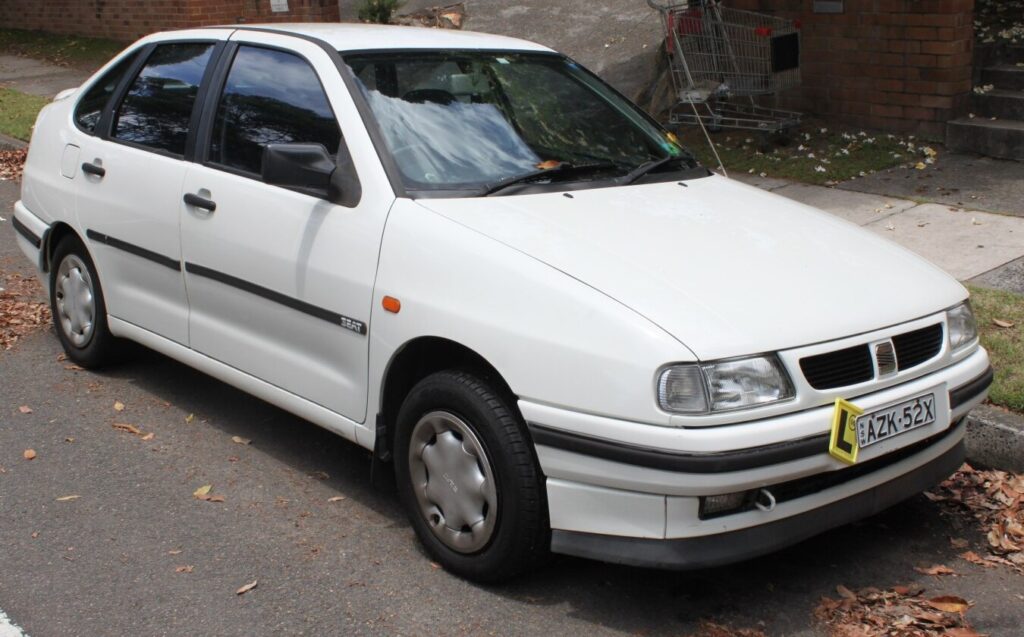
The SEAT Cordoba I 1.9 TDI, produced primarily in 1999, represented a significant offering in the compact sedan segment, particularly within European markets. Positioned as a practical and fuel-efficient option, the 1.9 TDI variant, boasting 110 horsepower, aimed to balance performance with economy. It was built upon the Volkswagen Group’s A3/1HX0 platform, shared with models like the Volkswagen Golf Mk4, Audi A3, and Skoda Octavia, allowing for economies of scale and a degree of mechanical commonality. This particular engine and transmission combination was a popular choice for drivers seeking a blend of usability and reasonable running costs.
Technical Specifications
| Brand | Seat |
| Model | Cordoba |
| Generation | Cordoba I |
| Type (Engine) | 1.9 TDI (110 Hp) |
| Start of production | March, 1999 |
| End of production | 1999 |
| Powertrain Architecture | Internal Combustion engine |
| Body type | Sedan |
| Seats | 5 |
| Doors | 4 |
| Fuel consumption (urban) | 6.5 l/100 km (36.2 US mpg, 43.5 UK mpg, 15.4 km/l) |
| Fuel consumption (extra urban) | 4 l/100 km (58.8 US mpg, 70.6 UK mpg, 25 km/l) |
| Fuel Type | Diesel |
| Acceleration 0 – 100 km/h | 10.6 sec |
| Acceleration 0 – 62 mph | 10.6 sec |
| Acceleration 0 – 60 mph | 10.1 sec |
| Maximum speed | 180 km/h (111.85 mph) |
| Weight-to-power ratio | 10 kg/Hp, 99.5 Hp/tonne |
| Weight-to-torque ratio | 4.7 kg/Nm, 212.7 Nm/tonne |
| Power | 110 Hp @ 4150 rpm |
| Power per litre | 58 Hp/l |
| Torque | 235 Nm @ 1900 rpm (173.33 lb.-ft. @ 1900 rpm) |
| Engine layout | Front, Transverse |
| Engine Model/Code | ASV |
| Engine displacement | 1896 cm3 (115.7 cu. in.) |
| Number of cylinders | 4 |
| Engine configuration | Inline |
| Cylinder Bore | 79.5 mm (3.13 in.) |
| Piston Stroke | 95.5 mm (3.76 in.) |
| Compression ratio | 19.5:1 |
| Number of valves per cylinder | 2 |
| Fuel injection system | Direct injection |
| Engine aspiration | Turbocharger, Intercooler |
| Valvetrain | OHC |
| Engine oil capacity | 4.5 l (4.76 US qt | 3.96 UK qt) |
| Coolant | 6.5 l (6.87 US qt | 5.72 UK qt) |
| Kerb Weight | 1105 kg (2436.11 lbs.) |
| Max. weight | 1565 kg (3450.23 lbs.) |
| Max load | 460 kg (1014.13 lbs.) |
| Trunk (boot) space – minimum | 455 l (16.07 cu. ft.) |
| Trunk (boot) space – maximum | 762 l (26.91 cu. ft.) |
| Fuel tank capacity | 45 l (11.89 US gal | 9.9 UK gal) |
| Length | 4144 mm (163.15 in.) |
| Width | 1640 mm (64.57 in.) |
| Height | 1424 mm (56.06 in.) |
| Wheelbase | 2443 mm (96.18 in.) |
| Front track | 1430 mm (56.3 in.) |
| Rear (Back) track | 1394 mm (54.88 in.) |
| Drivetrain Architecture | The Internal combustion engine (ICE) drives the front wheels of the vehicle. |
| Drive wheel | Front wheel drive |
| Number of gears and type of gearbox | 5 gears, manual transmission |
| Front suspension | Wishbone |
| Rear suspension | Suspension with traction connecting levers |
| Front brakes | Disc |
| Rear brakes | Disc |
| Assisting systems | ABS (Anti-lock braking system) |
| Steering type | Steering rack and pinion |
| Power steering | Hydraulic Steering |
| Tires size | 185/60 R14 |
Powertrain & Engine Architecture
The heart of the Cordoba I 1.9 TDI was the ASV engine code, a 1.9-liter, four-cylinder diesel engine. This engine utilized direct injection technology, a key feature for maximizing fuel efficiency and reducing emissions. The direct injection system, coupled with a turbocharger and intercooler, allowed for a relatively high output of 110 horsepower and 235 Nm (173 lb-ft) of torque. The engine employed an overhead camshaft (OHC) valvetrain with two valves per cylinder. The five-speed manual transmission was the standard offering, providing a balance between fuel economy and driver control. The engine’s robust construction and relatively simple design contributed to its reputation for reliability.
Driving Characteristics
The 1.9 TDI engine in the Cordoba I delivered a characteristically torquey diesel driving experience. While not particularly fast, with a 0-60 mph time of around 10.1 seconds, it offered ample power for everyday driving and overtaking maneuvers. The turbocharger provided a noticeable boost in power from around 1900 rpm, making it a flexible engine in various driving situations. Compared to the lower-powered 1.6-liter gasoline versions, the 1.9 TDI offered significantly more pulling power, especially when fully loaded. However, it lacked the responsiveness and higher revving nature of the gasoline engines. The five-speed manual transmission was well-matched to the engine’s characteristics, providing adequate gear spacing for both urban and highway driving.
Equipment & Trim Levels
The Cordoba I 1.9 TDI typically came with a reasonable level of standard equipment, reflecting its position as a mid-range offering. Features included power steering, central locking, electric front windows, and an anti-lock braking system (ABS). Interior upholstery was typically cloth, with a functional and durable design. Optional extras included air conditioning, alloy wheels, and a radio/cassette player. Higher trim levels, if available, might have added features like a sunroof, upgraded upholstery, and more comprehensive audio systems.
Chassis & Braking
The Cordoba I utilized a relatively conventional chassis setup. Front suspension consisted of wishbones, while the rear employed a torsion beam suspension with traction connecting levers. This setup provided a comfortable ride quality, although it wasn’t particularly sporty. Brakes were disc brakes all around, providing adequate stopping power for the vehicle’s weight and performance. The hydraulic power steering offered light and easy steering, making it maneuverable in urban environments.
Market Reception & Comparison
The SEAT Cordoba I 1.9 TDI was generally well-received by automotive critics as a practical and economical choice. Its fuel efficiency was a major selling point, particularly in Europe where diesel fuel was often cheaper than gasoline. Compared to the gasoline-powered Cordoba variants, the 1.9 TDI offered superior fuel economy and torque. However, it was criticized for its slightly noisy engine and lack of outright performance. Against competitors like the Ford Focus and Opel Astra, the Cordoba offered a competitive package in terms of price, fuel economy, and practicality.
Legacy
The 1.9 TDI engine, in its various iterations, became renowned for its durability and reliability. The ASV engine code found in the Cordoba I is no exception. Well-maintained examples continue to be found on the used car market today, often with high mileage. While age and wear can lead to issues with components like the turbocharger and fuel injection system, the engine’s fundamental robustness means that many examples remain serviceable. The Cordoba I 1.9 TDI represents a solid and dependable compact sedan from a period when SEAT was establishing itself as a distinct and value-oriented brand.