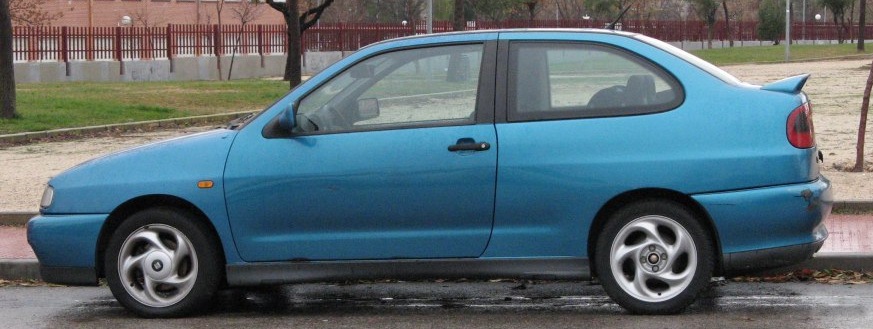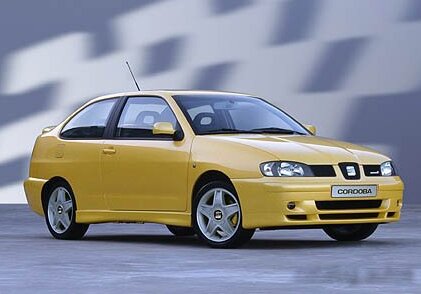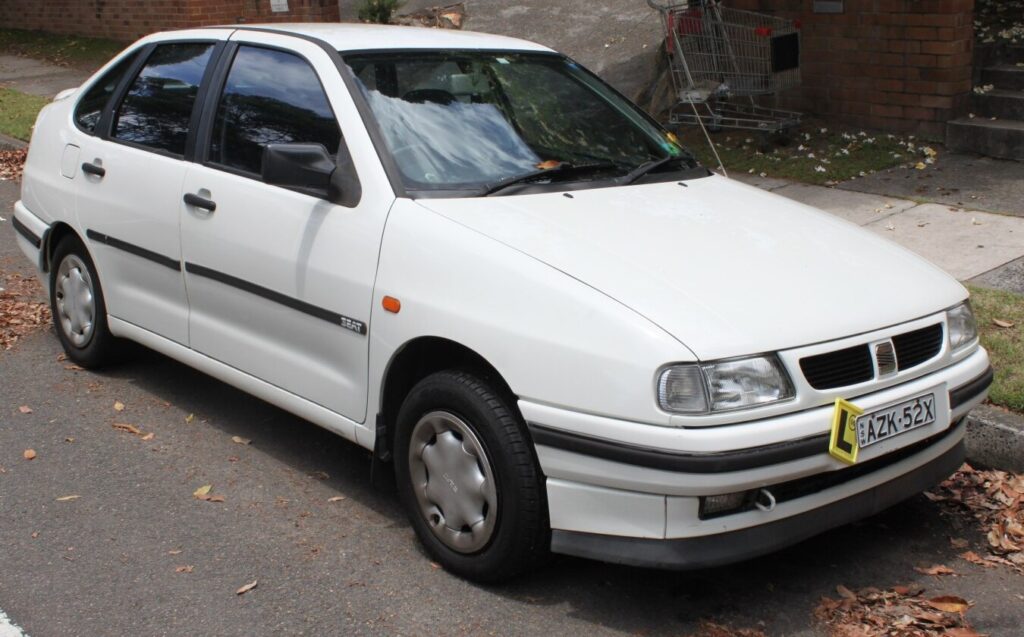
The SEAT Córdoba I 2.0 i, produced between April 1996 and June 1999, represented a significant step up in performance and refinement for the first generation Córdoba. Positioned as a mid-range offering within the lineup, it catered to drivers seeking a more engaging driving experience than the base models, while remaining more accessible than the sportier variants. Built on the Volkswagen Group’s A03 platform (also known as the 1HX0/A3 platform), the Córdoba I aimed to provide a practical and stylish compact sedan, particularly appealing to the European market. This 2.0-liter variant offered a balance of power, fuel efficiency, and affordability, making it a popular choice for families and individuals alike.
Technical Specifications
| Brand | Seat |
| Model | Cordoba |
| Generation | Cordoba I |
| Type (Engine) | 2.0 i (115 Hp) |
| Start of production | April, 1996 |
| End of production | June, 1999 |
| Powertrain Architecture | Internal Combustion engine |
| Body type | Sedan |
| Seats | 5 |
| Doors | 4 |
| Fuel consumption (combined) | 7.8 l/100 km (30.2 US mpg, 36.2 UK mpg, 12.8 km/l) |
| Fuel Type | Petrol (Gasoline) |
| Acceleration 0 – 100 km/h | 10.1 sec |
| Acceleration 0 – 62 mph | 10.1 sec |
| Acceleration 0 – 60 mph | 9.6 sec |
| Maximum speed | 195 km/h (121.17 mph) |
| Weight-to-power ratio | 9.2 kg/Hp, 109 Hp/tonne |
| Weight-to-torque ratio | 6.4 kg/Nm, 157.3 Nm/tonne |
| Power | 115 Hp @ 5400 rpm |
| Power per litre | 58 Hp/l |
| Torque | 166 Nm @ 3200 rpm (122.44 lb.-ft. @ 3200 rpm) |
| Engine layout | Front, Transverse |
| Engine Model/Code | AGG |
| Engine displacement | 1984 cm3 (121.07 cu. in.) |
| Number of cylinders | 4 |
| Engine configuration | Inline |
| Cylinder Bore | 82.5 mm (3.25 in.) |
| Piston Stroke | 92.8 mm (3.65 in.) |
| Compression ratio | 10:1 |
| Number of valves per cylinder | 2 |
| Fuel injection system | Multi-port manifold injection |
| Engine aspiration | Naturally aspirated engine |
| Valvetrain | OHC |
| Engine oil capacity | 4 l (4.23 US qt | 3.52 UK qt) |
| Coolant | 6.6 l (6.97 US qt | 5.81 UK qt) |
| Kerb Weight | 1055 kg (2325.88 lbs.) |
| Max. weight | 1530 kg (3373.07 lbs.) |
| Max load | 475 kg (1047.2 lbs.) |
| Trunk (boot) space – minimum | 455 l (16.07 cu. ft.) |
| Trunk (boot) space – maximum | 802 l (28.32 cu. ft.) |
| Fuel tank capacity | 47 l (12.42 US gal | 10.34 UK gal) |
| Length | 4109 mm (161.77 in.) |
| Width | 1640 mm (64.57 in.) |
| Height | 1408 mm (55.43 in.) |
| Wheelbase | 2440 mm (96.06 in.) |
| Front track | 1429 mm (56.26 in.) |
| Rear (Back) track | 1394 mm (54.88 in.) |
| Drivetrain Architecture | The Internal combustion engine (ICE) drives the front wheels of the vehicle. |
| Drive wheel | Front wheel drive |
| Number of gears and type of gearbox | 5 gears, manual transmission |
| Front suspension | Wishbone |
| Rear suspension | Suspension with traction connecting levers |
| Front brakes | Ventilated discs |
| Rear brakes | Disc |
| Assisting systems | ABS (Anti-lock braking system) |
| Steering type | Steering rack and pinion |
| Power steering | Hydraulic Steering |
| Tires size | 185/60 R14 |
| Wheel rims size | 14 |
Powertrain & Engine Architecture
The heart of the Córdoba I 2.0 i is the AGG engine, a naturally aspirated, inline four-cylinder gasoline engine displacing 1984cc. This engine is a member of the Volkswagen Group’s EA827 family, known for its robust construction and relative simplicity. The AGG features a single overhead camshaft (OHC) operating two valves per cylinder. Fuel delivery is managed by a multi-port fuel injection system, providing precise fuel metering for optimal combustion. The engine’s 10:1 compression ratio contributes to its respectable power output of 115 horsepower at 5400 rpm and 166 Nm (122.44 lb-ft) of torque at 3200 rpm. The engine is transversely mounted, driving the front wheels. The standard transmission for this variant was a five-speed manual gearbox, offering a direct and engaging driving experience. While an automatic transmission was available on some Córdoba models, it was less common with the 2.0-liter engine.
Driving Characteristics
The Córdoba I 2.0 i offered a noticeable improvement in performance over the lower-displacement engines in the range. The 115 hp engine provided brisk acceleration, with a 0-60 mph time of around 9.6 seconds and a top speed of 195 km/h (121.17 mph). The five-speed manual transmission allowed drivers to effectively utilize the engine’s powerband, providing good control and responsiveness. Compared to the 1.6-liter models, the 2.0 i felt significantly more capable, particularly when carrying passengers or luggage. While not a sports car, the Córdoba 2.0 i offered a satisfying driving experience, with enough power for comfortable highway cruising and spirited backroad driving. The gear ratios were well-matched to the engine’s characteristics, providing good in-gear acceleration.
Equipment & Trim Levels
The 2.0 i trim level typically included features such as power steering, central locking, electric front windows, and an adjustable steering column. Interior upholstery was generally cloth, with a functional and durable design. Optional extras included air conditioning, alloy wheels, and a radio/cassette player. The dashboard layout was typical of Volkswagen Group vehicles of the era, with a clear and straightforward design. Safety features included ABS (Anti-lock Braking System) as standard equipment, enhancing braking performance and stability.
Chassis & Braking
The Córdoba I utilized a relatively simple but effective chassis design. The front suspension featured independent wishbones, providing good handling and ride comfort. The rear suspension employed a torsion beam setup, which offered a good balance between space efficiency and handling. Braking duties were handled by ventilated discs at the front and solid discs at the rear, providing adequate stopping power for the vehicle’s weight and performance. The hydraulic power steering provided light and precise steering feel.
Market Reception & Comparison
The SEAT Córdoba I 2.0 i was generally well-received by automotive critics. It was praised for its strong engine, comfortable ride, and practical interior. Compared to its siblings, such as the 1.6-liter models, the 2.0 i offered a significant performance upgrade. However, it was often seen as less sporty than some of its rivals, such as the Renault Mégane or Peugeot 306. Fuel economy was respectable for its class, averaging around 7.8 l/100 km (30.2 US mpg). Reliability was generally good, although some owners reported minor issues with the electrical system.
Legacy
The SEAT Córdoba I 2.0 i remains a popular choice among enthusiasts and classic car collectors. The AGG engine is known for its durability and relatively straightforward maintenance. While finding parts can sometimes be challenging, they are generally available through specialist suppliers. Today, well-maintained examples of the Córdoba I 2.0 i are becoming increasingly sought after, representing a piece of SEAT’s early history and a testament to the enduring appeal of a well-engineered compact sedan.