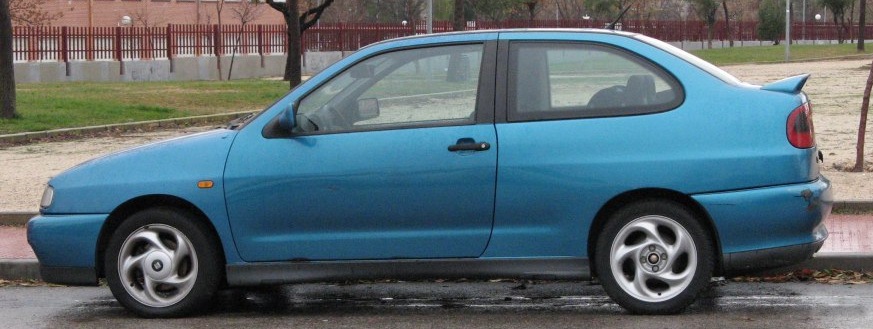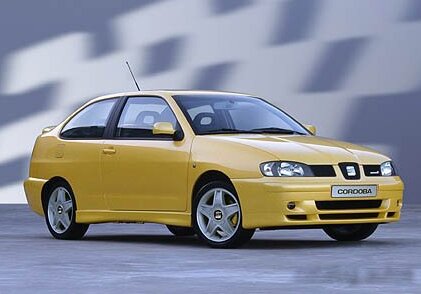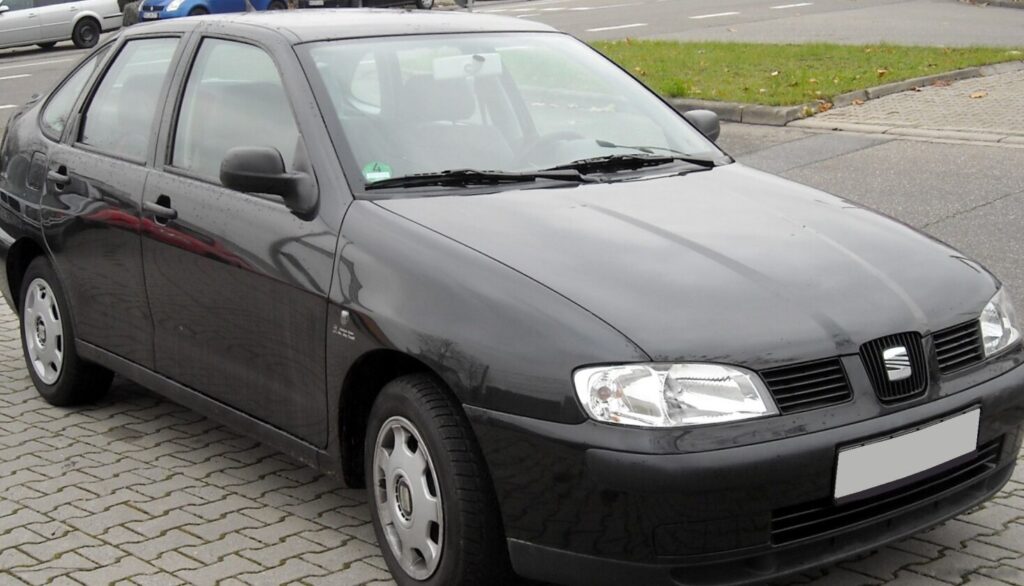
The SEAT Córdoba I (facelift, 1999) 1.0 i represents the entry point into the Córdoba range during its final production years. Introduced in August 1999 and continuing through August 2002, this variant was aimed at budget-conscious buyers seeking economical transportation. It was part of the first generation Córdoba (1993-2002), a model heavily based on the first generation Volkswagen Polo and Ibiza, sharing the 024A platform. The facelift brought subtle styling updates, but the core mechanicals remained largely unchanged from earlier iterations. This 1.0-liter model served as the base trim, offering a simple and affordable option within the broader Córdoba lineup.
Technical Specifications
| Brand | SEAT |
| Model | Córdoba |
| Generation | Córdoba I (facelift 1999) |
| Type (Engine) | 1.0 i (50 Hp) |
| Start of production | August 1999 |
| End of production | August 2002 |
| Powertrain Architecture | Internal Combustion Engine |
| Body type | Sedan |
| Seats | 5 |
| Doors | 4 |
| Fuel Type | Petrol (Gasoline) |
| Power | 50 Hp |
| Engine Model/Code | ALD, ANV, AUC |
| Engine aspiration | Naturally Aspirated |
| Engine oil capacity | 4.3 l (4.54 US qt | 3.78 UK qt) |
| Coolant capacity | 6.6 l (6.97 US qt | 5.81 UK qt) |
Powertrain & Engine Architecture
The Córdoba 1.0 i was powered by a naturally aspirated, inline-three cylinder engine, designated with engine codes ALD, ANV, or AUC depending on the specific market and year. This engine, a member of the Volkswagen EA111 family, displaced 999cc. It featured a single overhead camshaft (SOHC) operating two valves per cylinder. Fuel delivery was managed by a Bosch Mono-Motronic fuel injection system, a relatively simple system for the time, prioritizing reliability and cost-effectiveness over outright performance. The engine’s modest output of 50 horsepower at 5000 rpm and 68 lb-ft of torque at 3600 rpm was achieved through a relatively low compression ratio (9.5:1). The engine was typically paired with a four-speed automatic transmission, though a five-speed manual was also available. The automatic transmission was a conventional hydraulic unit, known for its durability but not particularly quick shifting or fuel-efficient by modern standards.
Driving Characteristics
The driving experience in the Córdoba 1.0 i Automatic was characterized by its relaxed and unhurried nature. Acceleration was modest, requiring a significant amount of throttle input for overtaking maneuvers. The four-speed automatic transmission, while reliable, lacked the responsiveness of more modern gearboxes. Gear changes were noticeable, and the transmission tended to hunt for gears on inclines. The low-end torque was sufficient for city driving, but highway cruising demanded careful planning and a willingness to accept a slower pace. Compared to the 1.6-liter and 1.8-liter versions of the Córdoba, the 1.0 i felt significantly underpowered. The manual transmission offered a slightly more engaging experience, allowing drivers to better utilize the engine’s limited power band. However, even with the manual, the Córdoba 1.0 i was not intended for spirited driving.
Equipment & Trim Levels
The 1.0 i Córdoba was positioned as the entry-level model, and its equipment level reflected this. Standard features typically included power steering, central locking, and basic instrumentation. Interior upholstery was usually a simple cloth material. Air conditioning was often an optional extra, as were power windows and alloy wheels. The dashboard layout was functional but lacked the aesthetic refinements found in higher trim levels. The overall interior ambiance was basic, prioritizing practicality and durability over luxury. Safety features were also limited, typically consisting of driver and passenger airbags and seatbelts. The trim level was often simply designated as “Base” or “Style,” with minimal differentiation within the 1.0 i range.
Chassis & Braking
The Córdoba 1.0 i utilized a MacPherson strut front suspension and a torsion beam rear suspension. This setup was a common configuration for compact cars of the era, offering a reasonable balance between ride comfort and handling. The torsion beam rear suspension was a cost-effective solution, but it didn’t provide the same level of sophistication as independent rear suspension systems. Braking was typically accomplished with disc brakes on the front wheels and drum brakes on the rear wheels. Anti-lock Braking System (ABS) was often an optional extra. The braking performance was adequate for the car’s weight and power, but it wasn’t particularly strong. Stabilizer bars were fitted to both the front and rear axles, helping to reduce body roll during cornering.
Market Reception & Comparison
The Córdoba 1.0 i Automatic received mixed reviews. Critics generally acknowledged its affordability and fuel efficiency but criticized its lack of power and refinement. It was often seen as a sensible choice for first-time car buyers or those seeking a low-cost runabout. Compared to other trims in the Córdoba lineup, such as the 1.6 or 1.8 models, the 1.0 i offered significantly lower performance but also a lower purchase price and potentially better fuel economy. The 1.6-liter version, while more expensive, provided a much more enjoyable driving experience. The 1.8-liter models offered even greater performance but came with a higher price tag and increased running costs. In terms of reliability, the 1.0 i engine was generally considered to be robust and dependable, although the automatic transmission could be prone to wear and tear if not properly maintained.
Legacy
The SEAT Córdoba 1.0 i Automatic, while not a performance icon, holds a place in automotive history as an affordable and practical compact car. Its simple engine and transmission design contribute to its relative ease of maintenance. Today, these cars are relatively rare, and well-maintained examples are becoming increasingly sought after by enthusiasts and collectors. The 1.0-liter engine, while underpowered by modern standards, is known for its longevity. The automatic transmission, however, remains a potential weak point, requiring regular fluid changes and careful driving. In the used car market, the Córdoba 1.0 i represents a budget-friendly option for those seeking a classic European hatchback, offering a glimpse into the automotive landscape of the late 1990s and early 2000s.