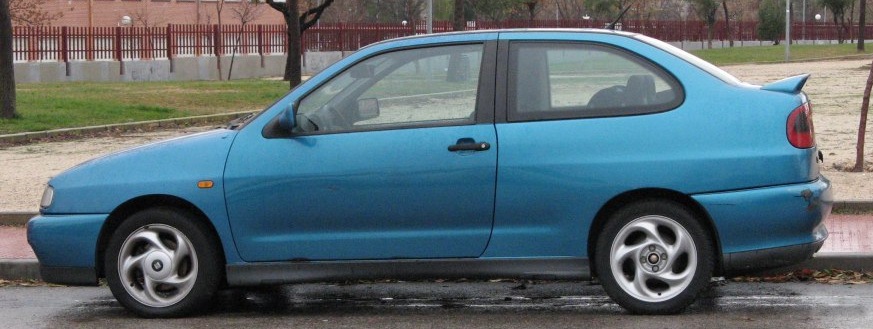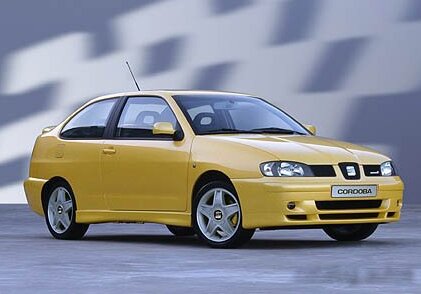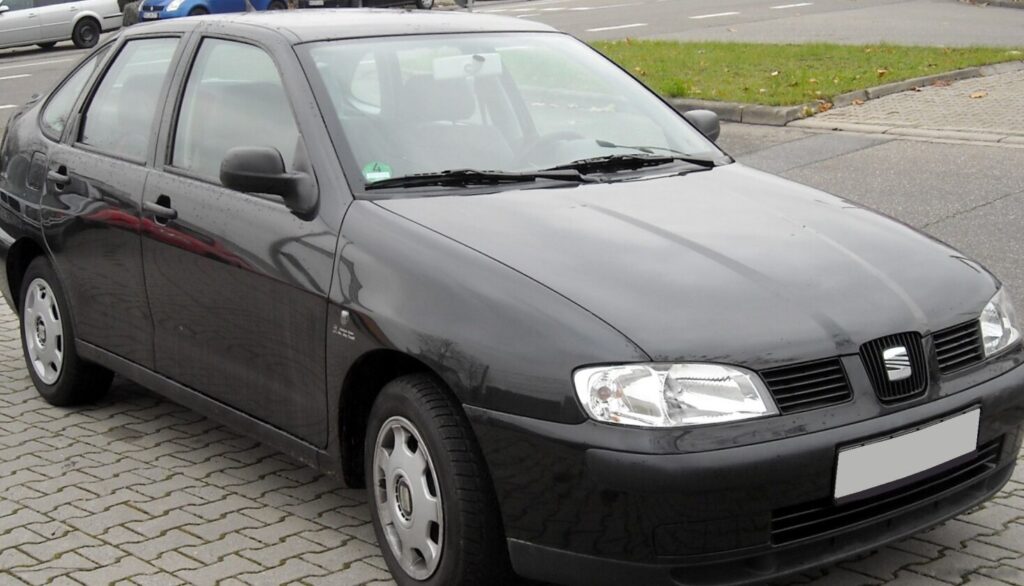
The SEAT Córdoba I (facelift, 1999) 1.4 16V, producing 75 horsepower, was a mainstay of the Spanish automaker’s lineup during its production run from February 1999 to August 2002. Positioned as an entry-level offering within the Córdoba range, it represented an affordable and practical option for buyers seeking a compact sedan. This facelifted version of the original Córdoba (1993-2002) benefited from styling updates and minor mechanical refinements. It was built on the Volkswagen Group’s A2 platform, shared with models like the Volkswagen Polo, Škoda Felicia, and the first-generation Audi A3. The Córdoba, in general, was SEAT’s attempt to establish itself as a modern, independent brand following its acquisition by Volkswagen in 1986, and the 1.4 16V played a crucial role in achieving volume sales.
Technical Specifications
| Brand | Seat |
| Model | Cordoba |
| Generation | Cordoba I (facelift 1999) |
| Type (Engine) | 1.4 16V (75 Hp) |
| Start of production | February, 1999 |
| End of production | August, 2002 |
| Powertrain Architecture | Internal Combustion engine |
| Body type | Sedan |
| Seats | 5 |
| Doors | 4 |
| Fuel consumption (urban) | 8.4 l/100 km (28 US mpg, 33.6 UK mpg, 11.9 km/l) |
| Fuel consumption (extra urban) | 5.3 l/100 km (44.4 US mpg, 53.3 UK mpg, 18.9 km/l) |
| Fuel Type | Petrol (Gasoline) |
| Acceleration 0 – 100 km/h | 12.9 sec |
| Acceleration 0 – 62 mph | 12.9 sec |
| Acceleration 0 – 60 mph | 12.3 sec |
| Maximum speed | 170 km/h (105.63 mph) |
| Weight-to-power ratio | 13.8 kg/Hp, 72.5 Hp/tonne |
| Weight-to-torque ratio | 8.1 kg/Nm, 123.7 Nm/tonne |
| Power | 75 Hp @ 5000 rpm |
| Power per litre | 54 Hp/l |
| Torque | 128 Nm @ 3300 rpm (94.41 lb.-ft. @ 3300 rpm) |
| Engine layout | Front, Transverse |
| Engine Model/Code | APE |
| Engine displacement | 1390 cm3 (84.82 cu. in.) |
| Number of cylinders | 4 |
| Engine configuration | Inline |
| Cylinder Bore | 76.5 mm (3.01 in.) |
| Piston Stroke | 75.6 mm (2.98 in.) |
| Compression ratio | 10.5:1 |
| Number of valves per cylinder | 4 |
| Fuel injection system | Multi-port manifold injection |
| Engine aspiration | Naturally aspirated engine |
| Valvetrain | OHC |
| Engine oil capacity | 3.2 l (3.38 US qt, 2.82 UK qt) |
| Coolant capacity | 6 l (6.34 US qt, 5.28 UK qt) |
| Kerb Weight | 1035 kg (2281.78 lbs.) |
| Max. weight | 1495 kg (3295.91 lbs.) |
| Max load | 460 kg (1014.13 lbs.) |
| Trunk (boot) space – minimum | 455 l (16.07 cu. ft.) |
| Trunk (boot) space – maximum | 762 l (26.91 cu. ft.) |
| Fuel tank capacity | 45 l (11.89 US gal, 9.9 UK gal) |
| Length | 4163 mm (163.9 in.) |
| Width | 1640 mm (64.57 in.) |
| Height | 1424 mm (56.06 in.) |
| Wheelbase | 2443 mm (96.18 in.) |
| Front track | 1429 mm (56.26 in.) |
| Rear track | 1394 mm (54.88 in.) |
| Drivetrain Architecture | The Internal combustion engine (ICE) drives the front wheels of the vehicle. |
| Drive wheel | Front wheel drive |
| Number of gears and type of gearbox | 5 gears, manual transmission |
| Front suspension | Spring Strut |
| Rear suspension | Suspension with traction connecting levers |
| Front brakes | Disc |
| Rear brakes | Drum |
| Assisting systems | ABS (Anti-lock braking system) |
| Steering type | Steering rack and pinion |
| Power steering | Hydraulic Steering |
| Tires size | 175/70 R13 |
Powertrain & Engine Architecture
The Córdoba 1.4 16V was powered by the Volkswagen Group’s APE engine, a 1.4-liter inline-four cylinder gasoline engine. This engine featured a single overhead camshaft (SOHC) design operating four valves per cylinder, hence the “16V” designation. The APE engine utilized multi-point fuel injection, providing a relatively smooth and efficient fuel delivery system for its time. The engine’s 75 horsepower output at 5000 rpm and 94.41 lb-ft of torque at 3300 rpm were modest, but adequate for everyday driving. The engine’s relatively simple design contributed to its reliability, though it wasn’t known for being particularly powerful or refined. The engine was transversely mounted in the front of the vehicle, driving the front wheels. The standard transmission was a five-speed manual, although a four-speed automatic transmission was also offered, albeit less commonly.
Driving Characteristics
The 1.4 16V Córdoba offered a predictable, if uninspiring, driving experience. Acceleration was leisurely, taking around 12.9 seconds to reach 62 mph. The engine felt strained when pushed hard, and overtaking maneuvers required careful planning. The five-speed manual transmission helped to keep the engine in its optimal power band, but the automatic version, while offering convenience, further diminished performance. The steering was light and easy, making it suitable for urban driving, but lacked feedback. The suspension provided a comfortable ride on most road surfaces, but body roll was noticeable during cornering. Compared to the more powerful 1.8-liter and diesel variants, the 1.4 16V prioritized fuel economy and affordability over outright performance.
Equipment & Trim Levels
The 1.4 16V Córdoba typically came with a basic level of equipment. Standard features included power steering, central locking, and an adjustable steering column. Interior upholstery was typically cloth, and the dashboard featured a simple, functional design. Optional extras included air conditioning, electric windows, and an upgraded audio system. Higher trim levels, such as the Stella or Sport, added features like alloy wheels, fog lights, and more luxurious interior trim. The base 1.4 16V was aimed at budget-conscious buyers who prioritized practicality and reliability.
Chassis & Braking
The Córdoba 1.4 16V utilized a relatively simple chassis design. The front suspension consisted of MacPherson struts, while the rear suspension employed a torsion beam setup. Brakes were disc brakes at the front and drum brakes at the rear. Anti-lock Braking System (ABS) was available as an option, enhancing safety. The suspension was tuned for comfort rather than sporty handling. The relatively light weight of the 1.4 16V model helped to compensate for its modest power output, providing adequate braking performance.
Market Reception & Comparison
The Córdoba 1.4 16V was generally well-received as an affordable and reliable compact sedan. Critics praised its fuel efficiency and practicality, but noted its lack of performance and refinement compared to more expensive rivals. Compared to the 1.8-liter versions, the 1.4 16V offered significantly lower running costs but lacked the punch for more spirited driving. The diesel variants, while more expensive to purchase, provided superior fuel economy and torque. The 1.4 16V appealed to buyers who prioritized value for money and were willing to sacrifice performance for affordability.
Legacy
The SEAT Córdoba 1.4 16V has proven to be a relatively durable and reliable vehicle. The APE engine, while not particularly sophisticated, is known for its longevity when properly maintained. Today, these cars are relatively inexpensive to purchase on the used market, making them attractive to first-time car owners or those seeking a budget-friendly runabout. Parts availability is generally good, thanks to the widespread use of Volkswagen Group components. While not a particularly collectible model, the Córdoba 1.4 16V represents a significant chapter in SEAT’s history, demonstrating the brand’s commitment to providing affordable and practical transportation.