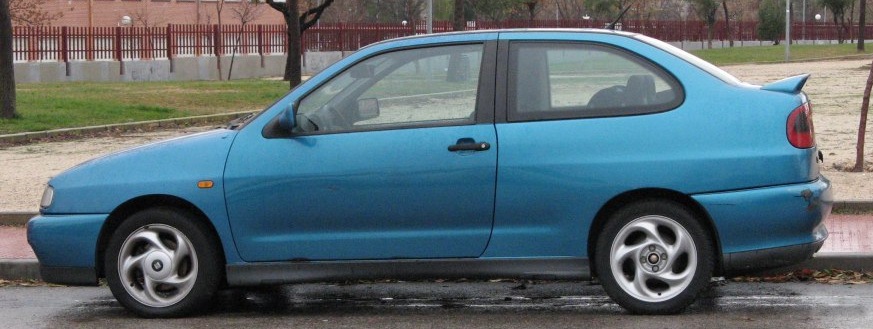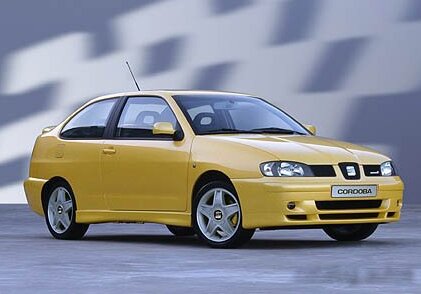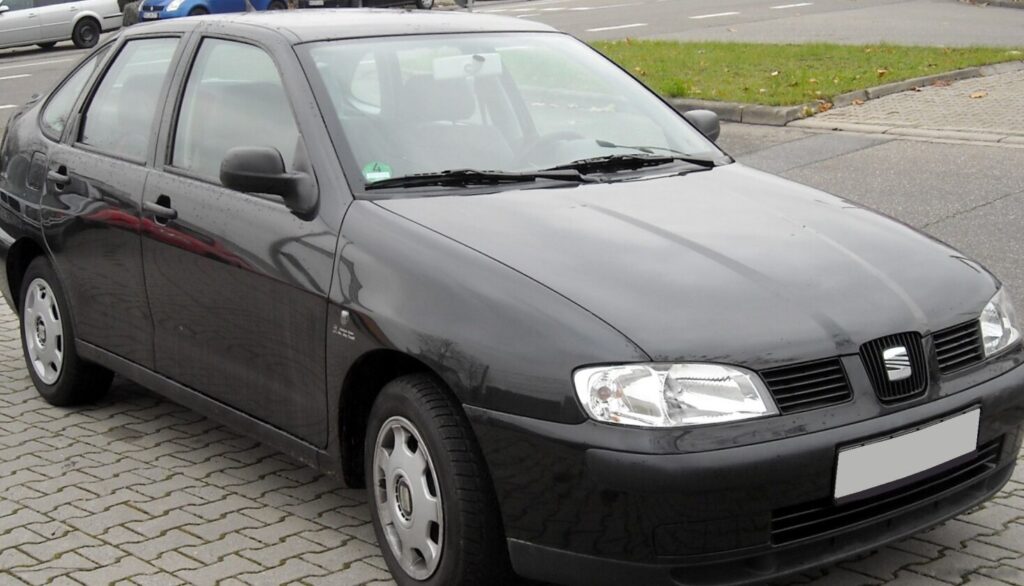
The Seat Cordoba I (facelift, 1999) 1.6, producing 101 horsepower, represented a key offering in Seat’s lineup during the late 1990s and early 2000s. Introduced in June 1999 and continuing through August 2002, this variant of the Cordoba – a subcompact sedan – was positioned as a practical and affordable option within the broader Cordoba range, which also included lower-powered engines and, in some markets, sportier variants. It was built on the Volkswagen Group’s A3/1HX0 platform, shared with models like the Volkswagen Golf, Bora, and Skoda Octavia, providing a foundation of proven engineering. This facelifted version brought styling updates and refinements to the original Cordoba I, aiming to enhance its appeal in a competitive segment.
Technical Specifications
| Brand | Seat |
| Model | Cordoba |
| Generation | Cordoba I (facelift 1999) |
| Type (Engine) | 1.6 (101 Hp) |
| Start of production | June, 1999 |
| End of production | August, 2002 |
| Powertrain Architecture | Internal Combustion engine |
| Body type | Sedan |
| Seats | 5 |
| Doors | 4 |
| Fuel consumption (urban) | 10.9 l/100 km (21.6 US mpg) |
| Fuel consumption (extra urban) | 6 l/100 km (39.2 US mpg) |
| Fuel Type | Petrol (Gasoline) |
| Acceleration 0 – 100 km/h | 10.3 sec |
| Acceleration 0 – 62 mph | 10.3 sec |
| Acceleration 0 – 60 mph | 9.8 sec |
| Maximum speed | 188 km/h (116.82 mph) |
| Weight-to-power ratio | 10.8 kg/Hp |
| Weight-to-torque ratio | 7.5 kg/Nm |
| Power | 101 Hp @ 5600 rpm |
| Torque | 145 Nm @ 3800 rpm (106.95 lb.-ft. @ 3800 rpm) |
| Engine layout | Front, Transverse |
| Engine Model/Code | AEH, AKL |
| Engine displacement | 1595 cm3 (97.33 cu. in.) |
| Number of cylinders | 4 |
| Engine configuration | Inline |
| Cylinder Bore | 81 mm (3.19 in.) |
| Piston Stroke | 77.4 mm (3.05 in.) |
| Compression ratio | 10.2:1 |
| Number of valves per cylinder | 2 |
| Fuel injection system | Multi-port manifold injection |
| Engine aspiration | Naturally aspirated engine |
| Valvetrain | OHC |
| Engine oil capacity | 4.5 l (4.76 US qt | 3.96 UK qt) |
| Coolant capacity | 5.5 l (5.81 US qt | 4.84 UK qt) |
| Kerb Weight | 1092 kg (2407.45 lbs.) |
| Max. weight | 1555 kg (3428.19 lbs.) |
| Max load | 463 kg (1020.74 lbs.) |
| Trunk (boot) space – minimum | 455 l (16.07 cu. ft.) |
| Trunk (boot) space – maximum | 762 l (26.91 cu. ft.) |
| Fuel tank capacity | 45 l (11.89 US gal | 9.9 UK gal) |
| Length | 4163 mm (163.9 in.) |
| Width | 1640 mm (64.57 in.) |
| Height | 1424 mm (56.06 in.) |
| Wheelbase | 2443 mm (96.18 in.) |
| Front track | 1429 mm (56.26 in.) |
| Rear track | 1394 mm (54.88 in.) |
| Drivetrain Architecture | Front wheel drive |
| Number of gears | 5 gears, manual transmission |
| Front suspension | Spring Strut |
| Rear suspension | Suspension with traction connecting levers |
| Front brakes | Disc |
| Rear brakes | Drum |
| Assisting systems | ABS (Anti-lock braking system) |
| Steering type | Steering rack and pinion |
| Power steering | Hydraulic Steering |
| Tires size | 185/60 R14 |
INTRODUCTION
The Seat Cordoba I (facelift, 1999) 1.6, with its 101 horsepower output, was a significant model for Seat as it aimed to establish itself as a more mainstream automotive brand. Positioned within the first generation Cordoba (1993-2002), this facelifted version, introduced in 1999, offered a blend of practicality, affordability, and a touch of European styling. It was designed to appeal to buyers seeking a reliable and economical sedan, particularly in European markets where subcompacts were – and remain – highly popular. The 1.6-liter engine and five-speed manual transmission combination represented a middle-ground offering, balancing performance with fuel efficiency.
Powertrain & Engine Architecture
The heart of the Cordoba 1.6 was the Volkswagen Group’s AEH or AKL engine code, an inline four-cylinder, naturally aspirated gasoline engine displacing 1595cc. This engine featured a single overhead camshaft (OHC) valvetrain with two valves per cylinder. Fuel delivery was managed by a multi-port fuel injection system, providing a balance between efficiency and responsiveness. The engine’s 101 horsepower peak was achieved at 5600 rpm, while its 145 Nm (106.95 lb-ft) of torque was available at 3800 rpm. The engine’s design prioritized reliability and ease of maintenance. The five-speed manual transmission was a standard offering, providing a relatively direct connection between the engine and the front wheels. This transmission was known for its durability and straightforward operation. While an automatic transmission was available on some Cordoba models, it wasn’t commonly paired with the 1.6-liter engine, making the manual version the more prevalent choice.
Driving Characteristics
The Cordoba 1.6 offered a driving experience geared towards practicality rather than outright performance. Acceleration from 0 to 100 km/h (0-62 mph) took approximately 10.3 seconds, and top speed was around 188 km/h (116.82 mph). Compared to the more powerful versions of the Cordoba, such as those equipped with the 2.0-liter engine, the 1.6 felt noticeably less spirited. However, it provided adequate power for everyday driving situations, including city commuting and highway cruising. The five-speed manual transmission allowed drivers to keep the engine in its optimal power band, maximizing efficiency and responsiveness. The gear ratios were tuned for fuel economy, resulting in a slightly less engaging driving experience than some sportier alternatives. The steering was light and precise, making it easy to maneuver in urban environments.
Equipment & Trim Levels
The Cordoba 1.6 typically came with a reasonable level of standard equipment, reflecting its position as a mainstream offering. Standard features generally included power steering, central locking, electric front windows, and an adjustable steering column. Interior upholstery was typically cloth, with a relatively simple and functional dashboard layout. Optional extras included air conditioning, alloy wheels, a radio/cassette player, and upgraded interior trim. Higher trim levels, such as the ‘Stella’ or ‘Sport’ variants (depending on the market), added features like body-colored bumpers, upgraded seats, and additional convenience items. The overall interior design prioritized practicality and durability over luxury.
Chassis & Braking
The Cordoba 1.6 utilized a relatively conventional chassis setup. The front suspension consisted of a MacPherson strut design, while the rear suspension employed a torsion beam axle. This configuration provided a good balance between ride comfort and handling. Braking duties were handled by disc brakes at the front and drum brakes at the rear. Anti-lock Braking System (ABS) was standard, enhancing safety by preventing wheel lockup during hard braking. The suspension was tuned for comfort, providing a relatively smooth ride over uneven road surfaces. Stabilizer bars were included to reduce body roll during cornering, improving handling stability.
Market Reception & Comparison
The Seat Cordoba 1.6 was generally well-received by automotive critics as a practical and affordable sedan. It was praised for its reliability, fuel efficiency, and comfortable ride. However, it was often criticized for its relatively modest performance compared to some of its rivals. Compared to other engines in the Cordoba lineup, the 1.6 offered a more economical option than the 2.0-liter, but lacked its performance. The 1.9 TDI diesel engine provided superior fuel economy but at the cost of refinement and noise. The 1.6 appealed to buyers who prioritized value and practicality over sporty driving dynamics. Fuel economy figures of around 6 l/100 km (39.2 US mpg) on the extra-urban cycle were competitive for its class.
Legacy
The Seat Cordoba 1.6, particularly those equipped with the AEH or AKL engine, have proven to be relatively reliable vehicles. The engine is known for its durability and relatively simple construction, making it relatively easy and inexpensive to maintain. In the used car market, these Cordobas are often sought after as affordable and dependable transportation. While not particularly collectible, they represent a solid and practical choice for buyers seeking a budget-friendly sedan. Common issues, when they arise, often relate to age-related wear and tear, such as corrosion and component failure. However, parts availability remains good, thanks to the widespread use of Volkswagen Group components.