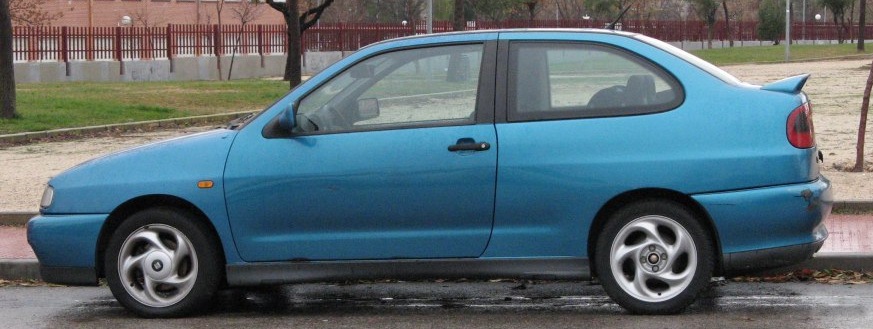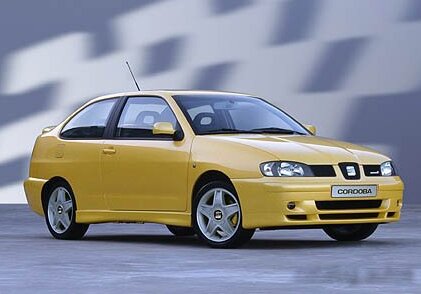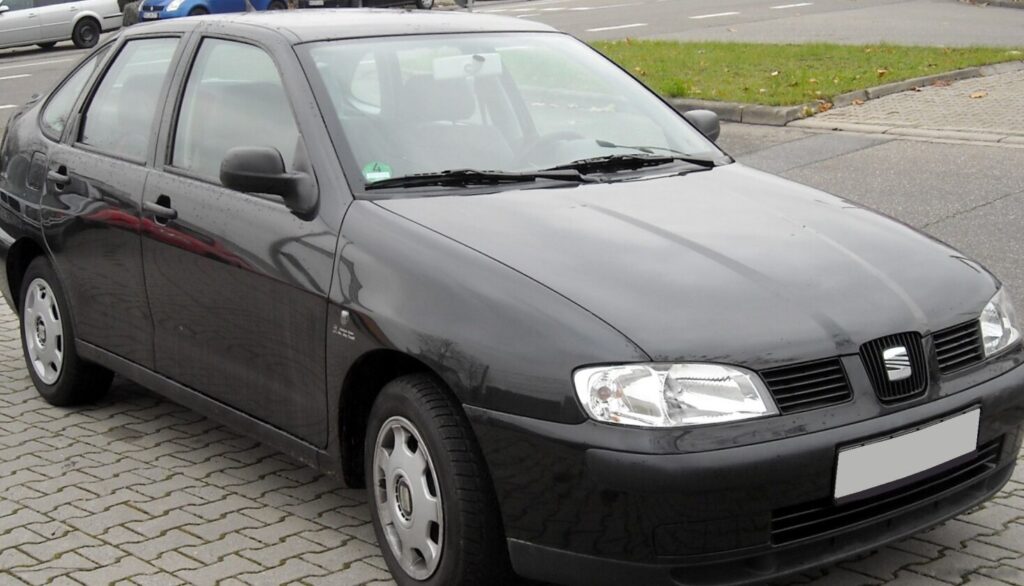
The SEAT Córdoba I (facelift, 1999) 1.6, producing 75 horsepower, represented an entry-level offering within the broader Córdoba range. Introduced as part of the facelifted first generation (1999-2002), this variant aimed to provide affordable and practical transportation, primarily targeting budget-conscious buyers in European markets. The Córdoba itself was SEAT’s answer to the compact sedan segment, sharing its platform – the Volkswagen Group’s PQ64 – with the Volkswagen Polo, Škoda Fabia, and later, the Ibiza. This 1.6-liter model served as a stepping stone into the Córdoba lineup, positioned below the more powerful and technologically advanced versions.
Technical Specifications
| Brand | Seat |
| Model | Cordoba |
| Generation | Cordoba I (facelift 1999) |
| Type (Engine) | 1.6 (75 Hp) |
| Start of production | 1999 |
| End of production | August, 2002 |
| Powertrain Architecture | Internal Combustion engine |
| Body type | Sedan |
| Seats | 5 |
| Doors | 4 |
| Fuel consumption (urban) | 10.3 l/100 km (22.8 US mpg) |
| Fuel consumption (extra urban) | 6 l/100 km (39.2 US mpg) |
| Fuel Type | Petrol (Gasoline) |
| Acceleration 0 – 100 km/h | 13.2 sec |
| Acceleration 0 – 62 mph | 13.2 sec |
| Acceleration 0 – 60 mph | 12.5 sec |
| Maximum speed | 170 km/h (105.63 mph) |
| Weight-to-power ratio | 14.6 kg/Hp |
| Weight-to-torque ratio | 8.1 kg/Nm |
| Power | 75 Hp @ 4600 rpm |
| Torque | 135 Nm @ 2800 rpm (99.57 lb.-ft. @ 2800 rpm) |
| Engine layout | Front, Transverse |
| Engine Model/Code | ALM |
| Engine displacement | 1598 cm3 (97.52 cu. in.) |
| Number of cylinders | 4 |
| Engine configuration | Inline |
| Cylinder Bore | 76.5 mm (3.01 in.) |
| Piston Stroke | 86.9 mm (3.42 in.) |
| Compression ratio | 9.8:1 |
| Number of valves per cylinder | 2 |
| Fuel injection system | Multi-port manifold injection |
| Engine aspiration | Naturally aspirated |
| Valvetrain | OHC |
| Engine oil capacity | 3.2 l (3.38 US qt | 2.82 UK qt) |
| Coolant capacity | 5.6 l (5.92 US qt | 4.93 UK qt) |
| Kerb Weight | 1092 kg (2407.45 lbs.) |
| Max. weight | 1555 kg (3428.19 lbs.) |
| Max load | 463 kg (1020.74 lbs.) |
| Trunk (boot) space – minimum | 455 l (16.07 cu. ft.) |
| Trunk (boot) space – maximum | 762 l (26.91 cu. ft.) |
| Fuel tank capacity | 45 l (11.89 US gal | 9.9 UK gal) |
| Length | 4163 mm (163.9 in.) |
| Width | 1640 mm (64.57 in.) |
| Height | 1424 mm (56.06 in.) |
| Wheelbase | 2443 mm (96.18 in.) |
| Front track | 1429 mm (56.26 in.) |
| Rear track | 1394 mm (54.88 in.) |
| Drivetrain Architecture | Front wheel drive |
| Number of gears | 5 |
| Gearbox type | Manual transmission |
| Front suspension | Spring Strut |
| Rear suspension | Suspension with traction connecting levers |
| Front brakes | Disc |
| Rear brakes | Drum |
| Assisting systems | ABS (Anti-lock braking system) |
| Steering type | Steering rack and pinion |
| Power steering | Hydraulic |
| Tires size | 175/70 R13 |
Powertrain & Engine Architecture
The Córdoba 1.6 utilized the Volkswagen Group’s ALM engine code, a naturally aspirated, inline-four cylinder petrol engine displacing 1598cc. This engine featured a single overhead camshaft (OHC) valvetrain with two valves per cylinder. Fuel delivery was managed by a multi-port fuel injection system, a common setup for engines of this era. The ALM engine was known for its relative simplicity and durability, though it wasn’t a powerhouse in terms of performance. The engine’s 9.8:1 compression ratio was a typical value for the time, balancing efficiency and power output. The engine was transversely mounted, driving the front wheels.
Driving Characteristics
With 75 horsepower and 135 Nm (99.57 lb-ft) of torque, the Córdoba 1.6 offered modest performance. Acceleration from 0-60 mph took around 12.5 seconds, and top speed was limited to 170 km/h (105.63 mph). The five-speed manual transmission was geared to prioritize fuel economy over outright acceleration. Compared to the more potent versions of the Córdoba, such as those equipped with the 1.8-liter 20V engine or the TDI diesel, the 1.6 felt noticeably slower. However, it provided a smooth and predictable driving experience, suitable for everyday commuting and urban driving. The gear ratios were relatively long, requiring frequent downshifts when overtaking or climbing hills.
Equipment & Trim Levels
The 1.6-liter Córdoba typically came with a basic level of equipment. Standard features generally included power steering, central locking, and an adjustable steering column. Interior upholstery was typically cloth, and the dashboard featured a functional, if somewhat spartan, design. Optional extras included air conditioning, electric windows, and an upgraded audio system. Trim levels varied slightly depending on the market, but the 1.6 generally represented the entry point to the Córdoba range. It was aimed at buyers who prioritized affordability and practicality over luxury features.
Chassis & Braking
The Córdoba 1.6 featured a MacPherson strut front suspension and a torsion beam rear suspension. This setup provided a reasonable balance between ride comfort and handling. The front brakes were ventilated discs, while the rear brakes were drums. ABS (Anti-lock Braking System) was often included as standard equipment, enhancing safety. The suspension was tuned for comfort, resulting in a slightly softer ride compared to the sportier versions of the Córdoba. The relatively lightweight nature of the 1.6 model helped to mitigate the limitations of the suspension and braking system.
Market Reception & Comparison
The Córdoba 1.6 was generally well-received as an affordable and reliable compact sedan. Critics acknowledged its practicality and fuel efficiency, but noted its lack of outright performance. Compared to the higher-spec Córdoba models, the 1.6 offered a more economical option, but at the expense of driving excitement. The 1.8-liter versions provided significantly more power, while the TDI diesels offered superior fuel economy. However, the 1.6 remained a popular choice for buyers who prioritized value for money.
Legacy
The ALM engine, found in the Córdoba 1.6, proved to be a durable and relatively trouble-free unit. While not known for its high performance, it offered good reliability and reasonable fuel economy. Today, Córdoba 1.6 models are relatively common in the used car market, often available at very affordable prices. Maintenance is generally straightforward, and spare parts are readily available. However, potential buyers should be aware of the age-related issues common to vehicles of this era, such as corrosion and wear and tear on suspension components. The Córdoba 1.6 remains a practical and economical choice for those seeking a simple and reliable compact sedan.