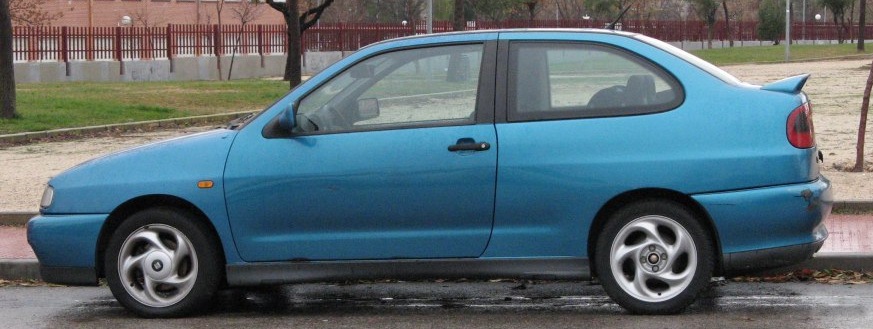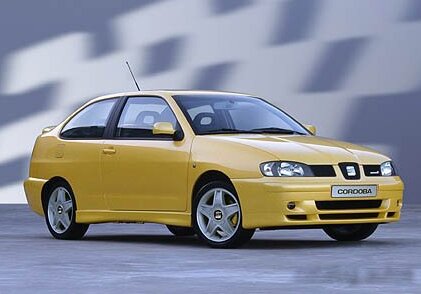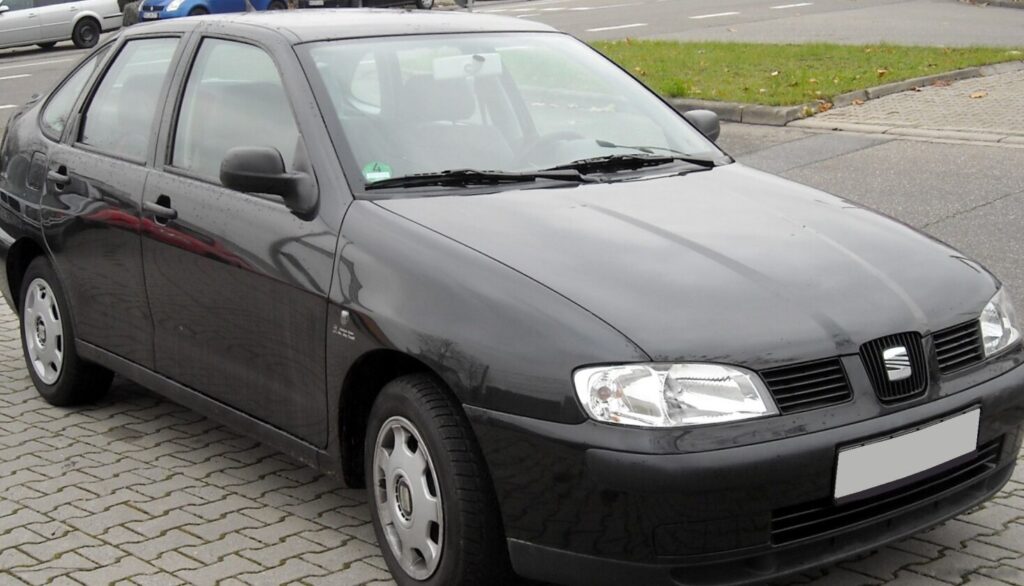
The SEAT Córdoba I (facelift, 1999) 1.9 TDI, producing 110 horsepower, represents a significant iteration of SEAT’s entry-level compact sedan. Introduced in March 1999 and continuing through August 2002, this variant occupied a key position within the Córdoba range, offering a blend of fuel efficiency, respectable performance, and practicality aimed at buyers seeking a sensible and economical family car. It was built on the Volkswagen Group’s A3/1HX0 platform, shared with the Volkswagen Golf Mk4, Audi A3, and Škoda Octavia, benefiting from the economies of scale and engineering advancements of the group. This facelifted version of the Córdoba I brought updated styling and refinements to the original model launched in 1993.
Technical Specifications
| Brand | Seat |
| Model | Cordoba |
| Generation | Cordoba I (facelift 1999) |
| Type (Engine) | 1.9 TDI (110 Hp) |
| Start of production | March, 1999 |
| End of production | August, 2002 |
| Powertrain Architecture | Internal Combustion engine |
| Body type | Sedan |
| Seats | 5 |
| Doors | 4 |
| Fuel consumption (urban) | 6.5 l/100 km (36.2 US mpg, 43.5 UK mpg, 15.4 km/l) |
| Fuel consumption (extra urban) | 4 l/100 km (58.8 US mpg, 70.6 UK mpg, 25 km/l) |
| Fuel Type | Diesel |
| Acceleration 0 – 100 km/h | 10.7 sec |
| Acceleration 0 – 62 mph | 10.7 sec |
| Acceleration 0 – 60 mph | 10.2 sec |
| Maximum speed | 193 km/h (119.92 mph) |
| Weight-to-power ratio | 10.7 kg/Hp, 93.9 Hp/tonne |
| Weight-to-torque ratio | 5 kg/Nm, 200.5 Nm/tonne |
| Power | 110 Hp @ 4150 rpm |
| Power per litre | 58 Hp/l |
| Torque | 235 Nm @ 1900 rpm (173.33 lb.-ft. @ 1900 rpm) |
| Engine layout | Front, Transverse |
| Engine Model/Code | ASV |
| Engine displacement | 1896 cm3 (115.7 cu. in.) |
| Number of cylinders | 4 |
| Engine configuration | Inline |
| Cylinder Bore | 79.5 mm (3.13 in.) |
| Piston Stroke | 95.5 mm (3.76 in.) |
| Compression ratio | 19.5:1 |
| Number of valves per cylinder | 2 |
| Fuel injection system | Direct injection |
| Engine aspiration | Turbocharger, Intercooler |
| Valvetrain | OHC |
| Engine oil capacity | 4.5 l (4.76 US qt | 3.96 UK qt) |
| Coolant | 6.8 l (7.19 US qt | 5.98 UK qt) |
| Kerb Weight | 1172 kg (2583.82 lbs.) |
| Max. weight | 1635 kg (3604.56 lbs.) |
| Max load | 463 kg (1020.74 lbs.) |
| Trunk (boot) space – minimum | 455 l (16.07 cu. ft.) |
| Trunk (boot) space – maximum | 762 l (26.91 cu. ft.) |
| Fuel tank capacity | 45 l (11.89 US gal | 9.9 UK gal) |
| Length | 4163 mm (163.9 in.) |
| Width | 1640 mm (64.57 in.) |
| Height | 1424 mm (56.06 in.) |
| Wheelbase | 2443 mm (96.18 in.) |
| Front track | 1429 mm (56.26 in.) |
| Rear (Back) track | 1394 mm (54.88 in.) |
| Drivetrain Architecture | The Internal combustion engine (ICE) drives the front wheels of the vehicle. |
| Drive wheel | Front wheel drive |
| Number of gears and type of gearbox | 5 gears, manual transmission |
| Front suspension | Spring Strut |
| Rear suspension | Suspension with traction connecting levers |
| Front brakes | Disc |
| Rear brakes | Disc |
| Assisting systems | ABS (Anti-lock braking system) |
| Steering type | Steering rack and pinion |
| Power steering | Hydraulic Steering |
| Tires size | 185/55 R15 |
Powertrain & Engine Architecture
The heart of the Córdoba 1.9 TDI was the ASV engine code, a 1.9-liter, four-cylinder diesel engine. This engine was a mainstay of the Volkswagen Group’s diesel offerings during the late 1990s and early 2000s. It featured direct injection, a technology that significantly improved fuel efficiency and reduced emissions compared to older indirect injection systems. The ASV engine utilized a Bosch VE distributor-type fuel injection pump, delivering fuel directly into the combustion chamber at extremely high pressure. The engine employed an overhead camshaft (OHC) valvetrain with two valves per cylinder. A turbocharger with an intercooler was standard, boosting power output to 110 horsepower and 235 Nm (173 lb-ft) of torque. This torque figure, available from a low 1900 rpm, provided strong pulling power and good responsiveness. The engine was transversely mounted in the front of the vehicle, driving the front wheels. The five-speed manual transmission was well-matched to the engine’s characteristics, offering smooth shifts and effective gear ratios.
Driving Characteristics
The 1.9 TDI 110 hp variant of the Córdoba offered a practical and efficient driving experience. While not a performance-oriented model, the engine’s ample torque made it surprisingly capable in everyday driving situations. Acceleration to 60 mph took around 10.2 seconds, and it could reach a top speed of 119.92 mph. The gear ratios were optimized for fuel economy and mid-range acceleration, making it well-suited for highway cruising and overtaking maneuvers. Compared to the lower-powered 1.6-liter gasoline versions, the TDI offered significantly more torque and better fuel economy. It wasn’t as nimble or responsive as the sportier variants, such as those equipped with the 1.8-liter 20V gasoline engine, but it provided a more relaxed and economical driving experience. The manual transmission allowed for greater driver control, although the shift quality could feel somewhat notchy compared to more modern gearboxes.
Equipment & Trim Levels
The Córdoba 1.9 TDI typically came with a reasonable level of standard equipment. This included central locking, power steering, electric front windows, and an anti-lock braking system (ABS). Interior upholstery was typically cloth, with a functional and durable design. Higher trim levels, such as the Stella or Sport, offered additional features like alloy wheels, air conditioning, a radio/cassette player, and upgraded interior trim. Optional extras included a sunroof, metallic paint, and a trip computer. The dashboard layout was typical of Volkswagen Group cars of the era, with a clear and straightforward design.
Chassis & Braking
The Córdoba’s chassis featured a MacPherson strut front suspension and a torsion beam rear suspension. This setup provided a comfortable ride and predictable handling. The front brakes were ventilated discs, while the rear brakes were solid discs. The ABS system helped to maintain stability during hard braking. The steering was a hydraulic power-assisted rack and pinion system, offering a good balance of feel and assistance. The standard tire size was 185/55 R15, providing adequate grip and ride comfort.
Market Reception & Comparison
The SEAT Córdoba 1.9 TDI was generally well-received by automotive critics for its fuel efficiency, practicality, and value for money. It was seen as a sensible choice for buyers seeking a reliable and economical family car. Compared to other cars in its class, such as the Ford Focus and Opel/Vauxhall Astra, the Córdoba offered a competitive level of equipment and performance at a reasonable price. The TDI engine was praised for its torque and fuel economy, but some critics noted that it could be somewhat noisy and unrefined compared to gasoline engines. Reliability was generally good, although some owners reported issues with the fuel injection pump and turbocharger over the long term.
Legacy
The SEAT Córdoba 1.9 TDI has proven to be a durable and reliable car, with many examples still on the road today. The ASV engine, while not without its potential issues, is generally considered to be a robust and long-lasting unit. In the used car market, these Córdobas are often sought after by buyers looking for an affordable and economical vehicle. Their simplicity and relatively low maintenance costs make them an attractive option for those seeking a practical and dependable car. The 1.9 TDI engine’s reputation for fuel efficiency and durability has cemented its place as a popular choice among diesel enthusiasts.