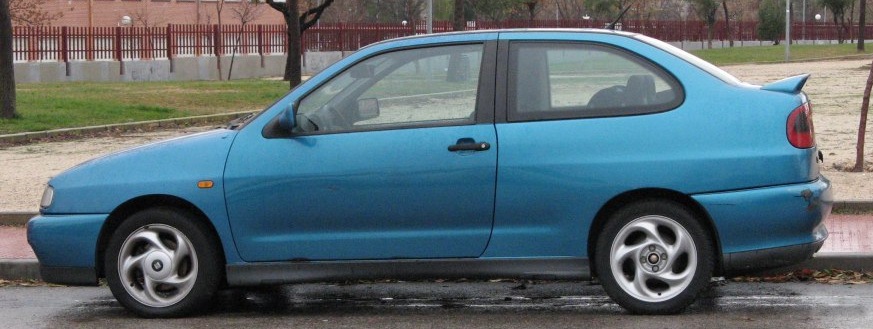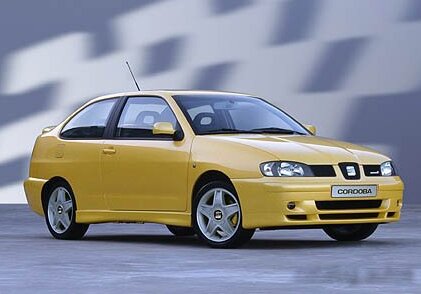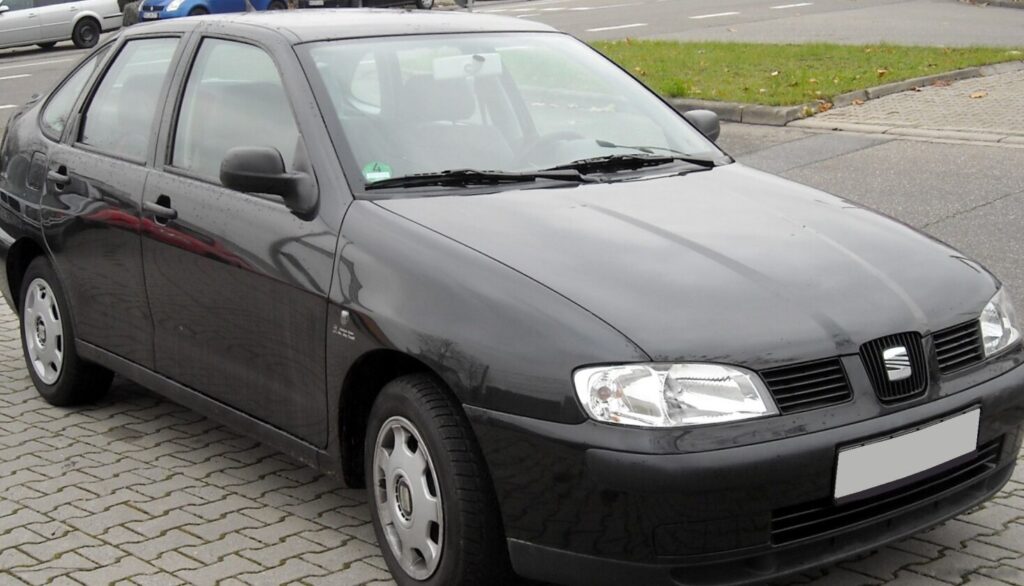
The Seat Cordoba I (facelift, 1999) 1.9 TDI, producing 90 horsepower, represents a significant iteration of Seat’s compact offering during a period of rapid development for the Spanish automaker under Volkswagen Group ownership. Introduced in February 1999 and continuing through August 2002, this variant occupied a crucial position in the Cordoba lineup, appealing to buyers seeking fuel efficiency and reasonable performance in a practical, four-door sedan package. It was built on the Volkswagen Group’s A3/1HX0 platform, shared with models like the Volkswagen Golf, Bora, and Skoda Octavia, benefiting from the economies of scale and engineering advancements of the wider group. This particular engine and transmission combination was aimed at a broad market segment, offering a balance between cost, economy, and usability.
Technical Specifications
| Brand | Seat |
| Model | Cordoba |
| Generation | Cordoba I (facelift 1999) |
| Type (Engine) | 1.9 TDI (90 Hp) |
| Start of production | February, 1999 |
| End of production | August, 2002 |
| Powertrain Architecture | Internal Combustion engine |
| Body type | Sedan |
| Seats | 5 |
| Doors | 4 |
| Fuel consumption (urban) | 6.3 l/100 km (37.3 US mpg, 44.8 UK mpg, 15.9 km/l) |
| Fuel consumption (extra urban) | 4 l/100 km (58.8 US mpg, 70.6 UK mpg, 25 km/l) |
| Fuel consumption (combined) | 5.4 l/100 km (43.6 US mpg, 52.3 UK mpg, 18.5 km/l) |
| Fuel Type | Diesel |
| Acceleration 0 – 100 km/h | 12.6 sec |
| Acceleration 0 – 62 mph | 12.6 sec |
| Acceleration 0 – 60 mph | 12 sec |
| Maximum speed | 185 km/h (114.95 mph) |
| Weight-to-power ratio | 12.9 kg/Hp, 77.6 Hp/tonne |
| Weight-to-torque ratio | 5.7 kg/Nm, 174.1 Nm/tonne |
| Power | 90 Hp @ 4000 rpm |
| Power per litre | 47.5 Hp/l |
| Torque | 202 Nm @ 1900 rpm (148.99 lb.-ft. @ 1900 rpm) |
| Engine layout | Front, Transverse |
| Engine Model/Code | AGR, ALH |
| Engine displacement | 1896 cm3 (115.7 cu. in.) |
| Number of cylinders | 4 |
| Engine configuration | Inline |
| Cylinder Bore | 79.5 mm (3.13 in.) |
| Piston Stroke | 95.5 mm (3.76 in.) |
| Compression ratio | 19.5:1 |
| Number of valves per cylinder | 2 |
| Fuel injection system | Direct injection |
| Engine aspiration | Turbocharger, Intercooler |
| Valvetrain | OHC |
| Engine oil capacity | 4.5 l (4.76 US qt | 3.96 UK qt) |
| Coolant | 6 l (6.34 US qt | 5.28 UK qt) |
| Kerb Weight | 1160 kg (2557.36 lbs.) |
| Max. weight | 1620 kg (3571.49 lbs.) |
| Max load | 460 kg (1014.13 lbs.) |
| Trunk (boot) space – minimum | 455 l (16.07 cu. ft.) |
| Trunk (boot) space – maximum | 762 l (26.91 cu. ft.) |
| Fuel tank capacity | 45 l (11.89 US gal | 9.9 UK gal) |
| Length | 4163 mm (163.9 in.) |
| Width | 1640 mm (64.57 in.) |
| Height | 1424 mm (56.06 in.) |
| Wheelbase | 2443 mm (96.18 in.) |
| Front track | 1429 mm (56.26 in.) |
| Rear (Back) track | 1394 mm (54.88 in.) |
| Drivetrain Architecture | The Internal combustion engine (ICE) drives the front wheels of the vehicle. |
| Drive wheel | Front wheel drive |
| Number of gears and type of gearbox | 5 gears, manual transmission |
| Front suspension | Spring Strut |
| Rear suspension | Suspension with traction connecting levers |
| Front brakes | Disc |
| Rear brakes | Drum |
| Assisting systems | ABS (Anti-lock braking system) |
| Steering type | Steering rack and pinion |
| Power steering | Hydraulic Steering |
| Tires size | 185/60 R14 |
Powertrain & Engine Architecture
The heart of this Cordoba variant is the 1.9-liter, four-cylinder diesel engine, typically identified by the engine codes AGR or ALH. These engines were widely used across the Volkswagen Group, known for their durability and fuel efficiency. The AGR version, earlier in the production run, utilized a distributor-type injection pump, while the ALH, a later revision, featured a more advanced Bosch VE EDC (Electronic Diesel Control) pump. Both versions employed direct fuel injection, contributing to improved combustion and reduced emissions. The engine’s single overhead camshaft (OHC) operated two valves per cylinder. A turbocharger with an intercooler was standard, boosting power output to 90 horsepower and 202 Nm (149 lb-ft) of torque. The torque curve was notably flat, providing good pulling power from relatively low engine speeds. The engine was transversely mounted in the front of the vehicle. The five-speed manual transmission was the standard offering, chosen for its efficiency and cost-effectiveness.
Driving Characteristics
The 1.9 TDI 90 hp Cordoba offered a practical and economical driving experience. Acceleration was adequate for everyday driving, with a 0-60 mph time of around 12 seconds. However, it wasn’t a particularly sporty vehicle. The focus was on fuel economy and usability. The flat torque curve meant that the engine felt responsive in most situations, making overtaking at highway speeds manageable. Compared to the more powerful 1.8-liter gasoline engines or the higher-output TDI variants (like the 110 hp version), this model prioritized efficiency over outright performance. The gear ratios were optimized for fuel economy, meaning the engine could feel slightly strained at higher speeds. The manual transmission provided a direct connection to the engine, allowing for precise control.
Equipment & Trim Levels
The 1.9 TDI 90 hp Cordoba typically came with a relatively basic level of equipment, reflecting its position as a more affordable option in the lineup. Standard features generally included power steering, central locking, electric front windows, and an anti-lock braking system (ABS). Interior upholstery was typically cloth, and the dashboard featured a functional, if somewhat spartan, design. Optional extras included air conditioning, alloy wheels, a radio/cassette player, and upgraded interior trim. Higher trim levels, such as the ‘Stella’ or ‘Sport’, added features like electric mirrors, a sunroof, and more luxurious interior appointments.
Chassis & Braking
The Cordoba I utilized a relatively simple chassis design. Front suspension consisted of MacPherson strut coil springs, while the rear employed a torsion beam setup. This configuration provided a comfortable ride, although it wasn’t particularly sporty. The front brakes were ventilated discs, providing adequate stopping power, while the rear brakes were drums. This combination was typical for vehicles in this price range at the time. The steering was a hydraulic power-assisted rack and pinion system, offering reasonable precision and feedback. Tire size was typically 185/60 R14.
Market Reception & Comparison
The Seat Cordoba 1.9 TDI 90 hp was generally well-received by critics as a practical and economical family car. It was praised for its fuel efficiency, reliability, and comfortable ride. However, it was also criticized for its somewhat bland styling and lack of sporting pretensions. Compared to the gasoline-powered Cordoba variants, the TDI offered significantly better fuel economy and more torque. Compared to the more powerful TDI models, it was more affordable and offered a good balance between performance and economy. It competed with other compact sedans in the European market, such as the Ford Focus, Opel Astra, and Renault Megane.
Legacy
The 1.9 TDI engine, in both AGR and ALH forms, has proven to be remarkably durable and reliable over the long term. Many examples are still on the road today, testament to their robust construction. The Cordoba 1.9 TDI 90 hp remains a popular choice in the used car market, particularly for buyers seeking an economical and dependable vehicle. While maintenance costs can increase with age, the engine’s inherent reliability and the availability of spare parts make it a relatively easy car to keep running. The combination of fuel efficiency, practicality, and affordability has ensured its enduring appeal.