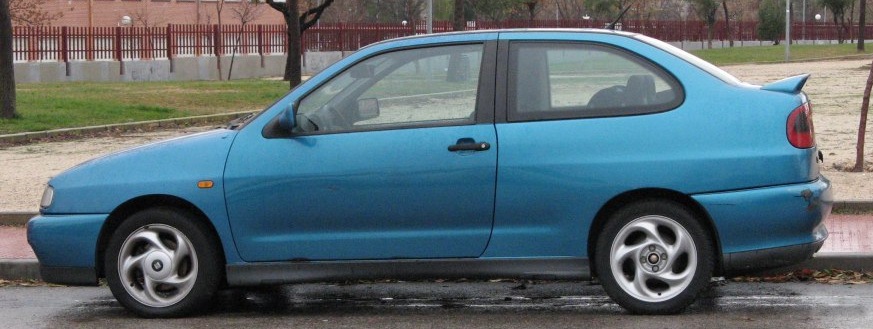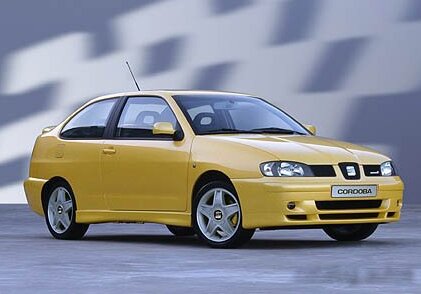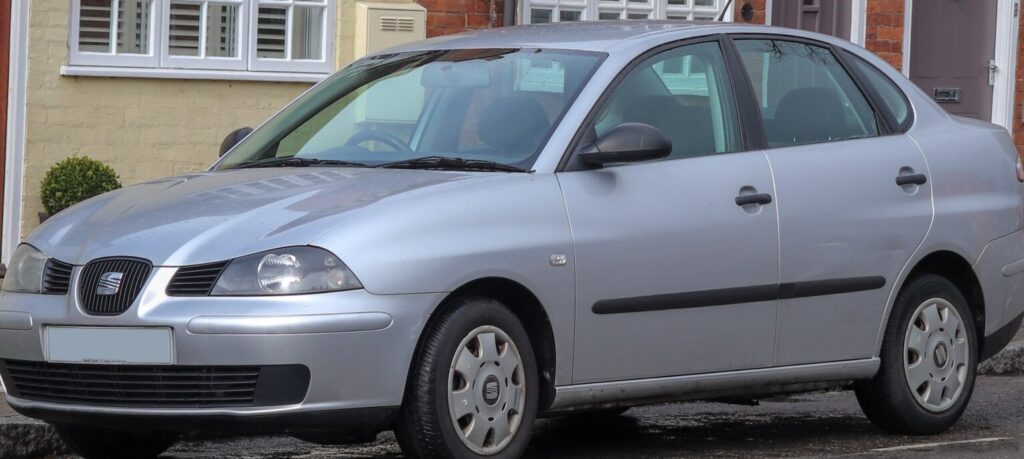
The SEAT Córdoba II 1.4 16V Automatic, produced between September 2002 and November 2008, represented an entry-level offering within the broader Córdoba II range. Positioned as a practical and affordable sedan, it catered to buyers prioritizing economy and ease of use over outright performance. This variant was built on the Volkswagen Group’s A4 platform (internally designated 1HX0/A3), shared with models like the Volkswagen Bora, Audi A3, and Škoda Octavia. The Córdoba II itself was a significant model for SEAT, representing a move towards more modern design and engineering within the Spanish automaker’s lineup, and aimed primarily at the European market.
Technical Specifications
| Brand | Seat |
| Model | Cordoba |
| Generation | Cordoba II |
| Type (Engine) | 1.4 16V (75 Hp) Automatic |
| Start of production | September, 2002 |
| End of production | November, 2008 |
| Powertrain Architecture | Internal Combustion engine |
| Body type | Sedan |
| Seats | 5 |
| Doors | 4 |
| Fuel consumption (urban) | 10.3 l/100 km (22.8 US mpg, 27.4 UK mpg, 9.7 km/l) |
| Fuel consumption (extra urban) | 5.9 l/100 km (39.9 US mpg, 47.9 UK mpg, 16.9 km/l) |
| Fuel consumption (combined) | 7.5 l/100 km (31.4 US mpg, 37.7 UK mpg, 13.3 km/l) |
| Fuel Type | Petrol (Gasoline) |
| Acceleration 0 – 100 km/h | 15.9 sec |
| Acceleration 0 – 62 mph | 15.9 sec |
| Acceleration 0 – 60 mph | 15.1 sec |
| Maximum speed | 172 km/h (106.88 mph) |
| Weight-to-power ratio | 14.5 kg/Hp, 68.8 Hp/tonne |
| Weight-to-torque ratio | 8.5 kg/Nm, 117.4 Nm/tonne |
| Power | 75 Hp @ 5000 rpm |
| Power per litre | 54 Hp/l |
| Torque | 128 Nm @ 3300 rpm (94.41 lb.-ft. @ 3300 rpm) |
| Engine layout | Front, Transverse |
| Engine Model/Code | BBY, BKY |
| Engine displacement | 1390 cm3 (84.82 cu. in.) |
| Number of cylinders | 4 |
| Engine configuration | Inline |
| Cylinder Bore | 76.5 mm (3.01 in.) |
| Piston Stroke | 75.6 mm (2.98 in.) |
| Compression ratio | 10.5:1 |
| Number of valves per cylinder | 4 |
| Fuel injection system | Multi-port manifold injection |
| Engine aspiration | Naturally aspirated engine |
| Valvetrain | OHC |
| Engine oil capacity | 3.2 l (3.38 US qt | 2.82 UK qt) |
| Coolant | 6 l (6.34 US qt | 5.28 UK qt) |
| Kerb Weight | 1090 kg (2403.04 lbs.) |
| Max. weight | 1585 kg (3494.33 lbs.) |
| Max load | 495 kg (1091.29 lbs.) |
| Trunk (boot) space – minimum | 485 l (17.13 cu. ft.) |
| Fuel tank capacity | 45 l (11.89 US gal | 9.9 UK gal) |
| Length | 4280 mm (168.5 in.) |
| Width | 1698 mm (66.85 in.) |
| Height | 1441 mm (56.73 in.) |
| Wheelbase | 2460 mm (96.85 in.) |
| Front track | 1419 mm (55.87 in.) |
| Rear (Back) track | 1408 mm (55.43 in.) |
| Drivetrain Architecture | The Internal combustion engine (ICE) drives the front wheels of the vehicle. |
| Drive wheel | Front wheel drive |
| Number of gears and type of gearbox | 4 gears, automatic transmission |
| Front suspension | Coil spring |
| Rear suspension | Coil spring |
| Front brakes | Ventilated discs |
| Rear brakes | Drum |
| Assisting systems | ABS (Anti-lock braking system) |
| Steering type | Steering rack and pinion |
| Power steering | Hydraulic Steering |
| Tires size | 185/60 R14 |
| Wheel rims size | 14 |
Powertrain & Engine Architecture
The Córdoba 1.4 16V Automatic utilized the Volkswagen Group’s BBY or BKY engine code, a 1.4-liter inline-four cylinder petrol engine. This engine featured a single overhead camshaft (SOHC) design with four valves per cylinder, contributing to reasonable breathing for its displacement. Fuel delivery was managed by a multi-port fuel injection system, a common setup for engines of this era. The engine’s 75 horsepower output at 5000 rpm and 128 Nm (94.41 lb-ft) of torque at 3300 rpm were modest, but sufficient for everyday driving. The automatic transmission was a conventional four-speed unit, designed for smooth, if not particularly rapid, gear changes. This transmission was chosen to provide ease of use, particularly in urban environments, at the expense of some performance and fuel efficiency compared to the available five-speed manual.
Driving Characteristics
The driving experience in the Córdoba 1.4 Automatic was characterized by its relaxed nature. Acceleration was noticeably slower than the manual transmission or higher-powered variants like the 1.8 20V. The four-speed automatic transmission, while providing convenience, lacked the close gear ratios needed for spirited driving. The engine felt strained when attempting brisk acceleration or overtaking maneuvers. However, for typical commuting and city driving, the powertrain proved adequate. The automatic transmission’s shift points were calibrated for fuel economy, resulting in a smooth but unhurried driving experience. The weight-to-power ratio of 14.5 kg/Hp underscored the car’s lack of outright performance.
Equipment & Trim Levels
The 1.4 16V Automatic trim generally included basic features such as power steering, central locking, electric front windows, and an ABS anti-lock braking system. Interior upholstery was typically cloth, with a functional, if somewhat basic, dashboard layout. Optional extras could include air conditioning, alloy wheels, and a radio/CD player. The trim level was generally considered entry-level, appealing to buyers seeking a practical and affordable vehicle. Higher trim levels within the Córdoba II range offered more luxurious appointments and additional features.
Chassis & Braking
The Córdoba II featured a relatively simple chassis design, with coil spring suspension at both the front and rear. The front brakes were ventilated discs, providing adequate stopping power, while the rear brakes were drums, a cost-saving measure common in this segment. The suspension was tuned for comfort rather than sporty handling. Stabilizer bars were present, but their thickness was modest, contributing to a degree of body roll during cornering. The hydraulic power steering provided light and easy steering input, making it maneuverable in tight spaces.
Market Reception & Comparison
The Córdoba 1.4 16V Automatic received mixed reviews. Critics generally praised its affordability and ease of use, but criticized its lack of performance. Compared to the 1.8 20V or 1.9 TDI variants, the 1.4 Automatic offered significantly less power and a slower driving experience. However, it was more fuel-efficient than the 1.8 20V and generally more affordable to maintain than the diesel. The 1.4 Automatic appealed to buyers who prioritized economy and convenience over performance, such as first-time drivers or those primarily using the car for urban commuting.
Legacy
The SEAT Córdoba II 1.4 16V Automatic, while not a performance icon, proved to be a reliable and affordable vehicle. The BBY/BKY engine is generally considered durable, although regular maintenance is crucial. In the used car market, these models are often found at very affordable prices. Common issues include wear and tear on the automatic transmission and potential oil leaks. However, with proper care, these cars can provide years of reliable service. The Córdoba II, in general, helped establish SEAT as a viable competitor in the European compact car market, paving the way for future models like the León and Ibiza.