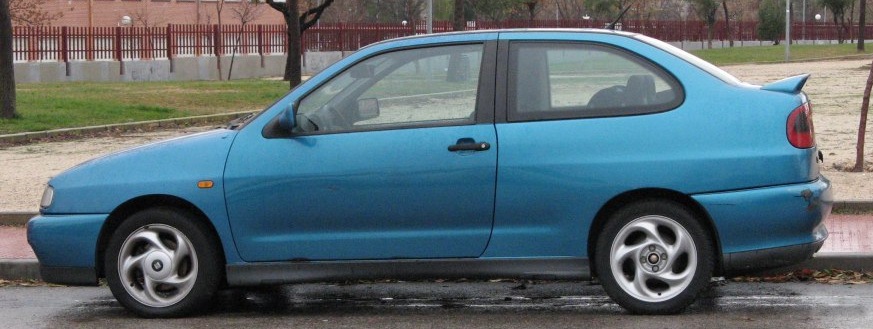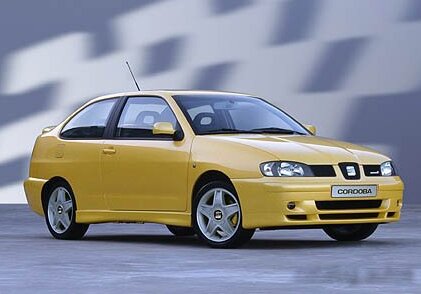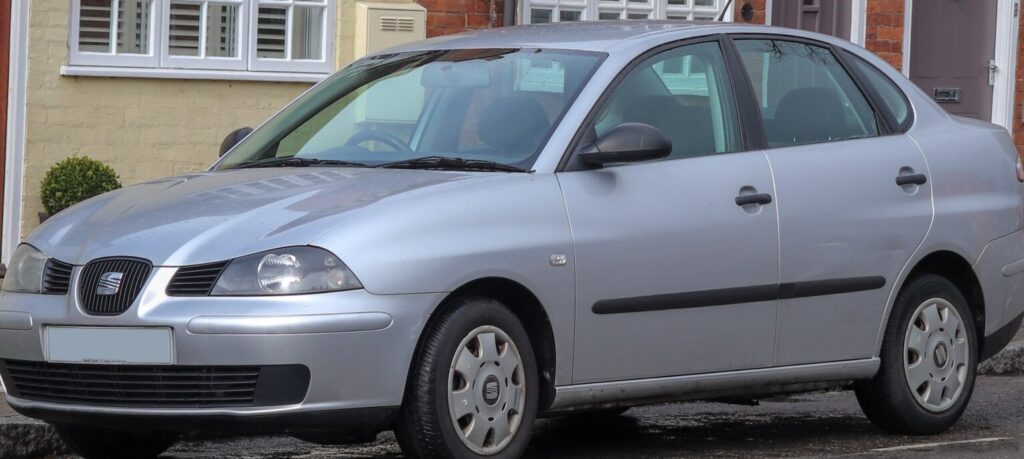
The Seat Cordoba II 1.9 TDI, producing 100 horsepower, was a mainstay of the Spanish automaker’s lineup from September 2002 until November 2008. Positioned as a practical and economical choice within the Cordoba II range (based on the Volkswagen Group’s PQ34 platform, also known as the 1HX0/A3 platform), this variant aimed to deliver a balance of performance and fuel efficiency for the European market. It served as a diesel-powered alternative to the gasoline-fueled Cordoba models, appealing to drivers prioritizing lower running costs and torque. The 1.9 TDI engine was a popular choice across the VW Group, known for its durability and relatively simple mechanical design.
Technical Specifications
| Brand | Seat |
| Model | Cordoba |
| Generation | Cordoba II |
| Type (Engine) | 1.9 TDI (100 Hp) |
| Start of production | September, 2002 |
| End of production | November, 2008 |
| Powertrain Architecture | Internal Combustion engine |
| Body type | Sedan |
| Seats | 5 |
| Doors | 4 |
| Fuel consumption (urban) | 6.7 l/100 km (35.1 US mpg, 42.2 UK mpg, 14.9 km/l) |
| Fuel consumption (extra urban) | 4.2 l/100 km (56 US mpg, 67.3 UK mpg, 23.8 km/l) |
| Fuel consumption (combined) | 5.1 l/100 km (46.1 US mpg, 55.4 UK mpg, 19.6 km/l) |
| Fuel Type | Diesel |
| Acceleration 0 – 100 km/h | 11.1 sec |
| Acceleration 0 – 62 mph | 11.1 sec |
| Acceleration 0 – 60 mph | 10.5 sec |
| Maximum speed | 192 km/h (119.3 mph) |
| Weight-to-power ratio | 11.9 kg/Hp, 84.2 Hp/tonne |
| Weight-to-torque ratio | 5 kg/Nm, 202 Nm/tonne |
| Power | 100 Hp @ 4000 rpm |
| Power per litre | 52.7 Hp/l |
| Torque | 240 Nm @ 2400 rpm (177.01 lb.-ft. @ 2400 rpm) |
| Engine layout | Front, Transverse |
| Engine Model/Code | ATD, AXR |
| Engine displacement | 1896 cm3 (115.7 cu. in.) |
| Number of cylinders | 4 |
| Engine configuration | Inline |
| Cylinder Bore | 79.5 mm (3.13 in.) |
| Piston Stroke | 95.5 mm (3.76 in.) |
| Compression ratio | 19:1 |
| Number of valves per cylinder | 2 |
| Fuel injection system | Pump-nozzle (Unit Injector) |
| Engine aspiration | Turbocharger, Intercooler |
| Engine oil capacity | 4.3 l (4.54 US qt | 3.78 UK qt) |
| Coolant | 5 l (5.28 US qt | 4.4 UK qt) |
| Kerb Weight | 1188 kg (2619.09 lbs.) |
| Max. weight | 1683 kg (3710.38 lbs.) |
| Max load | 495 kg (1091.29 lbs.) |
| Trunk (boot) space – minimum | 485 l (17.13 cu. ft.) |
| Fuel tank capacity | 45 l (11.89 US gal | 9.9 UK gal) |
| Length | 4280 mm (168.5 in.) |
| Width | 1698 mm (66.85 in.) |
| Height | 1441 mm (56.73 in.) |
| Wheelbase | 2460 mm (96.85 in.) |
| Front track | 1419 mm (55.87 in.) |
| Rear (Back) track | 1408 mm (55.43 in.) |
| Drivetrain Architecture | The Internal combustion engine (ICE) drives the front wheels of the vehicle. |
| Drive wheel | Front wheel drive |
| Number of gears and type of gearbox | 5 gears, manual transmission |
| Front suspension | Coil spring |
| Rear suspension | Coil spring |
| Front brakes | Ventilated discs |
| Rear brakes | Disc |
| Assisting systems | ABS (Anti-lock braking system) |
| Steering type | Steering rack and pinion |
| Power steering | Hydraulic Steering |
| Tires size | 185/60 R14 |
| Wheel rims size | 14 |
Powertrain & Engine Architecture
The heart of the Cordoba II 1.9 TDI was the 1.9-liter, four-cylinder diesel engine, typically identified by engine codes ATD or AXR. This engine was a direct injection diesel, utilizing the pump-nozzle (Unit Injector) technology developed by Bosch. This system delivered highly pressurized fuel directly into the combustion chamber, improving efficiency and reducing emissions compared to older indirect injection diesels. The engine featured a single overhead camshaft (SOHC) operating two valves per cylinder. A turbocharger with an intercooler was standard, boosting power output and providing improved throttle response. The intercooler cooled the compressed air from the turbocharger, increasing its density and further enhancing performance. The 100 horsepower output was a common tuning level for this engine, offering a good compromise between power and fuel economy.
Driving Characteristics
The 1.9 TDI engine in the Cordoba II delivered a characteristic diesel driving experience. While not particularly fast, with a 0-60 mph time of around 10.5 seconds, it offered strong low-end torque – 240 Nm (177 lb-ft) available from 2400 rpm. This made it well-suited for everyday driving and overtaking maneuvers. The five-speed manual transmission was the standard offering, providing adequate gear spacing for efficient cruising and acceleration. Compared to the more powerful gasoline engines available in the Cordoba II range, the 1.9 TDI prioritized fuel economy and usability over outright performance. The manual transmission allowed for greater driver control, but the engine’s torque characteristics meant that frequent downshifting wasn’t always necessary.
Equipment & Trim Levels
The Cordoba II 1.9 TDI typically came with a reasonably well-equipped standard specification, though trim levels varied depending on the market. Generally, it included central locking, power steering, electric front windows, and an anti-lock braking system (ABS). Interior upholstery was typically cloth, with a functional and durable design. Optional extras could include air conditioning, alloy wheels, a radio/CD player, and upgraded interior trim. The 1.9 TDI trim often sat in the mid-range of the Cordoba II lineup, offering a step up from the base models in terms of equipment and performance, but falling short of the more luxurious or sporty trims.
Chassis & Braking
The Cordoba II utilized a relatively simple chassis design. Front suspension consisted of coil springs and MacPherson struts, while the rear employed a torsion beam setup. This configuration provided a comfortable ride quality, though it wasn’t particularly sporty in handling. Brakes were ventilated discs on the front wheels and solid discs on the rear. ABS was standard, enhancing braking safety. The suspension setup was tuned for everyday use, prioritizing comfort and stability over aggressive cornering. Stabilizer bars were fitted to both the front and rear axles to reduce body roll.
Market Reception & Comparison
The Seat Cordoba II 1.9 TDI was generally well-received by automotive critics as a practical and economical choice. Its fuel efficiency was a major selling point, particularly in Europe where diesel fuel was often cheaper than gasoline. Compared to the 1.4 and 1.6-liter gasoline engines offered in the Cordoba II, the 1.9 TDI provided significantly more torque and better fuel economy, albeit with slightly slower acceleration. Reliability was generally good, although the pump-nozzle fuel injection system could be prone to issues if not properly maintained. The 1.9 TDI offered a compelling alternative to competitors like the Volkswagen Golf and Skoda Octavia, which shared the same platform and powertrain.
Legacy
The 1.9 TDI engine, in various iterations, became a workhorse for the Volkswagen Group, known for its durability and longevity. The Cordoba II 1.9 TDI remains a relatively common sight on European roads today, often appreciated for its low running costs and simple mechanical design. On the used car market, these models are generally affordable and represent a practical choice for those seeking a reliable and economical vehicle. However, potential buyers should be aware of the potential for issues with the pump-nozzle fuel injection system and ensure that the vehicle has been properly maintained. The engine’s robust construction and readily available parts contribute to its continued viability as a budget-friendly transportation option.