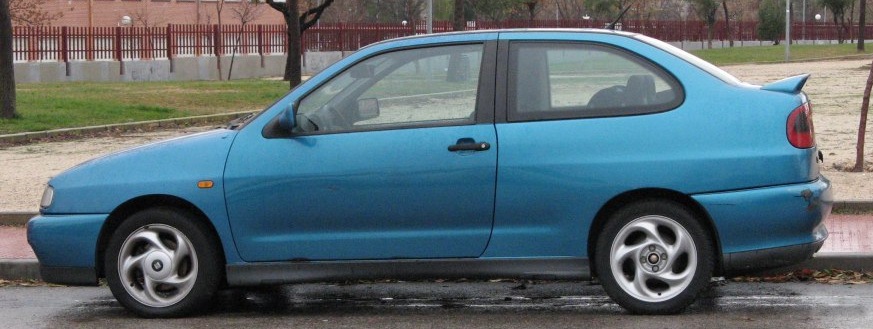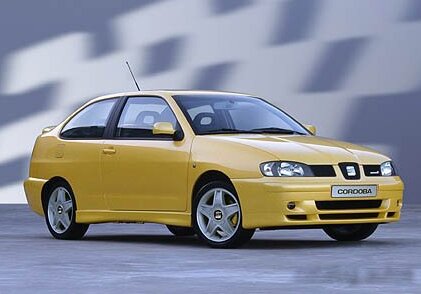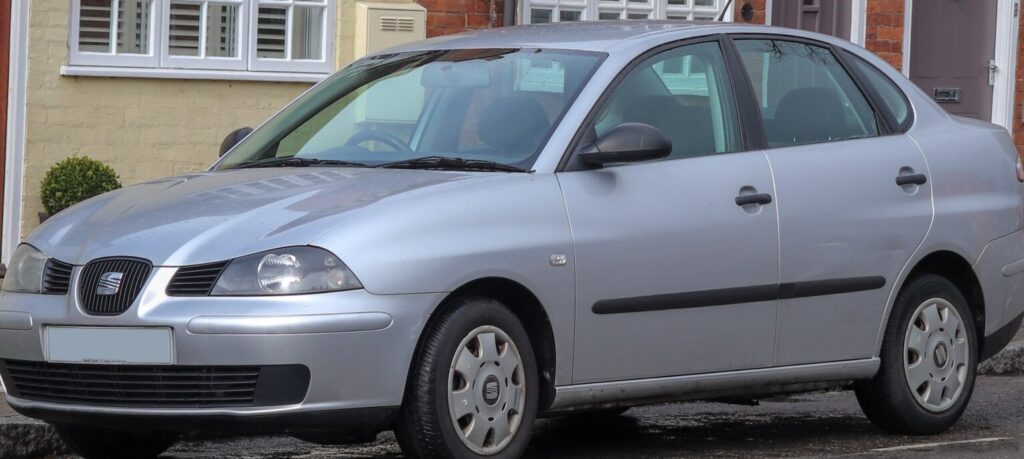
The SEAT Córdoba II 1.9 TDI Sport, produced between September 2002 and November 2008, represented a performance-oriented variant within the second generation of the Córdoba compact sedan. Positioned as a sporty trim level, it aimed to appeal to drivers seeking a blend of fuel efficiency and engaging driving dynamics. Built on the Volkswagen Group’s PQ34 (1HX0/A3) platform – shared with models like the Volkswagen Golf Mk4, Bora, and Škoda Octavia – the Córdoba II offered a more affordable and stylistically distinct alternative to its German counterparts. The 1.9 TDI Sport specifically targeted buyers who desired the benefits of a diesel engine – namely, low running costs and strong torque – without sacrificing a degree of performance.
Technical Specifications
| Brand | Seat |
| Model | Cordoba |
| Generation | Cordoba II |
| Type (Engine) | 1.9 TDI Sport (130 Hp) |
| Start of production | September, 2002 |
| End of production | November, 2008 |
| Powertrain Architecture | Internal Combustion engine |
| Body type | Sedan |
| Seats | 5 |
| Doors | 4 |
| Fuel consumption (urban) | 7.2 l/100 km (32.7 US mpg, 39.2 UK mpg, 13.9 km/l) |
| Fuel consumption (extra urban) | 4.4 l/100 km (53.5 US mpg, 64.2 UK mpg, 22.7 km/l) |
| Fuel Type | Diesel |
| Acceleration 0 – 100 km/h | 9.5 sec |
| Acceleration 0 – 62 mph | 9.5 sec |
| Acceleration 0 – 60 mph | 9 sec |
| Maximum speed | 210 km/h (130.49 mph) |
| Weight-to-power ratio | 9.6 kg/Hp, 104.7 Hp/tonne |
| Weight-to-torque ratio | 4 kg/Nm, 249.6 Nm/tonne |
| Power | 130 Hp @ 4000 rpm |
| Power per litre | 68.6 Hp/l |
| Torque | 310 Nm @ 1900 rpm (228.64 lb.-ft. @ 1900 rpm) |
| Engine layout | Front, Transverse |
| Engine Model/Code | ASZ, BLT |
| Engine displacement | 1896 cm3 (115.7 cu. in.) |
| Number of cylinders | 4 |
| Engine configuration | Inline |
| Cylinder Bore | 79.5 mm (3.13 in.) |
| Piston Stroke | 95.5 mm (3.76 in.) |
| Compression ratio | 19:1 |
| Number of valves per cylinder | 2 |
| Fuel injection system | Pump-nozzle (Unit Injector) |
| Engine aspiration | Turbocharger, Intercooler |
| Valvetrain | OHC |
| Engine oil capacity | 4.3 l (4.54 US qt | 3.78 UK qt) |
| Coolant | 5 l (5.28 US qt | 4.4 UK qt) |
| Kerb Weight | 1242 kg (2738.14 lbs.) |
| Max. weight | 1728 kg (3809.59 lbs.) |
| Max load | 486 kg (1071.45 lbs.) |
| Trunk (boot) space – minimum | 485 l (17.13 cu. ft.) |
| Fuel tank capacity | 45 l (11.89 US gal | 9.9 UK gal) |
| Length | 4280 mm (168.5 in.) |
| Width | 1698 mm (66.85 in.) |
| Height | 1441 mm (56.73 in.) |
| Wheelbase | 2460 mm (96.85 in.) |
| Front track | 1419 mm (55.87 in.) |
| Rear (Back) track | 1408 mm (55.43 in.) |
| Drivetrain Architecture | The Internal combustion engine (ICE) drives the front wheels of the vehicle. |
| Drive wheel | Front wheel drive |
| Number of gears and type of gearbox | 5 gears, manual transmission |
| Front suspension | Coil spring |
| Rear suspension | Coil spring |
| Front brakes | Ventilated discs |
| Rear brakes | Drum |
| Assisting systems | ABS (Anti-lock braking system) |
| Steering type | Steering rack and pinion |
| Power steering | Hydraulic Steering |
| Tires size | 205/50 R16 |
Powertrain & Engine Architecture
The heart of the Córdoba II 1.9 TDI Sport was the 1.9-liter (1896 cc) inline-four cylinder diesel engine, available with either the ASZ or BLT engine code depending on the specific production year and market. This engine was a mainstay of the Volkswagen Group’s diesel offerings, known for its robust construction and fuel efficiency. It utilized a pump-nozzle (unit injector) fuel injection system, a technology that allowed for precise fuel delivery and contributed to the engine’s strong torque output. The engine featured an overhead camshaft (OHC) valvetrain with two valves per cylinder. A turbocharger with an intercooler was employed to boost power and improve throttle response. The 130 horsepower output was a significant increase over the base model Cordobas, providing noticeably improved acceleration. The engine was transversely mounted in the front of the vehicle, driving the front wheels.
Driving Characteristics
The 1.9 TDI Sport offered a distinctly different driving experience compared to lower-powered Córdoba variants. The 310 Nm (228.64 lb-ft) of torque, available from a low 1900 rpm, provided strong pulling power in everyday driving situations. While not a sports car in the traditional sense, the TDI Sport offered brisk acceleration – achieving 0-60 mph in around 9 seconds – and a comfortable cruising speed on the highway. The five-speed manual transmission was well-matched to the engine’s characteristics, allowing drivers to effectively utilize the available power. Compared to the petrol engines available in the Córdoba II range, the TDI Sport prioritized torque and fuel economy over outright horsepower. The manual gearbox provided a more engaging driving experience than the optional automatic transmission, which could feel somewhat sluggish in comparison.
Equipment & Trim Levels
The “Sport” designation indicated a higher level of equipment compared to the base Córdoba models. Standard features typically included alloy wheels, sport seats, a leather-wrapped steering wheel, and air conditioning. The interior trim often featured a darker color scheme and unique upholstery patterns. Optional extras could include a sunroof, upgraded audio system, and parking sensors. The Córdoba II’s dashboard layout was functional and straightforward, prioritizing usability over stylistic flair. The Sport trim generally offered a more comprehensive equipment package, appealing to buyers seeking a more refined and well-equipped vehicle.
Chassis & Braking
The Córdoba II 1.9 TDI Sport utilized a relatively simple suspension setup, consisting of coil springs and dampers at all four corners. The front suspension incorporated a stabilizer bar to reduce body roll during cornering. The braking system featured ventilated discs at the front and drum brakes at the rear. ABS (Anti-lock Braking System) was standard equipment, enhancing safety and stability during emergency braking. The suspension tuning was geared towards providing a comfortable ride while maintaining reasonable handling characteristics. The weight distribution was fairly balanced, contributing to predictable handling.
Market Reception & Comparison
The SEAT Córdoba II 1.9 TDI Sport was generally well-received by automotive critics as a practical and efficient compact sedan. Reviewers praised its strong diesel engine, good fuel economy, and relatively affordable price point. However, some criticized its somewhat basic interior and lack of refinement compared to more premium competitors. Compared to the petrol-powered Córdoba variants, the TDI Sport offered superior fuel economy and torque, making it a popular choice for drivers covering long distances. Against rivals like the Ford Focus and Opel/Vauxhall Astra, the Córdoba II offered a distinctive Spanish design and a competitive price-to-performance ratio.
Legacy
The 1.9 TDI engine, in its various iterations, has earned a reputation for durability and reliability. The ASZ and BLT codes are generally considered robust and capable of high mileage with proper maintenance. Today, the Córdoba II 1.9 TDI Sport remains a relatively affordable used car option. However, potential buyers should be aware of the typical maintenance requirements of diesel engines, including regular servicing of the fuel injection system and turbocharger. Parts availability is generally good, thanks to the widespread use of the 1.9 TDI engine across the Volkswagen Group. The Córdoba II 1.9 TDI Sport represents a practical and economical choice for those seeking a reliable and fuel-efficient compact sedan with a touch of sporty flair.