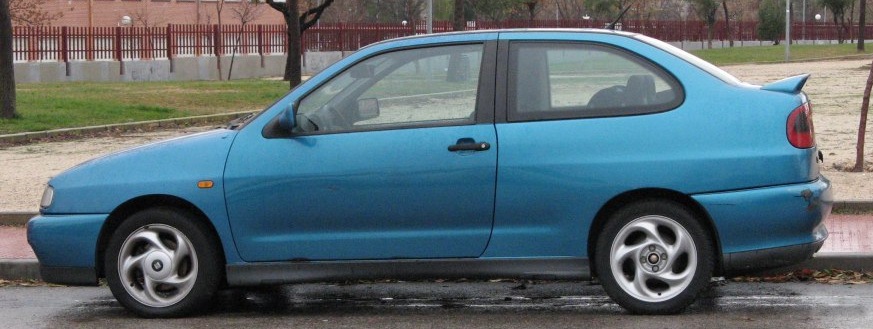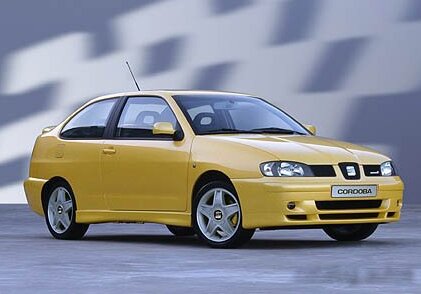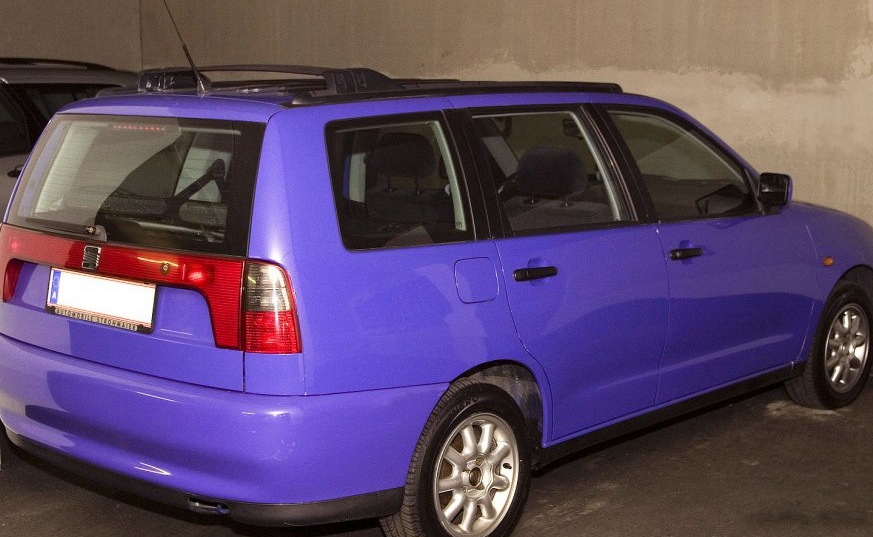
The SEAT Córdoba Vario I 1.6 i, produced between August 1996 and June 1999, represents a practical and affordable entry point into the compact estate car segment for European buyers. Positioned as the wagon variant of the popular Córdoba, the Vario I offered increased cargo capacity compared to the hatchback, appealing to families and those requiring versatile load-lugging capabilities. This specific 1.6-liter, 101 horsepower version occupied a mid-range position within the Vario I lineup, offering a balance between performance and economy. It sat below the more powerful 2.0-liter variants and above the base 1.4-liter models.
Technical Specifications
| Brand | SEAT |
| Model | Córdoba |
| Generation | Córdoba Vario I |
| Type (Engine) | 1.6 i (101 Hp) |
| Start of production | August, 1996 |
| End of production | June, 1999 |
| Powertrain Architecture | Internal Combustion engine |
| Body type | Station wagon (estate) |
| Seats | 5 |
| Doors | 5 |
| Fuel Type | Petrol (Gasoline) |
| Power | 101 Hp |
| Engine Model/Code | AFT |
| Engine aspiration | Naturally aspirated engine |
| Engine oil capacity | 3.8 l (4.02 US qt | 3.34 UK qt) |
| Coolant capacity | 5.5 l (5.81 US qt | 4.84 UK qt) |
| Fuel tank capacity | 45 l (11.89 US gal | 9.9 UK gal) |
Powertrain & Engine Architecture
The Córdoba Vario I 1.6 i utilized the SEAT AFT engine code, a 1.6-liter inline-four cylinder gasoline engine. This engine was part of the Volkswagen Group’s EA827 family, known for its relative simplicity and durability. It featured a single overhead camshaft (SOHC) valvetrain with two valves per cylinder. Fuel delivery was managed by Bosch Mono-Motronic fuel injection, a single-point injection system that was common for engines of this era. While not as sophisticated as multi-point injection, Mono-Motronic provided adequate fuel atomization for the engine’s output. The engine produced 101 horsepower at 5,600 rpm and 107 lb-ft of torque at 3,200 rpm. The engine was typically paired with a five-speed manual transmission, but a four-speed automatic transmission was also available, though less common. The automatic transmission, a conventional hydraulic unit, was geared towards smooth operation rather than outright performance.
Driving Characteristics
The 1.6-liter engine in the Córdoba Vario I provided adequate, but not exhilarating, performance. Acceleration from 0 to 60 mph took approximately 11.5 seconds, and top speed was around 109 mph. The automatic transmission, while offering convenience, noticeably impacted acceleration compared to the manual version. Gear changes were relatively smooth, but the transmission lacked the responsiveness of more modern units. The gear ratios were optimized for fuel economy and cruising comfort, rather than spirited driving. In real-world conditions, the Vario I 1.6 i felt most comfortable at highway speeds, where the engine could operate efficiently. The added weight of the wagon body, compared to the hatchback, was noticeable, particularly when fully loaded. The suspension, tuned for comfort, provided a reasonably compliant ride, but body roll was present during cornering.
Equipment & Trim Levels
The Córdoba Vario I 1.6 i typically came equipped with a reasonable level of standard features for its price point. These included power steering, central locking, electric front windows, and an adjustable steering column. Interior upholstery was typically cloth, with a simple, functional dashboard layout. Optional extras included air conditioning, alloy wheels, a sunroof, and an upgraded audio system. Higher trim levels, such as the ‘Stella’ or ‘Sport’ variants, added features like upgraded interior trim, body-colored bumpers, and fog lights. The base trim was fairly spartan, focusing on practicality and affordability. Safety features were limited by the standards of the time, typically consisting of a driver’s airbag and seatbelts.
Chassis & Braking
The Córdoba Vario I utilized a MacPherson strut front suspension and a torsion beam rear suspension. This setup provided a good balance between ride comfort and handling. The front brakes were ventilated discs, while the rear brakes were typically drum brakes, although some higher-spec models featured rear discs. The braking system was adequate for the vehicle’s weight and performance, but lacked the stopping power of more modern systems. Stabilizer bars were fitted to both the front and rear axles to reduce body roll. The steering was hydraulic power-assisted, providing light and easy steering feel.
Market Reception & Comparison
The SEAT Córdoba Vario I 1.6 i was generally well-received by automotive critics as a practical and affordable estate car. It was praised for its spacious interior, good fuel economy (around 32-38 mpg combined), and reasonable reliability. However, it was also criticized for its somewhat bland styling and lack of driving excitement. Compared to other estate cars in its class, such as the Ford Focus Estate or the Opel/Vauxhall Astra Estate, the Córdoba Vario I offered a competitive price point but lacked some of the refinement and features of its rivals. The 1.6-liter engine was considered a good compromise between performance and economy, but the automatic transmission was often criticized for its sluggishness. The 2.0-liter versions offered significantly more performance, but at a higher price.
Legacy
The Córdoba Vario I 1.6 i, while not a particularly groundbreaking vehicle, proved to be a reliable and durable workhorse for many owners. The AFT engine, when properly maintained, is known for its longevity. Today, these cars are relatively rare and are often sought after by enthusiasts looking for affordable classic cars. Common issues include corrosion, particularly in colder climates, and wear and tear on the suspension components. The automatic transmission, if not serviced regularly, can be prone to failure. However, spare parts are generally readily available and relatively inexpensive. The Córdoba Vario I 1.6 i represents a snapshot of late 1990s European automotive design, offering a practical and affordable solution for those needing a versatile family car.