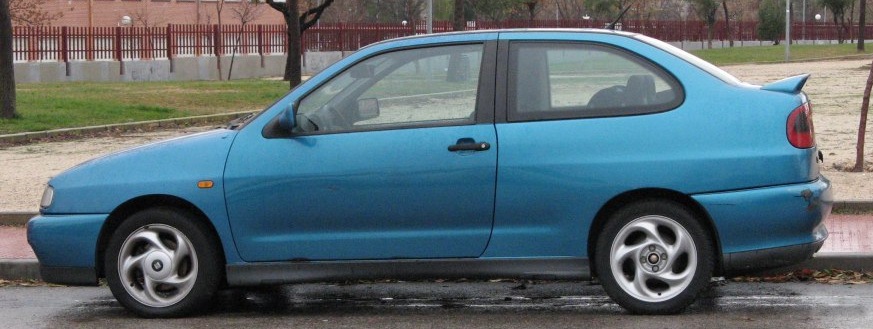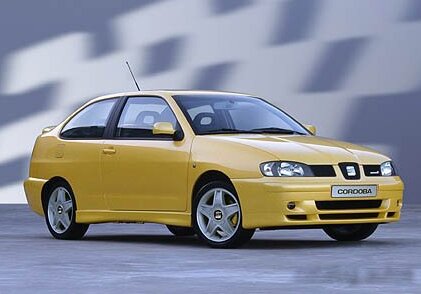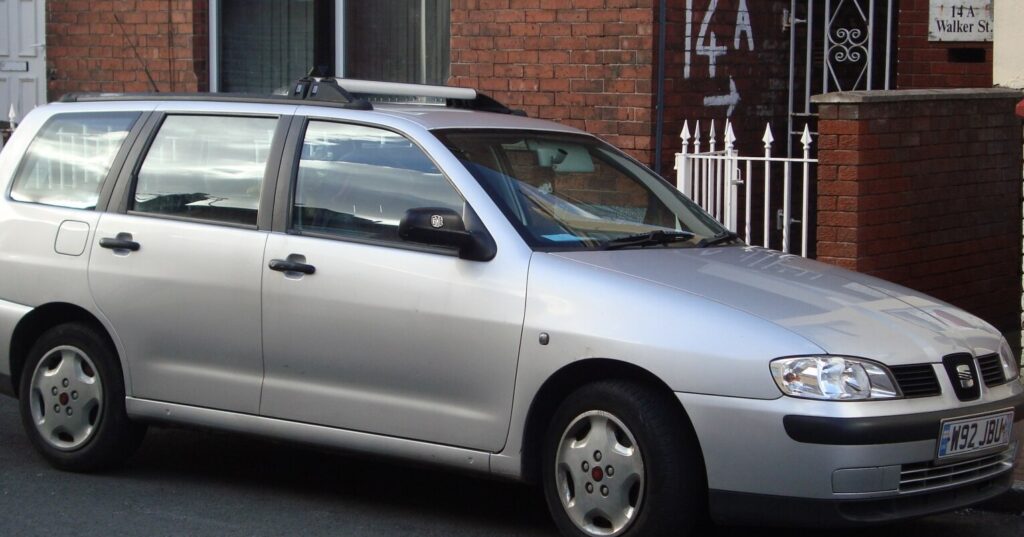
The SEAT Córdoba Vario I (facelifted in 1999) 1.4, producing 60 horsepower, was a practical and affordable station wagon aimed at budget-conscious buyers in the European market. Introduced in January 1999 and continuing through August 2002, this variant occupied the entry-level position within the Córdoba Vario range, offering a spacious and versatile body style at a competitive price point. It was based on the Volkswagen Group’s A3/1HX0 platform, shared with the Volkswagen Golf, Bora, and Škoda Octavia, providing a solid foundation for a family vehicle. The Vario, meaning ‘variable’ in Spanish, emphasized the car’s adaptability for carrying passengers and cargo.
Technical Specifications
| Brand | Seat |
| Model | Cordoba |
| Generation | Cordoba Vario I (facelift 1999) |
| Type (Engine) | 1.4 (60 Hp) |
| Start of production | January, 1999 |
| End of production | August, 2002 |
| Powertrain Architecture | Internal Combustion engine |
| Body type | Station wagon (estate) |
| Seats | 5 |
| Doors | 5 |
| Fuel consumption (urban) | 8.9 l/100 km (26.4 US mpg) |
| Fuel consumption (extra urban) | 5.5 l/100 km (42.8 US mpg) |
| Fuel Type | Petrol (Gasoline) |
| Acceleration 0 – 100 km/h | 16.4 sec |
| Acceleration 0 – 62 mph | 16.4 sec |
| Acceleration 0 – 60 mph | 15.6 sec |
| Maximum speed | 155 km/h (96.31 mph) |
| Weight-to-power ratio | 17 kg/Hp |
| Weight-to-torque ratio | 8.8 kg/Nm |
| Power | 60 Hp @ 4700 rpm |
| Power per litre | 43.2 Hp/l |
| Torque | 116 Nm @ 3000 rpm (85.56 lb.-ft. @ 3000 rpm) |
| Engine layout | Front, Transverse |
| Engine Model/Code | AKK, ANW, AUD |
| Engine displacement | 1390 cm3 (84.82 cu. in.) |
| Number of cylinders | 4 |
| Engine configuration | Inline |
| Cylinder Bore | 76.5 mm (3.01 in.) |
| Piston Stroke | 75.6 mm (2.98 in.) |
| Compression ratio | 10.7:1 |
| Number of valves per cylinder | 2 |
| Fuel injection system | Multi-port manifold injection |
| Engine aspiration | Naturally aspirated engine |
| Valvetrain | OHC |
| Engine oil capacity | 3.2 l (3.38 US qt | 2.82 UK qt) |
| Coolant | 5.6 l (5.92 US qt | 4.93 UK qt) |
| Kerb Weight | 1020 kg (2248.72 lbs.) |
| Max. weight | 1480 kg (3262.84 lbs.) |
| Max load | 460 kg (1014.13 lbs.) |
| Trunk (boot) space – minimum | 350 l (12.36 cu. ft.) |
| Trunk (boot) space – maximum | 1250 l (44.14 cu. ft.) |
| Fuel tank capacity | 45 l (11.89 US gal | 9.9 UK gal) |
| Length | 4163 mm (163.9 in.) |
| Width | 1640 mm (64.57 in.) |
| Height | 1433 mm (56.42 in.) |
| Wheelbase | 2443 mm (96.18 in.) |
| Front track | 1429 mm (56.26 in.) |
| Rear (Back) track | 1394 mm (54.88 in.) |
| Drivetrain Architecture | The Internal combustion engine (ICE) drives the front wheels of the vehicle. |
| Drive wheel | Front wheel drive |
| Number of gears and type of gearbox | 5 gears, manual transmission |
| Front suspension | Spring Strut |
| Rear suspension | Suspension with traction connecting levers |
| Front brakes | Disc |
| Rear brakes | Drum |
| Assisting systems | ABS (Anti-lock braking system) |
| Steering type | Steering rack and pinion |
| Power steering | Hydraulic Steering |
| Tires size | 175/70 R13 |
Powertrain & Engine Architecture
The Córdoba Vario 1.4 utilized a 1.4-liter, inline four-cylinder engine, typically identified by engine codes AKK, ANW, or AUD. This engine was a relatively simple, naturally aspirated unit featuring a single overhead camshaft (OHC) and two valves per cylinder. Fuel delivery was managed by a multi-port fuel injection system, providing adequate, though not exceptional, performance. The engine’s 1390 cc displacement produced 60 horsepower at 4700 rpm and 116 Nm (85.56 lb-ft) of torque at 3000 rpm. The engine was transversely mounted in the front of the vehicle, driving the front wheels. The standard transmission was a five-speed manual gearbox, although a four-speed automatic transmission was also available, albeit less common. The automatic transmission, while offering convenience, noticeably impacted acceleration and fuel economy.
Driving Characteristics
The 1.4-liter engine, paired with the five-speed manual transmission, provided adequate performance for everyday driving. Acceleration was modest, taking approximately 16.4 seconds to reach 62 mph (100 km/h). The car felt most comfortable at lower speeds, making it well-suited for urban environments and shorter journeys. The automatic transmission version suffered from slower acceleration and a less engaging driving experience. Gear ratios were optimized for fuel efficiency rather than outright performance. The engine was generally smooth and refined, but lacked the punch of larger-displacement engines available in the Córdoba range, such as the 1.6 or 1.8-liter variants.
Equipment & Trim Levels
The 1.4 Vario typically came with a basic level of equipment, reflecting its position as the entry-level model. Standard features generally included power steering, central locking, and an adjustable steering column. Interior upholstery was typically cloth, and the dashboard featured a functional, if somewhat basic, design. Optional extras included air conditioning, electric windows, and an upgraded audio system. Higher trim levels, such as the Stella or Sport, offered more luxurious appointments and additional features, but at a higher price point. The Vario’s key selling point was its practicality and spaciousness, offering a generous 350-liter boot capacity (expanding to 1250 liters with the rear seats folded down).
Chassis & Braking
The Córdoba Vario’s chassis featured a MacPherson strut front suspension and a torsion beam rear suspension. This setup provided a comfortable ride, although it wasn’t particularly sporty. The front brakes were disc brakes, while the rear brakes were drum brakes – a cost-saving measure common in this segment. Anti-lock Braking System (ABS) was standard, enhancing safety. The steering was a hydraulic power-assisted rack and pinion system, providing light and easy steering feel. The car rode on 175/70 R13 tires, which contributed to a comfortable ride but didn’t offer exceptional grip.
Market Reception & Comparison
The SEAT Córdoba Vario 1.4 was generally well-received as a practical and affordable family car. Critics praised its spacious interior, versatile cargo area, and reasonable fuel economy. However, the 1.4-liter engine was often criticized for its lack of power, particularly when paired with the automatic transmission. Compared to the 1.6-liter and 1.8-liter versions, the 1.4 offered significantly less performance but also lower running costs. The 1.9 TDI diesel variant provided superior fuel economy and torque, but at a higher purchase price. The Córdoba Vario competed with other small station wagons such as the Škoda Octavia Estate and the Ford Focus Estate.
Legacy
The SEAT Córdoba Vario 1.4, while not a performance icon, proved to be a reliable and durable vehicle. The 1.4-liter engine, though simple in design, is generally known for its longevity. Today, these cars are relatively affordable on the used car market, making them a practical choice for those seeking a budget-friendly station wagon. Maintenance is generally straightforward, and parts availability is good, thanks to the car’s widespread use of Volkswagen Group components. However, potential buyers should be aware of potential issues with rust, particularly on older examples. The Córdoba Vario 1.4 represents a sensible and practical choice for those prioritizing space, affordability, and reliability over outright performance.