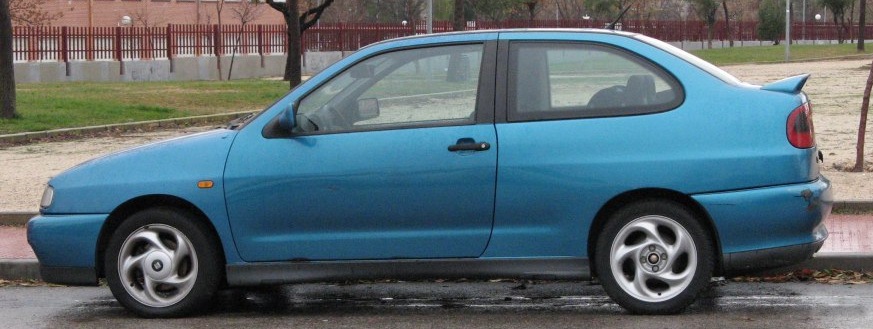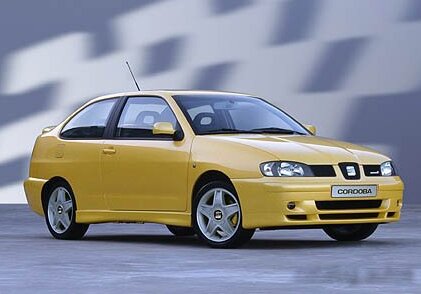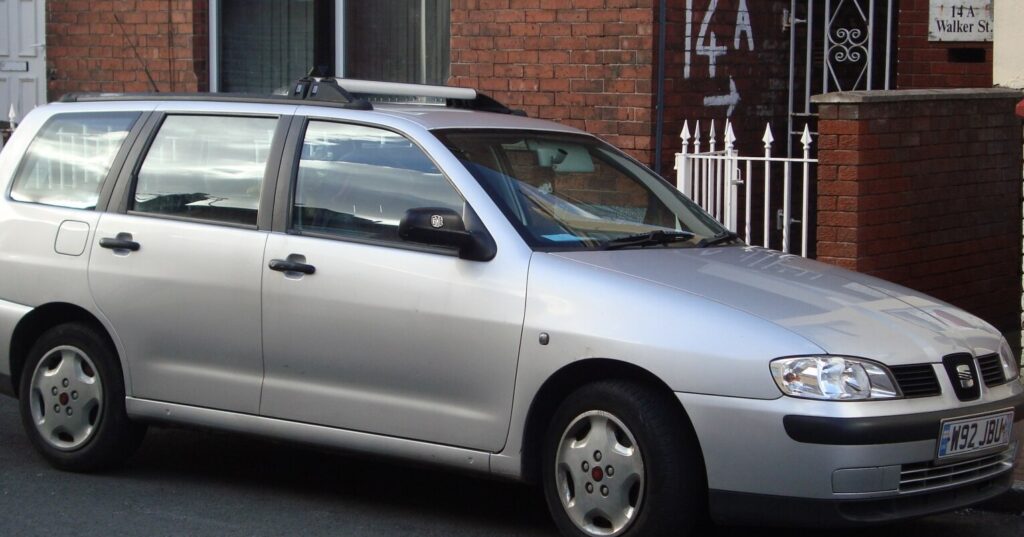
The SEAT Córdoba Vario I, specifically the facelifted model produced from April 1999 to August 2002, represented SEAT’s entry into the small station wagon (estate) market. This variant, powered by the 1.9 SDI engine producing 68 horsepower, was positioned as the economical and practical choice within the Córdoba range. The Vario I, based on the Volkswagen Group’s A2 platform, aimed to provide a versatile and affordable vehicle for families and those requiring additional cargo space. The facelift brought subtle styling updates and refinements to the original Vario, enhancing its appeal.
Technical Specifications
| Brand | SEAT |
| Model | Córdoba |
| Generation | Córdoba Vario I (facelift 1999) |
| Type (Engine) | 1.9 SDI (68 Hp) |
| Start of production | April 1999 |
| End of production | August 2002 |
| Powertrain Architecture | Internal Combustion engine |
| Body type | Station wagon (estate) |
| Seats | 5 |
| Doors | 5 |
| Fuel Type | Diesel |
| Power | 68 Hp |
| Engine Model/Code | AGP, AQM |
| Fuel injection system | Direct injection |
| Engine aspiration | Naturally aspirated engine |
| Engine oil capacity | 4.5 l (4.76 US qt | 3.96 UK qt) |
| Coolant capacity | 6 l (6.34 US qt | 5.28 UK qt) |
| Fuel tank capacity | 45 l (11.89 US gal | 9.9 UK gal) |
Powertrain & Engine Architecture
The heart of the Córdoba Vario I 1.9 SDI was the AGP or AQM engine code, a 1.9-liter, four-cylinder diesel engine. This engine utilized a direct injection (DI) system, a technology that became increasingly common in diesel engines during the late 1990s and early 2000s. Direct injection improved fuel efficiency and reduced emissions compared to older indirect injection systems. The SDI system, while not as sophisticated as later common rail technologies, offered a good balance of performance and economy. The engine featured a naturally aspirated configuration, meaning it did not employ a turbocharger or supercharger. This resulted in a relatively modest power output of 68 horsepower and approximately 120 lb-ft of torque. The engine’s valvetrain consisted of a single overhead camshaft (SOHC) operating two valves per cylinder. The engine was typically paired with a five-speed manual transmission, though a four-speed automatic transmission was also available, albeit less common. The automatic transmission was geared towards smooth operation and fuel economy rather than sporty performance.
Driving Characteristics
The 1.9 SDI engine in the Córdoba Vario I provided adequate, but not exhilarating, performance. Acceleration was leisurely, and overtaking required careful planning. The engine’s torque characteristics meant that most of the power was available at lower engine speeds, making it suitable for everyday driving and hauling loads. The automatic transmission, when equipped, further smoothed out the power delivery, but also contributed to a slight reduction in responsiveness. Compared to the more powerful petrol (gasoline) versions of the Córdoba, such as the 1.6 or 1.8-liter engines, the 1.9 SDI was significantly slower. However, it offered a substantial advantage in fuel economy. The suspension was tuned for comfort, providing a reasonably smooth ride, although it could feel somewhat wallowy when fully loaded. The steering was light and easy to use, making it well-suited for urban driving.
Equipment & Trim Levels
The Córdoba Vario I 1.9 SDI was generally offered in a relatively basic trim level, reflecting its position as the entry-level variant. Standard equipment typically included power steering, central locking, and an adjustable steering column. Interior upholstery was usually cloth, and the dashboard featured a simple, functional design. Air conditioning was often an optional extra, as were electric windows and alloy wheels. Higher trim levels, if available, might have added features such as a radio/cassette player, upgraded interior trim, and body-colored bumpers. The focus was on providing a practical and affordable vehicle, rather than luxury or high-tech features.
Chassis & Braking
The Córdoba Vario I utilized a MacPherson strut front suspension and a torsion beam rear suspension. This setup provided a good balance of ride comfort and handling. The braking system consisted of disc brakes on the front wheels and drum brakes on the rear wheels. Anti-lock Braking System (ABS) was often an optional extra, depending on the market and trim level. The chassis was reinforced to accommodate the increased weight and load-carrying capacity of the station wagon body style. Stabilizer bars were fitted to both the front and rear axles to reduce body roll during cornering. The tires were typically narrow, prioritizing fuel economy over grip.
Market Reception & Comparison
The SEAT Córdoba Vario I 1.9 SDI was generally well-received as a practical and economical station wagon. Critics praised its fuel efficiency and spacious interior, but noted its lack of performance. Compared to other small station wagons of the time, such as the Volkswagen Golf Estate or the Ford Focus Estate, the Córdoba Vario offered a more affordable price point. However, it lacked the refinement and driving dynamics of some of its competitors. The 1.9 SDI engine was known for its reliability, but it could be somewhat noisy and prone to producing black smoke under heavy acceleration. Fuel economy was a major selling point, with the 1.9 SDI achieving upwards of 50 mpg on the highway.
Legacy
The 1.9 SDI engine, in its various iterations, proved to be a durable and long-lasting powerplant. Many Córdoba Vario I 1.9 SDI models are still on the road today, testament to their robust construction. However, finding parts for these older vehicles can become increasingly challenging. The Córdoba Vario I, while not a particularly glamorous or high-performance car, played an important role in establishing SEAT as a credible player in the European automotive market. In the used car market, these models are typically valued for their affordability and practicality, making them a popular choice for first-time car buyers or those seeking a reliable and economical workhorse. The simplicity of the SDI engine also makes it relatively easy to maintain for those with basic mechanical skills.